
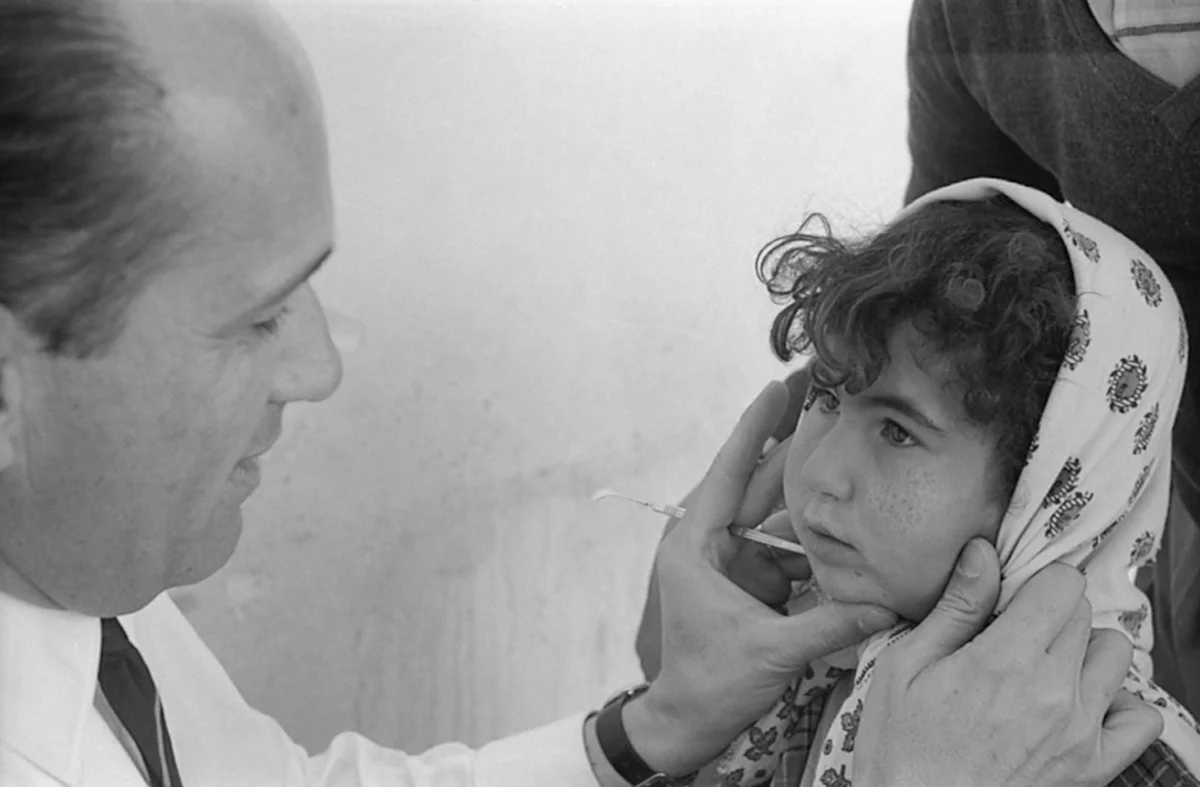
The World Health Organization (WHO) has formally recognized Tunisia for eliminating trachoma as a public health problem, marking a monumental achievement in the nation’s medical history and a significant victory for the global campaign against neglected tropical diseases (NTDs). This validation, announced following a rigorous assessment process, concludes decades of sustained national effort, comprehensive healthcare reform, and strategic community-level interventions. Tunisia now joins a select group of nations that have successfully eradicated the leading infectious cause of blindness, demonstrating the efficacy of long-term political commitment and integrated primary health care.
Trachoma is a devastating eye disease caused by infection with the bacterium Chlamydia trachomatis. It is transmitted through direct contact with eye or nose discharges from infected individuals, as well as through contact with contaminated surfaces and eye-seeking flies. If left untreated, repeated infections lead to a condition known as trachomatous trichiasis, where the eyelids turn inward and the eyelashes rub against the eyeball. This causes intense pain, corneal scarring, and eventually permanent, irreversible blindness. Because the disease is closely linked to poverty, inadequate sanitation, and limited access to clean water, it disproportionately affects the most vulnerable populations in the world’s most arid and underdeveloped regions.
In the early to mid-20th century, trachoma was a pervasive threat in Tunisia. Historical data indicates that the disease was endemic across the country, particularly in the southern governorates where arid conditions and limited infrastructure facilitated its spread. At its peak, trachoma affected at least half of the Tunisian population, placing an enormous burden on the national economy and the quality of life for millions of citizens. The elimination of this ancient scourge is not merely a clinical victory but a testament to Tunisia’s broader social and economic development.
The Path to Elimination: The SAFE Strategy
Tunisia’s success is rooted in its early and aggressive adoption of the WHO-recommended SAFE strategy. This multifaceted approach addresses both the immediate medical needs of infected individuals and the underlying environmental factors that allow the disease to persist. The acronym SAFE stands for Surgery, Antibiotics, Facial cleanliness, and Environmental improvement.
The "S" in the strategy—Surgery—was critical for treating those already suffering from advanced trachomatous trichiasis. Tunisia implemented nationwide screening programs to identify individuals at risk of blindness and provided corrective eyelid surgeries at the community level. By integrating these services into the primary healthcare system, the Ministry of Health ensured that even the most remote populations had access to life-saving ophthalmic care.
The "A" component—Antibiotics—involved the large-scale administration of antibiotics to clear the reservoir of infection within communities. Tunisia participated in mass drug administration (MDA) campaigns, utilizing evidence-based protocols to treat entire districts where the prevalence of the disease remained high. These efforts were supported by international partners and pharmaceutical donation programs, ensuring a consistent supply of effective medication.
"F" for Facial cleanliness focused on behavioral change and public education. Tunisian health authorities worked closely with schools and local community leaders to promote hygiene practices. Educational campaigns emphasized the importance of regular face-washing, particularly among children, who are the primary carriers of the bacteria. These initiatives were often paired with school health programs, ensuring that the next generation grew up with the habits necessary to break the cycle of transmission.
The final pillar, "E" for Environmental improvement, was perhaps the most challenging but impactful. Tunisia made significant investments in water and sanitation infrastructure, particularly in rural and southern regions. By increasing access to clean water and improving waste management, the country reduced the breeding grounds for flies and improved overall household hygiene. This structural development was essential for driving disease prevalence down to levels where transmission could no longer be sustained.
A Chronology of National Commitment
The journey toward validation was a multi-generational effort. Following the end of the colonial era, the Tunisian government identified eye health as a pillar of its national health policy. In the 1950s and 1960s, the country began establishing a network of primary health centers that would later become the frontline in the fight against trachoma.
By the 1990s, Tunisia had already made significant strides, but the launch of the WHO Alliance for the Global Elimination of Trachoma by 2020 (GET2020) in 1996 provided a renewed framework for the final push. The Ministry of Health intensified its surveillance and response mechanisms, moving from a general public health approach to a targeted, district-by-district strategy.
In the early 2000s, Tunisia began the process of documenting its progress for WHO validation. This required meticulous data collection, including prevalence surveys among children and adults in formerly endemic areas. The country had to prove not only that the disease had been suppressed but that the health system was capable of identifying and managing any new cases that might arise. This period of "post-treatment surveillance" lasted several years, ensuring that the reduction in disease was stable and permanent.
Official Responses and Global Recognition
The announcement of Tunisia’s validation has drawn praise from global health leaders. Dr. Tedros Adhanom Ghebreyesus, WHO Director-General, lauded the achievement as a historic milestone. "I congratulate Tunisia on this historic public health achievement," Dr. Tedros stated. "Eliminating trachoma shows what long-term political commitment, strong primary health care, and teamwork can do. Tunisia has proven that even the world’s leading infectious cause of blindness can be overcome."
Dr. Hanan Balkhy, WHO Regional Director for the Eastern Mediterranean, highlighted the consistency of Tunisia’s efforts. "This is a major achievement that reflects sustained and consistent national commitment over many years and shows what is possible when a country remains focused on addressing preventable causes of blindness," she said.
Within Tunisia, the validation is seen as a validation of the country’s investment in its people. Dr. Mustapha Ferjani, Tunisia’s Minister of Health, emphasized the collaborative nature of the victory. "This milestone is the result of decades of coordinated national efforts, with the dedication of generations of health-care professionals and local communities who worked tirelessly to expand access to care," Dr. Ferjani said. He reaffirmed the government’s commitment to sustaining these gains through continued surveillance and the protection of future generations.
Dr. Ahmed Zouiten, the Acting WHO Representative in Tunisia, noted that the success was a triumph of science and evidence-based policy. "The validation stands as a strong demonstration of how science, evidence-based programming, and coordinated technical support can overcome neglected tropical diseases every time and everywhere," Zouiten remarked.
Technical Criteria and Validation Standards
To be validated by the WHO for the elimination of trachoma as a public health problem, a country must meet specific and rigorous technical thresholds. These include:
- A prevalence of trachomatous trichiasis (TT) "unknown to the health system" of less than 0.2% in adults aged 15 years and older.
- A prevalence of trachomatous inflammation—follicular (TF) in children aged 1–9 years of less than 5% in each formerly endemic district.
- The existence of a robust system capable of identifying and managing incident cases of TT to prevent blindness.
Tunisia’s ability to meet and maintain these standards over time was verified by an independent dossier review and field assessments. The country’s post-validation surveillance system is now a model for other nations, featuring integrated monitoring within the national health information system and ongoing training for ophthalmic technicians and primary care providers.
Regional and Global Implications
Tunisia is the 31st country globally to be validated for trachoma elimination. It also becomes the 14th country in the WHO Eastern Mediterranean Region to eliminate at least one neglected tropical disease. This achievement is particularly significant given the regional challenges of migration, water scarcity, and varying levels of healthcare infrastructure. Tunisia’s success provides a roadmap for other nations in North Africa and the Middle East, proving that geographic and climatic challenges are not insurmountable barriers to disease elimination.
The elimination of trachoma in Tunisia is also a major contribution to the health-related Sustainable Development Goals (SDGs), specifically Goal 3.3, which aims to end the epidemics of neglected tropical diseases by 2030. By removing the threat of trachoma, Tunisia has removed a significant barrier to economic productivity and educational attainment, as blindness and visual impairment often lead to social exclusion and poverty.
The Future: Sustaining the Success
While the validation marks the end of trachoma as a public health problem, it does not mark the end of vigilance. The Tunisian Ministry of Health has established a comprehensive surveillance framework to ensure the disease does not re-emerge. This includes ongoing screening in schools, continued training for healthcare workers to recognize the early signs of infection, and the maintenance of high standards in water and sanitation.
The lessons learned from the fight against trachoma are now being applied to other public health challenges in Tunisia. The infrastructure built for the SAFE strategy—such as the network of rural health clinics and the community-based hygiene programs—is being utilized to tackle other infectious and non-communicable diseases.
Tunisia’s victory over trachoma is a beacon of hope for the millions of people worldwide still living in trachoma-endemic areas. It serves as a powerful reminder that with political will, scientific rigor, and community engagement, the goal of a world free from preventable blindness is within reach. As the global community looks toward the 2030 targets for neglected tropical diseases, Tunisia stands as a testament to what is possible when a nation commits to the health and dignity of its citizens.
