
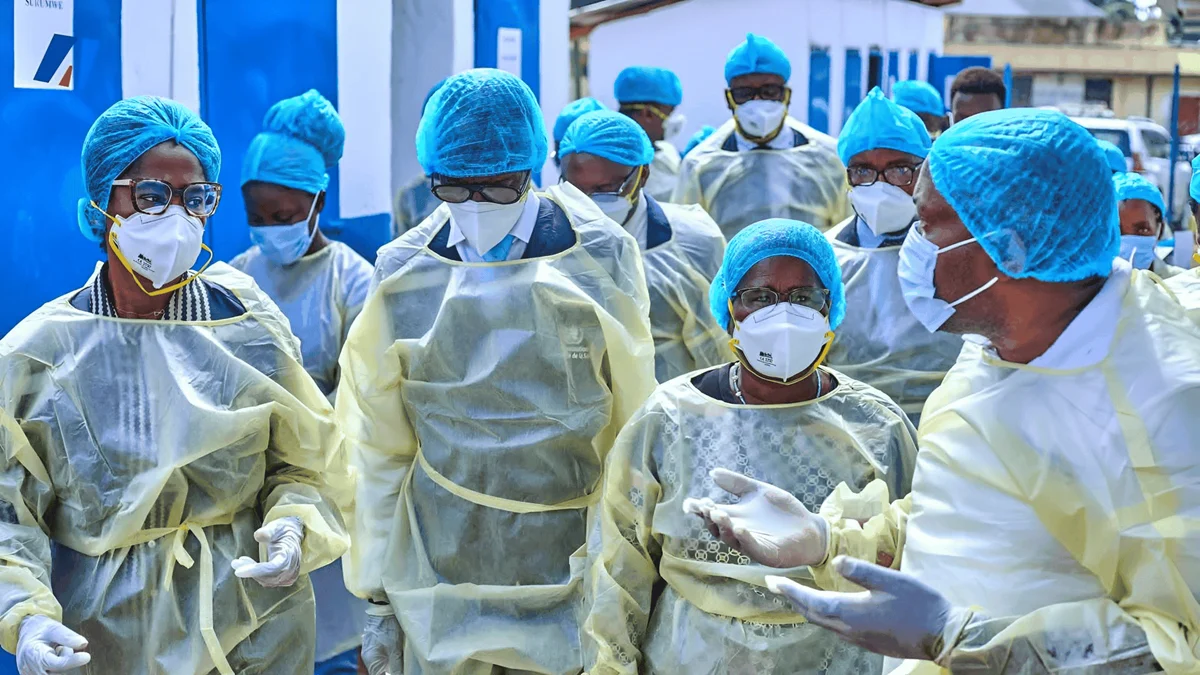
The World Health Organization (WHO) has successfully concluded Exercise Polaris II, an intensive two-day high-level simulation designed to pressure-test global health security infrastructures against the threat of a fictional, rapidly spreading bacterium. Conducted on April 22 and 23, 2026, the exercise convened 26 countries and territories, 600 health emergency experts, and more than 25 international partners. This massive undertaking served as a critical stress test for the world’s ability to activate emergency workforce structures, manage complex information flows, and coordinate multi-jurisdictional responses under the duress of a hypothetical global contagion.
By simulating a scenario where a novel bacterial pathogen bypassed traditional containment measures, Polaris II provided a unique platform for participating nations to move beyond theoretical planning. The exercise focused on the practical application of the Global Health Emergency Corps (GHEC) and the National health emergency alert and response framework, both of which are cornerstone elements of the WHO’s post-pandemic strategy to ensure a more resilient and interconnected global health architecture.
A Legacy of Preparedness: From Polaris I to Polaris II
Exercise Polaris II represents the latest milestone in HorizonX, the WHO’s forward-looking, multi-year simulation programme. The initiative was launched to address the systemic vulnerabilities exposed during the COVID-19 pandemic, emphasizing that paper-based strategies are insufficient without rigorous, real-time testing.
The first iteration, Polaris I, took place in April 2025 and focused on a fictional viral pathogen. While Polaris I concentrated on the initial detection and containment phases of a viral outbreak, Polaris II shifted the focus to a bacterial threat. This transition allowed experts to grapple with different clinical challenges, such as antibiotic resistance and localized surge capacity for bacterial treatment protocols.
In this second edition, participating countries activated their formal emergency coordination structures. Under real-life conditions, they were tasked with aligning national policies with international guidance, sharing epidemiological data across borders, and managing the "surge" of their health workforce to areas of greatest need. The expansion of the exercise from its predecessor reflects a growing international consensus that health security is a collective responsibility requiring constant refinement.
Strategic Frameworks and the Role of the GHEC
At the heart of the simulation were two pivotal frameworks published by the WHO in 2025. The Global Health Emergency Corps (GHEC) framework, released in June 2025, serves as the operational backbone for the deployment of emergency personnel. Built on the core principles of sovereignty, equity, and solidarity, the GHEC is designed to ensure that when a crisis hits, the global community can provide a surge of trained professionals to support national efforts without infringing on local governance.
The second framework, the National health emergency alert and response framework, published in October 2025, outlines the specific functions and coordination mechanisms required at the local, sub-national, and national levels. During Polaris II, these frameworks were used to guide the flow of information from frontline health workers to national ministries and eventually to the WHO’s regional and global hubs.
Dr. Tedros Adhanom Ghebreyesus, WHO Director-General, emphasized the necessity of these structures following the conclusion of the exercise. “Exercise Polaris II showed what is possible when we act together. It demonstrated that global cooperation is not optional—it is essential,” Dr. Tedros stated. He further noted that the primary objective of the GHEC is to build trust and strengthen connections, allowing the global health community to work as a unified front across borders.
Technological Innovation: AI-Enabled Workforce Planning
A significant advancement in Polaris II was the integration of artificial intelligence (AI) tools to assist in workforce organization and planning. As the fictional bacterium spread, participating countries utilized AI-enabled platforms to predict staffing shortages, optimize the deployment of specialized medical teams, and manage the logistics of surge support.
The use of AI allowed for more dynamic decision-making, simulating how modern technology can be used to parse vast amounts of data in real-time. This technological component addressed one of the most significant hurdles in emergency response: the "information fog" that often occurs during the early stages of an outbreak. By leveraging AI, the simulation explored how to maintain clear communication channels and ensure that resources—both human and material—are allocated based on the most current epidemiological evidence.
Global Participation and Collaborative Networks
The scale of Polaris II was significantly larger than previous exercises, reflecting a broader geographical and institutional commitment. The 26 participating countries and territories spanned every WHO region, including:
- Americas: Brazil, Colombia, El Salvador, Paraguay, Suriname.
- Africa: Ghana, Kenya, Republic of Congo, Rwanda.
- Eastern Mediterranean: Egypt, Jordan, Libya, Oman, Qatar, Yemen.
- Europe: France, Georgia, Kosovo*.
- South-East Asia: Bangladesh, India, Indonesia, Nepal, Thailand.
- Western Pacific: Brunei, Malaysia, Philippines.
(All references to Kosovo are understood to be in the context of UN Security Council resolution 1244).
The exercise also saw the debut of the recently launched Health Emergency Leaders Network for Africa and the Eastern Mediterranean. This network, a collaboration between the WHO, Africa CDC, and the Kingdom of Morocco, played a vital role in coordinating regional responses during the simulation, highlighting the importance of regional leadership in the broader global health framework.
Partner organizations provided a deep reservoir of technical expertise. Entities such as the Africa Centres for Disease Control and Prevention (Africa CDC), the International Federation of Red Cross and Red Crescent Societies (IFRC), Médecins Sans Frontières (MSF), and UNICEF worked alongside the WHO. Specialized emergency networks, including the Global Outbreak Alert and Response Network (GOARN) and the Emergency Medical Teams (EMT) initiative, practiced the rapid deployment of technical experts to assist national governments.
Perspectives from the Field: Turning Plans into Action
The transition from theoretical preparedness to operational readiness was a recurring theme among participants. Edenilo Baltazar Barreira Filho, Director of the Public Health Emergencies Department at the Ministry of Health in Brazil, highlighted the practical value of the exercise. “By simulating the spread of a dangerous pathogen under real-life conditions, Exercise Polaris II helped us turn existing plans into action. It is not enough to have plans on paper—what matters is how they perform in practice,” he remarked.
This sentiment was echoed by Dr. Chikwe Ihekweazu, Executive Director of WHO’s Health Emergencies Programme. He noted that the exercise reflected the "spirit of the Global Health Emergency Corps," characterizing the ideal response as one led by a well-organized, trained, and connected workforce ready to respond whenever and wherever a threat emerges.
Analysis of Implications for Global Health Security
The conclusion of Polaris II carries significant implications for the future of international health policy. First, the shift toward bacterial simulations acknowledges the rising threat of antimicrobial resistance (AMR) and the potential for non-viral pathogens to trigger global crises. By diversifying the types of pathogens used in simulations, the WHO is preparing member states for a wider array of biological threats.
Second, the emphasis on "equity" within the GHEC framework addresses a long-standing criticism of global health responses: that resource-rich nations often prioritize their own populations at the expense of global stability. Polaris II tested mechanisms designed to ensure that surge capacity is directed toward the most vulnerable regions, reinforcing the idea that no one is safe until everyone is safe.
Third, the exercise underscored the vital role of "Standby Partners" and the International Association of National Public Health Institutes (IANPHI). These organizations provide the "surge" personnel that national systems rely on when their own workforces are overwhelmed. Testing the interoperability of these diverse groups is essential for preventing the logistical bottlenecks that characterized early 2020.
Looking Ahead: World Health Day 2026 and Beyond
As the WHO moves forward, the lessons learned from Polaris II will be integrated into the ongoing development of the HorizonX programme. The findings will help refine the GHEC and the National alert and response frameworks, ensuring they remain relevant as new technologies and threats emerge.
The timing of the exercise is also significant as the organization approaches World Health Day 2026. The theme, “Together for health. Stand with science,” serves as a year-long campaign to champion science as the fundamental basis for protecting global well-being. Polaris II is a tangible manifestation of this theme, showcasing how scientific modeling, technological innovation, and international cooperation can be synthesized into a proactive defense against disease.
In an era defined by rapid globalization and environmental change, the frequency and intensity of health emergencies are expected to increase. The WHO’s commitment to continuous, high-level simulation exercises like Polaris II suggests a shift in global health strategy—from reactive crisis management to a state of permanent, proactive readiness. By investing in the "connective tissue" of the global health workforce today, the WHO and its partners aim to ensure that when the next real-world pathogen emerges, the global response will be swift, coordinated, and effective.
