
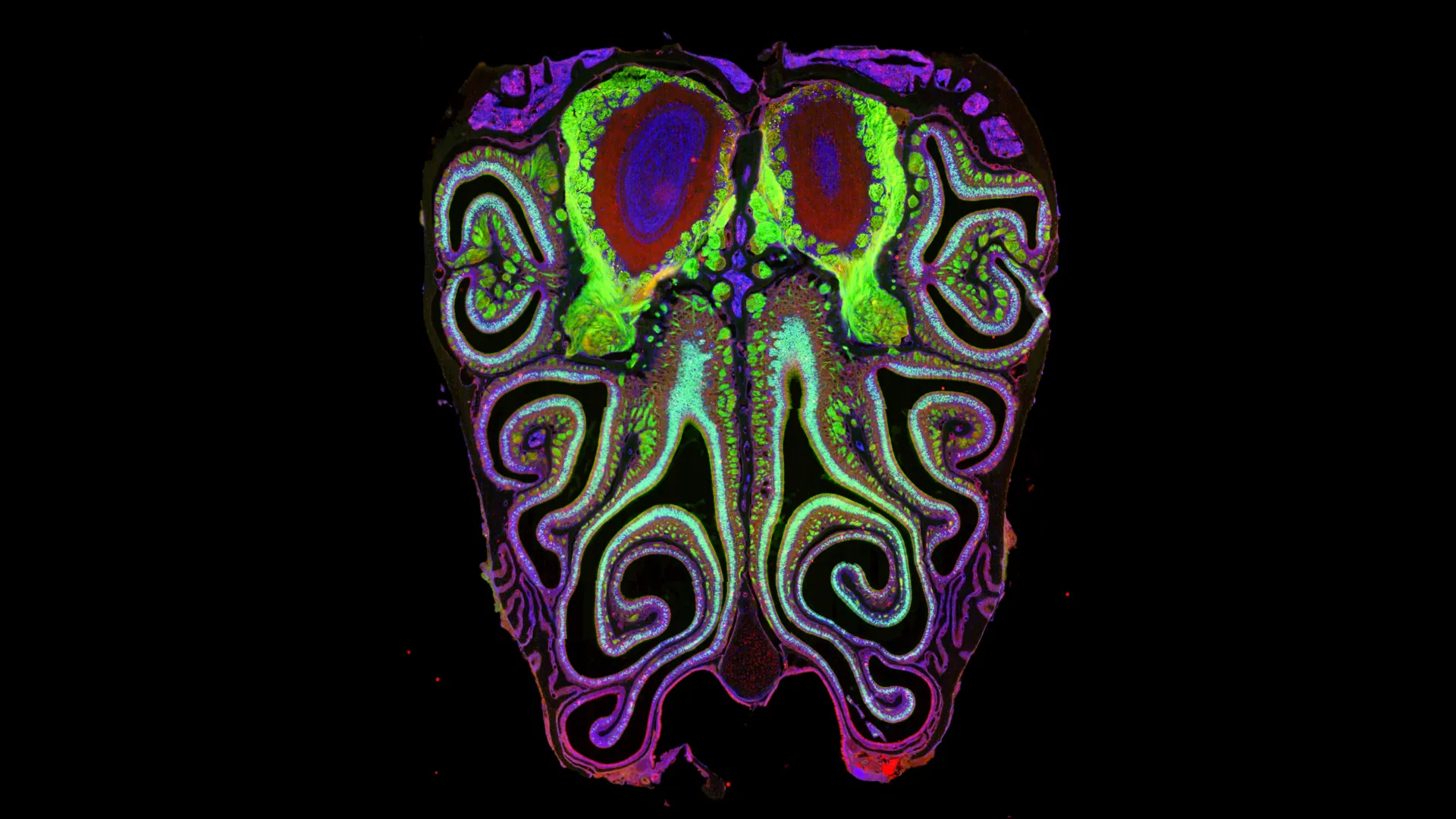
The human experience is deeply intertwined with the sense of smell, a fundamental yet often underestimated faculty that guides our daily lives. From alerting us to danger, such as a gas leak or spoiled food, to enriching our appreciation of food and evoking powerful memories and emotions, olfaction plays a pervasive role. Despite its profound impact, the biological underpinnings of how we smell have remained a persistent scientific puzzle, lagging behind our comprehension of other senses like sight, hearing, and touch. This gap in knowledge has now been significantly narrowed by a groundbreaking study that has produced the first detailed map of smell receptors within the mammalian nose, challenging long-held assumptions about the organization of this complex sensory system.
A Revolution in Olfactory Neuroscience
In a landmark achievement, researchers led by Sandeep (Robert) Datta, a professor of neurobiology at Harvard Medical School’s Blavatnik Institute, have meticulously charted the intricate arrangement of over a thousand distinct types of smell receptors in the nasal cavity of mice. Published on April 28 in the prestigious journal Cell, this study unveils a level of order within the olfactory system that was previously thought to be largely chaotic. The findings represent a paradigm shift in our understanding of how scent information is initially processed and transmitted to the brain, potentially paving the way for novel therapeutic interventions for olfactory disorders.
"Olfaction is super-mysterious," stated Professor Datta, the senior author of the study. "Compared with vision, hearing, and touch, the basic biology of smell has remained less understood." For decades, scientists have grappled with the sheer complexity of the olfactory system. Mice, for instance, possess approximately 20 million olfactory neurons, with each neuron specialized to express one of more than a thousand different types of odorant receptors. This intricate molecular diversity stands in stark contrast to human color vision, which relies on a mere three primary receptor types. Each of these olfactory receptors is designed to detect a specific subset of airborne odor molecules, creating an extraordinarily vast and nuanced system for scent detection.
The Decades-Long Quest for an Olfactory Map
The scientific journey to map the olfactory system has been a protracted one. While the organizational principles of sensory receptors in the eyes, ears, and skin have been well-established for many years, the olfactory system presented a unique challenge. "Olfaction has been the one exception; it’s the sense that has been missing a map for the longest time," Professor Datta remarked.
The initial identification of olfactory receptors by scientists dates back to 1991. In the subsequent decades, researchers embarked on a quest to discern any discernible patterns in the spatial distribution of these receptors within the nose. Early investigations, limited by the available technology, suggested that receptors were clustered into only a few broad zones, fostering the prevailing notion that their placement was largely random. This lack of apparent organization made it exceedingly difficult to comprehend how the brain could effectively decode the vast array of incoming scent signals.
The advent of advanced genetic sequencing and imaging technologies in recent years provided Professor Datta’s team with the sophisticated tools necessary to revisit this fundamental question with unprecedented precision. Their approach aimed to overcome the limitations of previous studies by employing techniques that could analyze millions of neurons and pinpoint their exact locations with remarkable accuracy.
Unveiling a Hidden Order: The Stripey Nasal Landscape
The research team’s meticulous analysis encompassed approximately 5.5 million neurons derived from over 300 mice. By integrating single-cell sequencing, which identifies the specific receptor expressed by each individual neuron, with spatial transcriptomics, which precisely maps the location of these neurons within the nasal tissue, they were able to construct a high-resolution map of the olfactory epithelium. "This is now arguably the most sequenced neural tissue ever, but we needed that scale of data in order to understand the system," Professor Datta explained, emphasizing the immense data requirements for such a complex undertaking.
The results of this exhaustive analysis were striking and definitive. Instead of a random scattering, the neurons expressing specific smell receptors were found to be highly organized into distinct, overlapping horizontal bands, or stripes, that extended from the top to the bottom of the nasal cavity. This ordered arrangement was remarkably consistent across all the animals studied, revealing a fundamental organizational principle that had eluded scientists for so long.
This newfound order in the nose was not an isolated phenomenon. Crucially, the researchers demonstrated that this nasal map precisely corresponded with existing topographical maps in the olfactory bulb, the primary processing center for smell in the brain. This direct alignment between the nasal architecture and the brain’s olfactory circuitry provides critical insights into how scent information is systematically encoded and transmitted from the periphery to the central nervous system. It suggests a sophisticated wiring diagram that ensures specific odor inputs are directed to specific neural pathways, enabling the brain to differentiate and interpret a vast spectrum of smells.
The Developmental Genesis of the Olfactory Map
Beyond identifying the existing map, the researchers delved into the developmental processes that give rise to this intricate structure. Their investigations pointed to retinoic acid, a molecule known for its role in regulating gene activity and embryonic development, as a key orchestrator of this organization.
The study revealed that a gradient of retinoic acid within the developing nose plays a critical role in guiding the olfactory neurons. As these neurons mature, their position within the nasal cavity dictates which specific smell receptor they will express, influenced by the varying concentrations of retinoic acid. This positional information is paramount in establishing the precise striped pattern observed in adult mice. To confirm the significance of retinoic acid, the researchers experimentally altered its levels. This manipulation resulted in a predictable shift in the entire receptor map, either upward or downward, underscoring the molecule’s vital role in establishing the correct spatial organization.
"We show that development can achieve this feat of organizing a thousand different smell receptors into an incredibly precise map that’s consistent across animals," Professor Datta remarked. This finding highlights the remarkable precision and robustness of developmental processes in establishing complex neural circuits. It’s worth noting that a parallel study, conducted by the laboratory of Catherine Dulac, a distinguished professor at Harvard University, and published in the same issue of Cell, yielded findings consistent with this research, further validating the discovery of this fundamental organizational principle in olfaction.
Implications for Treating Olfactory Deficits
The implications of this discovery extend far beyond fundamental neuroscience. Loss of smell, medically termed anosmia, can have significant and often overlooked consequences for an individual’s quality of life. It can compromise safety by rendering a person unable to detect dangerous substances like smoke or gas leaks. Furthermore, it can negatively impact nutrition by diminishing the pleasure derived from food, leading to potential malnutrition. Anosmia is also strongly linked to psychological well-being, contributing to feelings of isolation, depression, and a reduced sense of connection to the world. Currently, effective treatments for smell loss are limited, underscoring the urgent need for a deeper understanding of its underlying mechanisms.
"We cannot fix smell without understanding how it works on a basic level," Professor Datta emphasized. This new map provides a critical foundation for developing targeted therapeutic strategies. The research team is now focused on unraveling the precise reasons behind the specific ordering of these receptor stripes and, importantly, investigating whether a similar organizational principle exists in humans. This knowledge could pave the way for innovative approaches to restoring lost smell, potentially involving regenerative medicine techniques like stem cell therapies or even advanced neurotechnology such as brain-computer interfaces.
"Smell has a really profound and pervasive effect on human health, so restoring it is not just for pleasure and safety but also for psychological well-being," Professor Datta added. "Without understanding this map, we’re doomed to fail in developing new treatments." The ability to accurately map and potentially manipulate olfactory receptor organization could revolutionize the treatment of conditions ranging from post-viral anosmia to congenital olfactory disorders.
Future Directions and Broader Impact
The successful mapping of olfactory receptors in mice opens up numerous avenues for future research. Key questions remain about the evolutionary pressures that shaped this specific organizational pattern and the precise molecular cues that guide receptor expression and neuronal targeting. Furthermore, understanding the functional consequences of this organized architecture on odor perception is a critical next step. How does this stripe-like organization contribute to the brain’s ability to discriminate between thousands of different odorants and to form complex olfactory memories?
The research team’s commitment to investigating the presence and nature of similar organization in humans is paramount. If confirmed, this could lead to direct applications in human health. The development of diagnostic tools to assess the integrity of the olfactory map in individuals with smell disorders could become a reality. Moreover, therapeutic interventions aimed at repairing or regenerating damaged olfactory epithelium could be guided by this detailed understanding of its underlying structure.
This scientific endeavor, supported by substantial funding from the National Institutes of Health and other prestigious institutions, exemplifies the power of collaborative research and technological innovation. The contributions of a diverse group of scientists, including David Brann, Tatsuya Tsukahara, and many others listed in the study’s acknowledgments, underscore the interdisciplinary nature of modern scientific discovery.
In conclusion, the creation of the first detailed map of smell receptors in the nose represents a monumental leap forward in our understanding of olfaction. By bringing order to a previously enigmatic system, this research not only satisfies a fundamental scientific curiosity but also holds immense promise for alleviating the significant burden of olfactory dysfunction, ultimately enhancing human health and well-being.
