
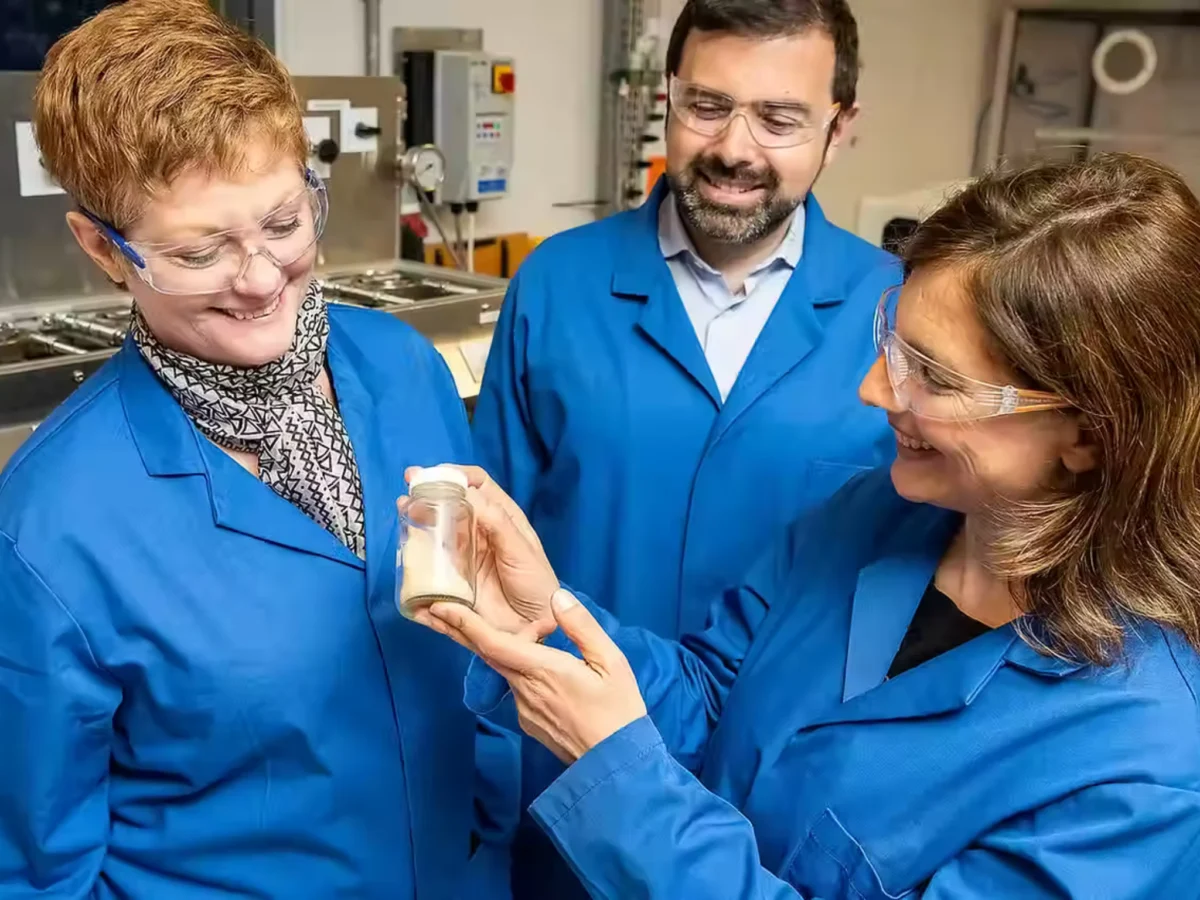
UK-based biomaterials innovator Naturbeads has announced a significant milestone in its mission to combat microplastic pollution, securing a €4.1 million (approximately $4.8 million) grant from the European Structural Fund. This substantial funding will be instrumental in establishing a new, state-of-the-art production facility in Puglia, Italy. The plant will be dedicated to manufacturing cellulose-based alternatives that can effectively replace microplastics across a wide spectrum of consumer and industrial products.
The grant, awarded through the EU’s programme for financing bespoke economic and social development projects, underscores the growing recognition of cellulose as a sustainable material and the urgent need for viable microplastic substitutes. Naturbeads plans to leverage its Italian subsidiary to oversee the construction and operation of the facility, strategically choosing Puglia for its burgeoning reputation as a hub for innovation, its skilled and youthful workforce, and its commitment to digital transformation and business development.
"We are nature’s fix for the use of microplastics, tackling the problem at its source while maintaining the same performance and cost as traditional plastics," stated Giovanna Laudisio, CEO of Naturbeads. This ambitious claim highlights the company’s commitment to not only environmental responsibility but also to providing economically competitive solutions for industries reliant on microplastic components. Laudisio further elaborated on the broad applicability of their technology, emphasizing that its use extends far beyond the cosmetics sector. "The use of our innovative technology isn’t restricted to cosmetic goods. It can be employed in multiple industries to eliminate the use of microplastics in making paints, coatings, detergents, adhesives, softeners, and even biomedical devices."
The EU funding will provide partial reimbursement for the construction costs of the Puglia plant and will also support crucial research and development expenditures as Naturbeads gears up for full commercialisation over the next two years. This phased approach to scaling production suggests a carefully planned strategy to ensure both technological readiness and market penetration.
The Rise of Cellulose-Based Microbeads: A Sustainable Solution
Microplastics, defined as plastic particles less than 5 millimeters in size, have become a pervasive environmental concern. Their durability, versatility, and low cost have led to their widespread inclusion in countless everyday products, from cosmetics and detergents to paints and coatings. However, their persistence in the environment poses significant threats to ecosystems and human health.
"Due to its versatility and durability, tiny microspheres of plastic are a popular ingredient in a range of everyday products," explained Laudisio. "For example, they’re routinely found in makeup that stays on your skin for only a few hours, but when you wash your face, they end up in the drain and from there in the oceans where they last for centuries." The long-term consequences of this accumulation are alarming. Scientific studies have documented the presence of microplastics in marine life, drinking water, food, and even the human body, with potential links to inflammation, endocrine disruption, and other health issues. The scale of the problem is staggering; it is estimated that the global production of plastics could triple by 2060, exacerbating the issue if sustainable alternatives are not adopted. Petrochemical-derived plastics can take anywhere from 20 to 500 years to decompose, contributing significantly to landfill waste and the leaching of harmful chemicals into soil and water systems.
Naturbeads’ innovative approach harnesses cellulose, the most abundant organic polymer on Earth and the primary structural component of plants. The company has developed a patented process that utilizes a green-solvent system to dissolve cellulose fibers and re-form them into perfectly spherical, uniform beads. Crucially, this process does not alter the chemical structure of the cellulose, ensuring its biodegradability and natural properties.
The breakthrough technology, originating from the University of Bath in 2018, masterfully combines solvent chemistry with advanced techniques like membrane emulsification and phase inversion. This sophisticated methodology grants Naturbeads complete control over particle size, surface texture, and porosity, enabling the creation of microbeads that precisely mimic the performance characteristics of traditional plastic counterparts.
A Closed-Loop System for Environmental Stewardship
A cornerstone of Naturbeads’ operational philosophy is a commitment to a closed-loop system designed for maximum efficiency and minimal environmental impact. This strategy is particularly evident in their solvent recovery and reuse protocols, which significantly reduce waste and energy consumption. The resulting cellulose-derived material is not only biodegradable but also consistently meets the high performance and consistency standards demanded by various industrial applications.
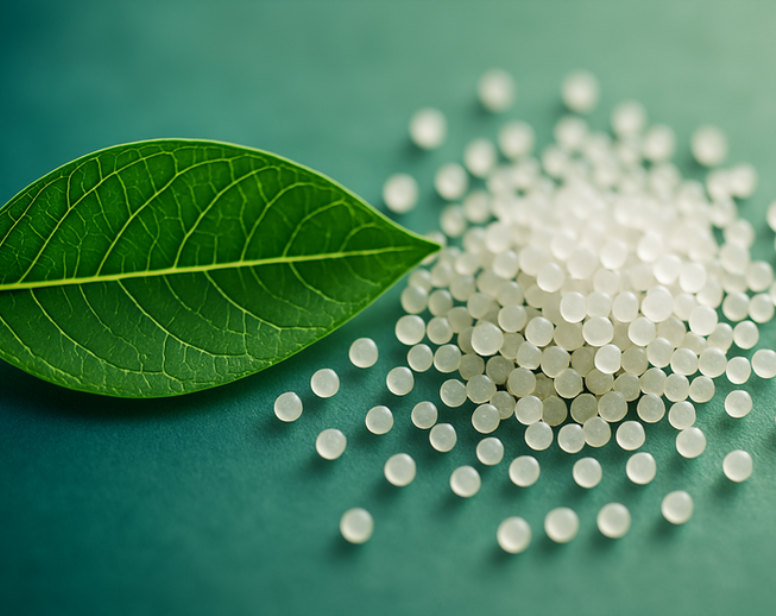
The versatility of these cellulose microbeads is a key differentiator. In the cosmetics industry, they can seamlessly replace plastic in formulations for rheology modifiers, sensory enhancers, and film formers, leveraging their spherical shape, smooth surfaces, and inherent stability. Their unique properties also translate to significant benefits in paints and coatings, offering improved elasticity, scratch resistance, the ability to form thicker layers, and increased solid content – all desirable attributes previously associated with plastic additives.
Beyond cosmetics and coatings, the hardness, porosity, and surface chemistry of Naturbeads’ material make it suitable for applications in glass packaging, adhesives, and even drilling fluids. The life sciences sector also stands to benefit significantly, with the biomaterial serving as a potential cell culture substrate and enzyme carrier for advancements in biocatalysis and vaccine development.
Navigating the Regulatory Landscape and Market Opportunities
The timing of Naturbeads’ expansion is particularly opportune, given the increasing global awareness of microplastic pollution and the proactive regulatory measures being implemented, especially within the European Union. The EU has already taken decisive steps to curb microplastic use, including a forthcoming ban on "rinse-off" cosmetics containing microplastic beads, scheduled for implementation next year. Furthermore, a ban on "leave-on" cosmetics that also contribute to microplastic pollution is slated for 2029, signaling a clear shift towards sustainable alternatives across the personal care sector.
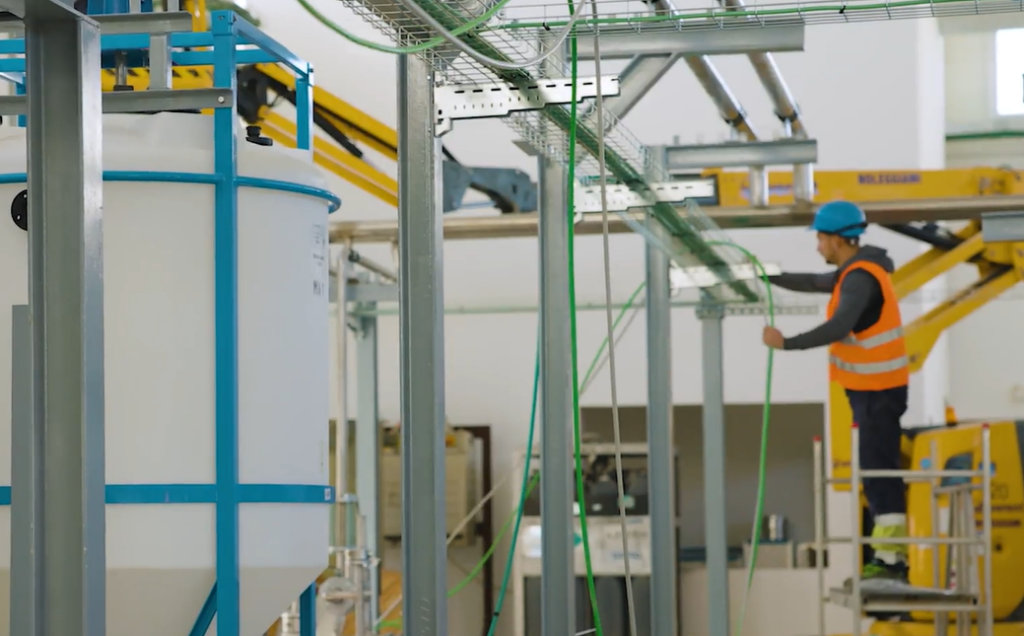
This evolving regulatory environment, coupled with growing consumer demand for eco-friendly products, is creating a fertile ground for innovative companies like Naturbeads. The company’s strategic decision to establish its first commercial plant in Lecce, Puglia, signifies a commitment to scaling up production to meet this anticipated surge in demand. At this facility, Naturbeads is not only validating its technology at an industrial scale but also meticulously optimizing its products and processes, and crucially, supplying its initial cohort of customers. In parallel, the company is actively designing a full-scale commercial plant to cater to the escalating global demand for bioplastics.
"We’ve already reached a key milestone by successfully starting production in our plant," Laudisio confirmed. "Our current focus is to complete the startup of different sections of the plant so that in June, we can ramp up production and start serving our customers around [the] world that are waiting for our product." This aggressive timeline indicates a strong confidence in their technology and a readiness to capture market share.
Expanding Horizons: Beyond Cellulose and Collaborative Innovations
Naturbeads’ technological platform demonstrates remarkable adaptability, extending beyond cellulose to encompass other biopolymers and even inorganic materials. This inherent flexibility opens doors for the development of novel encapsulated products and advanced biodegradable particles, positioning the company as a versatile solutions provider for a wide array of industries.
The company’s collaborative spirit is evident in its partnerships with key players across various sectors. Collaborations with industrial partner Chiral Vision have focused on developing and testing a platform of prototype carriers for enzyme immobilization. In the burgeoning field of cultivated meat, Naturbeads has partnered with UK-based Cellular Agriculture to test prototype carriers designed for cell attachment, proliferation, and differentiation. Furthermore, a promising collaboration with University College London and German AI startup Vitafluence is exploring the development of novel, thermally stable vaccine formulations utilizing Naturbeads’ cellulose microspheres. These partnerships highlight the company’s proactive engagement with the scientific and industrial communities, fostering innovation and accelerating the path to market for its advanced biomaterials.
A Wave of Cellulose Innovation
Naturbeads is not an isolated phenomenon in the burgeoning field of cellulose-based materials. Several other startups are also making significant strides and attracting substantial investment. Swiss firm Seprify recently raised 12.25 million Swiss francs (approximately $15.7 million) to scale its cellulose-based alternatives to titanium dioxide for use in the food, cosmetics, and coatings industries. Simultaneously, Finland’s Elea & Lili emerged from stealth mode with a €2.5 million (approximately $2.9 million) funding round to launch its cellulose alternative for diapers and agricultural applications. This trend signifies a broader market shift and a growing investor confidence in the potential of cellulose as a sustainable and high-performance material across diverse sectors.
The EU grant to Naturbeads represents a pivotal moment, not only for the company but also for the broader movement towards a circular economy and a reduction in plastic pollution. By providing the financial backing and strategic impetus for a new production facility in Italy, this funding will accelerate the availability of effective, bio-based microplastic alternatives, offering a tangible solution to one of the most pressing environmental challenges of our time. The success of Naturbeads and similar ventures will be crucial in shaping a future where industrial progress and environmental sustainability are not mutually exclusive.
