
The Director-General of the World Health Organization (WHO), Dr Tedros Adhanom Ghebreyesus, has completed the first day of a high-profile two-day state visit to the Hashemite Kingdom of Jordan, a mission aimed at reinforcing the strategic partnership between the global health body and one of the Middle East’s most pivotal healthcare hubs. The visit serves as a formal recognition of Jordan’s extensive efforts in advancing Universal Health Coverage (UHC), pioneering mental health integration, and maintaining a robust humanitarian response amid regional volatility. Central to the first day’s agenda was a high-level audience with His Majesty King Abdullah II, where the two leaders discussed the sustainability of health systems under the pressure of regional crises and the necessity of international solidarity in supporting Jordan’s unique role as a sanctuary for displaced populations.
Strategic Dialogue at the Royal Palace
The meeting between Dr Tedros and King Abdullah II underscored the intersection of national policy and global health security. Discussions focused on the "Medical Corridor" initiative, a humanitarian lifeline established under the King’s direction to facilitate the evacuation and treatment of critically ill and injured Palestinians from the Gaza Strip. Dr Tedros praised the King’s leadership, noting that Jordan’s proactive stance on health as a fundamental human right has set a benchmark for the region. The dialogue also touched upon the long-term integration of refugees into the national health framework, a feat that requires significant financial and technical support from the international community.
Jordan currently hosts one of the largest refugee populations per capita in the world. Dr Tedros expressed his profound gratitude to the King and the Jordanian people for their continued generosity, specifically highlighting the provision of comprehensive health services to over three million refugees, primarily from Syria and Palestine. This inclusivity is a cornerstone of Jordan’s approach to UHC, ensuring that legal status does not prevent access to essential life-saving care.
Humanitarian Action and the Medical Evacuation Corridor
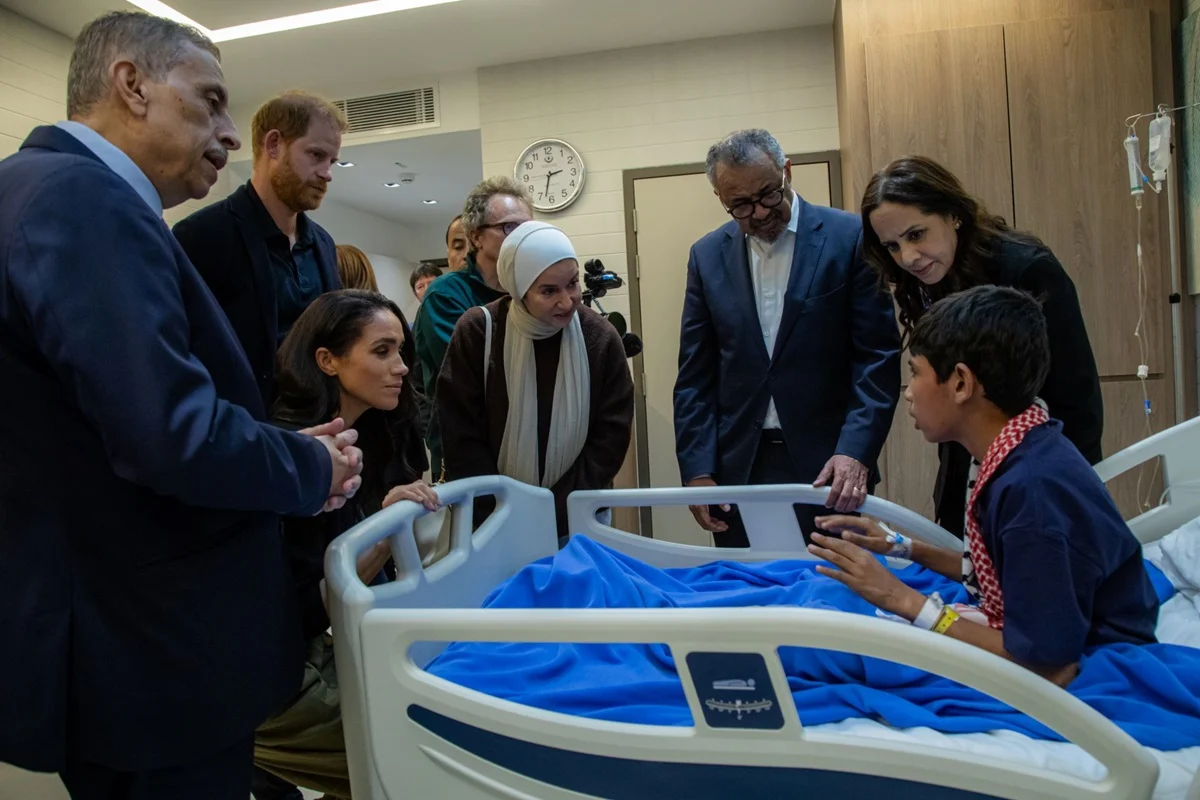
Following his meeting with the King, Dr Tedros visited a specialized hospital supported by the WHO that serves as a primary receiving point for children evacuated from Gaza. The visit provided a somber yet hopeful look at the frontline of humanitarian medicine. Dr Tedros met with young patients suffering from complex trauma, cancer, and war-related injuries, many of whom were evacuated through the Jordanian-led medical corridor.
The Director-General’s visit to the wards highlighted the technical challenges of medical evacuations in conflict zones, including the need for specialized pediatric oncology and orthopedic surgery. He commended the frontline health workers for their dedication, noting that the medical corridor is not merely a logistical route but a symbol of humanity’s resilience. The WHO has been instrumental in providing the necessary medical supplies, equipment, and training to ensure these facilities can handle the influx of high-acuity cases from neighboring conflict zones.
Mental Health Integration and the Archewell Partnership
A significant portion of the visit was dedicated to mental health, an area where Jordan has demonstrated global leadership through the integration of psychological services into primary healthcare. Dr Tedros was accompanied during several engagements by the Duke and Duchess of Sussex, Prince Harry and Meghan, who participated in their capacity as founders of Archewell Philanthropies. The Sussexes have been long-standing advocates for the WHO’s initiatives, having previously supported efforts ranging from COVID-19 vaccine equity to emergency mental health programs.
Prince Harry, speaking as an ally of the WHO’s mental health agenda, emphasized the critical need to destigmatize mental health issues, particularly for men, youth, and children living in emergency settings. The integration of mental health into routine care in Jordan is supported by the Director-General’s Special Initiative for Mental Health, which seeks to ensure that mental health services are accessible and affordable as part of the broader UHC framework.
In a joint statement, the Duke and Duchess of Sussex noted that mental health is fundamental to recovery and long-term peace in regions affected by crisis. Their presence signaled a growing trend of philanthropic engagement in technical health areas, bridging the gap between high-level policy and community-level awareness.
High-Level Multilateral Financing Meeting
To address the economic realities of Jordan’s health commitments, Dr Tedros convened a meeting with a coalition of health partners, donor countries, United Nations agencies, and philanthropic organizations. The focus was on "health system strengthening"—the process of improving the underlying infrastructure, workforce, and financing mechanisms that allow a country to respond to both routine needs and emergencies.
The Director-General emphasized that while Jordan’s leadership is exemplary, the financial burden of hosting millions of refugees and maintaining a corridor for Gaza cannot be borne by a single nation. The meeting sought to align donor priorities with the Jordanian Ministry of Health’s strategic goals, particularly in scaling up mental health services and upgrading primary healthcare centers. Representatives from various UN agencies reaffirmed their commitment to Jordan, recognizing that the country’s stability is a linchpin for regional health security.
Chronology of the State Visit
The visit is structured to cover the full spectrum of the Jordanian health landscape, from high-level diplomacy to clinical service delivery:
- Day 1 (Morning): Arrival and official reception. Meeting with His Majesty King Abdullah II at the Royal Palace to discuss regional health security and the Gaza Medical Corridor.
- Day 1 (Afternoon): Visit to the WHO-supported pediatric hospital. Interaction with evacuated patients from Gaza and frontline medical staff. Bilateral meeting with the Jordanian Minister of Health to discuss UHC and the integration of the "Special Initiative for Mental Health."
- Day 1 (Evening): High-level roundtable with international donors and UN partners to secure sustainable financing for Jordan’s health infrastructure.
- Day 2 (Morning – Projected): Visit to the National Center for Rehabilitation of Addicts to inspect integrated medical and social service models.
- Day 2 (Mid-day – Projected): Engagement with the Jordanian Hashemite Fund for Human Development (JOHUD) to discuss community-led health initiatives and women’s empowerment in the health sector.
- Day 2 (Afternoon – Projected): Visit to the King Hussein Cancer Center (KHCC), a leading regional institution for oncology, to discuss advances in cancer treatment and regional medical cooperation.
Supporting Data: The Impact of the Refugee Crisis on Jordanian Health
The enrichment of the health sector in Jordan is better understood through the lens of recent data. According to UNHCR and the Jordanian Ministry of Health, the country’s population has nearly doubled in the last two decades, largely due to successive waves of refugees.
- Refugee Demographics: Jordan hosts approximately 660,000 registered Syrian refugees, though the government estimates the actual number is closer to 1.3 million. Additionally, the country supports a massive population of Palestinian refugees under the mandate of UNRWA.
- Healthcare Spending: Jordan allocates approximately 8-9% of its GDP to healthcare, one of the highest proportions in the region. However, the cost of providing services to non-nationals is estimated to exceed hundreds of millions of dollars annually, creating a significant budget deficit in the health sector.
- Mental Health Gap: Prior to the WHO Special Initiative, mental health services were largely centralized in psychiatric hospitals. Since the integration into primary care, the number of primary health centers providing mental health services has increased by over 40%, significantly reducing the "treatment gap" for common disorders like depression and PTSD.
Professional Analysis of Implications
The state visit of Dr Tedros to Jordan carries significant weight for the future of global health diplomacy. By highlighting Jordan as a model for UHC and mental health integration, the WHO is signaling to other middle-income countries that a primary healthcare-led approach is viable even under extreme external pressures.
Furthermore, the involvement of Archewell Philanthropies suggests a strategic shift in how the WHO leverages celebrity advocacy. Rather than focusing solely on fundraising, the partnership with the Duke and Duchess of Sussex focuses on "visibility and hope," aiming to change the cultural narrative surrounding mental health in the Middle East—a region where stigma often prevents individuals from seeking help.
The visit also serves as a subtle but firm call to the international community. As the conflict in Gaza continues to place unprecedented strain on regional resources, the WHO is positioning Jordan as the essential "hub" for humanitarian health action. The success of the Medical Corridor initiative depends on sustained international funding; without it, the burden on Jordan’s domestic health system could become unsustainable, potentially rolling back the progress made toward Universal Health Coverage.
Conclusion and Future Outlook
As Dr Tedros prepares for the second day of his visit, the focus will shift from emergency response to long-term specialized care and rehabilitation. The scheduled visits to the National Center for Rehabilitation and the King Hussein Cancer Center will showcase Jordan’s technical sophistication and its ability to provide world-class care in niche medical fields.
The state visit reinforces a clear message: health is not merely a domestic issue but a central pillar of foreign policy and regional stability. Through the partnership between the WHO, the Jordanian government, and global philanthropies, the visit aims to ensure that the "Health for All" mission remains a reality for both Jordanians and the millions of vulnerable individuals who have found refuge within its borders. The conclusion of this visit is expected to result in renewed funding commitments and a strengthened framework for regional medical evacuations, cementing Jordan’s role as a leader in global humanitarian health.
