
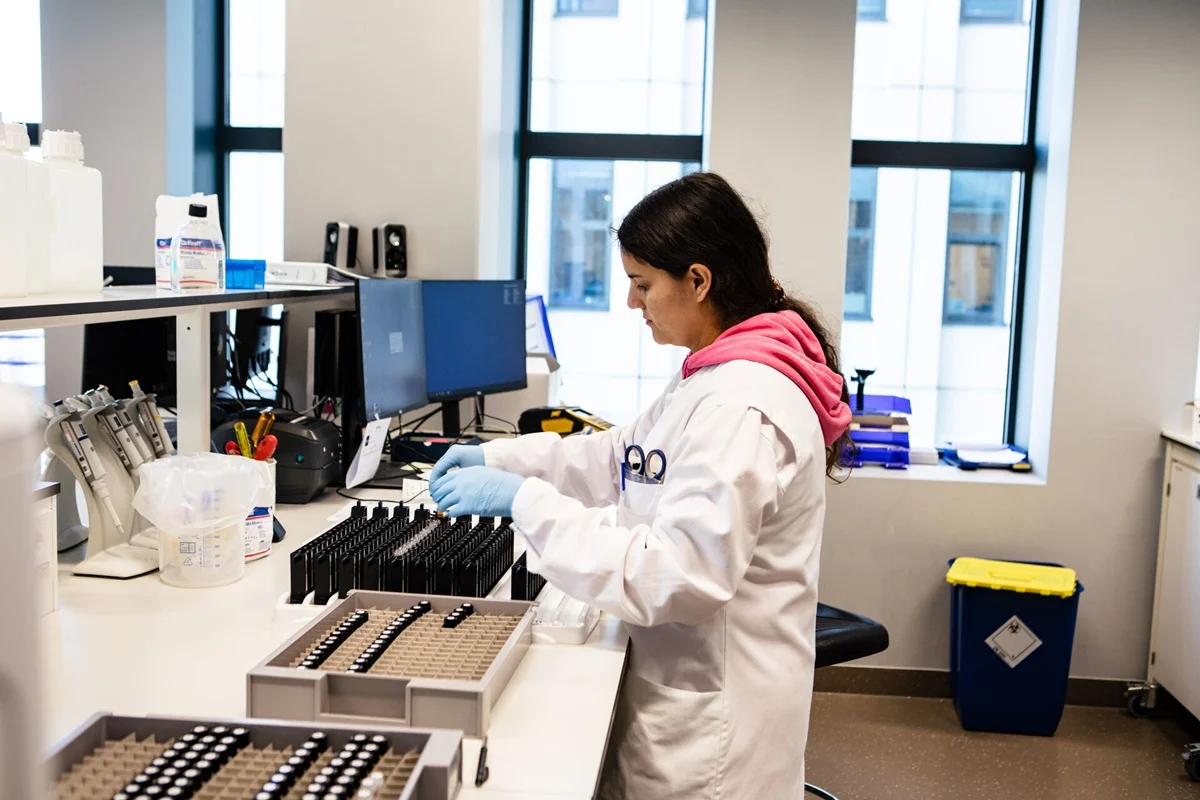
The World Health Organization (WHO) has officially inaugurated its 2026 World Health Day campaign, issuing a global call to action for governments, institutions, and citizens to prioritize scientific integrity and international cooperation. Under the theme “Together for health. Stand with science,” the organization is marking the 78th anniversary of its founding on April 7, 1948, by launching a comprehensive, year-long initiative aimed at reinforcing the role of rigorous inquiry in public health policy. The campaign arrives at a critical juncture for global health, as the international community navigates the complex intersection of post-pandemic recovery, accelerating climate change, and an increasingly volatile geopolitical landscape.
By centering the 2026 observance on the synergy between collective action and scientific advancement, the WHO seeks to address the growing threats of misinformation and the erosion of public trust in medical institutions. The campaign emphasizes that the monumental gains in human longevity and quality of life achieved over the last century were not accidental but were the direct result of cross-border collaboration and a steadfast commitment to the scientific method. As the organization transitions into its late seventies, it is positioning science as the primary "engine" for navigating the health challenges of the 21st century.
A Century of Transformation: The Impact of Scientific Progress
The historical context of World Health Day serves as a reminder of the transformative power of institutionalized health cooperation. Since the WHO’s inception in the mid-20th century, global health metrics have undergone a radical shift. The organization notes that human health has been more profoundly altered in the past 100 years than in any previous millennium. Much of this progress is attributed to the "golden age" of medical innovation, which saw the development of antibiotics, the eradication of smallpox, and the creation of life-saving vaccines for dozens of debilitating diseases.
Current data highlights the scale of these successes. Since the turn of the millennium, the global maternal mortality rate has declined by more than 40%. Even more striking is the reduction in child mortality; deaths among children under the age of five have been slashed by over 50% since the year 2000. These statistics represent millions of lives saved through improved obstetric care, better nutrition, and expanded immunization programs. Furthermore, conditions that were once considered death sentences—such as HIV/AIDS, certain forms of cancer, and chronic hypertension—have been transformed into manageable chronic conditions through advances in pharmacology, genomic sequencing, and diagnostic technology.
Dr. Tedros Adhanom Ghebreyesus, Director-General of the WHO, underscored the importance of recognizing these achievements as the foundation for future work. “Science is one of humanity’s most powerful tools for protecting and improving health,” Dr. Tedros stated during the launch event. “People in every country live longer and healthier lives on average today than their ancestors did, thanks to the power of science. Vaccines, penicillin, germ theory, MRI machines, and the mapping of the human genome are just some of the achievements that science has delivered that have saved lives and transformed health for billions of people.”
Rising Threats and the Need for Resilient Systems
Despite these historic gains, the WHO warns that the current global health landscape is fraught with emerging risks. The 2026 campaign is designed to address a "triple threat" of environmental degradation, geopolitical instability, and shifting demographics. Climate change, in particular, is now recognized as a primary driver of health inequality, exacerbating respiratory illnesses, spreading vector-borne diseases into new latitudes, and threatening food security through extreme weather events.
Simultaneously, the world is witnessing a resurgence of infectious diseases with epidemic and pandemic potential, often fueled by the encroachment of human activity into wild habitats. Strained health systems, many of which are still reeling from the structural and financial impacts of the COVID-19 pandemic, are struggling to maintain routine services while preparing for future outbreaks. Geopolitical tensions further complicate these efforts, as conflicts disrupt supply chains for essential medicines and lead to the displacement of millions, creating fertile ground for health crises.
To counter these threats, thousands of scientists globally are working in tandem with the WHO to accelerate research and develop the policies and tools necessary to protect modern communities. The 2026 theme serves as a reminder that these challenges cannot be solved in isolation. The organization asserts that a fragmented approach to health is a failed approach, advocating instead for a "One Health" framework that recognizes the interconnectedness of human, animal, and environmental health.
The Lyon One Health Summit and the Global Forum
A cornerstone of the World Health Day 2026 activities is the One Health Summit, hosted in Lyon, France, from April 5 to 7. Convened by the WHO in partnership with the G7 Presidency of France, the summit brings together Heads of State, leading researchers, and community advocates. The primary objective is to formalize a coordinated global strategy to mitigate health risks at the human-animal-environment interface. Lyon, a historic hub for biomedical research, provides a symbolic setting for this high-level diplomatic and scientific exchange.
Immediately following the summit, the WHO will host the Global Forum of its Collaborating Centres network from April 7 to 9. This network represents a massive intellectual resource, comprising over 800 academic and research institutions from more than 80 countries. These centers are essential to the WHO’s operational capacity, providing the technical assistance, data collection, and capacity-building work required to implement health standards globally. The forum will focus on translating theoretical research into practical, equitable healthcare solutions for low- and middle-income countries.
Dr. Sylvie Briand, WHO Chief Scientist, highlighted the necessity of these forums in an era of increasing skepticism. “Science transforms uncertainty into understanding and reveals the pathways to protect and heal our communities,” Dr. Briand remarked. “Without the clarity of rigorous scientific inquiry, we risk being led by bias and misconception—and too often toward treatments that fail us or even place us in harm’s way. Today, we must stand together with science so that our collaboration is sustained, supported, and enhanced for the better health of generations to come.”
Chronology of Global Health Milestones: 1948–2026
To understand the 2026 theme, it is necessary to look at the timeline of scientific and organizational milestones that have shaped the modern world:
- 1948: The WHO Constitution comes into force on April 7, establishing a specialized agency of the United Nations dedicated to international public health.
- 1955: The launch of the Global Malaria Eradication Programme, which, while not fully eradicating the disease, led to its elimination in many parts of the world.
- 1977: The last naturally occurring case of smallpox is recorded in Somalia, leading to the 1980 declaration of smallpox eradication—one of science’s greatest triumphs.
- 1988: The Global Polio Eradication Initiative is launched. Since then, polio cases have decreased by over 99%.
- 2003: The WHO Framework Convention on Tobacco Control is adopted, marking the first global public health treaty.
- 2020-2023: The global response to COVID-19 sees the fastest vaccine development in human history, demonstrating the power of modern biotechnology and international data sharing.
- 2026: The "Stand with Science" campaign is launched to combat the rising tide of anti-science sentiment and to address the health impacts of the climate crisis.
Analysis of Implications: Why the Theme Matters Now
The decision to focus on "Standing with Science" in 2026 is a calculated response to the socio-political climate of the mid-2020s. Public health experts note that the democratization of information through digital platforms has been a double-edged sword. While it has allowed for the rapid dissemination of life-saving health advice, it has also facilitated the spread of "infodemics"—the proliferation of false or misleading information that can lead to vaccine hesitancy and the rejection of proven medical interventions.
By advocating for science, the WHO is not merely promoting laboratory research but is calling for the application of evidence-based decision-making in governance. When governments align their policies with scientific consensus, the results are measurable: more efficient healthcare spending, higher immunization coverage, and more resilient infrastructure. Conversely, when science is sidelined for political or ideological reasons, the consequences often manifest in preventable outbreaks and increased mortality rates.
Furthermore, the emphasis on "Together" highlights the necessity of health equity. Scientific breakthroughs are only effective if they reach the populations that need them most. The WHO continues to emphasize that the fruits of scientific labor—such as mRNA technology or new malaria vaccines—must be treated as global public goods rather than exclusive commodities.
Future Outlook: Safeguarding Generations to Come
As the year-long campaign unfolds, the WHO will continue to work with its partners to generate and translate evidence across a wide range of health priorities. This includes addressing the "silent pandemics" of mental health disorders and antimicrobial resistance (AMR), both of which require urgent scientific innovation and global policy shifts.
The organization’s call to action extends beyond the halls of government. It is a call to individuals to make evidence-based decisions in their daily lives, from nutrition and exercise to the acceptance of preventive screenings. The message of World Health Day 2026 is clear: the future of global health depends on a renewed social contract where science is supported as a public good and collaboration is recognized as the only viable path forward.
In conclusion, the 2026 campaign serves as both a celebration of past victories and a sobering reminder of the work ahead. By standing with science, the WHO and its global partners aim to build a world where health is not a privilege determined by geography or wealth, but a fundamental human right protected by the best knowledge humanity has to offer. The success of this initiative will be measured not just in the policies enacted in 2026, but in the health and resilience of generations yet to be born.
