
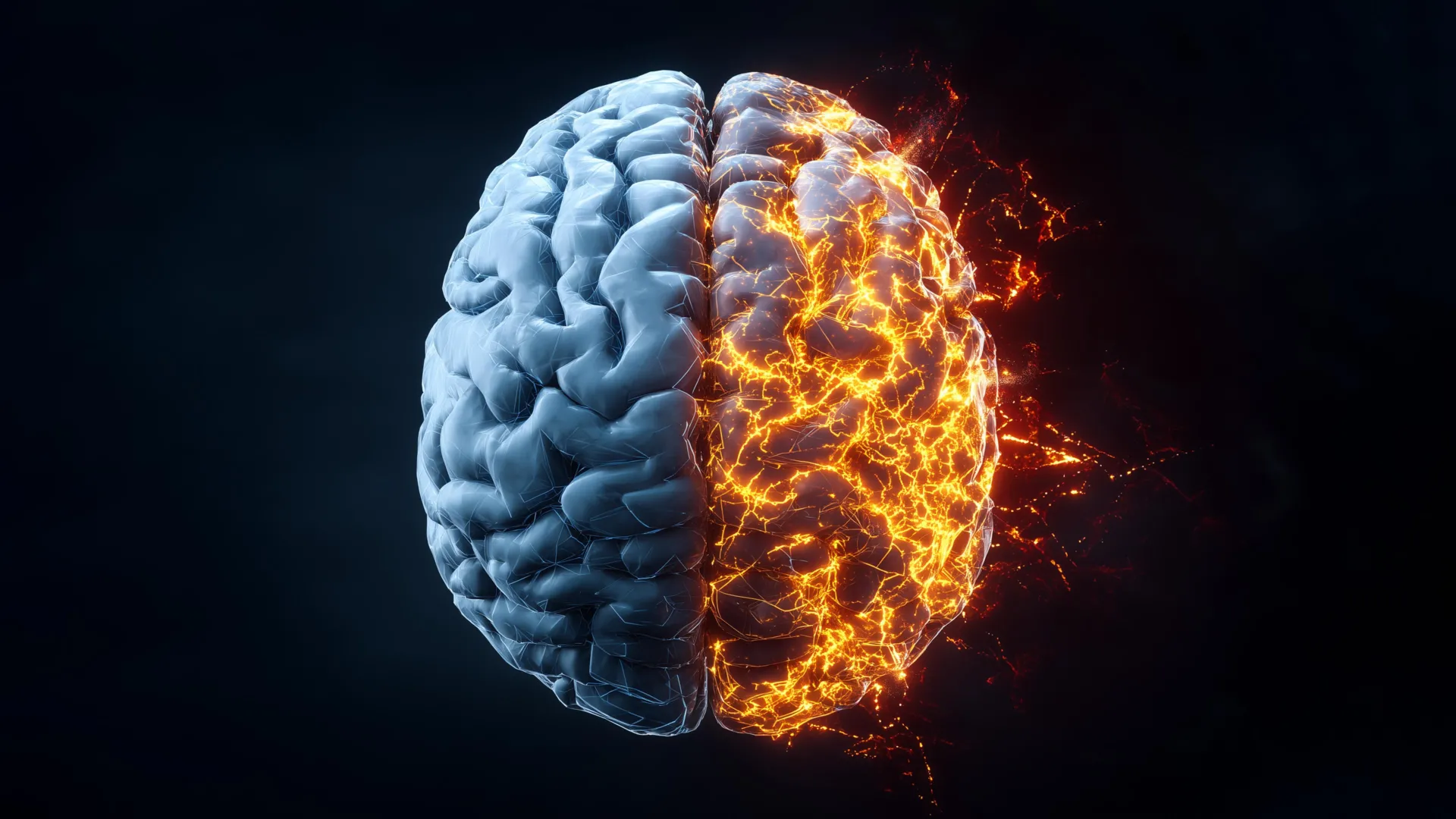
Researchers at Rice University have achieved a groundbreaking milestone in Alzheimer’s research, producing the first comprehensive, label-free molecular atlas of the disease within an animal model. This pioneering work, leveraging advanced imaging and machine learning, offers an unprecedentedly detailed view of how Alzheimer’s disease initiates and progresses through the brain. The significance of this discovery is underscored by the devastating impact of Alzheimer’s, which tragically claims more lives annually than breast and prostate cancers combined, highlighting the urgent need for a deeper understanding of its underlying mechanisms.
Unlocking the Chemical Landscape of Alzheimer’s
The study, published in the prestigious journal ACS Applied Materials and Interfaces, utilized a sophisticated hyperspectral Raman imaging technique in conjunction with advanced machine learning algorithms. This innovative approach allowed the team to examine brain tissue from both healthy and Alzheimer’s-affected animal models, meticulously revealing the intricate molecular changes associated with the disease. Their findings challenge previous assumptions, demonstrating that the chemical alterations characteristic of Alzheimer’s are not confined solely to amyloid plaques, which have long been a primary focus of research. Instead, these chemical shifts are distributed throughout the brain in complex, non-uniform patterns, suggesting a more diffuse and multifaceted pathological process.
Hyperspectral Raman Imaging: A Window into Molecular Detail
To capture these subtle yet critical molecular shifts, the Rice University scientists employed hyperspectral Raman imaging. This advanced spectroscopic method uses a precisely controlled laser to excite molecules within the tissue. As the molecules return to their ground state, they emit light at specific wavelengths, creating a unique "chemical fingerprint" that identifies each molecule.
"Traditional Raman spectroscopy provides a single point of chemical information at a given molecular site," explained Ziyang Wang, an electrical and computer engineering doctoral student at Rice and a first author of the study. "Our hyperspectral Raman imaging technique, however, repeats this measurement thousands of times across an entire tissue slice. This allows us to construct a comprehensive map, revealing the intricate variations in chemical composition across different regions of the brain."
The research team meticulously scanned entire brain samples, section by section, compiling tens of thousands of overlapping measurements. This painstaking process enabled them to construct high-resolution molecular maps of both healthy and diseased brain tissue. A key advantage of this methodology is its "label-free" nature. Unlike conventional techniques that require the addition of dyes, fluorescent proteins, or molecular tags to highlight specific structures, this method observed the brain in its natural state.
"This means we were able to observe the brain as it is, capturing a complete and unaltered portrait of its chemical makeup," Wang emphasized. "We believe this unbiased approach is more conducive to discovering novel disease-related changes that might otherwise be overlooked."
Machine Learning Deciphers Uneven Alzheimer’s Pathology
The sheer volume of data generated by the hyperspectral Raman imaging process presented a significant analytical challenge. To address this, the researchers turned to the power of machine learning (ML). Initially, they employed unsupervised ML algorithms, which allowed the data to reveal inherent patterns in the chemical signals without any preconceived notions or assumptions. These models independently sorted tissue samples based purely on their molecular characteristics. Subsequently, the team utilized supervised ML, training algorithms to differentiate between samples exhibiting Alzheimer’s-related chemistry and those from healthy controls. This crucial step helped quantify the extent to which different brain regions displayed these disease-associated chemical signatures.
"Our analysis revealed that the changes induced by Alzheimer’s disease are not uniformly distributed across the brain," Wang stated. "We observed distinct regions exhibiting profound chemical alterations, while others remained relatively unaffected. This uneven distribution pattern may offer valuable insights into why Alzheimer’s symptoms manifest gradually and why therapeutic strategies that target a single pathological feature have often met with limited success."
Metabolic Disruptions Extend Beyond Protein Aggregation
Beyond the well-documented accumulation of amyloid-beta and tau proteins, the study identified broader metabolic discrepancies between healthy and Alzheimer’s-affected brains. Levels of cholesterol and glycogen, crucial for cellular structure and energy supply respectively, showed significant variations across different brain regions. The most pronounced differences were observed in areas vital for memory formation and retrieval, specifically the hippocampus and the cortex.
"Cholesterol plays a critical role in maintaining the structural integrity of brain cells, while glycogen serves as a readily available local energy reserve," explained Shengxi Huang, an associate professor of electrical and computer engineering and materials science and nanoengineering at Rice, and the corresponding author of the study. "Collectively, these findings lend strong support to the emerging understanding that Alzheimer’s disease involves widespread disruptions in brain structure and energy homeostasis, extending beyond just protein aggregation and misfolding." Professor Huang is also affiliated with esteemed research centers at Rice, including the Ken Kennedy Institute, the Rice Advanced Materials Institute, and the Smalley-Curl Institute.
A Shift in Perspective: From Localized to Global Understanding
The genesis of this ambitious project stemmed from ongoing dialogues among researchers seeking novel methodologies to study the complex pathology of Alzheimer’s disease.
"Initially, our investigations were focused on analyzing only small, localized areas of brain tissue," Wang recalled. "However, a pivotal question arose: what if we could map the entire brain and gain a far more expansive perspective? It took considerable effort, involving multiple rounds of experimentation and iterative refinement, before the imaging acquisition and data analysis techniques were successfully integrated and optimized."
The culmination of this effort was the assembly of the complete chemical map of the Alzheimer’s brain. The impact of this integrated view was immediate and profound.
"Patterns emerged that had simply not been visible with conventional imaging techniques," Wang shared. "Witnessing those results was deeply gratifying. It felt akin to uncovering a hidden layer of information that had always been present but remained inaccessible until the appropriate analytical tools were developed."
Implications for Diagnosis and Treatment
By providing the first detailed, dye-free chemical maps of the Alzheimer’s brain in an animal model, this groundbreaking research offers a significantly more comprehensive understanding of the disease’s progression. The team expresses hope that these findings will pave the way for earlier and more accurate diagnostic methods, as well as the development of more effective strategies to slow or even halt the relentless march of Alzheimer’s pathology. The ability to visualize the diffuse and complex chemical alterations across the entire brain could fundamentally change how researchers approach therapeutic interventions, moving beyond a singular focus on amyloid plaques to address the broader metabolic and structural dysfunctions that characterize the disease.
This research was generously supported by grants from the National Science Foundation (awards #2246564 and #1934977), the National Institutes of Health (award #1R01AG077016), and the Welch Foundation (award #C2144). The collaborative effort and sustained funding have been instrumental in advancing this critical area of neurodegenerative disease research. The successful development of label-free molecular atlases, enabled by cutting-edge imaging and AI, represents a significant leap forward in our quest to understand and ultimately conquer Alzheimer’s disease.
