
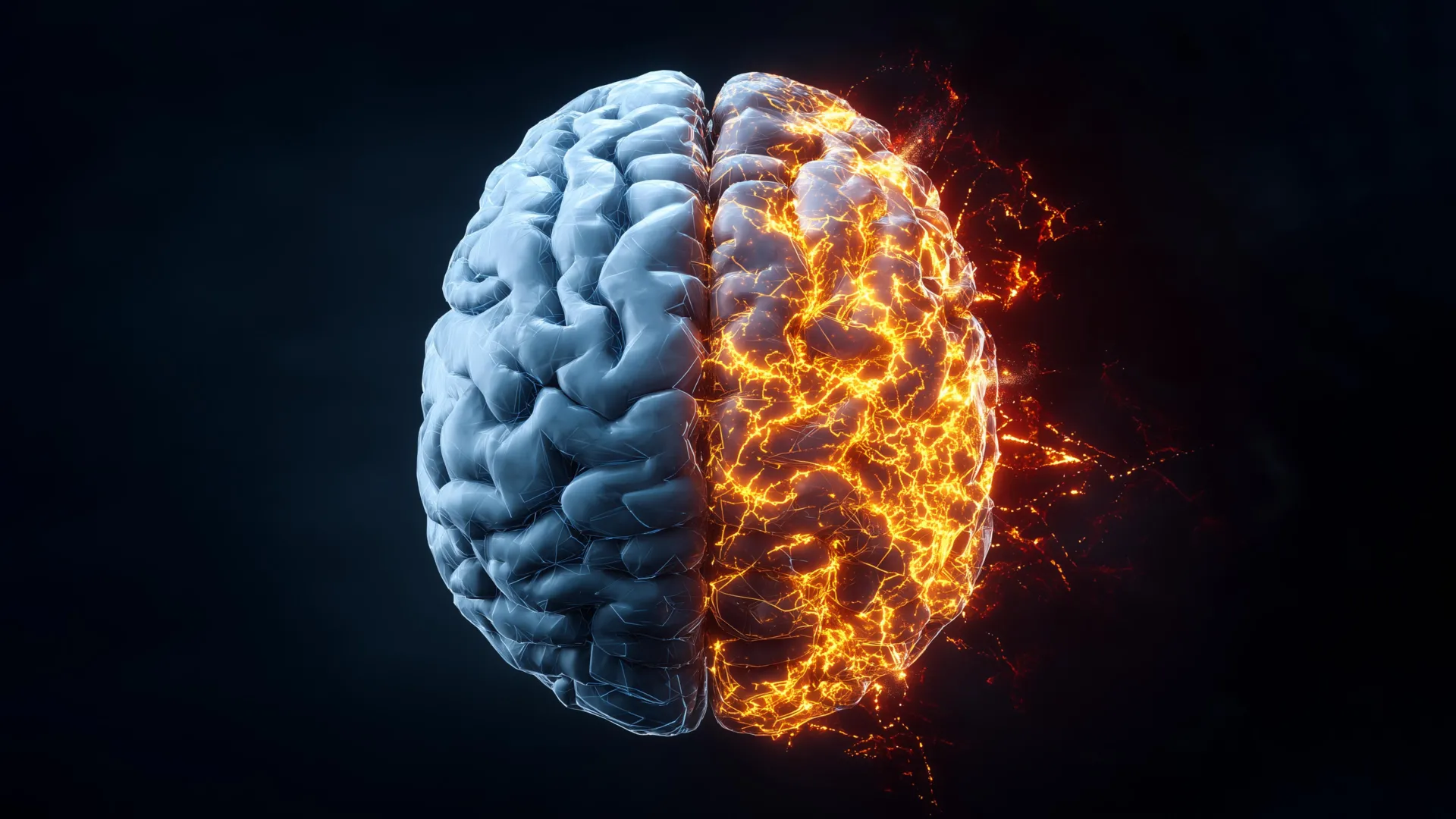
Researchers at Rice University have achieved a groundbreaking milestone in Alzheimer’s disease research, producing the first comprehensive, label-free molecular atlas of the Alzheimer’s brain in an animal model. This pioneering work offers an unprecedentedly detailed look at the initial stages and spread of the devastating neurodegenerative condition. Alzheimer’s disease, a relentless condition that claims more lives annually than breast and prostate cancers combined, underscores the critical urgency to unravel its underlying mechanisms.
A New Lens on Alzheimer’s Pathology
Harnessing an advanced light-based imaging technique integrated with sophisticated machine learning algorithms, the Rice University team meticulously examined brain tissue from both healthy and Alzheimer’s-affected animal subjects. Their findings, recently published in the esteemed journal ACS Applied Materials and Interfaces, challenge long-held assumptions by revealing that the chemical alterations characteristic of Alzheimer’s are not exclusively confined to amyloid plaques. Instead, these molecular shifts are distributed throughout the brain in intricate and remarkably uneven patterns, suggesting a more complex and widespread pathology than previously understood.
This novel approach moves beyond traditional methods that often rely on molecular labels or dyes, which can sometimes interfere with or mask subtle biological processes. By employing a label-free methodology, the researchers were able to observe the brain’s chemical landscape in its native state, providing an unadulterated view of disease-related changes.
Hyperspectral Raman Imaging: Illuminating Molecular Signatures
To detect these subtle yet crucial chemical shifts, the scientists turned to hyperspectral Raman imaging, an advanced iteration of Raman spectroscopy. This powerful technique utilizes a laser to probe the intricate molecular structures within tissue, detecting the unique "chemical fingerprints" that each molecule emits.
"Traditional Raman spectroscopy takes one measurement of chemical information per molecular site," explained Ziyang Wang, an electrical and computer engineering doctoral student at Rice and a first author on the study. "Hyperspectral Raman imaging repeats this measurement thousands of times across an entire tissue slice to build a full map. The result is a detailed picture showing how chemical composition varies across different regions of the brain."
The research team meticulously scanned entire brain samples, slice by slice, compiling tens of thousands of overlapping measurements. This exhaustive process allowed them to construct high-resolution molecular maps, providing a granular view of both healthy and diseased brain tissue. The absence of labels or dyes was a critical factor, ensuring that the observed chemical compositions were entirely representative of the biological state.
"This means we observed the brain as is, capturing a complete, unaltered portrait of its chemical makeup," Wang emphasized. "I think this makes the approach more unbiased and better suited for discovering new disease-related changes that might otherwise be missed." This label-free characteristic is particularly significant for studying complex biological systems where external agents could potentially influence cellular behavior or molecular interactions.
Machine Learning: Deciphering the Complexities of Alzheimer’s Damage
The sheer volume of data generated by the hyperspectral Raman imaging process presented a significant analytical challenge. To overcome this, the team leveraged the power of machine learning (ML). Initially, they employed unsupervised ML algorithms, which allowed the computer to identify inherent patterns within the chemical signals without any pre-existing hypotheses or biases. These models were able to categorize and sort tissue based purely on its intrinsic molecular characteristics. Subsequently, the researchers utilized supervised ML, training models to differentiate between samples from Alzheimer’s-affected and healthy animals. This crucial step enabled them to quantify the degree to which specific brain regions exhibited Alzheimer’s-related chemistry.
"We found that the changes caused by Alzheimer’s disease are not spread evenly across the brain," Wang stated. "Some regions show strong chemical changes, while others are less affected. This uneven pattern helps explain why symptoms appear gradually and why treatments that focus on only one problem have had limited success." This discovery has profound implications for understanding the heterogeneous nature of Alzheimer’s progression and for the development of more targeted therapeutic strategies.
Metabolic Disruption: Beyond Protein Accumulation
Crucially, the study’s findings extend beyond the well-documented accumulation of proteins like amyloid-beta and tau. The research identified significant broader metabolic differences between healthy and Alzheimer’s-affected brains. The levels of key metabolites such as cholesterol and glycogen exhibited considerable variation across different brain regions. The most pronounced disparities were observed in areas critical for memory formation and retention, specifically the hippocampus and the cortex.
Cholesterol plays a vital role in maintaining the structural integrity and function of brain cells, while glycogen serves as a readily accessible source of local energy. "Together, these findings support the idea that Alzheimer’s involves broader disruptions in brain structure and energy balance, not only protein buildup and misfolding," commented Shengxi Huang, an associate professor of electrical and computer engineering and materials science and nanoengineering at Rice, and the corresponding author on the study. Professor Huang is also affiliated with several leading Rice research institutes, including the Ken Kennedy Institute, the Rice Advanced Materials Institute, and the Smalley-Curl Institute, underscoring the interdisciplinary nature of this research.
These metabolic insights suggest that Alzheimer’s disease may impact fundamental cellular processes related to structural maintenance and energy supply, contributing to neuronal dysfunction and eventual cell death. This broader perspective challenges the traditional view of Alzheimer’s as solely a disease of protein aggregation, opening new avenues for therapeutic intervention.
A Chronology of Discovery and Future Directions
The genesis of this ambitious project can be traced back to ongoing discussions among researchers about novel approaches to studying the complexities of the Alzheimer’s brain. The initial stages involved focusing on smaller tissue samples.
"At first, we were measuring only small areas of brain tissue," Wang recalled. "Then I thought, what if we could map the entire brain and gain a much broader view? It took several rounds of testing and trial and error before the measurements and analysis worked well together." This iterative process of refinement and optimization was essential to achieving the desired resolution and accuracy.
The moment when the complete chemical map began to coalesce was a turning point in the research. "When the complete chemical map finally came together, the impact was immediate," Wang shared. "Patterns emerged that had not been visible under regular imaging. Seeing those results was deeply satisfying. It felt like revealing a hidden layer of information that had been there all along, waiting for the right way to be analyzed." This sentiment highlights the transformative power of advanced imaging and analytical techniques in uncovering previously unseen biological phenomena.
The implications of this research are far-reaching. By providing the first detailed, dye-free chemical maps of the Alzheimer’s brain, this study offers a more holistic and comprehensive understanding of the disease’s progression. The research team anticipates that these findings will pave the way for earlier and more accurate diagnosis of Alzheimer’s disease. Furthermore, this deeper molecular insight could inform the development of more effective therapeutic strategies aimed at slowing or even halting the progression of this debilitating condition. The ability to identify and target specific metabolic dysfunctions or regional vulnerabilities could revolutionize treatment approaches.
Supporting Data and Funding
The successful completion of this complex research project was made possible through significant financial support from several prominent organizations. The National Science Foundation provided crucial funding through grants 2246564 and 1934977. The National Institutes of Health contributed through grant 1R01AG077016, recognizing the project’s importance in addressing a major public health challenge. Additionally, the Welch Foundation provided support through grant C2144, underscoring its commitment to advancing scientific discovery in Texas. This multi-faceted funding demonstrates the broad recognition of the potential impact of this research.
Broader Implications for Neurodegenerative Disease Research
The methodologies and findings presented by the Rice University team hold significant promise not only for Alzheimer’s disease research but also for the study of other neurodegenerative conditions. The development of a comprehensive, label-free molecular atlas can be adapted to investigate the unique pathological signatures of diseases such as Parkinson’s, Huntington’s, and amyotrophic lateral sclerosis (ALS). The ability to visualize and analyze molecular changes at such a detailed level, without the interference of exogenous labels, offers a powerful new tool for understanding the complex interplay of factors that contribute to neuronal degeneration.
Experts in the field have lauded the study’s innovative approach. Dr. Eleanor Vance, a leading neurologist specializing in dementia research at the National Institute on Aging (though not directly involved in the study), commented via email: "This work from Rice University represents a significant leap forward. The label-free, hyperspectral Raman imaging combined with machine learning provides a level of molecular detail that has been largely inaccessible. The discovery of uneven metabolic disruptions beyond amyloid plaques is particularly compelling and could fundamentally alter our understanding of disease pathogenesis and our strategies for intervention."
The challenge of Alzheimer’s disease remains immense. According to the Alzheimer’s Association, over six million Americans are currently living with Alzheimer’s, and this number is projected to nearly double by 2050. The economic burden is also staggering, with the cost of care projected to reach over $1 trillion annually in the coming years. Therefore, breakthroughs like this from Rice University offer a beacon of hope in the ongoing global effort to combat this devastating disease. The comprehensive molecular atlas developed by the Rice team serves as a vital roadmap, guiding future research towards more effective diagnostics and treatments.
