
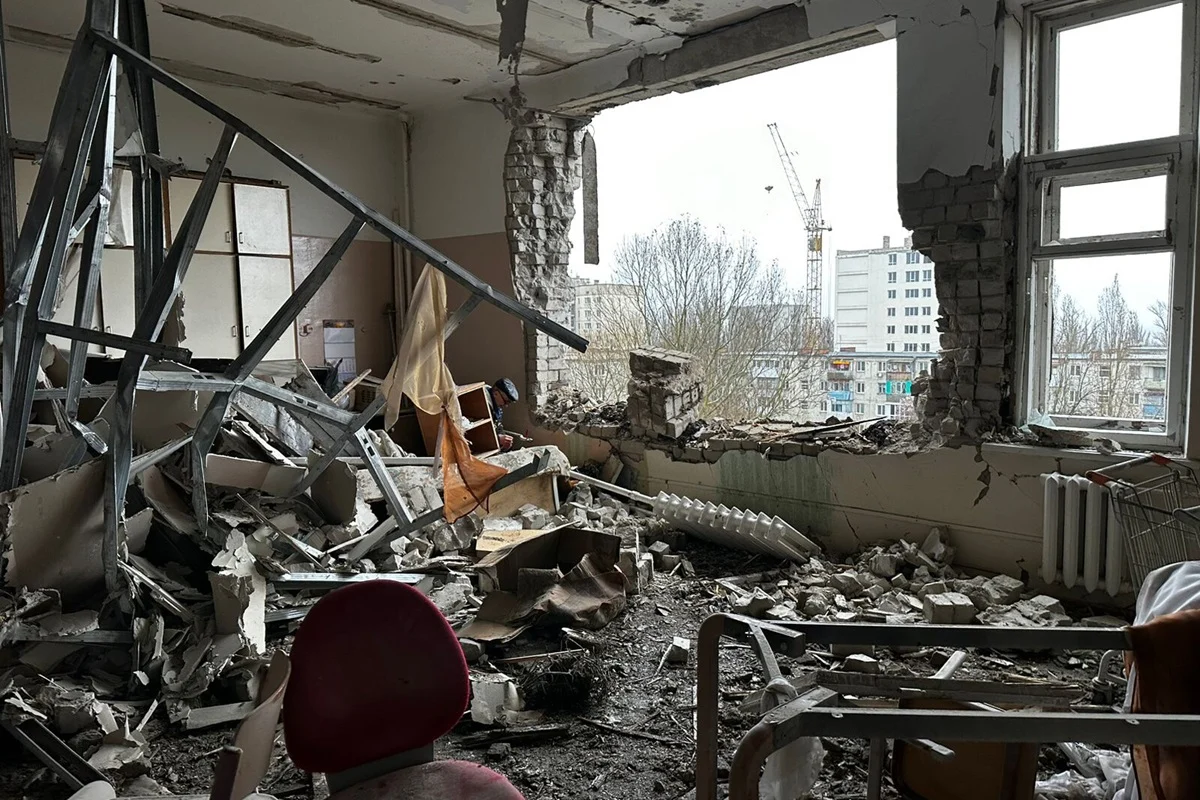
As the full-scale invasion of Ukraine enters its fifth year, the nation’s healthcare system is facing its most severe trial to date, marked by a nearly 20% surge in targeted attacks on medical facilities in 2025 compared to the previous year. Data released by the World Health Organization (WHO) reveals a harrowing landscape where the sanctity of medical care has been systematically eroded. Since the beginning of the full-scale conflict on February 24, 2022, the WHO has documented at least 2,881 verified attacks on healthcare services in Ukraine. these incidents have not only claimed the lives of medical professionals and patients but have also decimated the infrastructure required to sustain a nation under siege, including hospitals, ambulances, and vital medical warehouses.
The escalation in 2025 represents a critical inflection point in the conflict. While the earlier years of the war were characterized by rapid territorial shifts and acute trauma, the current phase has evolved into a war of attrition where civilian infrastructure—specifically the power grid and the healthcare supply chain—has become a primary theater of impact. The consequences are no longer confined to the battlefield; they have permeated every facet of Ukrainian life, creating a public health crisis that experts warn could resonate for generations.
A Chronology of Escalation: From Invasion to the 2026 Energy Crisis
The trajectory of the war’s impact on healthcare has followed a devastating timeline. In the initial months of 2022, the world witnessed the destruction of maternity wards and primary care centers in cities like Mariupol. By 2023 and 2024, the strategy shifted toward broader strikes on dual-use infrastructure. However, 2025 marked a definitive and more aggressive turn. During the third quarter of 2025 alone, 184 documented attacks resulted in the deaths of 12 people and left 110 health workers and patients injured.
This period also saw a strategic targeting of the medical supply chain. Attacks on medical warehouses tripled in 2025 compared to 2024. This specific focus on logistics suggests a deliberate attempt to cripple the distribution of life-saving medications, ranging from insulin to chemotherapy drugs, across the country.
The crisis reached a new peak in January 2026. During one of the harshest winters since the war began, a series of precision strikes on Kyiv’s energy infrastructure left nearly 6,000 buildings without heat in subzero temperatures. This single event prompted an estimated 600,000 residents to flee the capital, many of whom were elderly or suffered from chronic conditions that made survival impossible in unheated environments. The cumulative toll over four years now stands at 233 health workers and patients killed and 930 injured, figures that human rights organizations cite as clear evidence of violations of international humanitarian law.
The Physical and Psychological Toll on the Population
The dual pressure of direct kinetic attacks and the collapse of civilian utilities has created a stark health disparity between different regions of the country. According to a WHO assessment conducted in December 2025, the health status of Ukrainians is deteriorating rapidly, particularly in regions near the active combat zones. In frontline areas, 59% of the population reported their health as "poor" or "very poor," a significant jump from the 47% reported in non-frontline areas.
Beyond physical injuries, the invisible wounds of war have become a secondary pandemic. The WHO Regional Director for Europe, Dr. Hans Henri P. Kluge, highlighted that mental health needs have reached "staggering" levels. Recent surveys indicate that 72% of Ukrainians experienced symptoms of anxiety or depression over the past year. Despite this, only one in five individuals sought professional help, a gap attributed to both the stigma surrounding mental health and the physical unavailability of providers in high-risk zones.
The stress of prolonged conflict is also manifesting in a surge of cardiovascular diseases. Currently, one in four Ukrainians is living with dangerously high blood pressure. In a country where the healthcare system is already strained by trauma care, the rising tide of chronic conditions like hypertension and heart disease threatens to overwhelm existing resources. Dr. Kluge noted that these statistics represent real human tragedies: "It’s a heart patient who can’t find blood pressure medication, an amputee waiting months for a prosthetic, a teenager too afraid to leave the house."
The Infrastructure-Health Nexus: A Winter of Survival
One of the most complex challenges facing Ukrainian healthcare is the "cascading effect" of energy infrastructure destruction. The country’s thermal power plants, which underpin the national grid, have been repeatedly targeted. When a heating station is struck, the impact on healthcare is immediate and multifaceted.
Dr. Jarno Habicht, the WHO Representative to Ukraine, described a "devastating cycle" where repairs are rendered futile by subsequent strikes. In temperatures as low as -20°C, water in pipes freezes and bursts, flooding buildings with ice and making medical facilities uninhabitable. This forces healthcare workers to perform life-saving surgeries and provide critical care in environments without consistent electricity, running water, or warmth.
The impact extends into the recovery phase for patients. New mothers, cancer patients post-surgery, and those recovering from heart attacks are often discharged into homes that lack basic utilities. The medical progress made within the walls of a functioning hospital is frequently undone when a patient returns to a freezing, dark apartment, turning the process of recovery into a daily struggle for basic survival. This environment has also accelerated the threat of antimicrobial resistance (AMR) and increased the risk of infectious disease outbreaks as hygiene standards become harder to maintain without running water.
Barriers to Care: Medicine Access and the Rehabilitation Gap
Access to essential medicine remains one of the most persistent hurdles. Current data shows that 80% of Ukrainians—8 out of every 10 people—report difficulties in obtaining the medications they need. While security risks and closed pharmacies in frontline regions are major factors, the primary barrier is financial. Approximately 71% of those unable to access medicine cited high prices as the leading cause, as the war-torn economy continues to struggle with inflation and disrupted supply lines.
Furthermore, the surge in war-related trauma has created a massive demand for rehabilitation services that the current system is unable to meet. The numbers are stark:
- Only 4% of hospitals in Ukraine are equipped to provide inpatient rehabilitation.
- Only 3% of facilities offer assistive technologies, such as prosthetics and corrective devices.
With thousands of civilians and soldiers suffering from limb loss and complex blast injuries, the lack of prosthetic services represents a long-term social and economic challenge. Without adequate rehabilitation, a significant portion of the population faces permanent disability, which will increase the future burden on the state’s social welfare systems.
Official Responses and the Call for International Support
The international community, led by the WHO, has maintained a robust presence in Ukraine, but officials warn that the scale of the crisis is outstripping current aid levels. Dr. Tedros Adhanom Ghebreyesus, WHO Director-General, emphasized that while the organization is working to keep hospitals supplied with medicines and generators, these are temporary measures. "Ultimately, the best medicine is peace," he stated, highlighting the futility of medical intervention in a theater of ongoing bombardment.
In 2025, WHO support reached approximately 1.9 million people across Ukraine. This assistance included the delivery of medical supplies, the facilitation of patient referrals, and the provision of 284 generators to health facilities across 23 oblasts to ensure that life-saving equipment remains operational during power outages.
However, as the war enters 2026, the financial requirements to sustain these operations have grown. The WHO has launched a formal appeal for $42 million in funding for the 2026 calendar year. These funds are intended to protect access to care for at least 700,000 of the most vulnerable individuals, particularly those in hard-to-reach frontline areas where the formal healthcare system has all but collapsed.
Broader Implications and Analysis
The systematic targeting of healthcare in Ukraine carries implications that extend far beyond its borders. From a legal perspective, these actions represent a profound challenge to International Humanitarian Law and the Geneva Conventions, which provide specific protections for medical personnel and facilities. The normalization of such attacks in modern warfare sets a dangerous precedent for future global conflicts.
Analytically, the situation in Ukraine suggests that "healthcare" in modern conflict must be redefined to include energy security and logistical integrity. A hospital cannot function without a power grid, and a doctor cannot treat without a secure warehouse. The "Ukraine model" of healthcare disruption—targeting the secondary systems that make medicine possible—is likely to be studied by military and humanitarian experts for years to come.
As the fifth year of the war begins, the resilience of the Ukrainian medical workforce remains a focal point of the national defense. However, with burnout levels reaching critical highs and infrastructure continuing to crumble, the sustainability of the system is in question. The international community’s response in 2026 will likely determine whether the Ukrainian healthcare system can transition from a state of emergency survival to a model of sustainable recovery, or whether the gaps in care will become a permanent feature of the nation’s landscape.
