
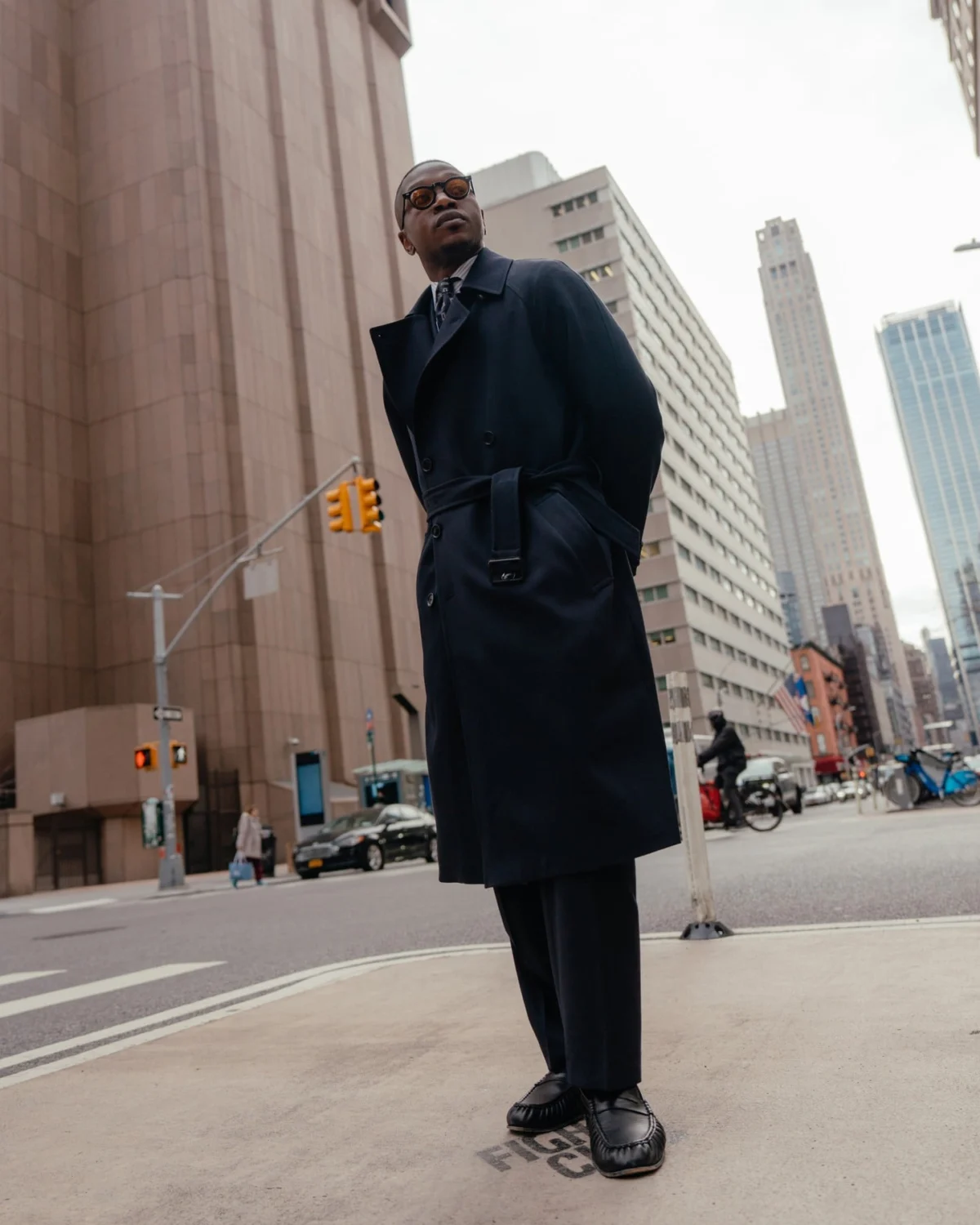
Standing in a menswear boutique, the distinction between a topcoat and an overcoat often feels like a riddle designed to confuse the consumer. To the untrained eye, both garments appear as variations of the same wool outerwear: knee-length, structured, and similarly priced. However, the industry’s shift toward loose terminology has rendered traditional definitions nearly obsolete, leaving shoppers to navigate a landscape where marketing labels often conflict with functional reality. Understanding these differences is no longer an academic exercise in sartorial history; it is a practical requirement for building a wardrobe that balances climate needs, professional requirements, and long-term investment value.

Historical Context and the Evolution of Outerwear
To understand the confusion, one must look back to the 19th century, when the distinction was clearly delineated by function and social setting. The topcoat was specifically designed for the urban professional—a man who spent his day commuting between heated offices and transport hubs. It was meant to be worn as the final layer over a tailored suit, engineered with lighter wool—typically between 10 and 16 ounces—to provide insulation without the bulk that would distort the silhouette of the suit jacket beneath it. Its design was sleek, single-breasted, and typically finished at or just above the knee to allow for ease of movement.

Conversely, the overcoat was a heavy-duty garment. Historically, it served as an umbrella term for any outer layer, but in strict menswear parlance, it refers to a garment designed for extreme conditions. Ranging from 20 to 32 ounces in wool weight, these coats were built to withstand brutal, sustained cold. Their length often extended to the mid-calf or ankle, providing maximum coverage against the elements. The construction was roomier by necessity, allowing for multiple layers—a suit jacket, a waistcoat, and a knit sweater—to be worn underneath without restriction.
The Divergence of Modern Retail Standards

The 21st-century retail environment has largely abandoned these rigid definitions. Several factors have contributed to this, most notably the rise of e-commerce and the necessity of Search Engine Optimization (SEO). As consumers search for broad terms like "men’s winter coat," brands have opted to categorize their inventory based on high-volume search terms rather than technical accuracy.
A survey of contemporary luxury and mid-market retailers reveals a startling lack of uniformity. Major department stores may classify a 38-inch coat as a topcoat, while another label might use the term "overcoat" for a light wool blend that barely reaches the thigh. This inconsistency is further compounded by the adoption of international terminology. Italian houses often use "cappotto" as a catch-all, while British heritage brands might use "ulster" or "greatcoat," confusing American consumers accustomed to a binary choice.

Chronology of Technical Development
The evolution of these garments has followed the broader technological advancements in textile manufacturing. By the mid-20th century, the traditional wool melton—a dense, wind-resistant, and heavy fabric—was the gold standard for both styles. However, the 1990s and 2000s saw a shift toward performance fabrics.

- The Synthetic Revolution (1990s-2010s): The introduction of technical fibers allowed for lighter weight materials to offer the same thermal insulation as heavy wool. This enabled designers to create "hybrid" coats that maintained the silhouette of a formal topcoat while providing the heat retention traditionally reserved for heavy overcoats.
- The Slim-Fit Era (2010s): Retailers pushed for ultra-slim profiles, which forced the industry to move away from the "roomy" cut of the classic overcoat. This created a generation of coats that were visually appealing but functionally deficient for those who intended to layer them over structured tailoring.
- The Modern Utility Shift (2020s-Present): We are currently seeing a move toward relaxed, intentional proportions. Longer lengths are returning to fashion, and the "roomy" fit is once again prioritized, not for the sake of volume, but for the sake of comfort and the re-introduction of knitwear layering.
Comparative Data: The Three Pillars of Winter Outerwear
When evaluating these garments, the focus should remain on three objective metrics: length, weight, and construction.

| Characteristic | Topcoat | Overcoat | Peacoat |
|---|---|---|---|
| Typical Length | At or above knee | Below knee/mid-calf | Hip to mid-thigh |
| Fabric Weight | 10–16 oz | 16–32 oz | 24–32 oz |
| Primary Intent | Professional commute | Extreme cold/Formal | Nautical/Casual |
| Shoulder Fit | Tailored/Structured | Roomy/Layering | Boxy/Military |
Supporting Data and Industry Reactions
Leading manufacturers have recently noted that consumer behavior is changing. A 2025 retail trend report indicates that 62% of consumers now prioritize "versatility" over "historical accuracy" when purchasing winter outerwear. This has led to the proliferation of the "modular" coat—a garment that features removable quilted liners. This innovation effectively allows a single piece of clothing to shift from a 10-ounce topcoat in late autumn to a 20-ounce overcoat in the heart of winter.

Professional tailors and menswear historians often argue that this shift is a double-edged sword. While it offers the consumer more value, it undermines the specialized utility that each coat was designed to provide. A coat that tries to be both a sleek business layer and a rugged arctic protector often fails to excel at either.
Implications for the Modern Wardrobe

For the average professional, the decision-making process should be driven by lifestyle rather than terminology. If one’s daily routine involves office-based work and a professional dress code, the topcoat remains the superior choice. Its ability to maintain the line of a suit jacket is a sign of sartorial discipline. Conversely, for individuals living in climates where temperatures regularly drop below 35°F, or for those whose commutes involve extensive walking in inclement weather, the overcoat is an essential piece of equipment.
The peacoat occupies a unique space. Originating as standard issue for the British Royal Navy, its characteristics—double-breasted construction, wide lapels, and heavy melton wool—are non-negotiable. Unlike the topcoat or overcoat, which have seen their definitions diluted, the peacoat has largely maintained its integrity. It remains a "weekend warrior" garment. It is fundamentally ill-suited for the boardroom due to its boxy cut and casual, nautical roots, yet it is unmatched for casual city excursions.

Strategic Shopping: The Buyer’s Checklist
To navigate the current market, consumers are advised to bypass brand-provided descriptions and focus on objective specifications.

- Measurement: Measure from the collar to the hem. A coat that hits the knee or slightly above is a topcoat; anything reaching toward the mid-calf is an overcoat.
- Fabric Weight: Look for the fabric specifications on the inner tag. If the weight is not listed, gauge the thickness by feel. A true overcoat should feel dense and substantial.
- The Suit Test: Always bring a tailored jacket when trying on a coat. If the shoulder of the coat pulls, or if the sleeves of the suit jacket are compressed, the coat is too slim to function as a proper overcoat.
- The Climate Factor: Recognize that geography dictates utility. In regions like the Pacific Northwest, a high-quality topcoat with water-repellent properties may suffice for the entire winter. In the Midwest or the Northeast, the heavy, long-form overcoat is a necessity.
The Broader Impact of Informed Consumption
The confusion surrounding these terms is, in many ways, a symptom of the "fast fashion" cycle that has dominated the last two decades. By simplifying or mislabeling products, retailers have made it easier for the average consumer to make quick, often regrettable, purchases. However, there is a growing movement toward "slow fashion," where the emphasis is placed on longevity and the specific utility of a garment.

Investing in a high-quality, 100% wool overcoat or a well-constructed topcoat is a commitment that can yield returns for over a decade. A coat costing $600 that lasts fifteen years is significantly more economical and environmentally sustainable than a $200 synthetic coat that loses its shape after three seasons.
Ultimately, the distinction between a topcoat and an overcoat is a guide, not a set of ironclad laws. The most successful wardrobe is one that is built on the reality of the wearer’s life. If a garment keeps the wearer warm, fits correctly over their existing clothing, and aligns with their personal aesthetic, the label applied by the retailer becomes secondary. As the industry continues to evolve, the informed consumer will be the one who looks past the marketing jargon to evaluate the weight, the construction, and the purpose of the garment, ensuring that their investment stands the test of time and weather.
