
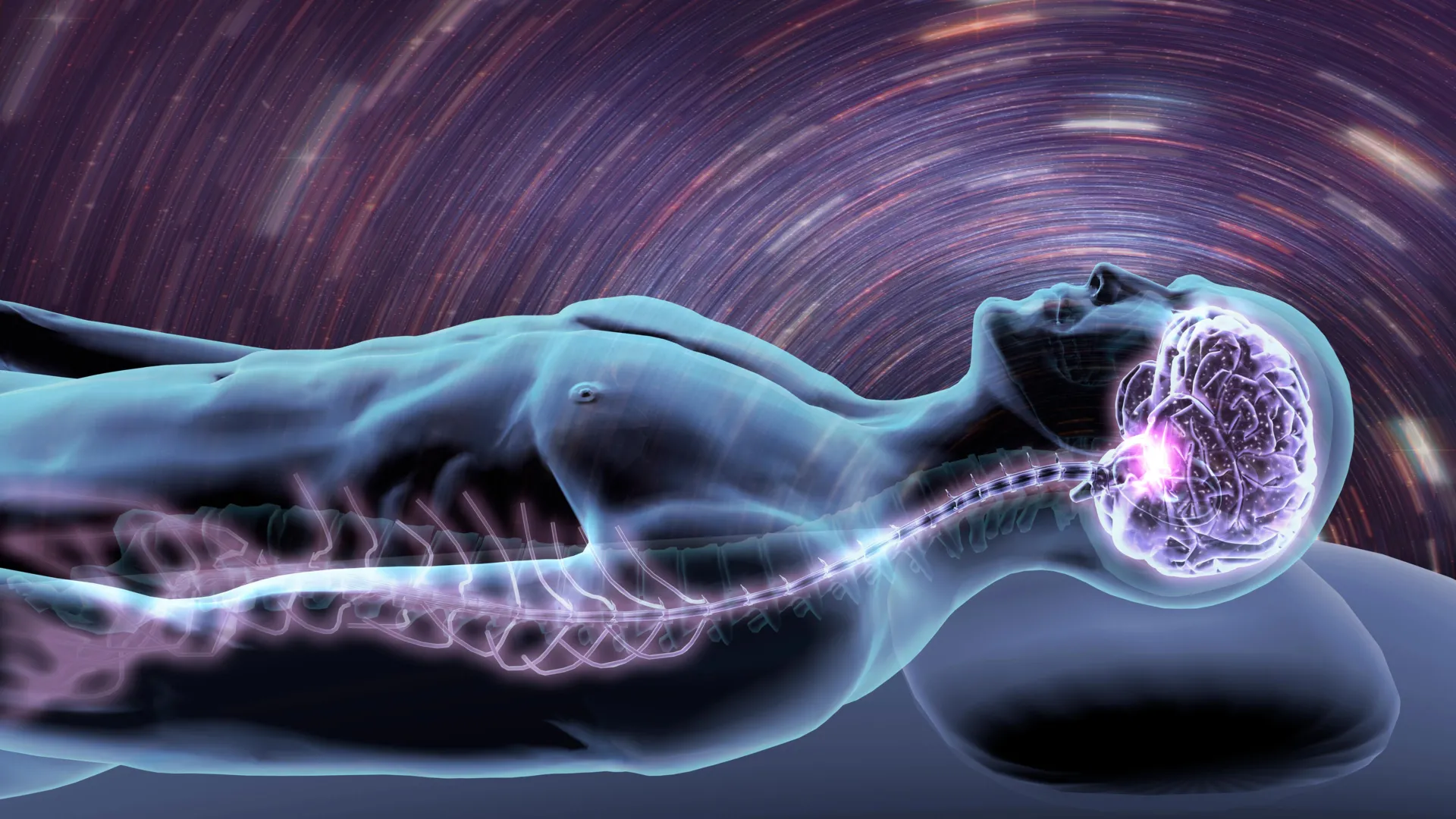
For decades, the cultural debate surrounding evening coffee consumption has centered on a binary question: can you fall asleep after drinking it? Millions of people swear by their ability to consume a double espresso at 8:00 PM and drift off into a peaceful slumber ten minutes later, while others report lying awake for hours, counting sheep while their minds race. Yet, modern sleep science is revealing that this simple focus on sleep onset may be fundamentally misleading. The true physiological cost of caffeine is not always paid at the pillow; rather, it is exacted deep within the architecture of the brain long after consciousness has faded.
Recent advancements in neurophysiological research indicate that even when individuals successfully fall asleep after consuming caffeine, the restorative quality of that sleep can be profoundly compromised. Scientists utilizing cutting-edge brain-monitoring technologies are discovering that a full night of perceived rest may actually mask a state of neurological deprivation. As public reliance on stimulants continues to rise in demanding modern workplaces, researchers are urging a comprehensive reevaluation of how caffeine interacts with the human body across a 24-hour cycle.
Unlocking the Brain at Rest: The Role of Quantitative EEG
To understand how caffeine alters sleep beyond mere wakefulness, researchers have increasingly turned to electroencephalography (EEG). While traditional sleep assessments—such as standard polysomnography—are exceptionally useful for measuring total sleep duration, sleep latency, and visible awakenings, they often fail to capture the subtle, microscopic shifts occurring within the brain’s electrical field.
EEG measurements allow researchers to record the electrical activity of the cerebral cortex with high temporal resolution. This technology goes far beyond simply determining whether a subject is awake or asleep; it exposes the biological depth and structural integrity of the resting brain. According to Prof. Donata Kurpas from the Department of Nursing at Wroclaw Medical University, quantitative EEG analysis reveals intricate alterations that standard assessments miss entirely.
"EEG allows us to see not only whether a person is sleeping, but also how the brain is sleeping," Prof. Kurpas explains. "Classical sleep assessment assesses sleep duration and its stages, whereas quantitative EEG analysis reveals more subtle changes, such as reduced slow-wave activity, which is an important marker of sleep depth and its restorative character."
Slow waves, characterized by high-amplitude, low-frequency oscillations, are the hallmark of slow-wave sleep (SWS), commonly known as deep sleep. This critical phase is when the body undergoes profound physical restoration, repairs muscular and immunological tissues, clears metabolic waste products accumulated during waking hours, and consolidates declarative memories. When caffeine interferes with this specific frequency band, the brain is deprived of its primary mechanism for neurological housekeeping.
The Illusion of Normal Rest: The Hidden Deficit
One of the most insidious aspects of caffeine consumption is its ability to decouple subjective restfulness from objective neurophysiological recovery. An individual might maintain a standard sleep schedule, logging seven to eight hours in bed, and wake up with the subjective impression that they have slept soundly. However, beneath the surface of this perceived normality, the brain’s electrical patterns may tell a vastly different story.
"Caffeine may shorten sleep or make it more difficult to fall asleep; however, even when sleep duration appears normal, it may reduce slow-wave activity and shift the EEG pattern toward a more ‘wakeful’ brain," Prof. Kurpas notes.
In practical terms, this means a person can spend a full eight hours horizontal without reaping the expected level of cognitive and physical restoration. Because this subtle neurological disruption frequently occurs without causing overt micro-awakenings or conscious discomfort, it evades detection by the sleeper.
"The subjective feeling of having slept well does not always correspond to what we observe in neurophysiological recordings," adds Prof. Kurpas. "A person may fall asleep without major difficulty and not remember awakenings, while the brain may display fewer features of deep sleep."
The Chronology of Consumption: From Historical Stimulant to Modern Reliance
Caffeine has served as humanity’s primary stimulant for centuries, tracing its roots back to the discovery of the coffee bean in the highlands of Ethiopia, through the bustling coffeehouses of 17th-century Europe, to the ubiquitous multi-billion-dollar global coffee industry of the 21st century. Historically, society viewed caffeine as a functional tool for morning awakening. However, the modern 24-hour economy—characterized by shift work, global communications, academic pressures, and competitive athletic training schedules—has fundamentally altered human consumption patterns.
Over the past three decades, the average daily intake of caffeine has steadily climbed, with energy drinks, pre-workout supplements, and specialty coffees expanding the demographic reach of stimulants to adolescents and older adults alike. Concurrently, sleep medicine has evolved from a nascent medical specialty into an essential pillar of public health.
As epidemiologists link chronic sleep deprivation to metabolic disorders, cardiovascular disease, neurodegenerative conditions, and impaired immune function, researchers began questioning why populations reporting adequate sleep durations were still exhibiting signs of chronic fatigue. The investigation increasingly pointed toward the invisible degradation of sleep quality caused by pharmacological agents like caffeine. By the early 2010s, pilot studies utilizing quantitative EEG began documenting how adenosine receptor antagonism—the primary mechanism by which caffeine promotes alertness—lingers long into the night, directly suppressing the delta waves responsible for deep sleep.
Why Responses Vary: The Biochemical Landscape
Public health guidelines regarding caffeine have historically relied on broad generalizations, such as advising individuals to avoid consumption four to six hours before bedtime. However, contemporary research underscores that human responses to caffeine are profoundly individualized. A "one-size-fits-all" curfew fails to account for the complex interplay of human biology.
Genetics play a foundational role in how rapidly an individual metabolizes caffeine. Variations in the CYP1A2 gene dictate whether a person is a "fast" or "slow" metabolizer of the drug. While fast metabolizers can clear caffeine from their bloodstream swiftly, slow metabolizers process the substance sluggishly, leaving significant pharmacological concentrations active in their central nervous system many hours after ingestion.
Beyond genetics, age, body mass, chronic stress levels, liver function, and baseline fatigue significantly influence caffeine pharmacokinetics. Furthermore, the total cumulative dose ingested throughout the day matters just as much as the timing of the final cup.
"It is not only about coffee consumed just before bedtime," emphasizes Prof. Kurpas. "For some people, the total amount of caffeine consumed during the day and whether the body has enough time to metabolize it before nightfall may also be important."
This variability is especially pronounced among high-performance demographics. Athletes seeking marginal gains in endurance, knowledge workers navigating high-stress corporate environments, medical professionals on grueling shifts, and students preparing for examinations frequently rely on sustained caffeine intake to maintain cognitive edge and stamina. Ironically, the very populations that rely most heavily on stimulants to maintain productivity may be the most vulnerable to the compounding deficits of unrecovered sleep.
The Vicious Circle of Fatigue and Stimulation
When individuals experience reduced sleep depth without realizing it, they often wake up feeling unrefreshed despite logging sufficient hours in bed. This morning grogginess is frequently interpreted as a sign of insufficient energy, prompting the individual to reach for their morning coffee—and the cycle begins anew.
This dynamic creates a biochemical loop that sleep specialists describe as a form of physiological borrowing. The individual uses caffeine to artificially enhance daytime alertness and mask underlying fatigue, but this temporary boost is paid for by diminishing the brain’s ability to repair itself the following night. Over time, diminished sleep quality leads to greater daytime exhaustion, which in turn drives a higher demand for artificial stimulation.
"If caffeine helps a person function during the day while simultaneously worsening the quality of nighttime recovery, a vicious circle may develop: greater fatigue, greater need for stimulation, and poorer sleep," warns Prof. Kurpas.
This self-perpetuating loop highlights a broader shift in sleep science away from simplistic metrics. For decades, public health messaging focused almost exclusively on sleep duration—the standard eight-hour recommendation. Today, researchers are pivoting toward sleep architecture and neurophysiological restoration as the true benchmarks of health.
Implications for Public Health and Lifestyle Management
The growing understanding of caffeine’s impact on deep sleep carries significant implications for clinical practice, occupational health, and individual wellness. Rather than demonizing a globally consumed beverage, sleep experts advocate for a nuanced, personalized approach to consumption that factors in lifestyle stressors, individual metabolism, and neurophysiological feedback.
Public health agencies and workplace wellness programs are increasingly urged to educate the public on the hidden costs of stimulants. Recognizing that subjective wakefulness can mask objective neurological fatigue empowers individuals to make informed choices regarding their daily intake limits and cutoff times.
Ultimately, caffeine occupies a unique space in human culture and biology. It is neither an unmitigated poison nor a harmless elixir. As Prof. Kurpas concludes:
"Caffeine is neither ‘good’ nor ‘bad’. It is a biologically active substance whose effects depend on dose, time of day, age, lifestyle, sleep quality, stress burden, and individual sensitivity."
As research continues to peel back the layers of human sleep architecture using advanced tools like quantitative EEG, the conversation around coffee is evolving. The modern consumer must look beyond the simple ability to fall asleep and consider what is happening within the brain during the hours that follow—ensuring that the pursuit of daily productivity does not quietly undermine the biological foundation of long-term health and cognitive vitality.
