

For millions of women worldwide, the journey toward understanding and managing Polycystic Ovary Syndrome (PCOS) is marked by frustration, prolonged uncertainty, and systemic hurdles. Clinical research indicates that receiving a formal PCOS diagnosis can take up to two years, frequently requiring a minimum of three distinct physician visits. Given that PCOS stands as the most prevalent endocrine disorder among individuals of reproductive age—affecting an estimated 6 to 12 percent of women globally—this prolonged diagnostic timeline highlights a significant bottleneck in women’s healthcare delivery.
The traditional pathway to identifying the condition relies heavily on multi-faceted clinical evaluations, patient medical histories, and specialized imaging. However, recent advancements in direct-to-consumer diagnostics and at-home testing kits are beginning to challenge conventional timelines, offering patients a streamlined initial screening mechanism that can be initiated outside of a clinical setting.
Understanding the Traditional Diagnostic Framework

To comprehend the significance of modern at-home hormone testing, one must first examine how medical professionals historically evaluate suspected cases of PCOS. Unlike conditions with a single, definitive diagnostic marker, PCOS is identified through a process of elimination and clinical consensus.
The globally recognized standard for diagnosis is the Rotterdam criteria, established in 2003. Under these guidelines, a patient must present with at least two of the following three manifestations:
- Oligo- or anovulation: Manifesting as irregular menstrual cycles, characterized by fewer than eight periods per year or the absence of menstruation for four consecutive months or longer.
- Clinical or biochemical signs of hyperandrogenism: Excess levels of male hormones, which can clinically present as hirsutism (excessive hair growth on the face, chest, back, or abdomen), severe acne, or female-pattern hair thinning on the scalp.
- Polycystic ovaries: Visualized via ultrasound as ovaries that are enlarged and contain twelve or more developing follicles surrounding the eggs.
Before a definitive diagnosis of PCOS can be confirmed, physicians are required to systematically rule out a host of other endocrine and metabolic disorders that mimic identical symptoms. Differential diagnoses often include Cushing’s syndrome, congenital adrenal hyperplasia, androgen-secreting tumors, primary hypothyroidism, hyperprolactinemia, and drug-induced hirsutism.
This exhaustive exclusion process is precisely why the diagnostic journey spans years. Patients are frequently referred from general practitioners to gynecologists, and subsequently to endocrinologists or reproductive specialists, accumulating a battery of transvaginal ultrasounds and comprehensive blood panels along the way. While transvaginal ultrasounds remain vital for visualizing ovarian morphology and ruling out structural anomalies, up to 20 percent of healthy women may present with polycystic ovaries on an ultrasound without exhibiting the broader metabolic or clinical symptoms of PCOS, further complicating physician evaluations.

The Advent of Direct-to-Consumer Hormonal Screening
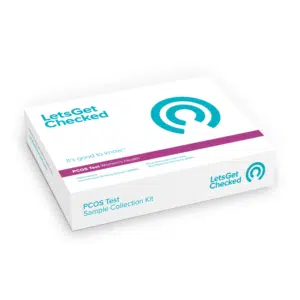
In response to widespread patient dissatisfaction regarding delayed diagnoses and a lack of accessible information, diagnostic companies have introduced targeted at-home testing solutions. Among these is the Let’s Get Checked PCOS Home Test, a mail-in diagnostic kit designed to evaluate key hormonal biomarkers associated with the syndrome via a simple finger-prick blood sample.
The mechanism of action is designed for accessibility. Users collect a small blood sample at home using a provided lancet, secure it in a pre-paid return envelope, and mail it directly to a certified laboratory. The facility analyzes the sample for crucial endocrine markers, including luteinizing hormone (LH), follicle-stimulating hormone (FSH), sex hormone-binding globulin (SHBG), and other relevant reproductive and metabolic hormones.
Upon completion of the laboratory analysis, clinical teams review the data to provide users with a probable indication of PCOS. This allows patients to approach their primary healthcare providers with actionable laboratory data, effectively bypassing the initial exploratory phase that typically consumes months of appointments.

Clinical Protocols and Cycle Synchronization
The accuracy of hormonal assays depends heavily on biological timing, as reproductive hormones fluctuate dynamically throughout the menstrual cycle. Consequently, medical protocols dictate strict adherence to collection windows.
For individuals experiencing regular menstrual cycles, collection is recommended strictly between days three and five of the cycle—representing the early follicular phase when baseline hormone levels are most stable. Conversely, for patients experiencing chronic anovulation or irregular periods, collection can typically take place on any three consecutive days, accommodating the unpredictable nature of the condition while allowing clinical evaluators to interpret the baseline data within the context of irregular cycles.
Medical experts explicitly advise against utilizing these kits while currently using hormonal contraceptives. Birth control pills artificially suppress and regulate endogenous hormone production, which can significantly skew baseline laboratory results and produce false negatives or misrepresentative hormonal profiles.
Broader Health Implications and Associated Risks
The imperative to shorten the diagnostic window extends far beyond the immediate relief of bothersome symptoms such as weight gain, acne, and excessive hair growth. Chronic hormonal imbalances inherent to untreated or undiagnosed PCOS carry profound long-term metabolic and cardiovascular consequences.
Clinical literature demonstrates that individuals with PCOS face an elevated risk of developing several secondary health conditions, including:
- Type 2 diabetes mellitus and impaired glucose tolerance
- Gestational diabetes and pregnancy-induced hypertension
- Dyslipidemia, characterized by elevated low-density lipoprotein (LDL) cholesterol and triglycerides
- Endometrial hyperplasia and increased risk of endometrial cancer due to prolonged, unopposed estrogen exposure
- Obstructive sleep apnea and non-alcoholic fatty liver disease (NAFLD)
Because of these systemic risks, timely identification is a matter of preventative healthcare. Early intervention allows patients and physicians to implement dietary modifications, insulin-sensitizing medications, or lifestyle interventions well before irreversible metabolic damage occurs.

Implications for the Future of Healthcare Delivery
The integration of at-home testing into the broader healthcare continuum represents a paradigm shift in how chronic conditions are approached. While at-home test kits do not officially replace a comprehensive medical examination by an endocrinologist or gynecologist, they serve as a crucial bridge between the patient and the healthcare system.
By arming patients with empirical data before their first formal consultation, direct-to-consumer diagnostics empower individuals to advocate for their health, reduce the emotional toll of medical gaslighting or dismissal, and accelerate the referral process to appropriate specialists, such as reproductive endocrinologists for those actively trying to conceive.
As laboratory-quality at-home testing continues to evolve and gain regulatory acceptance, the traditional two-year wait for a PCOS diagnosis may soon become a relic of the past, replaced by proactive, patient-initiated screening models that prioritize early detection and comprehensive care.
