
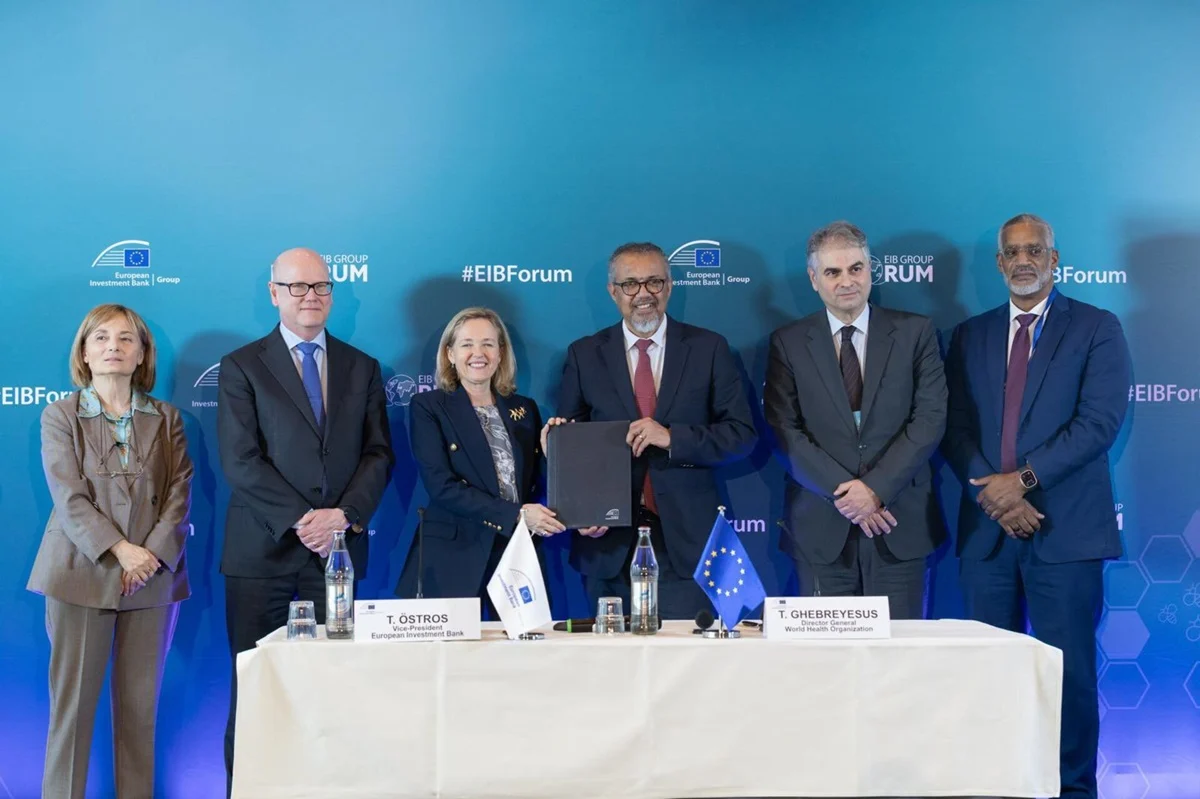
On 6 March 2025, at the prestigious EIB Group Forum held in Luxembourg, Dr. Tedros Adhanom Ghebreyesus, Director-General of the World Health Organization (WHO), and Thomas Östros, Vice-President of the European Investment Bank (EIB), formalized a landmark partnership. The signing of a 10 million euro grant agreement marks a critical intervention aimed at stabilizing and fortifying Lebanon’s deteriorating public health sector. This strategic collaboration between the UN’s health agency and the lending arm of the European Union is designed to address both the immediate humanitarian needs of the Lebanese population and the long-term systemic vulnerabilities that have plagued the country’s medical infrastructure for years.
The Scope of the Humanitarian Intervention
The 10 million euro injection of funds is specifically earmarked for two primary objectives: the rehabilitation of the Central Public Health Laboratory (CPHL) and the urgent provision of essential medications for chronic disease management.
The CPHL serves as the backbone of Lebanon’s national health security. Its functional re-establishment is essential for disease surveillance, diagnostic capacity, and the regulation of medical standards across the country. In recent years, due to economic collapse and infrastructure decay, the laboratory’s operational capacity has been severely curtailed, hindering the country’s ability to respond effectively to endemic diseases or potential outbreaks. By revitalizing this institution, the WHO and EIB Global are effectively restoring a vital layer of national security.
Furthermore, the initiative addresses the dire shortage of life-saving drugs. The funding will provide critical healthcare support to more than 50,000 patients suffering from chronic conditions, including diabetes, cardiovascular diseases, and various forms of cancer. These populations have been disproportionately affected by Lebanon’s hyperinflation, which has rendered imported medicines unaffordable for the average citizen and caused severe supply chain disruptions.
Chronology of the Lebanese Healthcare Crisis
The need for this intervention did not emerge in a vacuum. To understand the gravity of the current situation, one must examine the timeline of the collapse of the Lebanese health system:
- 2019 – The Financial Onset: The Lebanese Lira began a catastrophic devaluation, leading to a banking crisis that froze assets and restricted the importation of essential medical goods.
- 2020 – The Triple Blow: The COVID-19 pandemic compounded the financial crisis, followed by the devastating Beirut Port explosion in August, which destroyed several major hospitals and warehouses containing medical supplies.
- 2021-2023 – The Supply Vacuum: Hyperinflation reached triple digits, causing the Ministry of Public Health to struggle with basic procurement. Pharmacies reported empty shelves, and international aid agencies began stepping in to fill the gap left by the state.
- 2024 – Regional Instability: Ongoing border tensions and regional conflict further strained the internal displaced persons (IDP) population, placing additional pressure on an already broken health system.
- 2025 – Targeted Intervention: The EIB Global and WHO partnership represents the current phase of moving from emergency disaster response toward structural reconstruction.
Data-Driven Context: The Burden of Chronic Disease
The decision to focus specifically on chronic diseases is supported by epidemiological data indicating a shift in the disease burden in the Middle East. According to WHO figures, non-communicable diseases (NCDs) are responsible for a significant majority of deaths in Lebanon. Cardiovascular disease, in particular, remains the leading cause of mortality.
When access to medication is disrupted, the downstream costs to the healthcare system are exponential. For instance, a patient with uncontrolled diabetes faces a high risk of requiring emergency hospitalization for ketoacidosis or long-term complications such as kidney failure or amputation. By subsidizing the cost of insulin and other antihypertensive drugs, the WHO-EIB project acts as a form of preventative healthcare, mitigating the need for more expensive tertiary care interventions down the line.
Strategic Significance of the EIB-WHO Partnership
The involvement of the European Investment Bank is indicative of a shift in how international financial institutions approach "development" in fragile states. Traditionally, the EIB focused on large-scale infrastructure projects like energy grids and transport. However, the "EIB Global" arm, created in 2022, is increasingly prioritizing social infrastructure—health, education, and social protection—as pillars of economic stability.
For the World Health Organization, the partnership provides a reliable financial vehicle to execute complex, multi-year projects that require rigorous oversight. The EIB’s technical expertise in procurement and financial transparency complements the WHO’s medical expertise and policy guidance.
Official Perspectives and Institutional Commitment
While the primary announcement was issued via the EIB Group, statements from international observers and regional health analysts suggest that this agreement is viewed as a "life-line" rather than a permanent solution.
Dr. Tedros Adhanom Ghebreyesus has frequently highlighted that health is a human right, particularly in countries experiencing protracted economic crises. By securing this grant, the WHO aims to ensure that the most vulnerable segments of the Lebanese population—the elderly and those with pre-existing conditions—do not become "collateral damage" of the country’s macro-economic environment.
Thomas Östros of the EIB noted during the forum that the investment is part of the EU’s broader commitment to regional stability. By bolstering health infrastructure, the EIB is essentially investing in the resilience of the Lebanese state, ensuring that the country remains capable of managing its internal health challenges without the need for constant, ad-hoc international emergency interventions.
Broader Implications for Regional Stability
The implications of this agreement extend beyond the borders of Lebanon. In a region marked by significant volatility, the health sector often serves as the last bastion of stability. When public health systems collapse, the resulting migration of medical professionals (the "brain drain") and the loss of disease surveillance create regional security risks.
The rehabilitation of the Central Public Health Laboratory serves a dual purpose:
- Domestic Utility: It restores the ability of the Lebanese state to protect its own citizens through proper diagnostics and monitoring.
- Regional Cooperation: A functional laboratory in Beirut allows for better regional data sharing, which is essential for the WHO’s regional surveillance networks aimed at tracking cross-border infectious diseases.
Furthermore, this grant acts as a signal to other international donors. The involvement of the EIB, a major institutional lender, provides a "seal of approval" that may encourage other bilateral donors to contribute additional funds toward the modernization of Lebanon’s medical infrastructure.
Looking Ahead: Sustainability and Governance
The success of the 10 million euro initiative will ultimately depend on the governance and oversight mechanisms established by the WHO and the Lebanese Ministry of Public Health. The primary challenge remains the "leakage" of subsidized medications into the black market and the long-term fiscal sustainability of the CPHL.
In the coming months, the project is expected to transition into the procurement phase. The WHO will likely utilize its global supply chain networks to source high-quality medications at negotiated prices, bypassing the current retail hurdles within Lebanon. The physical renovation of the laboratory will require careful coordination with local contractors and international engineers to ensure that the facility meets international biosafety standards (BSL-2 or higher).
As the initiative moves forward, international observers will be closely monitoring the project’s milestones. If successful, this model of cooperation—combining the financial might of the EIB with the clinical and technical mandate of the WHO—could serve as a blueprint for supporting other nations facing similar intersections of financial crisis and humanitarian need.
The agreement signed in Luxembourg is more than a transaction; it is an acknowledgement that in an interconnected world, the health of a population is a foundational requirement for economic recovery and political stability. By targeting the intersection of chronic disease management and laboratory infrastructure, the EIB and WHO are attempting to reverse the erosion of public health in Lebanon, providing a much-needed foundation for the country to rebuild its institutional integrity.
