

Polycystic Ovary Syndrome (PCOS) stands as the most prevalent endocrine disorder affecting women of reproductive age, impacting an estimated 6 to 12 percent of women globally, or as many as 5 million individuals in the United States alone. Characterized by a complex interplay of hormonal imbalances, irregular menstrual cycles, ovarian cysts, and metabolic disturbances, PCOS presents a multifaceted challenge for both patients and healthcare providers. Central to the pathophysiology of this condition is insulin resistance, a metabolic hurdle identified in up to 75 percent of women diagnosed with PCOS, regardless of whether they are lean or overweight.
Because insulin resistance exacerbates the overproduction of androgens (male hormones) by the ovaries—leading to hallmark symptoms such as hirsutism, acne, and hair thinning—medical interventions frequently target insulin regulation. Among the most common pharmacological and supplemental approaches prescribed or recommended today are Metformin, a longstanding prescription medication for type 2 diabetes, and Myo-Inositol, a naturally occurring sugar alcohol often utilized as a dietary supplement. As the medical community continues to evaluate the efficacy, safety profiles, and long-term outcomes of both substances, patients face the critical question of how these two treatments compare in clinical practice.
The Role of Insulin Resistance in PCOS Pathophysiology

To understand why agents like Metformin and inositol form the bedrock of many PCOS treatment plans, one must examine the fundamental mechanics of insulin within the human body. Insulin functions as a biochemical key that unlocks cellular receptors, allowing glucose from the bloodstream to enter cells and be converted into energy. In individuals with insulin resistance, however, these cellular receptors become desensitized. The lock-and-key mechanism fails to operate efficiently, prompting the pancreas to secrete increasingly larger quantities of insulin to force glucose absorption.
This hyperinsulinemia—chronically elevated circulating insulin levels—triggers a cascade of adverse effects throughout the endocrine system. Excess insulin acts directly on the ovaries, stimulating the theca cells to produce excessive androgens. Furthermore, high insulin suppresses the hepatic synthesis of sex hormone-binding globulin (SHBG), a protein that typically binds to testosterone and renders it inactive. With diminished SHBG levels, free testosterone surges, compounding clinical symptoms such as anovulation, infertility, and metabolic dysfunction. Consequently, any therapeutic strategy designed to lower circulating insulin levels or restore cellular insulin sensitivity holds significant potential for mitigating the systemic manifestations of PCOS.
Metformin: Mechanisms, Clinical Efficacy, and Historical Context
Metformin has a well-established history in clinical medicine, primarily as a first-line pharmaceutical treatment for type 2 diabetes mellitus. Over the past three decades, its application has expanded significantly into reproductive endocrinology and gynecology for the off-label management of PCOS.

According to endocrinology experts and registered dietitians specializing in women’s health, Metformin addresses hyperglycemia and hyperinsulinemia through distinct pathways. Primarily, the medication operates by suppressing hepatic gluconeogenesis—the liver’s production of glucose—while simultaneously enhancing peripheral glucose uptake in skeletal muscle tissue. Furthermore, recent pharmacological research highlights that Metformin positively influences intracellular insulin-signaling cascades, specifically targeting pathways that overlap with those regulated by natural inositols.
Clinical trials evaluating Metformin’s efficacy in PCOS populations have yielded robust data. Landmark randomized controlled trials, including foundational work published by researchers such as Dr. Pietro Moghetti and comprehensive reviews by Dr. Hany Lashen, have demonstrated that Metformin administration can significantly improve metabolic parameters. Over multi-month treatment windows, patients frequently experience reductions in fasting insulin and blood glucose levels, decreased serum androgen concentrations, and restoration of spontaneous ovulation. These physiological improvements collectively enhance fertility and pregnancy rates among women previously struggling with anovulatory infertility.
Despite these clinical benefits, Metformin therapy is frequently accompanied by a notable profile of adverse gastrointestinal side effects. Clinical data indicate that up to 30 percent of patients initiating Metformin experience symptoms such as nausea, abdominal cramping, flatulence, and chronic diarrhea. While these side effects can sometimes be mitigated by initiating treatment at a low dose and titrating upward, or by utilizing extended-release formulations, they remain a primary reason for discontinuation. Additionally, long-term Metformin use has been associated with a risk of vitamin B12 malabsorption, necessitating periodic monitoring of micronutrient levels in chronic users.
Inositol: The Biochemical Alternative and Supplementation Dynamics
Inositol, a carbocyclic sugar naturally synthesized by the human body and ingested through foods such as fresh fruits, beans, grains, and nuts, has emerged as a premier dietary intervention in modern PCOS management. Within cellular biology, inositols exist in several stereoisomers, with Myo-Inositol (MI) and D-chiro-inositol (DCI) being the most biologically active and clinically relevant forms for metabolic health.
Myo-inositol functions as a critical secondary messenger in cellular signaling, playing a direct role in the operation of insulin receptors located on cell membranes. When insulin binds to its receptor, myo-inositol acts as a secondary mediator that facilitates the intracellular downstream effects of the hormone. In women with PCOS, tissue concentrations of myo-inositol are frequently depleted, impairing this signaling pathway and contributing to insulin resistance. Supplementation with exogenous myo-inositol helps restore these intracellular pools, optimizing the receptor’s responsiveness so that normal physiological quantities of insulin can effectively process glucose without requiring hypersecretion by the pancreas.
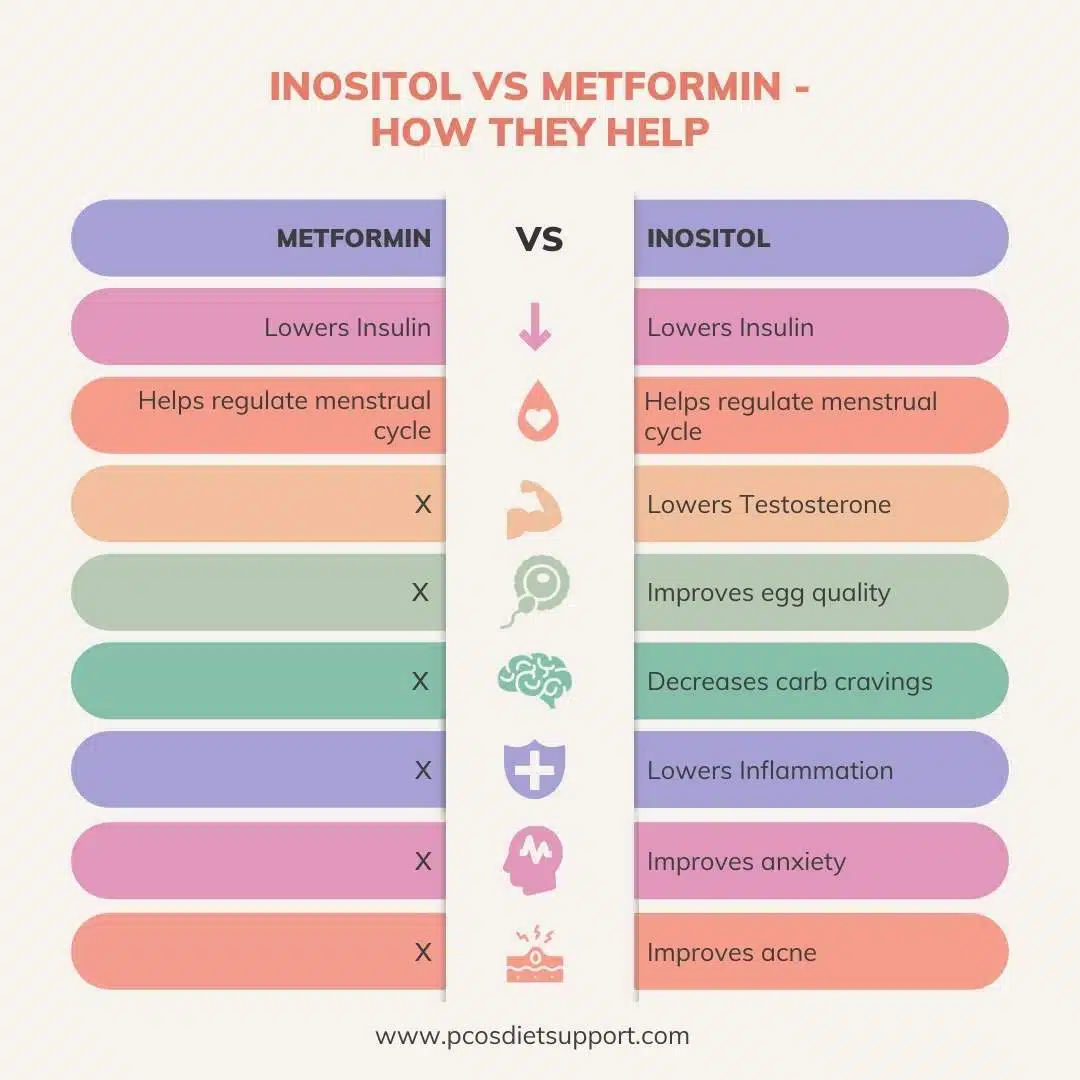
Comparative clinical investigations assessing the efficacy of myo-inositol versus Metformin have yielded compelling results. A systematic review and meta-analysis published in the European Review for Medical and Pharmacological Sciences evaluated multiple randomized trials comparing the two substances. The findings indicated that myo-inositol was statistically comparable to Metformin in improving metabolic parameters, lowering serum androgen levels, restoring regular menstrual cyclicity, and enhancing ovulation and clinical pregnancy rates in women with PCOS.
From a tolerability perspective, myo-inositol exhibits a remarkably favorable safety profile. Because it is a nutrient-like substance naturally processed by human metabolism, serious adverse events are exceedingly rare. Mild gastrointestinal upset can occasionally occur at high therapeutic doses—typically standard protocols of 2,000 to 4,000 milligrams daily—but these symptoms are significantly milder and less frequent than those associated with Metformin. Minor complaints such as occasional mild headaches have been reported, but overall patient compliance rates for inositol significantly surpass those of pharmaceutical Metformin.

Side-by-Side Comparison: Benefits and Drawbacks
When clinicians and patients weigh the choice between Metformin and inositol, a systematic evaluation of therapeutic advantages and physiological drawbacks provides necessary clarity.
Metformin:
- Pros: Extensive long-term safety data in human populations; robustly proven efficacy in reducing hepatic glucose output and lowering systemic insulin; prescription-grade standardization; potential coverage by health insurance plans.
- Cons: High incidence of gastrointestinal side effects (nausea, diarrhea, abdominal distress); risk of vitamin B12 depletion with long-term use; contraindications in patients with impaired renal function due to lactic acidosis risks; does not consistently induce significant weight loss in all PCOS phenotypes.
Inositol:

- Pros: Exceptional gastrointestinal tolerability with minimal side effects; dual action as an insulin sensitizer and an ovarian function regulator; supports overall metabolic health and egg quality in fertility treatments; available over-the-counter without a prescription.
- Cons: Higher out-of-pocket financial cost, as dietary supplements are rarely covered by standard health insurance; lack of uniform regulatory oversight for all commercial supplement brands, requiring consumers to vet manufacturers for purity and potency.
Clinical Integration: Can Metformin and Inositol Be Combined?
A frequent inquiry among patients navigating PCOS treatment plans involves the potential integration of both therapies. Because Metformin and myo-inositol operate through complementary yet distinct molecular pathways to enhance insulin sensitivity, medical professionals occasionally permit or recommend combination therapy, particularly for individuals with severe insulin resistance who experience partial relief from Metformin alone or who cannot tolerate the full therapeutic dose of the pharmaceutical.
However, healthcare providers emphasize caution when combining these agents. Because both substances function as insulin sensitizers, administering them concurrently introduces a theoretical risk of hypoglycemia (abnormally low blood sugar) if dosages are not carefully monitored. Furthermore, patients currently prescribed Metformin are strongly advised to consult their endocrinologist, gynecologist, or primary care physician prior to introducing an over-the-counter inositol supplement. Professional medical oversight ensures that cumulative metabolic adjustments are tracked safely and that any pre-existing pharmacological regimens remain uncompromised.
Market Landscape and Branded Formulations
The commercial availability of inositol supplements has expanded rapidly alongside clinical interest. Formulations range from pure myo-inositol powders to specialized blends, such as Ovasitol, which combines myo-inositol and D-chiro-inositol in the physiological plasma ratio typically found in healthy women (40:1). While proprietary blends market specific pharmacokinetic advantages, comparative clinical data indicate that the foundational efficacy stems primarily from the myo-inositol component itself. Consumers navigating the supplement market are encouraged to seek products certified by independent third-party testing organizations—such as NSF International or USP—to verify accurate labeling, purity, and the absence of heavy metal contaminants.
Future Outlook in PCOS Therapeutics
As research into the endocrine and metabolic intricacies of Polycystic Ovary Syndrome advances, the management paradigm continues to shift toward personalized medicine. While Metformin remains a cornerstone pharmacological intervention anchored by decades of diabetic and endocrine data, myo-inositol has firmly established itself as an evidence-based, highly tolerable alternative that addresses the root drivers of insulin resistance without the burden of severe gastrointestinal side effects.
Ultimately, the choice between inositol and Metformin depends on individual patient physiology, severity of symptoms, personal tolerance for side effects, financial considerations, and overarching family-planning goals. Comprehensive dialogue between patients and specialized healthcare providers remains essential in charting an optimal, individualized course of treatment designed to restore metabolic equilibrium and long-term well-being.
