
The European Commission has released its long-awaited framework for the future of the continent’s agricultural and food sectors, introducing a comprehensive strategy designed to foster a competitive, sustainable, and resilient agrifood system through 2040 and beyond. While the newly minted blueprint explicitly recognizes the immense potential of protein diversification and the critical need to scale up industrial fermentation capacity, it has drawn immediate criticism from industry stakeholders and policy experts. The core of the controversy lies in a glaring omission: despite identifying the systemic necessity of alternative proteins for climate resilience, food security, and public health, the Commission has failed to attach concrete financial commitments or dedicated funding mechanisms to turn these ambitions into reality.
This latest policy release highlights an ongoing ideological and structural paradox within European Union policymaking. On one hand, Brussels increasingly acknowledges that conventional food production systems must evolve to meet global environmental and nutritional challenges. On the other hand, the financial backing and regulatory pathways required to transition these innovations from the laboratory to the commercial market remain sluggish, fragmented, and burdened by regulatory bottlenecks. As alternative protein investments surge globally, industry advocates warn that Europe risks falling behind unless policymakers bridge the widening chasm between strategic rhetoric and fiscal reality.
Unpacking the Blueprint: Agri 2040 and Food 2040
The newly unveiled innovation strategy acts as an umbrella roadmap, uniting two foundational, interconnected frameworks: Agri 2040, which focuses on the primary sectors of agriculture, forestry, and rural development; and Food 2040, which centers on broader food systems transformation.
Agri 2040 outlines eight preliminary areas of action, ranging from bioeconomy initiatives in agriculture and multifunctional forestry management to advanced livestock systems and rural digitalization. Meanwhile, Food 2040 establishes six strategic spheres of action, prioritizing innovation scale-up, resource efficiency, place-based food systems, aquaculture, and the promotion of healthy, sustainable diets.
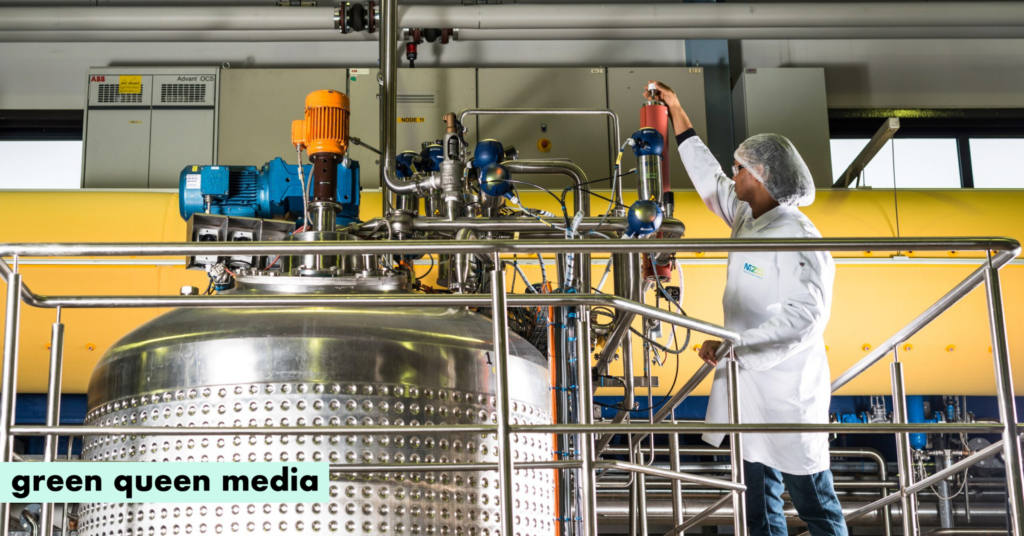
Within these frameworks, the Commission formally acknowledges that alternative protein projects play a vital role in tackling global systemic crises. These include mitigating climate change, alleviating natural resource scarcity, enhancing food security, improving nutritional health, and reducing the risks associated with zoonotic diseases and antimicrobial resistance. Furthermore, the strategy highlights the necessity of expanding advanced production infrastructure—specifically precision and biomass fermentation—to help startups navigate the perilous "second valley of death," the critical funding gap that often traps early-stage companies between pilot-scale testing and full commercial manufacturing.
Despite these positive acknowledgments, the strategy falls short of renewing dedicated research funding aimed at optimizing the sensory profiles, structural textures, and retail pricing of plant-based, fermentation-derived, and cultivated foods. This oversight is particularly stark given that an accompanying review of the current Food 2030 program documented tangible successes in developing novel plant proteins through targeted public research grants.
A Chronology of Contradictions: The EU Protein Plan and Regulatory Hurdles
The European Commission’s ambivalent stance toward sustainable protein innovation is part of a broader, well-documented policy timeline that has unfolded over recent years. To understand the gravity of the current omission, it is necessary to examine the sequence of recent EU agricultural and biotechnology initiatives:
- Late 2024 to Early 2025: The European Commission launches various life sciences initiatives, setting aside approximately €350 million in targeted funding opportunities to boost biotechnology and food innovation, explicitly flagging the commercial and environmental potential of fermentation.
- July 2025: The Commission publishes its comprehensive Protein Plan, which identifies precision and biomass fermentation as essential technologies capable of generating innovative circular business models for farmers and the animal feed industry. However, the plan faces immediate backlash from agrifood analysts for prioritizing protein crops as animal feed rather than directing them toward human consumption.
- Late 2025 to Mid-2026: Regulatory friction intensifies as the EU moves forward with restrictive labeling rules, banning companies from utilizing traditional meat-related terminology on plant-based product packaging, with discussions regarding further nationwide and cross-border restrictions remaining ongoing.
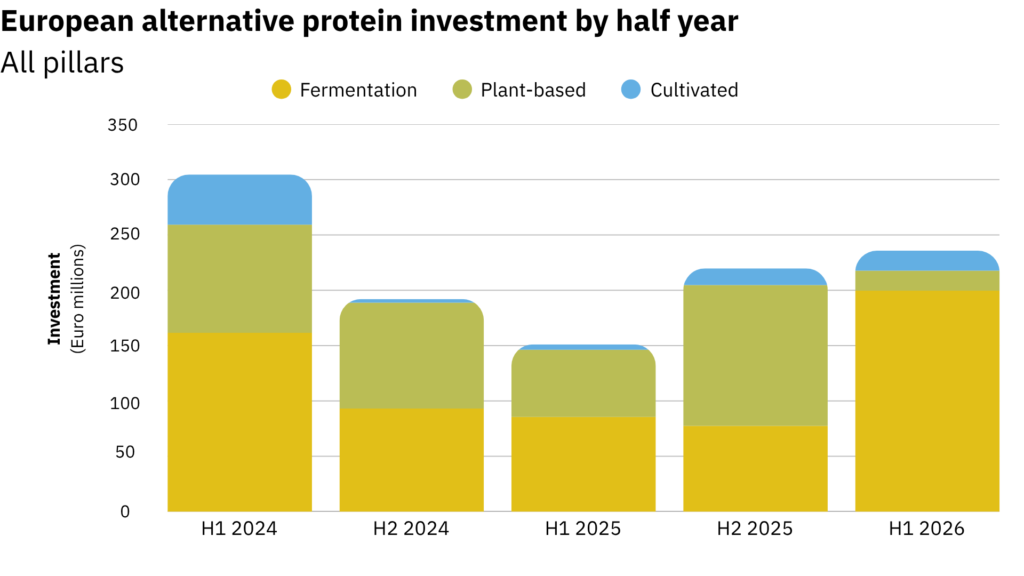
- Mid-2026: Data compiled by the Good Food Institute (GFI) Europe reveals that private investment resilience is heavily anchored in the fermentation sector, which accounted for a staggering 84% of all private funding for alternative proteins in the first half of 2026, driving a 56% year-on-year increase for the broader sector.
- September 2026: The Commission officially launches its Agri-Food Innovation Strategy for 2026–2034, acknowledging industrial capacity needs while failing to provide direct financial commitments or include novel foods in regulatory sandboxes under the initial Biotech Act.
This timeline illustrates a persistent disconnect: while EU executive bodies recognize biotechnology and alternative proteins as critical economic drivers, legislative measures frequently undermine these technologies through restrictive marketing barriers and a lack of dedicated fiscal support.
Stakeholder Reactions: The Good Food Institute Speaks Out
The response from policy advocates and industry insiders has been swift. Alessandro Gardino, a policy officer at GFI Europe, voiced cautious optimism tempered by deep frustration over the missed opportunities within the newly released strategy.
"While it’s great to see a renewed focus on scaling up Europe’s fermentation manufacturing capacity, the lack of dedicated research to improve the taste and price of alternative proteins is a missed opportunity, particularly as the Commission has acknowledged their benefits in its own evidence review," Gardino stated. He emphasized that resolving foundational scientific challenges regarding taste, texture, and cost remains paramount if these novel foods are to capture mainstream consumer markets and fulfill EU ambitions for a sustainable food system.
Industry analysts point out that while the Commission intends to encourage private investment to build and upgrade open-access infrastructure—allowing startups to test and de-risk production processes without massive upfront capital—relying solely on private market forces is insufficient. Given the capital-intensive nature of scaling biomanufacturing facilities, public co-funding and institutional backing are viewed as indispensable catalysts to attract risk-averse private investors.
The Regulatory Sandbox Controversy
Compounding the funding deficit is a contentious regulatory dispute surrounding the European Union’s approach to pre-market approvals. The new research strategy explicitly extols the virtues of regulatory sandboxes—controlled, collaborative environments where businesses and researchers can work alongside regulators to design safety standards and accelerate product approvals.
However, a major point of contention arose when the Commission conspicuously omitted novel foods from the food and feed regulatory sandboxes included in its inaugural Biotech Act. This exclusion has triggered a concerted lobbying effort from biotechnology coalitions and environmental organizations, who are actively urging policymakers to explicitly designate fermentation-derived food ingredients and microbial single-cell proteins as covered technology categories in the second installment of the Biotech Act, scheduled for publication later this quarter.
GFI Europe and allied industry groups maintain that the EU must reverse its exclusion of novel foods from these sandboxes if it genuinely hopes to honor its own long-term food roadmaps. Without streamlined regulatory pathways and sandbox testing grounds, innovative food tech startups will continue to face prolonged bureaucratic delays, often prompting them to seek commercial approval and capital deployment in more receptive foreign jurisdictions such as the United States, Singapore, or Israel.
Economic and Strategic Implications for Europe
The implications of the European Commission’s hesitant funding approach extend far beyond agricultural politics, touching directly upon European economic competitiveness, food sovereignty, and climate mitigation targets.
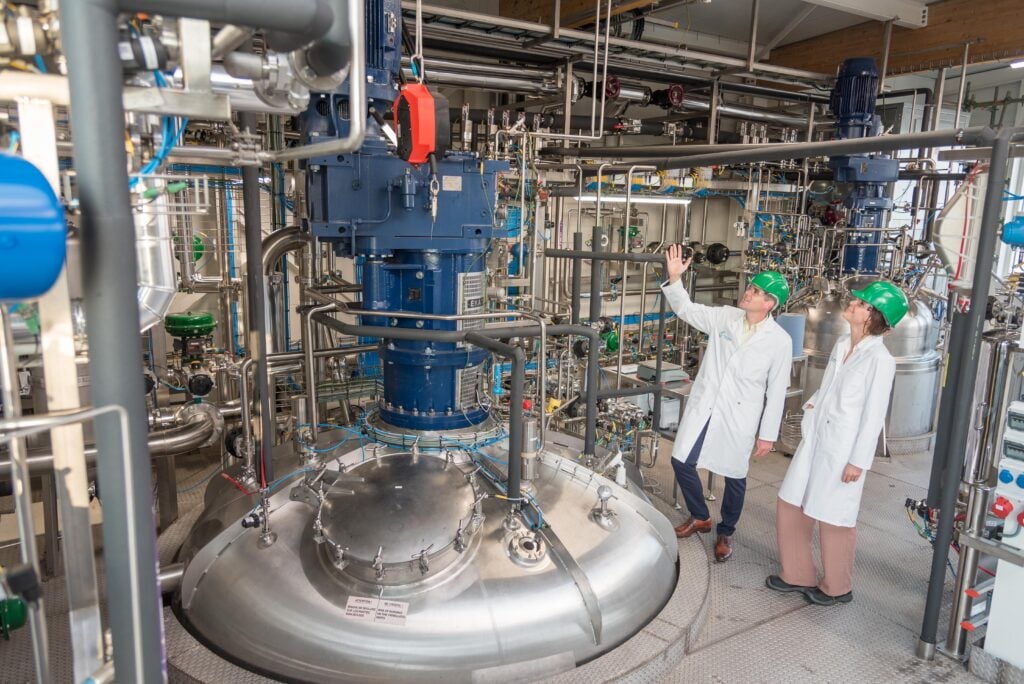
From an economic perspective, the global market for sustainable proteins and precision fermentation is expanding rapidly. By failing to allocate robust public financing for industrial-scale infrastructure and targeted R&D, the EU risks ceding its technological leadership to international competitors who are aggressively subsidizing domestic biotech sectors. Although European startups—particularly within the fermentation subsector—continue to demonstrate strong resilience and attract private capital, venture funding alone cannot bridge the capital expenditure gap required to build multi-million-euro bioreactors and large-scale manufacturing plants.
Furthermore, from a strategic standpoint, Europe remains heavily reliant on imported protein for animal feed, exposing its agricultural supply chains to global market volatility and geopolitical disruptions. By treating alternative proteins and advanced fermentation as peripheral novelties rather than central pillars of agricultural policy, the Commission risks missing a historic opportunity to modernize its rural economies, empower forward-thinking farmers, and build a truly climate-resilient food infrastructure for the decades leading up to 2040.
