
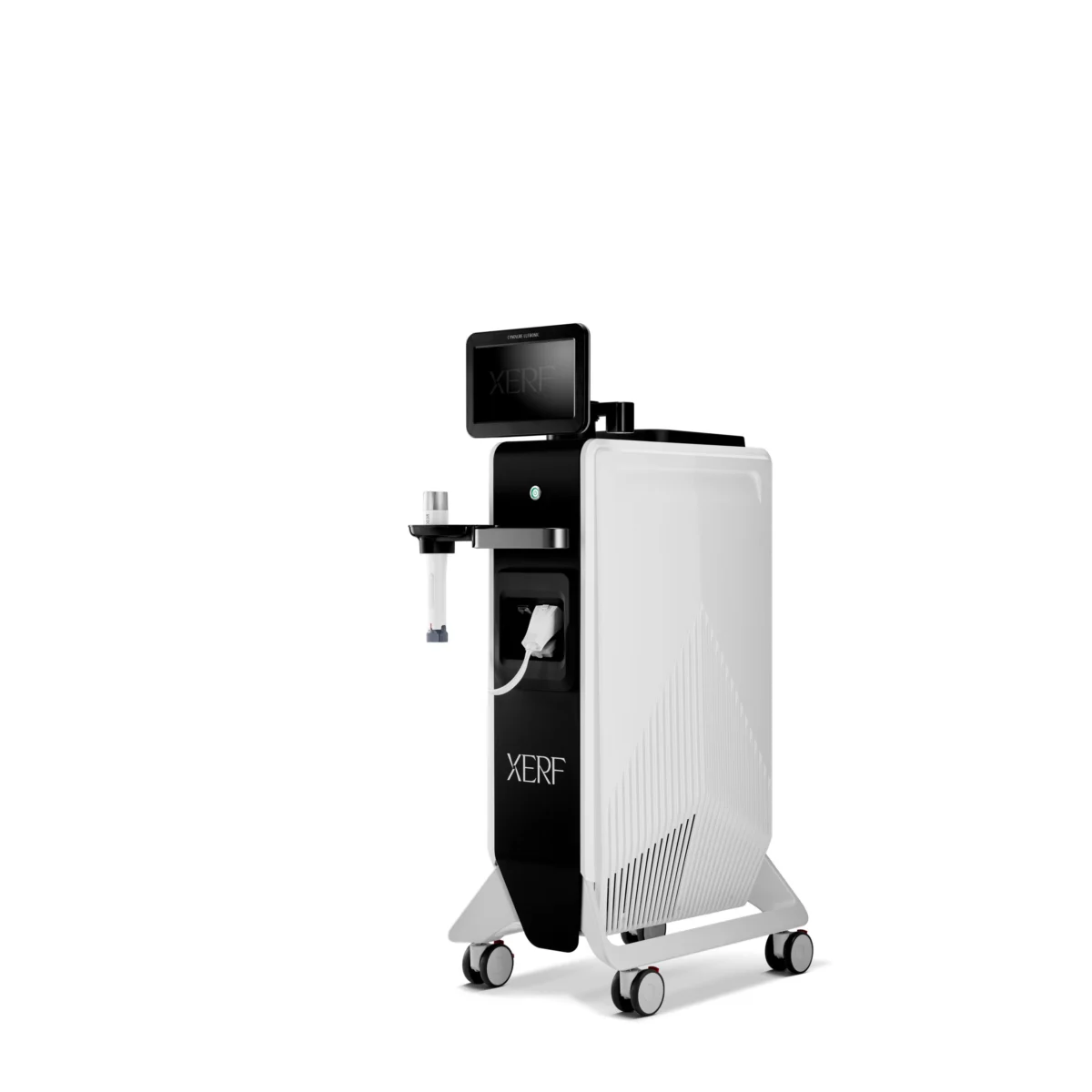
The landscape of aesthetic medicine in the United Kingdom has entered a new phase with the official market introduction of XERF, an advanced non-invasive skin-tightening platform. Brought to British shores through an exclusive distribution partnership with established laser and energy-based device company Seriderm, the technology introduces a sophisticated approach to addressing early-to-moderate skin laxity without the need for surgical intervention. As consumer demand for downtime-free aesthetic procedures continues to climb across the country, industry stakeholders are closely monitoring how this dual-frequency monopolar radiofrequency device will perform within a competitive and highly regulated UK aesthetic market.
Background Context of the Aesthetic Device Market and the Rise of Non-Invasive Technologies
Over the past decade, the global aesthetic medicine market has undergone a significant paradigm shift. Patients increasingly favor non-surgical, minimally invasive treatments that offer visible rejuvenation with minimal recovery time, bypassing the physical risks, financial costs, and social downtime associated with traditional plastic surgery procedures such as rhytidectomy (facelifts) or neck lifts. Within this broader evolution, energy-based devices utilizing ultrasound and radiofrequency (RF) energy have emerged as the gold standard for stimulating neocollagenesis—the biological process of creating new collagen fibers within the dermis.
Skin laxity is a hallmark of chronological aging, driven primarily by the progressive degradation of extracellular matrix proteins, specifically collagen and elastin. As endogenous production of these structural proteins declines from our mid-twenties onward, the skin loses its inherent tensile strength, resilience, and elasticity. Environmental factors, including ultraviolet radiation, oxidative stress, pollution, and lifestyle habits, further accelerate this structural breakdown. Traditionally, addressing sagging skin along the lower face, jawline, and neck required surgical intervention. However, advancements in bio-engineering have enabled manufacturers to design energy delivery systems capable of targeting deep dermal and subdermal layers while preserving the integrity of the epidermis.
Seriderm, recognized within the British and Irish medical aesthetic sectors for supplying clinically validated technologies to practitioner clinics, identified a gap in the market for a high-precision, multi-depth radiofrequency device. By securing the exclusive distribution rights for XERF, Seriderm aims to equip dermatology clinics, plastic surgery practices, and advanced aesthetic medical centers with a versatile tool engineered to combat localized tissue laxity with high clinical precision.
Chronology and Rollout Timeline of the XERF Launch
The commercial introduction of XERF in the UK follows a carefully orchestrated timeline designed to build regulatory confidence, clinical familiarity, and commercial anticipation among medical professionals.
Phase 1: Pre-Market Evaluation and Clinical Efficacy Review
Prior to its commercial launch, the XERF device underwent rigorous evaluation phases in select international markets to validate its safety profile, energy delivery consistency, and patient comfort levels. Clinical observations focused heavily on the device’s ability to uniformly heat target tissue volumes without causing thermal injury to the surrounding epidermis.
Phase 2: Practitioner Engagement and Early Access Pre-Orders
Throughout the spring and early summer, Seriderm initiated private preview events and educational symposia for key opinion leaders in dermatology and aesthetic medicine. These closed-door sessions allowed experienced practitioners to examine the patented dual-frequency technology firsthand, analyze technical data sheets, and observe preliminary treatment protocols. This strategic phase generated substantial industry buzz, culminating in a wave of early practitioner pre-orders ahead of the official public announcement.
Phase 3: Official UK Market Debut and Practitioner Training
The official commercial launch marks the transition from pre-market anticipation to active clinical integration. According to Seriderm, comprehensive clinical training programs are currently underway to ensure that practitioners purchasing the system are fully certified in operating the dual-frequency handpieces, mapping treatment vectors, and managing patient expectations.
Phase 4: Commercial Rollout and First Patient Treatments
Clinics across the UK and Ireland are scheduled to commence live patient treatments with the XERF platform starting in September. This timing has been strategically selected to align with the post-summer period, when patients frequently seek skin rejuvenation therapies to address environmental skin damage accumulated during warmer months.
Technical Specifications and Mechanisms of Action
Understanding the clinical utility of XERF requires a detailed examination of its underlying physics and biological mechanisms. Unlike traditional single-frequency radiofrequency devices that may deposit thermal energy uniformly or superficially, XERF utilizes a patented dual-frequency monopolar radiofrequency architecture.
Monopolar radiofrequency systems operate by passing an electrical current between an active treatment electrode applied to the skin and a return pad placed on the patient’s body, completing an electrical circuit. This design allows the energy to penetrate deep into the subcutaneous tissue layers. XERF’s dual-frequency capability takes this a step further by allowing practitioners to target multiple tissue depths simultaneously or sequentially within a single treatment session.
The controlled thermal energy generated by the device penetrates deep into the dermal matrix and reaches subdermal structures, most notably the superficial musculoaponeurotic system (SMAS)—the fibrous sheet of tissue that encases, separates, and interconnects the muscles of facial expression. Traditionally targeted only during surgical facelifts, the SMAS layer plays a critical role in facial support. When exposed to precise thermal thresholds (typically ranging between 40°C and 45°C), collagen helices within these deep structures undergo immediate denaturation and contraction. This initial tightening effect is followed by a prolonged, cascade-driven wound-healing response. Over the subsequent weeks and months, fibroblasts are stimulated to synthesize fresh Type I and Type III collagen, leading to long-term collagen remodeling, enhanced dermal density, and improved structural integrity.
Target Indications and Anatomical Focus Areas
The XERF system is specifically engineered to treat early-to-moderate skin laxity across several critical anatomical zones that are notoriously difficult to correct using topical skincare or superficial cosmetic procedures. These include:
- The Jawline: Redefining mandibular contours that have become obscured by tissue descent or loss of structural definition.
- Early Jowls: Mitigating the descent of soft tissue lateral to the chin, smoothing the transition between the cheek and jaw.
- Loose Neck Skin: Improving crepey texture and laxity along the anterior and lateral cervical regions.
- Under-Chin Laxity (Submental Region): Tightening redundant skin beneath the chin to create a more angular, youthful cervicomental angle.
- Reduced Facial Firmness: Restoring overall skin tension and resilience across the mid and lower face.
Official Responses and Industry Perspectives
The commercial launch of XERF has elicited enthusiastic responses from both corporate leadership and the wider medical aesthetic community. Industry analysts note that the level of pre-launch demand observed by Seriderm underscores a broader appetite among UK practitioners for differentiated technologies that offer measurable, science-backed results.
Zabi Zaheer, South UK and Ireland business manager at Seriderm, provided detailed insight into the market reception and strategic significance of the launch:
"Patients are already expressing strong interest, while practitioner demand and pre-orders have been exceptional. Its patented dual-frequency technology, designed to deliver controlled energy at multiple tissue depths, including deeper structures around the superficial musculoaponeurotic system, offers something genuinely distinctive to the UK market. With treatments commencing in September, I expect XERF’s momentum to further build. For Seriderm, this is just the beginning."
Independent aesthetic practitioners and dermatological nurses have similarly highlighted the importance of multi-depth energy delivery. In clinical consultations, patients frequently report a desire for treatments that address both superficial skin texture and deep structural support simultaneously. By bridging this gap, XERF allows clinics to offer a comprehensive tightening protocol that can be customized to individual anatomical variations and degrees of skin aging.
Market Implications and Future Outlook for UK Aesthetics
The introduction of XERF into the UK market carries several notable implications for the aesthetic sector, influencing clinical practices, patient demographics, and competitive dynamics among device manufacturers.
Elevation of Clinical Standards
As non-invasive technologies become increasingly sophisticated, patient expectations have risen correspondingly. Devices that rely on vague claims of rejuvenation are facing greater scrutiny from both regulatory bodies and educated consumers. The integration of patented dual-frequency technology positions Seriderm at the forefront of scientifically rigorous aesthetic distribution, encouraging other market players to substantiate their clinical claims with robust biophysical data.
Expansion of the Non-Surgical Rejuvenation Demographic
Historically, patients exhibiting early jowling or submental laxity faced a difficult choice: accept the gradual progression of facial aging or undergo invasive surgery. The availability of high-performance energy-based devices like XERF expands the addressable demographic, capturing younger cohorts—particularly patients in their late thirties to mid-fifties—who wish to proactively manage skin laxity before it reaches a stage requiring surgical correction. Furthermore, older patients who are medically unsuited for surgery, or those who simply wish to avoid surgical recovery times, represent a steady and growing market segment.
Economic and Practice Growth for Clinics
For aesthetic clinics, investing in multi-functional, high-demand platforms like XERF represents a crucial strategy for business growth and patient retention. In a saturated marketplace, clinics that offer cutting-edge, exclusive technologies can differentiate themselves from competitors, command premium pricing for specialized treatments, and build long-term patient loyalty through consistent, reproducible clinical outcomes.
Regulatory Compliance and Safety Considerations
As the rollout proceeds toward full clinical operations in September, adherence to strict safety protocols remains paramount. Seriderm’s emphasis on comprehensive practitioner training reflects a broader industry recognition that advanced energy-based devices must be operated by qualified, medically trained professionals to minimize the risk of adverse events, such as thermal burns, contour irregularities, or post-inflammatory hyperpigmentation. Regulatory oversight in the UK aesthetic sector continues to evolve, making structured manufacturer-led education an essential component of successful device adoption.
Conclusion
The official debut of the XERF non-invasive skin-tightening treatment under Seriderm’s exclusive UK distribution marks a significant milestone in the evolution of non-surgical aesthetic medicine. By combining patented dual-frequency monopolar radiofrequency energy with the ability to target deep anatomical structures such as the SMAS layer, the platform addresses a critical clinical need for patients experiencing early-to-moderate skin laxity. With exceptional early pre-orders, strong practitioner demand, and live treatments set to commence across the UK, XERF is well-positioned to shape clinical protocols and patient expectations in the competitive British aesthetic landscape for years to come.
