
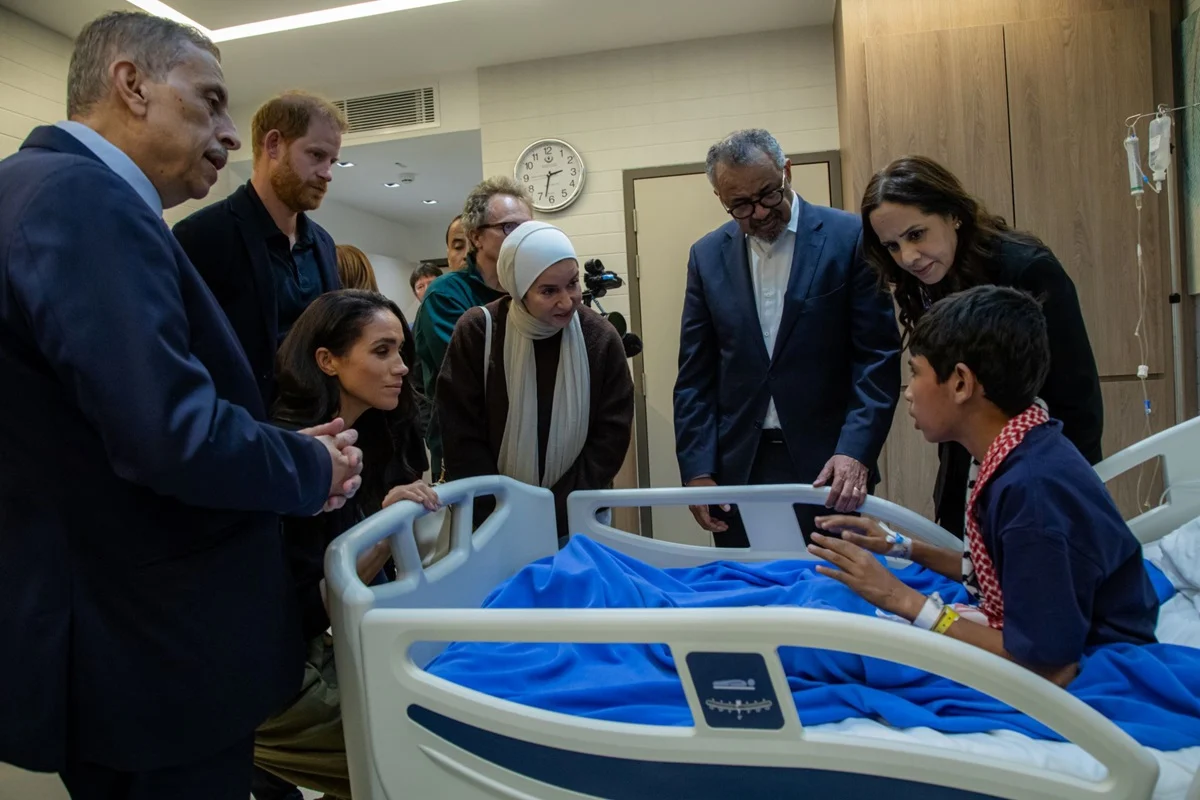
The Director-General of the World Health Organization (WHO), Dr Tedros Adhanom Ghebreyesus, has completed the first day of a significant two-day State visit to the Hashemite Kingdom of Jordan, a trip designed to fortify the long-standing strategic partnership between the global health body and one of the Middle East’s most pivotal humanitarian hubs. The visit underscores a multifaceted agenda centered on three critical pillars: the achievement of Universal Health Coverage (UHC), the integration of mental health into primary care, and the urgent coordination of humanitarian health actions amidst escalating regional crises. As Jordan continues to serve as a sanctuary for millions of displaced persons and a vital corridor for medical aid to the Palestinian territories, Dr Tedros’s presence serves as both a recognition of Jordan’s past contributions and a call for renewed international solidarity to sustain its overstretched health infrastructure.
High-Level Diplomacy and the Royal Audience
The cornerstone of the visit’s first day was a private audience with His Majesty King Abdullah II. This meeting reflected the high-level diplomatic weight accorded to the visit, signaling that health is viewed by the Jordanian monarchy not merely as a social service but as a cornerstone of national security and regional stability. During the discussions, King Abdullah II and Dr Tedros explored the mechanisms required to strengthen resilient health systems capable of withstanding the dual pressures of domestic needs and external shocks.
Central to their dialogue was the ongoing humanitarian catastrophe in the Gaza Strip. Jordan has emerged as a primary lifeline for the Palestinian people, utilizing its diplomatic and logistical infrastructure to facilitate the evacuation of critically ill and injured patients. Dr Tedros expressed profound gratitude for the King’s leadership, particularly highlighting the "Medical Corridor" initiative. This program has been instrumental in transferring children from Gaza who require complex surgeries or specialized treatments—such as oncology and advanced trauma care—that are no longer available in the besieged enclave due to the systematic destruction of its healthcare facilities.
Dr Tedros lauded the King’s vision, stating that Jordan’s commitment to UHC and its generosity toward refugees provide a blueprint for other nations. The Director-General noted that in an era of increasing global fragmentation, Jordan’s approach of putting "health and humanity first" serves as a necessary moral compass for the international community.
The Humanitarian Burden: A Nation of Three Million Guests
A significant portion of the day’s agenda focused on Jordan’s extraordinary role as a host nation. Currently, Jordan provides essential health services to more than three million refugees, a population primarily composed of those fleeing conflict in Syria and the Palestinian territories. This demographic reality places an immense burden on the Jordanian Ministry of Health, which has integrated refugees into its national health system rather than sequestering them in parallel structures—a move that WHO considers a "gold standard" for humanitarian integration.
To understand the ground-level impact of these policies, Dr Tedros visited a WHO-supported hospital that specializes in the care of children evacuated from Gaza. This facility acts as a terminal for the medical corridor, providing life-saving interventions for cancer, severe trauma, and chronic conditions. During the visit, the Director-General engaged with frontline health workers, many of whom have been working around the clock to manage the influx of high-acuity patients. He also met with the families of young patients, hearing firsthand accounts of the harrowing journeys taken to reach safety and medical care. The visit served as a poignant reminder that while political solutions remain elusive, the medical neutrality and humanitarian commitment shown by Jordan provide a tangible glimmer of hope.
Strategic Philanthropy and the Sussex Collaboration
In a notable addition to the official delegation, the Director-General was joined by the Duke and Duchess of Sussex, Prince Harry and Meghan. Their participation was not merely ceremonial but rooted in a substantive partnership between WHO and Archewell Philanthropies. The Duke and Duchess have a history of collaborating with WHO, dating back to their advocacy for global vaccine equity during the COVID-19 pandemic.
In Jordan, Prince Harry took a prominent role as an ally of WHO’s mental health initiatives. He participated in discussions regarding the psychological toll of conflict and displacement, emphasizing that mental health support is not a luxury but a fundamental component of recovery and long-term peace. The Duke highlighted the specific needs of men, young people, and children—groups often marginalized in traditional mental health frameworks.
Prince Harry’s remarks resonated with the broader mission of the visit, as he praised Jordan for its "compassion, resilience, and innovation." He noted that through Archewell Philanthropies, he and the Duchess have witnessed the transformative power of WHO’s emergency responses. By leveraging their global platform, the Sussexes aim to reduce the stigma associated with mental health issues in crisis settings and mobilize resources for community-based psychological support.
Advancing Mental Health and Universal Health Coverage
While the humanitarian crisis often dominates headlines, a significant portion of Dr Tedros’s visit was dedicated to the technical and structural advancements of the Jordanian health system. In bilateral meetings with the Jordanian Minister of Health, the Director-General focused on the "Special Initiative for Mental Health," a WHO flagship program that identifies Jordan as a global leader.
Jordan has been a pioneer in the Eastern Mediterranean Region for its integration of mental health services into primary healthcare. This approach ensures that a patient visiting a local clinic for a physical ailment can also receive psychological screening and support as part of routine care. This integration is crucial in a country where a large percentage of the population has experienced the trauma of war and displacement.
The discussions also touched upon the broader goal of Universal Health Coverage. Jordan’s strategy involves expanding insurance coverage and improving the quality of care in rural and underserved areas. Dr Tedros reaffirmed WHO’s commitment to providing technical expertise and facilitating international funding to help Jordan bridge the remaining gaps in its UHC roadmap.
Financing the Future: The High-Level Partners’ Meeting
Recognizing that Jordan’s humanitarian and health goals cannot be achieved in isolation, Dr Tedros convened a high-level meeting with a diverse group of stakeholders, including donor countries, United Nations agencies, and philanthropic organizations. The focus was on "financing priorities" for health system strengthening.
The Director-General made a compelling case for sustained investment, arguing that supporting Jordan’s health system is an investment in regional stability. The meeting addressed the need for "predictable and flexible" funding to allow the Ministry of Health to plan for long-term improvements rather than merely reacting to immediate emergencies. Key areas identified for investment included:
- Scaling up mental health services to reach the most vulnerable refugee populations.
- Enhancing laboratory and diagnostic capacities to improve disease surveillance.
- Modernizing digital health infrastructure to streamline patient data and resource allocation.
- Strengthening the health workforce through specialized training in trauma and emergency medicine.
Timeline and Upcoming Engagements
The first day of the visit established a robust foundation for the remainder of the mission. The chronology of the trip reflects a progression from high-level policy discussions to community-level engagement.
- Day 1 Morning: Arrival and high-level briefing with the WHO Country Office; Meeting with the Minister of Health.
- Day 1 Afternoon: Royal Audience with King Abdullah II; Visit to the specialized pediatric hospital for Gaza evacuees; High-level meeting with international donors and UN partners.
- Day 1 Evening: Working dinner focused on mental health advocacy with the Duke and Duchess of Sussex and Jordanian mental health professionals.
Looking ahead to the second day, Dr Tedros is scheduled to visit the National Center for Rehabilitation of Addicts. This WHO-supported facility is a cornerstone of Jordan’s comprehensive approach to mental health, providing integrated medical and social services for individuals struggling with substance abuse. The Director-General will also meet with community leaders and women’s groups, including representatives from the Jordanian Hashemite Fund for Human Development (JOHUD), to discuss the role of women in community health and local resilience.
A final visit to the King Hussein Cancer Center (KHCC) is also planned. As a premier oncology facility in the region, KHCC plays a vital role in treating patients from across the Middle East, and Dr Tedros intends to discuss regional collaborations to improve cancer survival rates and access to advanced therapies.
Analysis: The Implications of the State Visit
The visit of Dr Tedros to Jordan occurs at a critical juncture for global health diplomacy. As the world faces multiple overlapping crises—ranging from the aftermath of the pandemic to the health impacts of climate change and active conflicts—Jordan stands as a "buffer state" whose stability is essential.
By highlighting Jordan’s leadership, WHO is sending a message to the global community that the burden of hosting refugees must be shared more equitably. The visit also serves to elevate mental health to the same level of priority as physical health in emergency settings, a shift that could redefine humanitarian aid standards worldwide. Furthermore, the involvement of high-profile figures like the Duke and Duchess of Sussex helps to keep the "forgotten" aspects of the Gaza crisis and the Syrian refugee situation in the public eye, potentially driving private sector and individual philanthropic contributions.
In conclusion, the first day of Dr Tedros’s visit has successfully mapped out the interconnectedness of health, peace, and security. As the Director-General noted in his closing remarks for the day, Jordan’s role as a hub for medical evacuation and emergency response is not just a regional asset but a global one. The partnership between WHO and Jordan remains a testament to what can be achieved when national leadership and international expertise align in the service of the most vulnerable.
