

In a significant development for the food and beverage industry, US-based startup Marine Biologics has introduced SeaTex, an innovative seaweed-derived powder designed to meet the escalating consumer demand for clean-label products. This single-ingredient solution offers manufacturers a powerful tool to stabilize proteins, bind fats, and create nutritious, additive-free formulations, directly addressing growing concerns around ultra-processed foods (UPFs). The company is set to showcase its groundbreaking ingredient at the prestigious Future Food-Tech event in San Francisco, scheduled for March 19-20, marking a pivotal moment in the quest for healthier, more transparent food options.
The clean-label movement, driven by consumer awareness and a desire for simpler ingredient lists, has placed immense pressure on food manufacturers to reformulate their products. Traditional methods often rely on a complex array of stabilizers, emulsifiers, and texturizers, many of which are perceived by consumers as artificial or unnecessary. SeaTex emerges as a direct response to this challenge, offering a versatile, naturally derived alternative that can replace multiple synthetic or highly refined ingredients. Its unique properties allow it to suspend and stabilize a wide range of compounds, including proteins, fibers, minerals, and beneficial bioactives, while simultaneously binding and structuring fats and lipids. This multi-functional capability makes SeaTex a compelling proposition for brands aiming to reposition their offerings as free from UPFs and industrial additives.
Marine Biologics is leveraging cutting-edge artificial intelligence (AI) to accelerate the development and consistency of its clean-label ingredients. The company’s proprietary AI engine, MacroLink, is specifically engineered for ingredient discovery and utilizes predictive AI to dramatically shorten the timeline from concept to market-ready ingredient, compressing what once took years into mere months. This AI-driven approach is crucial for establishing consistent and cost-effective global supply chain solutions, a critical factor in the widespread adoption of novel food ingredients. MacroLink is built upon a robust biochemical data warehouse and supported by Marine Biologics’ standardized bulk material, SuperCrude. SuperCrude represents a minimally processed feedstock platform that transforms variable seaweed biomass into a quality-controlled intermediate, ensuring reliable performance and scalability.
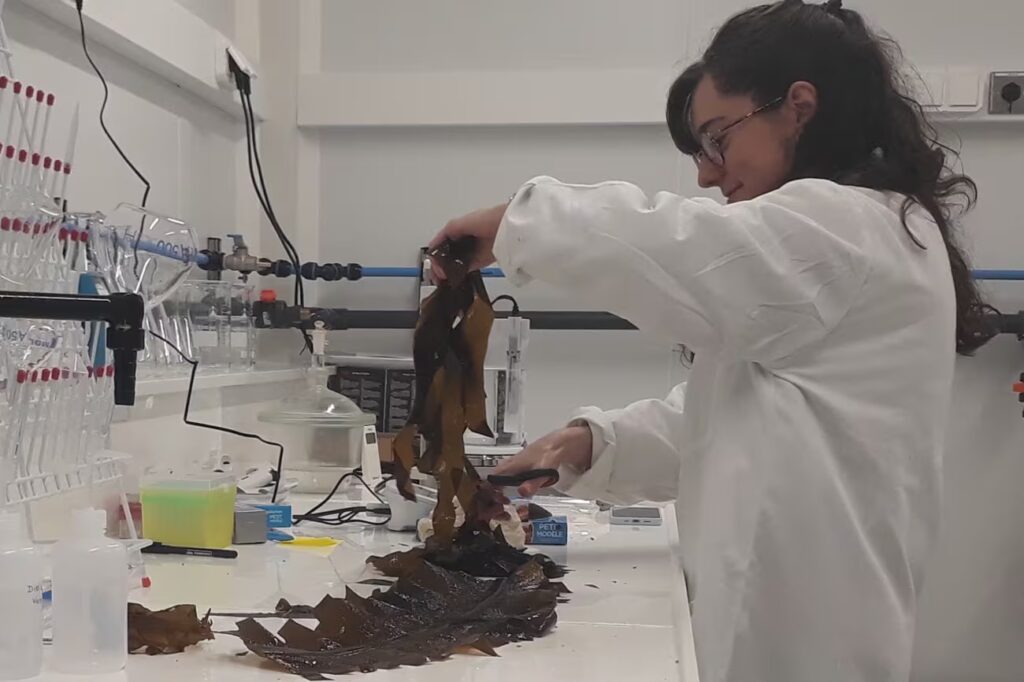
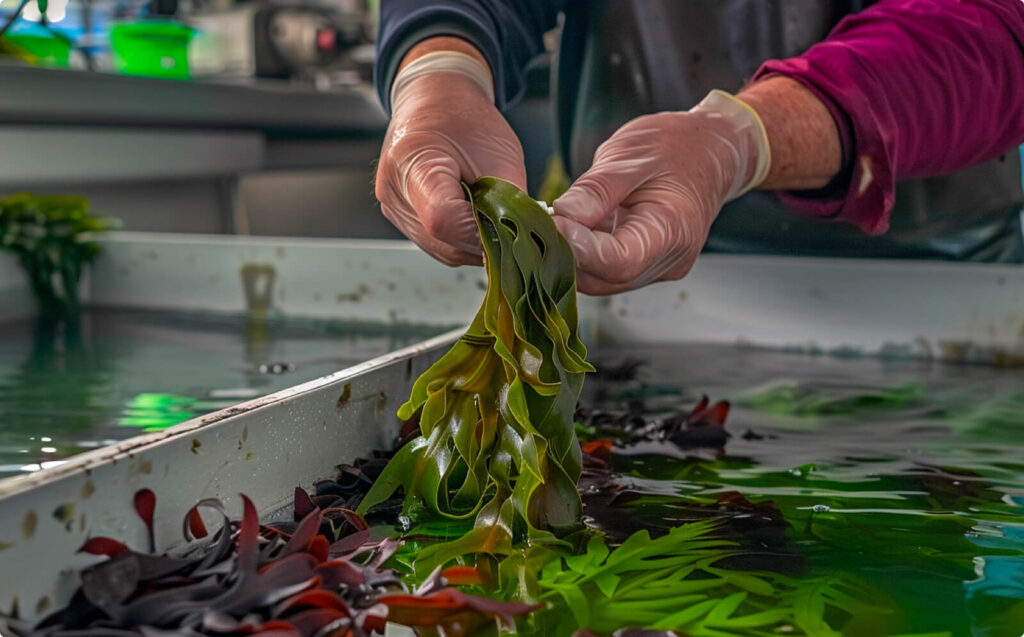
SeaTex itself is derived from an ocean-harvested brown seaweed that already holds the Generally Recognized as Safe (GRAS) designation from the US Food and Drug Administration (FDA). This established regulatory status significantly simplifies the adoption process for manufacturers, allowing them to incorporate SeaTex into market-ready formulations without facing extensive regulatory hurdles. The ingredient is characterized by its neutral taste, enabling it to be seamlessly integrated into a diverse range of food and beverage applications without imparting undesirable flavors. Furthermore, SeaTex functions effectively at extremely low application rates, demonstrating high efficacy with minimal usage. It also exhibits remarkable tolerance to a broad spectrum of pH and temperature conditions, enhancing its versatility in various processing environments.

Crucially, SeaTex contains zero additives or synthetic ingredients, a fact that directly appeals to manufacturers seeking to eliminate gums, buffers, and bulking agents from their product labels. This is particularly relevant in the United States, where food additives have become a focal point of consumer criticism and regulatory scrutiny. A prominent petition, initiated by former FDA commissioner David Kessler, has called for the revocation of GRAS status for certain additives and their removal from the food supply. Health secretary Robert F Kennedy Jr. has indicated a commitment to addressing these concerns, signaling a potential shift in regulatory landscapes that favors natural and minimally processed ingredients.
The market data underscores the growing importance of clean labels. According to Innova Market Insights, in 2025, over one in three food and beverage launches in North America featured a clean-label claim, with "no additives/preservatives" being the most frequently highlighted attribute. Consumer sentiment further reinforces this trend. A significant 79% of Americans perceive UPFs as a "significant threat" to public health, and an overwhelming 82% believe that foods with fewer artificial or unfamiliar ingredients are healthier. This translates into practical consumer behavior, with 69% of consumers actively checking labels to avoid highly processed ingredients and 80% expressing a preference for familiar ingredients over artificial additives. These statistics paint a clear picture of a market ripe for innovations like SeaTex.
Marine Biologics’ breakthrough processing capabilities aim to address what CEO Patrick Griffin describes as a "narrow understanding" of seaweed’s potential. Historically, while seaweed has been recognized for its abundance and renewability as a nutritional source, its complex chemical composition and traditional processing methods have often resulted in highly refined ingredients that no longer align with consumer preferences for naturalness. Griffin stated, "With our breakthrough processing capabilities, we provide product developers and brand teams with new tools to meet consumer demands for cleaner labels."
The company’s vision extends beyond SeaTex, with a strategic focus on developing a comprehensive pipeline of clean-label functional ingredients. This includes natural egg replacements, innovative baking texturants, potent bioactives, and next-generation biopolymers for sustainable packaging. The latter area is seeing significant innovation from other seaweed-focused startups, such as Notpla in the UK and Uluu in Australia, highlighting the broader potential of marine-derived materials across various industries.
Marine Biologics’ commitment to innovation is further demonstrated by its strategic use of AI, specifically its MacroLink platform. This AI engine represents a paradigm shift in ingredient development, enabling the rapid exploration and validation of natural compounds. By building a comprehensive biochemical data warehouse and linking it to standardized, quality-controlled seaweed feedstock (SuperCrude), Marine Biologics can efficiently identify and refine ingredients with specific functional properties. This systematic approach not only accelerates discovery but also ensures consistency and scalability, crucial for meeting the demands of large-scale food manufacturing. The ability to digitally benchmark and characterize these ingredients transforms them from variable natural products into reliable manufacturing inputs.
The broader context of the algae and seaweed industry reveals a rapidly expanding sector attracting significant investment. Companies are increasingly recognizing the immense potential of marine-based ingredients for both nutrition and sustainability. For instance, Mara Renewables is harnessing microalgae to produce DHA, an omega-3 fatty acid with scientifically proven health benefits. Their recent $9.1 million funding round is earmarked for scaling up manufacturing capabilities, signaling strong market confidence in microalgae-derived products.
Similarly, Aqua Theon recently secured $13 million to advance its seaweed technology, with a portion of these funds dedicated to expanding its OoMee line of functional marine beverages. This investment underscores the growing consumer interest in functional drinks and the role of seaweed in delivering targeted health benefits. In the realm of alternative proteins, Israel’s Brevel raised $5 million to develop microalgae-based proteins, lipids, fibers, and antioxidants, demonstrating the versatility of algae as a source for a wide array of food and beverage applications.
These developments, alongside Marine Biologics’ SeaTex, collectively illustrate a growing industry trend towards unlocking the full potential of marine resources. Griffin’s vision for a "limitless pipeline of clean-label food ingredients" powered by technology is becoming a tangible reality. SeaTex serves as the inaugural product showcasing this potential, exemplifying how advanced technological approaches can effectively harness natural raw materials for the food industry, moving beyond the limitations of traditional, often less consumer-friendly, processing methods.
The unveiling of SeaTex at Future Food-Tech in San Francisco is strategically timed to coincide with a global dialogue on food innovation and sustainability. The event attracts leading food technologists, ingredient suppliers, brand innovators, and investors, providing a crucial platform for Marine Biologics to engage with key stakeholders. The presentation of a ready-to-drink coffee beverage stabilized solely with SeaTex will offer a tangible demonstration of its capabilities, moving beyond theoretical benefits to practical application. This showcase is expected to generate significant interest from beverage manufacturers seeking to enhance their product offerings with clean-label solutions.
Looking ahead, Marine Biologics has ambitious plans for SeaTex’s application. Following its initial beverage focus, the company intends to explore ready-to-mix products, dairy and dairy alternative applications, and baking and snack formulations. This phased approach allows for targeted market penetration and further validation of SeaTex’s efficacy across diverse food matrices. Sally Aaron, Chief Commercial Officer at Marine Biologics, emphasized this expansion strategy in her comments to Green Queen, highlighting the broad applicability of their seaweed powder.
The implications of SeaTex extend beyond mere ingredient substitution. By enabling the creation of products with simpler, more recognizable ingredient lists, Marine Biologics is contributing to a broader shift in consumer trust and perception of food products. As regulatory bodies and consumer advocacy groups continue to scrutinize ultra-processed foods and their components, ingredients like SeaTex offer a proactive solution for brands looking to align with evolving health standards and consumer expectations. The company’s AI-driven approach to ingredient development also promises to democratize access to advanced, clean-label solutions, potentially leveling the playing field for smaller brands and innovators.
In conclusion, Marine Biologics’ SeaTex represents a significant advancement in the field of clean-label ingredients. By harnessing the power of seaweed through innovative AI-driven processing, the company is providing the food and beverage industry with a versatile, natural, and highly effective solution to meet the growing demand for healthier, more transparent products. As consumer awareness and regulatory pressures continue to shape the future of food, SeaTex is poised to play a pivotal role in redefining what constitutes a clean label and unlocking the vast potential of marine-derived ingredients.