
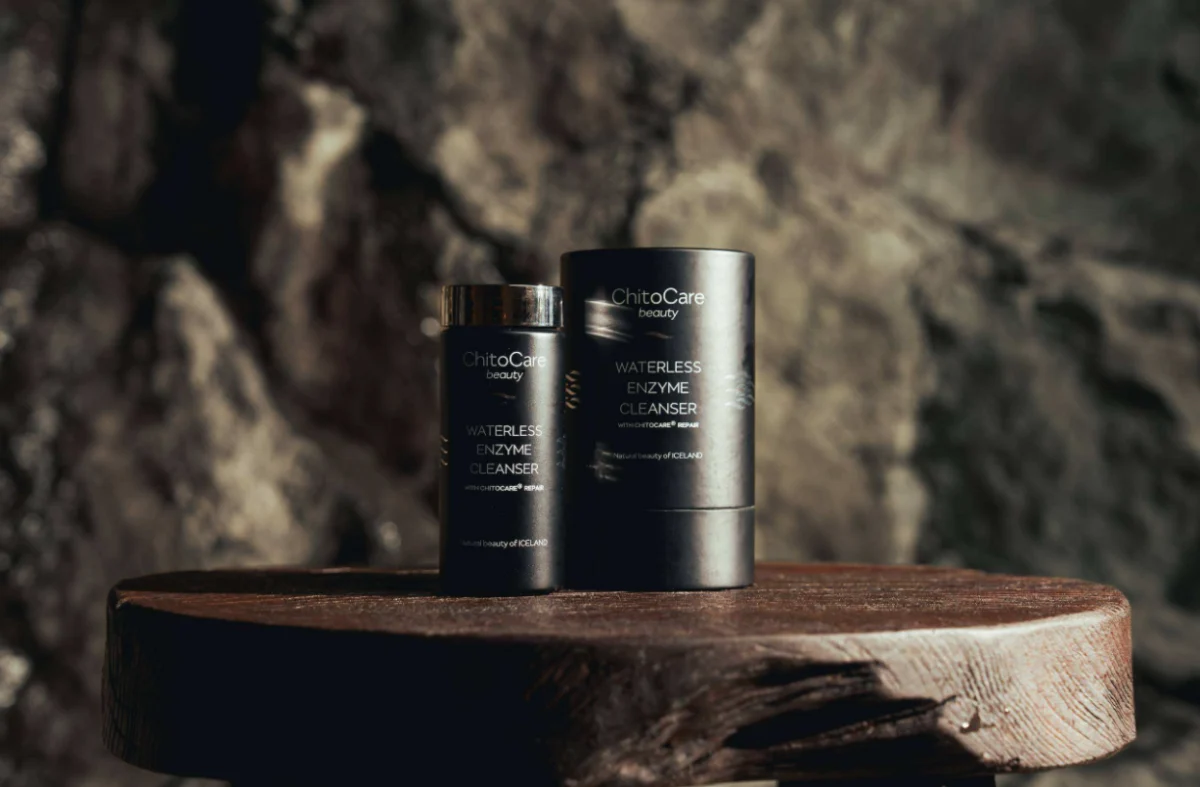
Icelandic biotechnology and skincare brand ChitoCare Beauty has officially introduced its latest formulation, the Waterless Enzyme Cleanser, marking a significant strategic expansion in the company’s portfolio of science-led, marine-derived cosmetics. The newly launched product utilizes a unique powder-to-lather transformation mechanism, engineered to merge deep enzymatic exfoliation with barrier-supporting marine biopolymers. By eliminating water from the initial formulation matrix, the Reykjavik-headquartered enterprise aims to address multiple contemporary challenges within the global beauty sector, ranging from carbon-efficient logistics and product stability to the avoidance of micro-abrasive physical scrubs and harsh synthetic acid peels.
The introduction of this waterless formulation arrives at a time of accelerated growth for anhydrous beauty products worldwide, aligning consumer demand for sustainable, highly concentrated skincare with advanced biomedical derivative research originating from the North Atlantic.
Core Formulation and Active Ingredients
At the technological core of the ChitoCare Beauty Waterless Enzyme Cleanser is a synergistic blend of naturally derived botanical enzymes and proprietary marine chitosan. Unlike conventional liquid cleansers—which are frequently composed of up to eighty percent water and require synthetic preservatives to maintain shelf-life stability—the dry powder format remains inert until it encounters moisture during the user’s cleansing routine.
Upon contact with water, the powder transforms into a rich, active lather driven by a trio of targeted exfoliating agents: papaya fruit extract, papain extract, and protease. These proteolytic enzymes function by selectively breaking down the protein bonds holding dead, dull skin cells to the stratum corneum. This biochemical exfoliation process gently lifts away surface impurities, excess sebum, and residual cosmetic pigments without the need for friction-heavy physical exfoliants like crushed nut shells or plastic microbeads, which have faced global regulatory scrutiny and environmental backlash due to their contribution to marine pollution.
Complementing the enzymatic complex is marine chitosan, a specialized biopolymer extracted sustainably from crustacean sources. Chitosan has a long and established history in medical science, where its biocompatible, film-forming, and antimicrobial properties are extensively utilized in advanced wound care and tissue regeneration. Within the context of topical skincare, marine chitosan acts as a protective shield for the cutaneous barrier. It helps lock in essential moisture while shielding the delicate epidermal layer from environmental stressors and urban pollutants. By uniting enzymatic renewal with the soothing, barrier-supportive qualities of medical-grade chitosan, the cleanser is formulated to provide an optimal balance of efficacy and tolerability, making it suitable for various skin types, including sensitive and reactive complexions.
Chronology and Product Development Timeline
The genesis of the Waterless Enzyme Cleanser traces back to years of rigorous scientific research conducted by ChitoCare Beauty and its parent organization, Primex Iceland, a pioneer in the processing and application of high-purity marine chitin and chitosan.
Phase one of the development lifecycle involved isolating pharmaceutical-grade chitosan from responsibly harvested North Atlantic marine sources, optimizing its purity and molecular weight for cosmetic delivery systems. Concurrently, formulation chemists in Iceland spent over twenty-four months evaluating various botanical enzyme combinations to identify a synergistic complex that could deliver uniform enzymatic activity without destabilizing in a dry, powder-based matrix.
By the final quarter of the preceding year, laboratory stability testing and initial dermatological trials were successfully completed. These trials evaluated the powder-to-lather texture, dissolution rate, and skin compatibility across diverse demographic panels. Following positive clinical feedback regarding skin softness, clarity, and barrier preservation, the company initiated commercial manufacturing preparations in early spring. The official global launch of the Waterless Enzyme Cleanser represents the culmination of this extensive research and development pipeline, positioning ChitoCare Beauty at the forefront of the burgeoning anhydrous cosmetics movement.
Executive Insights and Sustainability Strategy
Sigga Vigfúsdóttir, Chief Executive Officer of ChitoCare Beauty, provided crucial context regarding the philosophy and environmental metrics guiding the product’s release. Commenting on the strategic decision to adopt a waterless format, Vigfúsdóttir emphasized the convergence of ecological responsibility and advanced cosmetic science.
"The Waterless Enzyme Cleanser was developed to reflect our sustainability values, environmental vision and scientific approach to skincare," stated Vigfúsdóttir. "Removing water creates a highly concentrated, more stable powder that activates only on contact with water, preserving ingredient quality while delivering an effective yet gentle, fresh cleansing experience. It also reduces product weight and transportation emissions, supporting our commitment to responsible innovation."
The executive’s remarks underscore a broader corporate mandate aimed at minimizing the environmental footprint associated with manufacturing, packaging, and global distribution. By omitting water—which constitutes the primary bulk volume of standard liquid cleansers—the physical weight and dimensional footprint of each unit are drastically reduced. Lighter cargo translates directly to decreased fuel consumption and lower greenhouse gas emissions throughout international shipping corridors. Furthermore, the exclusion of water eliminates the necessity for heavy plastic bottles traditionally required for liquid formulations, paving the way for more minimalist, resource-efficient packaging solutions.
Market Context and Industry Implications
The launch of ChitoCare Beauty’s Waterless Enzyme Cleanser occurs against a backdrop of profound transformation within the global beauty and personal care market. Industry analysts and market research firms note a surging consumer preference for minimalist routines, water conservation, and high-potency formulations where every ingredient serves a demonstrable physiological purpose.
Anhydrous beauty—commonly referred to as waterless skincare—has transitioned from a niche eco-trend into a major market segment. Consumers are increasingly cognizant of water scarcity issues globally, leading to heightened scrutiny of cosmetic ingredient decks where water frequently occupies the primary position. By substituting water with active dry powders, balms, and solid bars, brands are able to offer consumers superior active ingredient concentration. Without water present, formulas are inherently more resistant to microbial proliferation, which significantly curtails the requirement for complex, potentially irritating synthetic preservative systems.
Moreover, the integration of marine biotechnology into daily skincare reflects an ongoing evolution in functional cosmetics. As consumers become better educated about skin barrier health, the demand for harsh physical scrubs and high-percentage acid toners has softened. Shoppers are pivoting toward intelligent, enzyme-driven resurfacing options that respect the skin microbiome and lipid matrix. The inclusion of medical-grade marine chitosan by ChitoCare Beauty bridges the gap between clinical efficacy and everyday cosmetic luxury, signaling a broader industry trend toward biomimetic and biocompatible ingredient sourcing.
Broader Economic and Environmental Impact
The broader implications of ChitoCare Beauty’s latest offering extend to supply chain transparency and circular economy principles. By deriving chitosan from marine processing side-streams—specifically the shells of cold-water shrimp harvested in pristine Icelandic waters—the brand practices upcycling, transforming what would otherwise be considered organic waste into high-value biomedical and cosmetic assets. This closed-loop sourcing model supports local maritime economies while adhering to strict Icelandic environmental regulations regarding sustainable fishing and processing quotas.
From an economic perspective, the introduction of concentrated powder formats offers distinct logistical advantages for retail partners and distributors. Reduced volumetric requirements mean that warehousing storage space can be optimized, and inventory shipping costs can be significantly mitigated. As global logistics networks face ongoing cost pressures and sustainability mandates, lightweight product categories like waterless cleansers are expected to gain preferential placement among retailers aiming to meet corporate carbon-reduction targets.
Future Outlook for ChitoCare Beauty
With the successful rollout of the Waterless Enzyme Cleanser, ChitoCare Beauty has solidified its reputation as a science-driven innovator bridging marine biotechnology and clean beauty standards. Industry observers anticipate that the positive reception of this product will catalyze further research into anhydrous delivery systems across the brand’s broader product pipeline, potentially inspiring additional powder-to-liquid or solid-format innovations designed to elevate efficacy while championing environmental stewardship.
As regulatory bodies and eco-conscious consumers continue to demand verifiable proof of sustainability claims, brands that ground their product development in peer-reviewed science, upcycled raw materials, and traceable supply chains are uniquely positioned to lead the market. ChitoCare Beauty’s latest release demonstrates that high-performance skincare and environmental responsibility are not mutually exclusive, setting a rigorous benchmark for future developments within the global cosmetic industry.
