
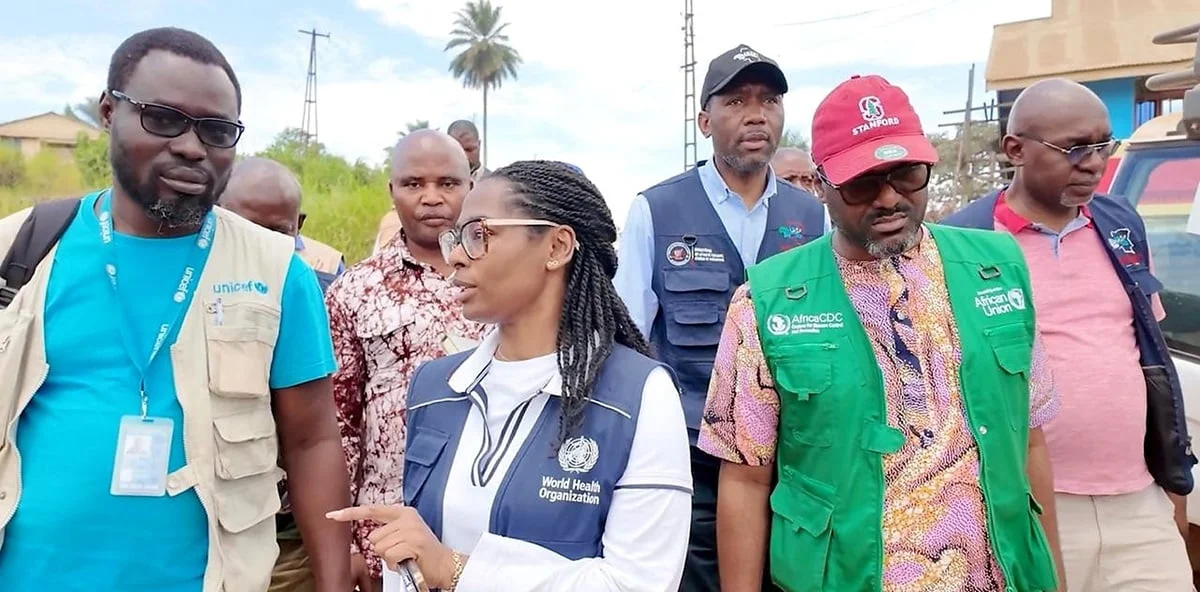
The Africa Centres for Disease Control and Prevention (Africa CDC) and the World Health Organization (WHO) have officially introduced a comprehensive joint continental preparedness and response plan to address the escalating Ebola outbreak caused by the Bundibugyo virus. This strategic initiative, unveiled today, seeks to mobilize US$ 518 million in emergency funding to assist African nations and international partners in the rapid detection, containment, and management of the virus. The plan is designed to span a critical six-month window, running from June to November 2026, and represents a unified front against a pathogen that has historically posed significant challenges to regional health security.
This joint framework, centered on a “One Response” approach, marks a pivotal shift toward institutional synchronization, ensuring that governments, health agencies, and local communities operate under a single coordinated strategy. The primary objectives of the plan include the enhancement of emergency coordination, the intensification of disease surveillance, the scaling of laboratory testing capacities, and the rigorous implementation of infection prevention and control (IPC) protocols. Furthermore, the plan emphasizes clinical care excellence, community engagement, logistical optimization, and the preservation of essential health services, which are often disrupted during large-scale viral outbreaks.
Historical Context and the Specificity of the Bundibugyo Virus
The Bundibugyo ebolavirus (BDBV) is one of six species within the genus Ebolavirus. It was first identified in 2007 following an outbreak in the Bundibugyo District of western Uganda. While it is often overshadowed by the more frequently occurring Zaire ebolavirus, BDBV remains a formidable threat. Historically, the Bundibugyo species has demonstrated a case fatality rate ranging from approximately 25% to 34%, which, while lower than the Zaire strain’s potential 90% fatality rate, still represents a catastrophic risk to public health.
The current 2026 outbreak has necessitated this massive continental response because, unlike the Zaire species, there are currently no licensed vaccines or specialized therapeutics approved for the Bundibugyo virus. The absence of medical countermeasures such as the Ervebo vaccine, which has been instrumental in controlling recent Zaire-strain outbreaks in the Democratic Republic of the Congo (DRC), leaves health authorities reliant on traditional public health interventions: rigorous contact tracing, isolation, supportive clinical care, and safe burial practices. This gap in the medical arsenal underscores the urgency of the US$ 518 million funding target, as resources must be directed toward strengthening the fundamental pillars of health systems.
Strategic Pillars of the One Response Plan
The "One Response" strategy is built upon the principle of "one plan, one budget, one team." This philosophy aims to eliminate the fragmentation and duplication of efforts that have occasionally hindered previous international health responses. By centralizing the command structure, the Africa CDC and WHO intend to streamline the flow of information and resources.
Dr. Tedros Adhanom Ghebreyesus, WHO Director-General, emphasized that the success of the plan hinges on political will and the trust of the people. According to Dr. Tedros, containing Ebola depends on sustained financing and the deep engagement of communities. He noted that the plan intentionally places local populations at the center of the response. Experience from the 2014-2016 West African Ebola epidemic showed that when communities are not involved, contact tracing efforts often fail due to fear and misinformation, leading to delayed care and continued transmission.
Dr. Jean Kaseya, Director-General of Africa CDC, echoed these sentiments, highlighting the need for speed. He stated that because Ebola moves with high velocity, the continental response must be even faster. The joint plan is intended to provide a clear roadmap for Member States to act with unity, protecting not only the countries currently reporting cases but also neighboring nations at high risk of cross-border transmission.
Resource Allocation and Financial Requirements
The US$ 518 million budget is a calculated assessment of the requirements needed to stabilize the region over the next six months. While the specific breakdown of the funds will be managed dynamically, the primary allocations are expected to follow these critical areas:
- Surveillance and Contact Tracing: A significant portion of the funds will be dedicated to deploying field epidemiologists and community health workers to identify and monitor every person who has come into contact with an infected individual.
- Laboratory Capacity: Strengthening the speed and accuracy of diagnostic testing is vital. The plan involves the procurement of reagents and the deployment of mobile laboratories to remote areas to reduce the turnaround time for test results.
- Infection Prevention and Control (IPC): Funds will support the provision of Personal Protective Equipment (PPE) for healthcare workers and the training of hospital staff to prevent nosocomial (hospital-acquired) transmission.
- Clinical Care and Therapeutics Research: Given the lack of approved treatments, the plan supports the delivery of high-quality supportive care, which significantly improves survival rates. It also earmarks resources for clinical research to accelerate the evaluation of experimental BDBV treatments.
- Logistics and Supply Chain: The movement of personnel and equipment across difficult terrain in the DRC and Uganda requires substantial investment in aviation, ground transport, and cold-chain maintenance.
Geographic Focus and Priority Countries
The plan is designed to complement the national response strategies already launched by the governments of the Democratic Republic of the Congo and Uganda. These two nations currently represent the frontline of the BDBV outbreak. However, the Africa CDC and WHO have identified 10 additional priority countries that share borders or have significant travel links with the affected zones.
In these 10 priority countries, the plan focuses on "readiness" rather than "response." This includes strengthening screening measures at points of entry—such as international airports and land border crossings—and conducting simulation exercises to ensure that local health systems can detect a single imported case before it triggers a local cluster. Cross-border coordination is a hallmark of this plan, recognizing that viral pathogens do not respect national boundaries.
Addressing a Multi-Crisis Environment
The launch of the Ebola preparedness plan comes at a time when the African continent is grappling with several concurrent health emergencies. The Africa CDC and WHO have noted that the response to BDBV must not come at the expense of other critical health interventions. Currently, several regions in Africa are battling significant outbreaks of mpox, cholera, and measles.
The joint plan emphasizes the need for a "resilient health systems" approach. By investing in Ebola preparedness, the agencies aim to strengthen the overall public health infrastructure. For example, laboratory improvements made for Ebola detection can often be repurposed for other viral hemorrhagic fevers or respiratory pathogens. The goal is to ensure that the response to the acute Ebola crisis does not cause a collapse in routine immunization programs or maternal health services, which would lead to secondary mortality.
Timeline and Chronology of the Response
The timeline for the current intervention is structured to address both immediate needs and medium-term stabilization:
- Early 2026: Initial cases of Bundibugyo ebolavirus are detected and confirmed via laboratory testing in the DRC and Uganda.
- May 2026: National governments in the DRC and Uganda activate emergency response plans and request international assistance.
- June 2026: Africa CDC and WHO officially launch the Continental Preparedness and Response Plan and begin the US$ 518 million fundraising drive.
- June–August 2026: Rapid scale-up phase. Deployment of "One Response" teams to the field, establishment of treatment centers, and intensification of community-based surveillance.
- September–October 2026: Stabilization phase. Focus shifts to breaking the final chains of transmission and conducting intensive cross-border monitoring.
- November 2026: Evaluation phase. Review of the plan’s effectiveness and transition to long-term surveillance and system strengthening.
Analysis of Implications and Long-term Impact
The successful implementation of this US$ 518 million plan has implications that extend far beyond the current outbreak. From a geopolitical perspective, the "One Response" approach reinforces the autonomy and leadership of the African Union and Africa CDC in managing continental crises. It signals a move away from fragmented, donor-driven responses toward a more self-determined and organized African health security architecture.
Economically, the plan acts as a safeguard. Previous Ebola outbreaks have caused billions of dollars in losses due to the disruption of trade, tourism, and agriculture. By aiming to contain the virus within a six-month window, the Africa CDC and WHO are attempting to minimize the long-term economic scarring that often follows protracted health emergencies.
Furthermore, the focus on the Bundibugyo species serves as a reminder to the global scientific community of the need for diversified research. While the world successfully developed vaccines for the Zaire strain, the current crisis highlights the vulnerability created by focusing on a single pathogen species. The plan’s research component is expected to catalyze renewed interest in pan-Ebola vaccines and treatments that could provide protection against all known species of the virus.
About the Implementing Agencies
The Africa Centres for Disease Control and Prevention (Africa CDC) is an autonomous public health agency of the African Union. Its mission is to strengthen the capacity of AU Member States to detect, prevent, and respond to disease threats. Through its Regional Collaborating Centres, Africa CDC works to harmonize health policies and provide technical expertise during emergencies.
The World Health Organization (WHO) is the United Nations’ specialized agency for health. Guided by science and a commitment to health for all, the WHO coordinates international responses to health emergencies and sets global standards for disease management. The 2026 theme for World Health Day, "Together for health. Stand with science," underscores the organization’s current focus on evidence-based interventions as the foundation for global well-being.
The collaborative effort between these two giants of public health represents a significant milestone in international cooperation. As the 2026 Bundibugyo Ebola outbreak continues to evolve, the global community will be looking toward the "One Response" plan as the primary mechanism for restoring health and stability to the affected regions. The success of this ambitious initiative will ultimately depend on the timely mobilization of the requested US$ 518 million and the unwavering commitment of the governments and communities on the ground.
