
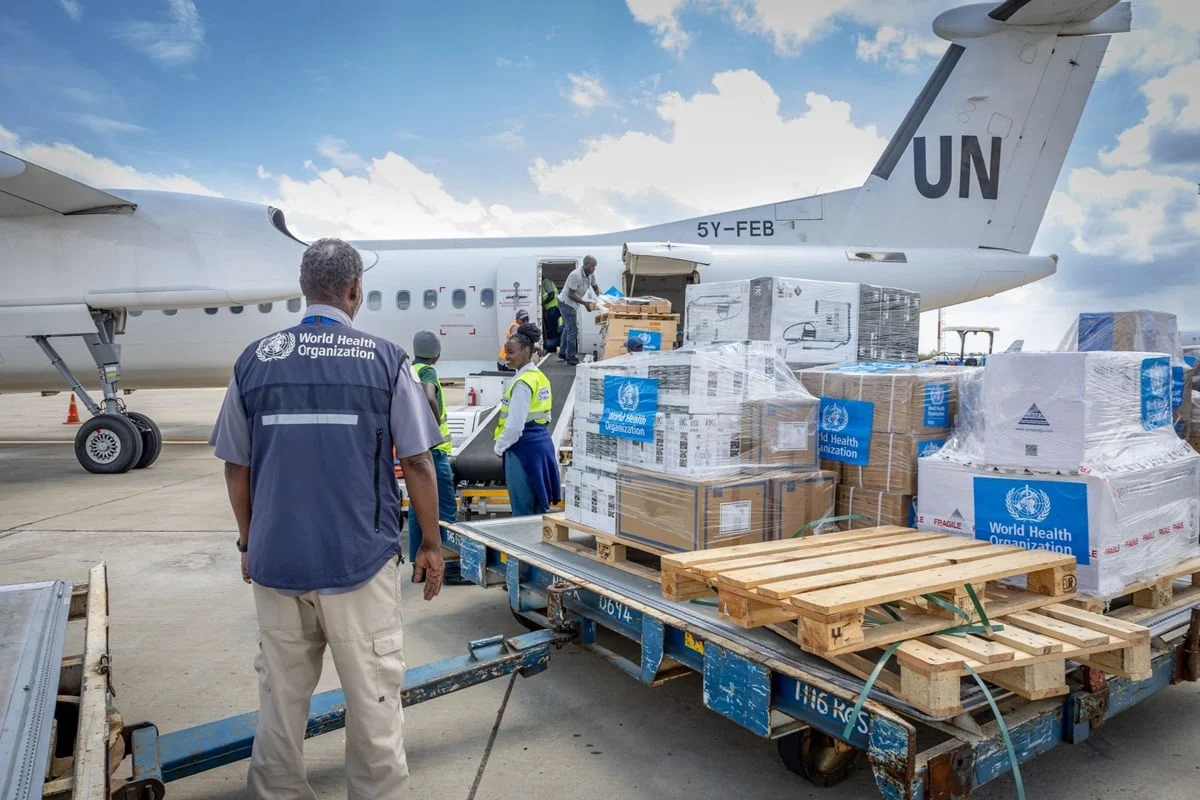
The World Health Organization (WHO) has officially designated the ongoing epidemic of Ebola disease caused by the Bundibugyo virus (BDBV) in the Democratic Republic of the Congo (DRC) and Uganda as a Public Health Emergency of International Concern (PHEIC). This determination, made by the WHO Director-General on May 17, 2026, follows the criteria established under Article 12 of the International Health Regulations (IHR 2005). While the situation has been classified as a PHEIC—a formal designation for an extraordinary event that constitutes a public health risk to other states through the international spread of disease—the Director-General clarified that the outbreak does not currently meet the specific criteria of a "pandemic emergency."
The decision was reached following extensive consultations with the governments of the DRC and Uganda, the two primary nations grappling with the current transmission. Following the initial declaration, the IHR Emergency Committee convened on May 19, 2026, to review the epidemiological data and operational challenges. The committee’s findings underscored the severity of the situation, noting that the epidemic is unfolding in one of the most complex humanitarian and operational environments globally, characterized by regional insecurity, porous borders, and significant logistical hurdles.
Chronology of the 2026 Bundibugyo Outbreak
The formal international response was triggered in mid-May 2026, though the groundwork for the emergency declaration began weeks prior as case numbers in the DRC’s eastern provinces began to climb. On May 17, the Director-General issued the initial statement determining the PHEIC status and providing preliminary advice to State Parties.
Two days later, on May 19, the first meeting of the IHR Emergency Committee regarding the Bundibugyo virus disease (BVD) took place. The experts on the committee reached a consensus that while the outbreak is a significant regional threat with a high risk of international spread, the "pandemic emergency" threshold—which requires evidence of sustained, uncontained global transmission—had not been breached.
By May 22, 2026, the WHO Secretariat completed a comprehensive risk assessment. This assessment categorized the risk level as "Very High" for the DRC and "High" for Uganda. The regional risk for neighboring countries was also classified as "High," while the global risk remained "Low." This tiered assessment forms the basis for the temporary recommendations issued to the international community.
Epidemiological Profile and the Bundibugyo Virus
The current crisis is driven by the Bundibugyo virus (BDBV), one of the six species within the Orthoebolavirus genus. BDBV was first identified in 2007 following an outbreak in the Bundibugyo District of western Uganda. Historically, BDBV has been associated with lower case fatality rates (CFR) compared to the more common Zaire ebolavirus; however, it remains a highly lethal pathogen with CFRs in previous outbreaks ranging from 25% to 40%.
A critical challenge in the 2026 response is the lack of approved medical countermeasures. Unlike the Zaire ebolavirus, for which the Ervebo vaccine and various monoclonal antibody treatments (such as Ebanga and Inmazeb) have been successfully deployed, there are currently no licensed vaccines or therapeutics specifically for the Bundibugyo species. While candidate vaccines and drugs are being fast-tracked for clinical trials, the current strategy relies almost exclusively on traditional public health interventions: early detection, isolation, contact tracing, and optimized supportive care.
As of the latest situation report on May 22, Uganda has confirmed two cases of BVD. Both cases have been epidemiologically linked to known transmission chains in the DRC, indicating that while cross-border movement is occurring, Uganda has not yet seen sustained community transmission. In the DRC, however, the situation is more volatile, with multiple health zones reporting active clusters.
Operational Context and Regional Challenges
The Emergency Committee highlighted that the epidemic is occurring in a region marked by long-standing conflict and displacement. Eastern DRC has faced decades of instability, which complicates the deployment of health workers and the establishment of surveillance systems. The movement of displaced populations across the border into Uganda and other neighboring states creates a high-velocity environment for viral spread.
Furthermore, the "Very High" risk rating for the DRC reflects the strain on local health infrastructure. The lack of standardized intensive care facilities in remote areas means that mortality rates can climb quickly if patients do not receive early supportive rehydration and symptomatic treatment. The WHO has emphasized that the response must be "context-aware," integrating community engagement to ensure that public health measures are accepted by local populations who may be skeptical of outside intervention.
Temporary Recommendations for Affected States
For the Democratic Republic of the Congo and Uganda, the WHO has issued a stringent set of temporary recommendations focused on containment and mitigation. These recommendations are legally grounded in the principles of Article 3 of the IHR, which demands full respect for human rights and the dignity of persons.
- Coordination and Leadership: Both nations are urged to activate high-level emergency coordination mechanisms, ensuring that the response is multi-sectoral and involves not just health ministries, but also security, finance, and local governance.
- Surveillance and Laboratory Capacity: Strengthening "point-of-entry" screening and enhancing laboratory throughput are top priorities. Rapid diagnosis is essential to prevent "silent" transmission chains.
- Infection Prevention and Control (IPC): Health facilities are often sites of amplification for Ebola. The WHO recommends rigorous IPC training for all frontline workers and the provision of adequate personal protective equipment (PPE).
- Community Engagement: To combat misinformation, the WHO advises a strategy of "Risk Communication and Community Engagement" (RCCE). This involves working with local leaders and traditional healers to explain the necessity of safe burials and isolation protocols.
Preparedness for Neighboring and Global States
The WHO’s advice extends beyond the immediate outbreak zone. Countries sharing land borders with the DRC and Uganda—such as Rwanda, South Sudan, and Burundi—are classified under a "High" regional risk. These states are recommended to:
- Increase cross-border collaboration and information sharing.
- Enhance surveillance at major border crossings.
- Conduct "readiness" drills for their healthcare systems to ensure they can manage a suspected case without further transmission.
For the rest of the world, where the risk is "Low," the focus remains on vigilance and avoiding unnecessary disruptions to international travel and trade. The WHO specifically advises against any travel or trade restrictions that are not based on scientific evidence, as such measures can lead to economic hardship and discourage countries from reporting future cases.
Research, Development, and the Path Forward
A significant portion of the WHO’s current mandate involves the "Research and Development of medical countermeasures." The absence of a BDBV vaccine is a major gap in the global health security architecture. The WHO Secretariat is currently working with international partners and the pharmaceutical industry to accelerate the evaluation of candidate vaccines through the "R&D Blueprint" framework.
Clinical trials are being organized to take place within the affected regions, provided that ethical standards and community consent are maintained. These trials are viewed as a dual-purpose strategy: they offer a potential path to protecting high-risk individuals (such as healthcare workers) while simultaneously generating the data needed for future regulatory approval.
Analysis of Global Health Implications
The declaration of a PHEIC for a Bundibugyo outbreak represents a significant moment in global health governance. It signals that the international community recognizes the specific threat posed by non-Zaire Ebola species. Since the massive West African Ebola outbreak of 2014-2016, the WHO has moved toward a more proactive stance, declaring emergencies earlier to mobilize funding and technical support.
However, the decision not to label this a "pandemic emergency" is equally telling. It suggests a calibrated approach designed to prevent global panic while focusing resources on the specific geographic corridor where the risk is highest. The success of this intervention will depend on two factors: the speed of international funding and the ability of response teams to operate safely in conflict-affected zones.
The economic impact on the DRC and Uganda is expected to be substantial. Even without formal trade bans, the stigma associated with an Ebola PHEIC often leads to reduced foreign investment and a slowdown in regional tourism. The WHO’s emphasis on maintaining open borders (with screening) is an attempt to mitigate these collateral effects.
As of late May 2026, the global health community remains on high alert. The implementation of these temporary recommendations will be reviewed periodically by the Emergency Committee. The primary goal remains the interruption of transmission in the DRC and the prevention of an established outbreak in Uganda. With no vaccine currently available, the world is reminded that the fundamentals of public health—tracking, testing, and treating—remain the most vital tools in the fight against one of the world’s most feared pathogens.
