
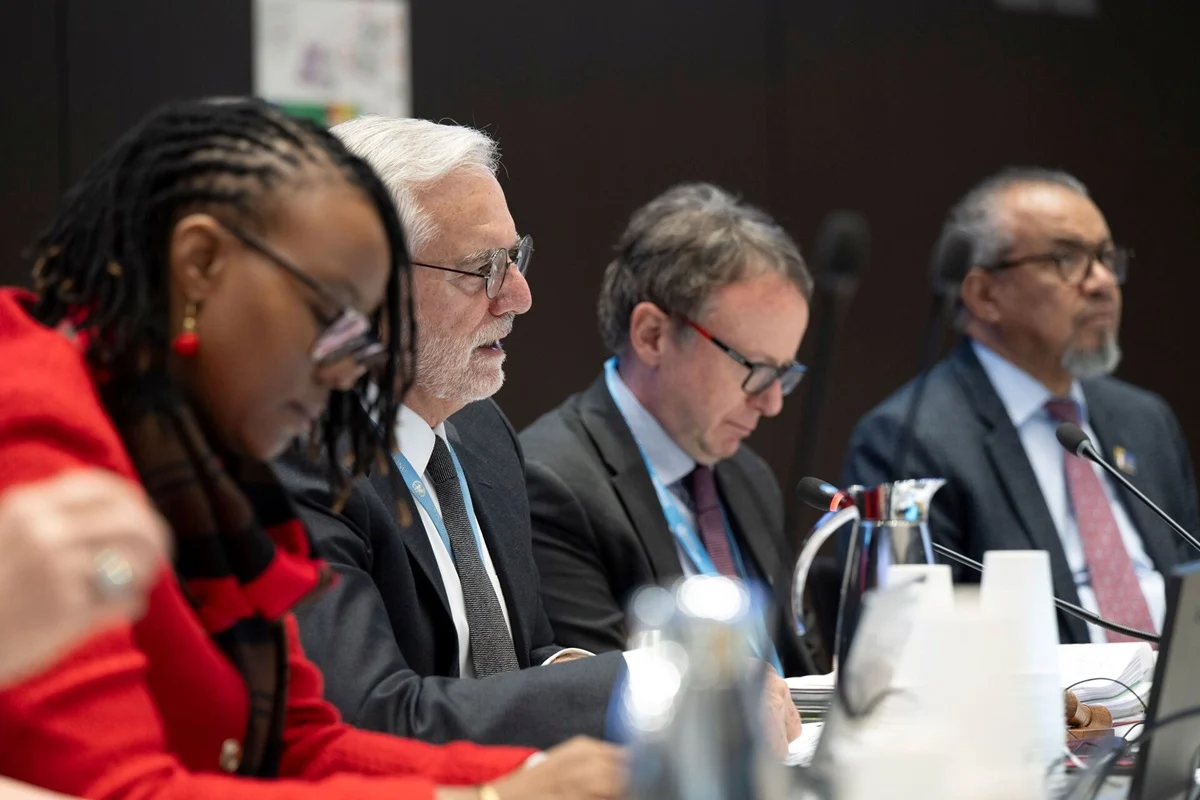
Member States of the World Health Organization (WHO) have concluded a pivotal resumed session of the sixth meeting of the Intergovernmental Working Group (IGWG), marking a significant step forward in the development of the Pathogen Access and Benefit Sharing (PABS) system. While substantial progress was reported on the technical and legal frameworks of the PABS annex—a cornerstone of the broader WHO Pandemic Agreement—delegates in Geneva reached a consensus that additional time is required to resolve outstanding complexities. This decision underscores the intricate nature of balancing global health security with equitable access to medical countermeasures. The outcome of these deliberations will be formally presented to the Seventy-ninth World Health Assembly (WHA) later this month, where member nations will be asked to consider an extension of the IGWG’s mandate.
The PABS system is designed to rectify one of the most glaring failures observed during the COVID-19 pandemic: the disconnect between the rapid sharing of viral data and the subsequent inequitable distribution of life-saving tools. Under the proposed framework, countries would commit to the rapid sharing of pathogens with pandemic potential. In exchange, the system would guarantee the fair and equitable sharing of benefits arising from the use of those pathogens, including vaccines, diagnostics, and therapeutics. This "quid pro quo" arrangement is viewed by many public health experts as the "last piece of the puzzle" required to operationalize a comprehensive global response to future health emergencies.
The Evolution of the Pandemic Agreement and the IGWG Mandate
The journey toward a legally binding pandemic treaty began in the wake of the devastating social and economic impacts of COVID-19. In May 2025, the World Health Assembly formally adopted the WHO Pandemic Agreement, a landmark document intended to strengthen global prevention, preparedness, and response capabilities. Recognizing that certain technical aspects required more specialized negotiation, the Assembly established the open-ended Intergovernmental Working Group (IGWG) specifically to draft and negotiate the PABS system.
The IGWG has since become the primary forum for debating the mechanics of how biological materials and genetic sequence data are shared internationally. The group’s work is governed by Resolution WHA78.1, which provides the legal basis for these negotiations. As the current session in Geneva ended, the IGWG Bureau recommended that the World Health Assembly extend the timeline for these negotiations, with a goal of submitting a final outcome to the Assembly by May 2027 at the latest, or potentially earlier through a special session in 2026.
Dr. Tedros Adhanom Ghebreyesus, WHO Director-General, emphasized the necessity of this work, noting that the biological clock is ticking. "Real progress was made on the PABS annex, and I am confident through continued negotiations differences will be overcome," Dr. Tedros stated. He urged Member States to maintain a sense of urgency, reiterating the common public health refrain that the next pandemic is a "matter of when, not if."
Chronology of Negotiations and Future Milestones
The timeline for the PABS negotiations reflects the high stakes and the diplomatic sensitivity of the issues involved. Following the establishment of the IGWG in early 2025, several rounds of intensive discussions have taken place.
- May 2025: Adoption of the WHO Pandemic Agreement and creation of the IGWG.
- Late 2025 – Early 2026: Preliminary meetings to define the scope of "pathogens with pandemic potential" and the legal definitions of "benefit sharing."
- May 2026: The resumed session of the sixth IGWG meeting in Geneva concludes, identifying the need for further deliberation.
- Late May 2026: The 79th World Health Assembly reviews progress and considers the extension of the IGWG mandate.
- July 6–17, 2026: The scheduled seventh meeting of the IGWG, where delegates will attempt to bridge remaining gaps in the annex.
- 2026 (Optional): A potential special session of the World Health Assembly to finalize the PABS system if a consensus is reached early.
- May 2027: The final deadline for the submission of the PABS annex to the World Health Assembly.
This extended timeline is not seen as a failure of diplomacy, but rather as a recognition of the technical and legal precision required to create a system that must function seamlessly under the pressure of a global crisis.
Data-Driven Context: The Economic and Human Cost of Delay
The urgency behind the PABS system is rooted in the sobering data from the COVID-19 era. According to the International Monetary Fund (IMF), the pandemic resulted in a cumulative global output loss of approximately $12.5 trillion through 2024. Beyond the economic toll, the disparity in vaccine access remains a primary driver for the PABS negotiations. In the first year of vaccine availability, while high-income countries achieved coverage rates of over 70%, many low-income nations remained below 10%, leading to what some leaders termed "vaccine apartheid."
The PABS system aims to institutionalize a more balanced approach. Preliminary proposals suggest that the WHO should have guaranteed access to a certain percentage of pandemic-related product production—potentially 20% (10% as a donation and 10% at affordable prices)—to be distributed based on public health need rather than purchasing power. Achieving a consensus on these specific percentages and the legal triggers for their activation remains one of the more challenging aspects of the current negotiations.
Technical and Legal Complexities of Benefit Sharing
The PABS annex is not merely a public health document; it is a complex legal instrument that intersects with international trade, intellectual property, and sovereignty laws. Ambassador Tovar da Silva Nunes of Brazil, the IGWG Bureau Co-Chair, highlighted the dedication required to navigate these complexities. "Finalizing a document of such technical and legal complexity requires precision and dedication, both of which the Member States have demonstrated in full," he noted.
One of the central friction points involves Digital Sequence Information (DSI). In the modern era, pathogens are often shared not as physical samples, but as digital genetic codes uploaded to public databases. While this accelerates research, it creates a loophole where companies can develop products using shared data without necessarily contributing to the benefit-sharing pool. The PABS system seeks to ensure that the "access" to this data is inextricably linked to the "benefit" sharing that follows, a concept that aligns with the principles of the Nagoya Protocol on Access and Benefit-sharing but tailored specifically for the rapid needs of a pandemic.
Perspectives from the Negotiating Table
The negotiations involve a diverse array of stakeholders, each with distinct priorities. While the official WHO statements focus on unity, the underlying discussions reflect broader geopolitical dynamics.
- The Global South: Developing nations, often the "providers" of pathogen samples due to high biodiversity and surveillance efforts, are pushing for ironclad guarantees. For these countries, the PABS system must be more than a voluntary guideline; it must be a mandatory framework that ensures they are not left behind in the queue for vaccines and treatments.
- The Global North and the Pharmaceutical Industry: Nations with large biotechnology sectors emphasize the need for a system that does not stifle innovation. There are concerns that overly restrictive benefit-sharing requirements could disincentivize rapid R&D. Industry representatives have expressed support for the goals of equity but advocate for mechanisms that respect intellectual property rights and market stability.
- Civil Society and Public Health Advocates: Organizations such as Médecins Sans Frontières (MSF) and various global health think tanks have urged for maximum transparency. They argue that the PABS system must include provisions for technology transfers to regional manufacturing hubs in Africa, Asia, and Latin America to ensure long-term self-reliance.
IGWG Co-Chair Mr. Matthew Harpur expressed confidence that the current trajectory is correct despite these competing interests. "The IGWG Bureau is confident we are moving in the right direction to finalize the PABS annex, and in doing so provide the WHO Pandemic Agreement with the framework needed to ensure countries are better, and more equitably, prepared and protected," he said.
Implications for Global Health Security
The finalization of the PABS Annex is the prerequisite for many countries to proceed with the formal signature and ratification of the entire WHO Pandemic Agreement. Without the PABS framework, the Agreement lacks the enforcement mechanism necessary to ensure that "equity" is more than just a rhetorical goal.
The implications of a successful PABS system are profound. It would create a permanent, pre-negotiated "peace-time" structure that activates automatically when a new pathogen is identified. This would eliminate the need for the frantic, ad-hoc negotiations that characterized the early months of the COVID-19 pandemic, where countries competed for limited supplies of personal protective equipment (PPE) and raw materials.
Furthermore, a functional PABS system would bolster the WHO’s "One Health" approach, which recognizes the interconnection between human, animal, and environmental health. By incentivizing the reporting of new viruses in animal populations through the promise of shared benefits, the world can improve its early warning systems and potentially stop an outbreak before it becomes a pandemic.
The Road Ahead: From Geneva to the World Health Assembly
As the international community looks toward the 79th World Health Assembly, the focus remains on maintaining the momentum built in Geneva. The request for an extension is a strategic move to ensure that the final PABS annex is robust enough to withstand the pressures of a future crisis.
The upcoming seventh meeting in July 2026 will be a critical juncture. Negotiators will need to tackle the remaining "bracketed" text—sections of the document where consensus has not yet been reached. These typically involve the most sensitive issues, such as the specific legal obligations of private sector entities and the financial mechanisms required to sustain the PABS system.
The commitment shown by Member States suggests a shared understanding that the status quo is no longer tenable. The lessons of the past five years have demonstrated that in a globalized world, no one is safe until everyone is safe. The PABS annex represents a historic attempt to codify that sentiment into international law, ensuring that the scientific triumphs of the next pandemic are shared by all of humanity, regardless of geography or economic status.
