
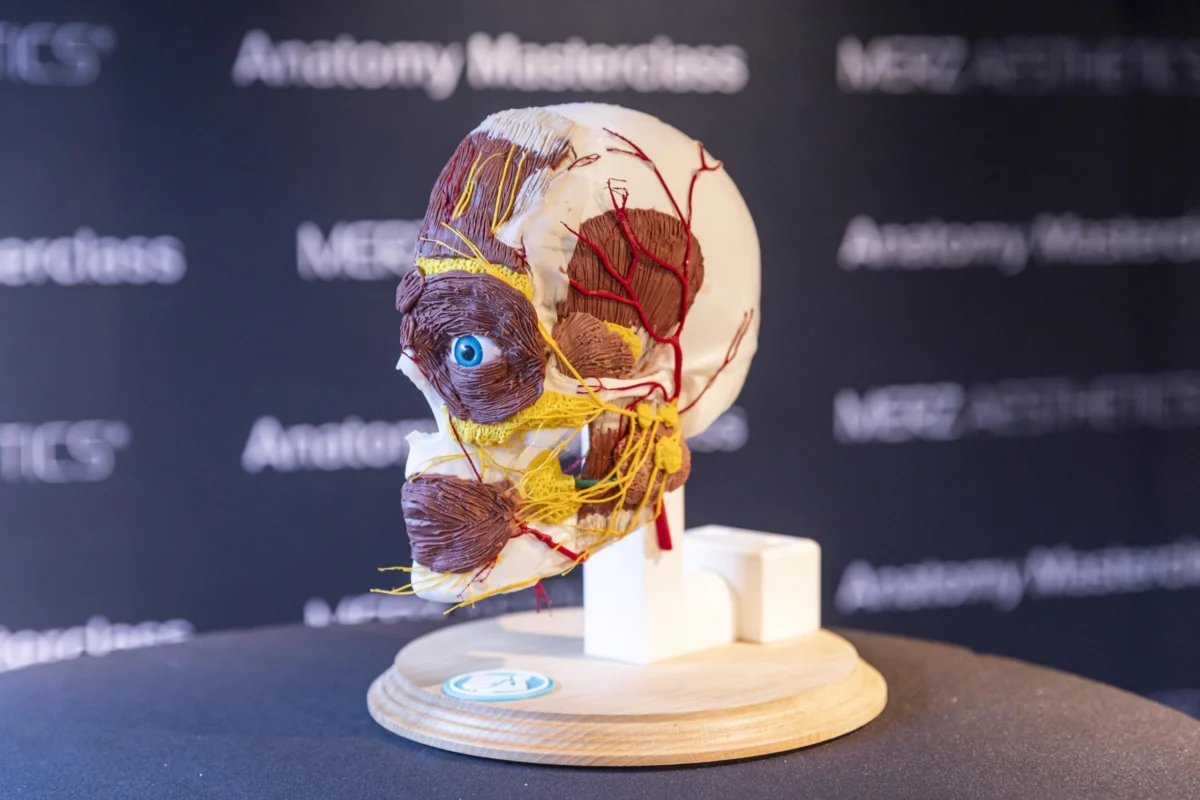
On April 23, the landscape of medical aesthetic education underwent a significant transformation as Merz Aesthetics, a global leader in medical aesthetics, hosted a specialist masterclass at The Memoir Club in London. This intensive educational event, designed specifically for advanced practitioners, represented a departure from traditional didactic teaching methods, instead favoring a highly interactive, "surgical sculpture" approach to anatomical learning. The masterclass was led by a trio of distinguished consultant plastic and reconstructive surgeons—Mr Dalvi Humzah, Mr Thomas Pidgeon, and Ms Nathalie Cain—who provided a bridge between theoretical medical knowledge and the practical, tactile demands of aesthetic procedures. By integrating 3D-printing technology with traditional sculpting techniques, the event aimed to set a new benchmark for how clinicians visualize and interact with the complex layers of human facial anatomy.
A Strategic Partnership in Clinical Excellence
The collaboration between Merz Aesthetics and Surgical Sculpture marks a strategic effort to address the evolving needs of the aesthetic medicine sector. Merz Aesthetics, part of the Merz Group, has long been recognized for its portfolio of injectable treatments and energy-based devices, including the well-known dermal filler line Belotero and the botulinum toxin Xeomin. However, as the industry grows, the company has increasingly focused on the "how" of treatment—emphasizing that product efficacy is inextricably linked to the practitioner’s anatomical precision.
Surgical Sculpture, the organization partnering with Merz for this initiative, specializes in a unique pedagogical model that blends fine art with medical science. Their methodology is rooted in the belief that by physically constructing anatomical structures, practitioners can develop a more profound, three-dimensional understanding of the "danger zones" and "safe planes" within the face. This partnership reflects a broader trend in medical education where simulation and haptic feedback are becoming essential components of professional development.
The Methodology: From 3D Printing to Wax Sculpting
The core of the masterclass was a hands-on workshop that utilized cutting-edge 3D-printing technology. Each delegate was provided with a 3D-printed half-skull model, which served as the foundation for their anatomical reconstruction. Unlike traditional plastic models, these skulls were designed to provide realistic landmarks necessary for accurate sculpting.
Participants used wax and specialized sculpting tools to build up facial muscles, fat pads, and connective tissues layer by layer. To further enhance the realism of the exercise, pliable 3D-printed neurovascular structures were introduced. These components allowed clinicians to physically place nerves and blood vessels in their correct anatomical positions, providing a visual and tactile representation of the intricate network that lies beneath the skin. This "bottom-up" approach to anatomy—starting from the bone and moving outward to the dermis—is designed to correct common misconceptions that can occur when practitioners view two-dimensional diagrams in textbooks.
Detailed Regional Focus: Navigating the Facial "Danger Zones"
The curriculum of the day was meticulously structured to cover the most high-risk and high-demand areas of the face. Specialized focus groups were organized to drill down into the specifics of various regions:
Sensory Nerves and Facial Vessels
One of the primary concerns in injectable aesthetics is the avoidance of vascular compromise, which can lead to skin necrosis or, in rare cases, visual impairment. The workshop provided intensive training on the pathways of the facial artery and its branches, as well as the exit points of major sensory nerves like the supraorbital and infraorbital nerves. By sculpting these structures, delegates gained a better sense of the depth and trajectory of these vessels.
The Periorbital and Ocular Region
The area around the eyes is notoriously difficult to treat due to the thinness of the skin and the complexity of the underlying musculature, such as the orbicularis oculi. The masterclass emphasized the safe boundaries for tear trough fillers and the management of the periorbital fat pads, utilizing cadaveric dissection footage to supplement the sculpting exercise.
Temporalis and Masseter Regions
As the demand for facial slimming and temple volumization increases, understanding the masseter and temporalis muscles has become crucial. The session explored the various layers of the temporal fascia and the location of the deep temporal arteries. This segment was particularly relevant for practitioners looking to refine their techniques in "liquid facelifts" and structural rejuvenation.
Addressing the Ethical and Financial Barriers of Traditional Training
A central theme of the event, as highlighted by Mr Dalvi Humzah, was the need for sustainable and accessible alternatives to cadaveric training. While human cadaveric dissection has traditionally been the "gold standard" for anatomical study, it is fraught with challenges.
From a financial perspective, the cost of sourcing, transporting, and ethically disposing of human tissue is immense, often making such training prohibitively expensive for individual practitioners. Ethically, the use of human remains requires strict adherence to the Human Tissue Act and requires a constant supply of donors, which can be inconsistent.
Mr Humzah noted that the Anatomy Masterclass series provides a "rigorous, cost-effective alternative." By using 3D-printed models and wax, the program offers a repeatable and scalable model of education that does not rely on biological material. This allows for a more standardized learning experience where every delegate has access to the same anatomical landmarks, which is not always possible with cadavers due to natural biological variation.
Supporting Data: The Rising Need for Anatomical Mastery
The impetus for such rigorous training is supported by industry data regarding the growth of the aesthetics market and the corresponding rise in complications. According to recent market analysis, the global medical aesthetics market is projected to grow at a compound annual growth rate (CAGR) of nearly 10% through 2030. This growth is driven by an increasing number of non-surgical procedures, particularly dermal fillers and neuromodulators.
However, data from various aesthetic complication registries suggests that a significant portion of adverse events—such as vascular occlusions or unintended muscle paralysis—stem from a lack of precise anatomical knowledge. A 2022 survey of aesthetic practitioners indicated that over 65% felt their initial training did not sufficiently prepare them for the complex three-dimensional reality of facial injections. Events like the Merz Aesthetics masterclass are designed to bridge this "confidence gap" by providing a level of detail that exceeds standard certification courses.
Professional Reactions and Industry Impact
While the event was primarily focused on education, the reaction from the clinical community suggests a shift in how professional standards are perceived. Industry observers note that by investing in high-level education, Merz Aesthetics is positioning itself as a "safety-first" partner in the industry. This is particularly important in the UK market, where the regulation of non-surgical cosmetic procedures is currently under intense government scrutiny and reform.
Clinicians who attended the event remarked on the value of "active participation" versus "passive observation." In traditional lectures, the retention of anatomical detail is often low. In contrast, the kinesthetic learning involved in sculpting has been shown in educational psychology to improve long-term memory and spatial reasoning—skills that are directly transferable to the clinic when a practitioner is holding a needle or cannula.
Analysis: The Future of Aesthetic Education
The success of the April 23 masterclass points toward a future where medical education is increasingly hybrid. The integration of cadaveric dissection footage with 3D-printed physical models provides a comprehensive view of the human body that neither medium can provide alone. The footage offers the reality of tissue texture and fluid dynamics, while the sculpting provides the structural understanding and repetitive practice needed for mastery.
Furthermore, this model of training could eventually expand into virtual and augmented reality (VR/AR). If a practitioner can sculpt a face in a physical medium, the next logical step is to interact with a digital twin of a patient’s specific anatomy. Merz Aesthetics’ move into 3D-based masterclasses is a precursor to this digital evolution.
Conclusion: A New Standard for Clinical Practice
The Merz Aesthetics and Surgical Sculpture masterclass at The Memoir Club represents more than just a single day of training; it is a reflection of the maturing aesthetic industry. As the field moves away from "one-size-fits-all" injection patterns and toward bespoke, anatomically-driven treatments, the need for deep-dive educational workshops will only grow.
By focusing on the intersection of art, science, and technology, the organizers have provided a blueprint for how medical education can evolve to be more ethical, more affordable, and ultimately, more effective. For the delegates in attendance, the mastery of the 3D-printed skull and the wax-sculpted nerve pathways serves as a vital safeguard, ensuring that their clinical practice is grounded in a profound understanding of the human form. As these practitioners return to their clinics, the impact of this masterclass will likely be seen in improved patient outcomes and a heightened standard of safety across the London aesthetic sector and beyond.
