
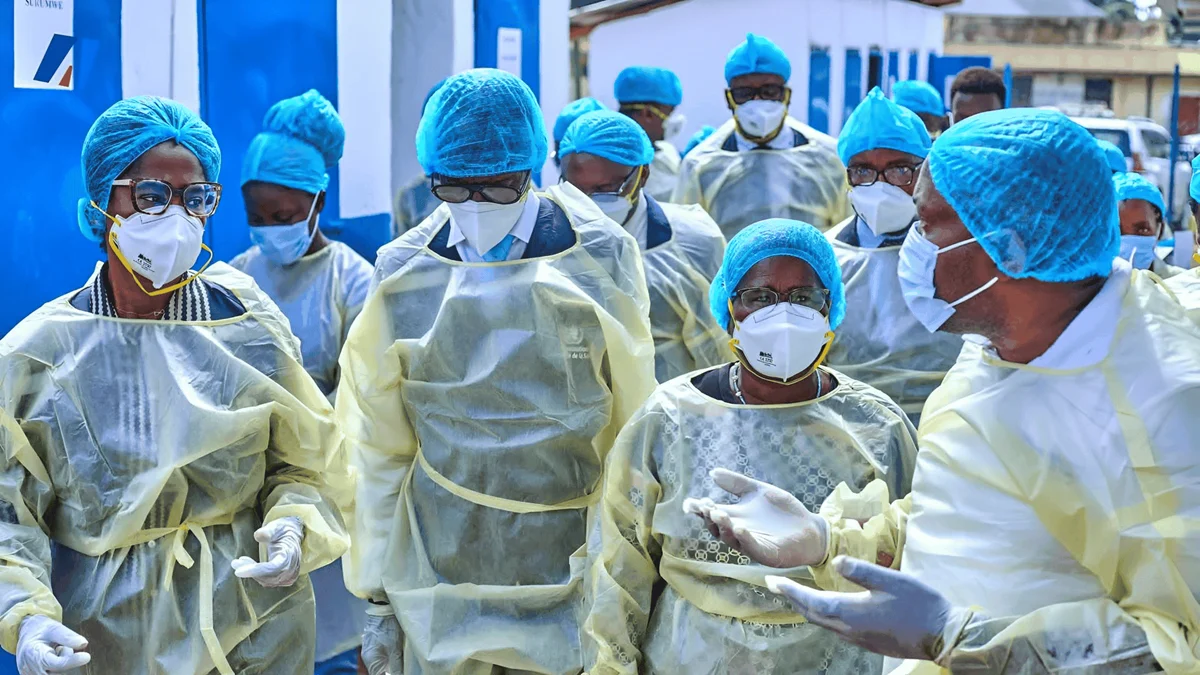
The World Health Organization (WHO) has successfully concluded Exercise Polaris II, a sophisticated two-day high-level simulation designed to pressure-test the world’s collective ability to respond to a rapidly evolving global health crisis. Conducted on April 22 and 23, the exercise centered on the hypothetical emergence of a fictional new bacterium, marking a critical milestone in the international community’s transition from theoretical pandemic planning to operational readiness. The event brought together a massive coalition of 26 countries and territories, 600 health emergency experts, and more than 25 global partners, serving as a rigorous stress test for the newly established Global Health Emergency Corps (GHEC) and associated national response frameworks.
This iteration of the Polaris series follows the foundational success of Polaris I, held in April 2025, which utilized a viral pathogen scenario to establish baseline coordination protocols. By shifting the focus to a bacterial threat in 2026, the WHO aimed to broaden the scope of preparedness, addressing different transmission dynamics, medical countermeasure requirements, and public health interventions. Throughout the 48-hour simulation, participating nations were required to activate their emergency coordination structures under real-life conditions, facilitating a high-stakes environment where information flow, policy alignment, and workforce surging were analyzed in real-time.
The Evolution of Global Health Simulations: From Polaris I to Polaris II
Exercise Polaris II represents the latest component of HorizonX, the WHO’s forward-looking, multi-year simulation exercise program. The HorizonX initiative was born out of the necessity to move beyond static pandemic preparedness plans toward a dynamic, iterative model of readiness. While traditional planning often results in voluminous documents that remain untested until a crisis occurs, HorizonX utilizes simulations to identify gaps in the global health architecture before they can be exploited by a real-world pathogen.
The chronology of these exercises demonstrates a clear trajectory of increasing complexity. Polaris I, conducted one year prior, focused on the initial mobilization of resources and the activation of communication channels during a viral outbreak. Polaris II has built upon those lessons by introducing more intricate variables, such as the use of artificial intelligence (AI) in workforce management and the integration of the National Health Emergency Alert and Response Framework. The 2026 exercise also saw a significant expansion in participation, reflecting a growing global consensus that health security is a shared responsibility that transcends national borders.
By simulating a bacterial pathogen, the WHO also addressed the unique challenges associated with such outbreaks, including the potential for antimicrobial resistance, the necessity for specific laboratory diagnostics, and the logistical hurdles of distributing antibiotics and specialized treatments. This shift ensures that the global health workforce is not merely prepared for another respiratory virus but is versatile enough to handle a diverse array of biological threats.
Operationalizing the Global Health Emergency Corps (GHEC)
A central objective of Exercise Polaris II was the practical application of the Global Health Emergency Corps (GHEC) framework. Published in June 2025, the GHEC framework was designed to provide a standardized, yet flexible, roadmap for countries to strengthen their health workforces. The framework is built upon three core pillars: sovereignty, equity, and solidarity. During the simulation, these principles were put to the test as countries navigated the complexities of deploying regional and global emergency personnel across borders while respecting national jurisdictions.
The GHEC serves as a connective tissue for the world’s emergency responders. In the context of Polaris II, the framework facilitated the exchange of technical expertise and the rapid scaling of the workforce. For many participating nations, the simulation provided the first opportunity to use AI-enabled tools for workforce organization and planning. These tools assisted coordinators in identifying personnel shortages in real-time and optimizing the deployment of experts to high-need areas based on the evolving data of the fictional outbreak.
Dr. Tedros Adhanom Ghebreyesus, WHO Director-General, emphasized the significance of this collaborative model following the conclusion of the exercise. According to Dr. Tedros, the exercise demonstrated that global cooperation is an essential requirement for modern health security. He noted that the GHEC’s purpose is to build trust and strengthen connections, allowing the world to function as a unified entity in the face of a shared threat. The simulation highlighted that when countries act in concert, the collective response is far more effective than the sum of individual national efforts.
Strengthening National Alert and Response Systems
In addition to global coordination, Polaris II focused heavily on the National Health Emergency Alert and Response Framework. Released in October 2025, this framework outlines the specific functions and actions required at local, sub-national, and national levels to manage a health emergency effectively. The simulation required participating countries to demonstrate how their internal systems communicate with international bodies and how local data is synthesized to inform national policy.
The practical application of this framework was a highlight for many participants. Edenilo Baltazar Barreira Filho, Director of the Public Health Emergencies Department at the Ministry of Health in Brazil, noted that the exercise allowed health officials to transition from "plans on paper" to active practice. Brazil, as one of the key participating nations, utilized the simulation to test its internal surge capacities and its ability to synchronize its domestic response with the broader international community.
The integration of the National Framework with the GHEC ensures a "bottom-up" and "top-down" approach to health emergencies. By refining the flow of information from local clinics to national ministries and eventually to the WHO’s global headquarters, Exercise Polaris II aimed to eliminate the communication bottlenecks that have historically hindered early-stage outbreak containment.
A Global Coalition of Partners and Participants
The scale of Exercise Polaris II was unprecedented, involving a diverse array of 26 countries and territories spanning every WHO region. The participants included Bangladesh, Brazil, Brunei, Colombia, Egypt, El Salvador, France, Georgia, Ghana, India, Indonesia, Jordan, Kenya, Kosovo (under UN Security Council Resolution 1244), Libya, Malaysia, Nepal, Oman, Paraguay, Philippines, Qatar, the Republic of Congo, Rwanda, Suriname, Thailand, and Yemen. This broad geographic representation ensured that the simulation accounted for a wide variety of healthcare infrastructures, economic contexts, and regional challenges.
Beyond national governments, the exercise saw the active involvement of over 25 major health agencies and organizations. This multi-sectoral approach is vital for a comprehensive response, as it incorporates the specialized capabilities of various groups:
- Africa Centres for Disease Control and Prevention (Africa CDC): Played a crucial role in coordinating regional responses across the African continent.
- The International Federation of Red Cross and Red Crescent Societies (IFRC): Focused on community-level engagement and the humanitarian aspects of the response.
- Médecins Sans Frontières (MSF) and UK-Med: Provided insights into frontline medical delivery and the deployment of emergency medical teams.
- UNICEF: Addressed the specific needs of children and vulnerable populations during a health crisis.
- Specialized Networks: The Global Outbreak Alert and Response Network (GOARN), the Emergency Medical Teams (EMT) initiative, and the International Association of National Public Health Institutes (IANPHI) provided the technical backbone for the simulation’s operational maneuvers.
A notable addition to this year’s exercise was the participation of the recently launched Health Emergency Leaders Network for Africa and the Eastern Mediterranean. This new network facilitated enhanced collaboration between two regions that are often on the front lines of emerging infectious diseases, demonstrating the power of regional alliances within the global WHO framework.
Data-Driven Insights and Technical Innovations
The use of data and technology was a defining feature of Polaris II. In an era where information travels faster than pathogens, the ability to manage and analyze data is a primary defense mechanism. The simulation explored the use of AI-enabled tools to assist in complex decision-making processes, such as predicting the spread of the bacterium based on travel patterns and optimizing the supply chain for medical resources.
By integrating these technologies, the WHO is preparing for a future where digital tools are as essential as vaccines and diagnostic kits. The exercise provided a sandbox for countries to experiment with these tools without the risks associated with a real outbreak. The data collected during Polaris II will now be analyzed to refine the GHEC and National Frameworks, ensuring that the "lessons learned" are translated into tangible improvements in global health policy.
Dr. Chikwe Ihekweazu, Executive Director of the WHO’s Health Emergencies Programme, remarked that the spirit of the Global Health Emergency Corps was fully visible during the exercise. He described a workforce that was not only well-organized and trained but also deeply connected. This connectivity, according to Dr. Ihekweazu, is the key to ensuring that the world is ready to respond wherever and whenever a threat emerges.
Implications for Global Health Security and World Health Day 2026
The conclusion of Exercise Polaris II comes at a pivotal moment for the World Health Organization. As the organization prepares for World Health Day 2026, themed "Together for health. Stand with science," the results of the simulation serve as a powerful testament to the role of science as the foundation of public health. The year-long campaign surrounding World Health Day 2026 will highlight the importance of scientific evidence in protecting global well-being, a principle that was at the heart of the Polaris II simulation.
The implications of this exercise extend far beyond the two days of activity. It has established a new benchmark for what collective readiness looks like. By moving away from periodic, isolated training sessions toward a continuous, multi-year investment in simulation through the HorizonX program, the WHO is fostering a culture of perpetual preparedness.
The success of Polaris II suggests that the global health architecture is becoming more resilient. The ability to coordinate 600 experts across dozens of time zones to tackle a fictional threat proves that the infrastructure for a real-world response is being built and refined. However, the exercise also served as a reminder that readiness is not a destination but a process. As pathogens evolve and global dynamics shift, the frameworks for response must remain agile.
In the coming months, the WHO will release a comprehensive report detailing the outcomes of Exercise Polaris II. This report is expected to provide specific recommendations for participating countries and partners, focusing on improving the speed of information exchange and the efficiency of workforce deployment. As the world looks toward future challenges, the lessons of Polaris II will remain a cornerstone of the global strategy to keep the world safe and serve the vulnerable. Through the continued operationalization of the GHEC and the National Frameworks, the international community is taking proactive steps to ensure that when the next real threat emerges, the world will not just be watching—it will be ready.
