
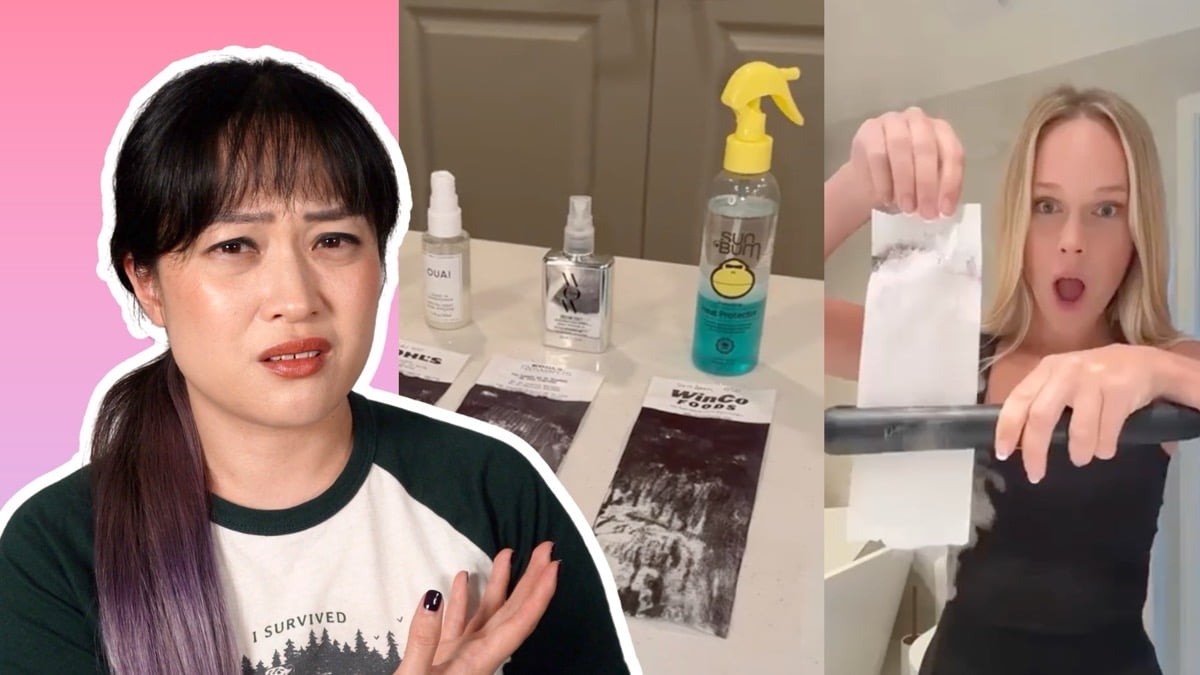
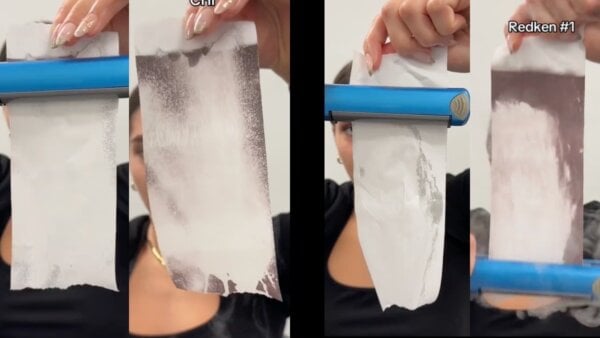
A pervasive beauty trend, originating on platforms like TikTok, has seen individuals evaluating the efficacy of heat protectant sprays by applying them to thermal paper receipts and then subjecting them to a flat iron. The premise is straightforward: thermal receipts darken when exposed to heat, so a product that keeps the receipt white is deemed an effective heat protectant. However, a comprehensive investigation by cosmetic chemist Michelle Wong of Lab Muffin Beauty Science, published on September 9, 2025, meticulously debunks this viral test, revealing that its results are fundamentally misleading and bear no correlation to a product’s ability to protect hair from heat damage.
The Rise of a Digital Beauty Myth
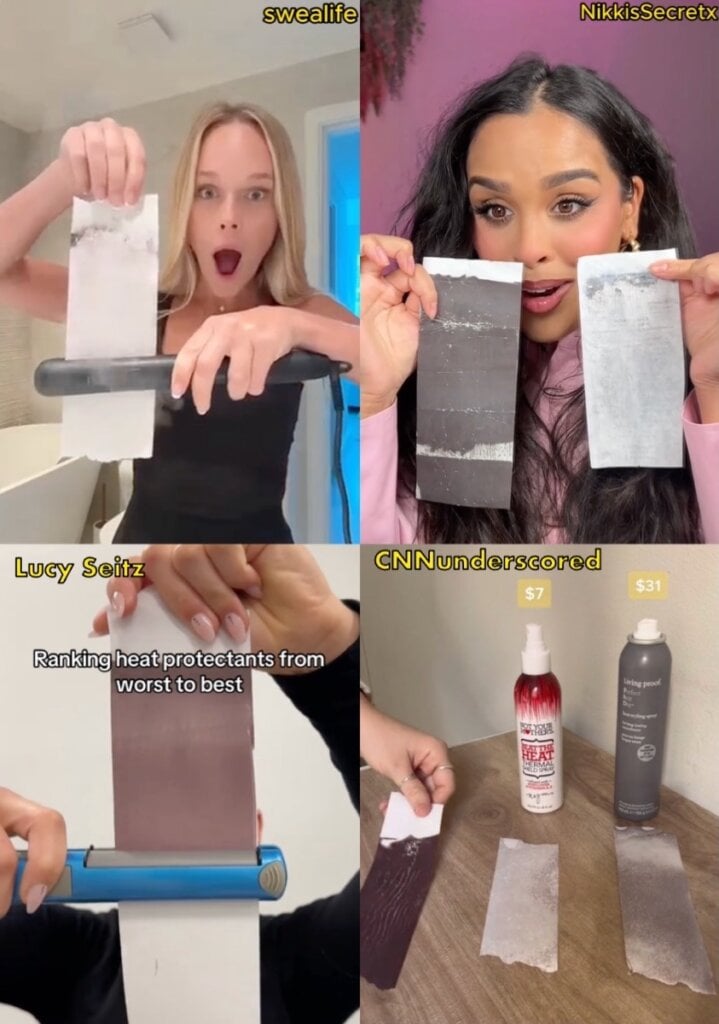
The "receipt test" gained significant traction due to its visual simplicity and the perceived scientific rigor of a tangible, observable outcome. Influencers and cosmetologists, such as Lucy Seitz, widely replicated the test, often demonstrating products that seemingly "passed" by leaving the thermal paper visibly lighter or entirely white, while others that "failed" resulted in stark black marks. This compelling visual evidence quickly convinced a large online audience, who began to rely on this method to make informed purchasing decisions about hair care products. The allure lay in demystifying complex product claims through an accessible, at-home experiment, seemingly providing a clear-cut answer to a common consumer concern: which heat protectant truly works?
Initial Replication and Emerging Anomalies
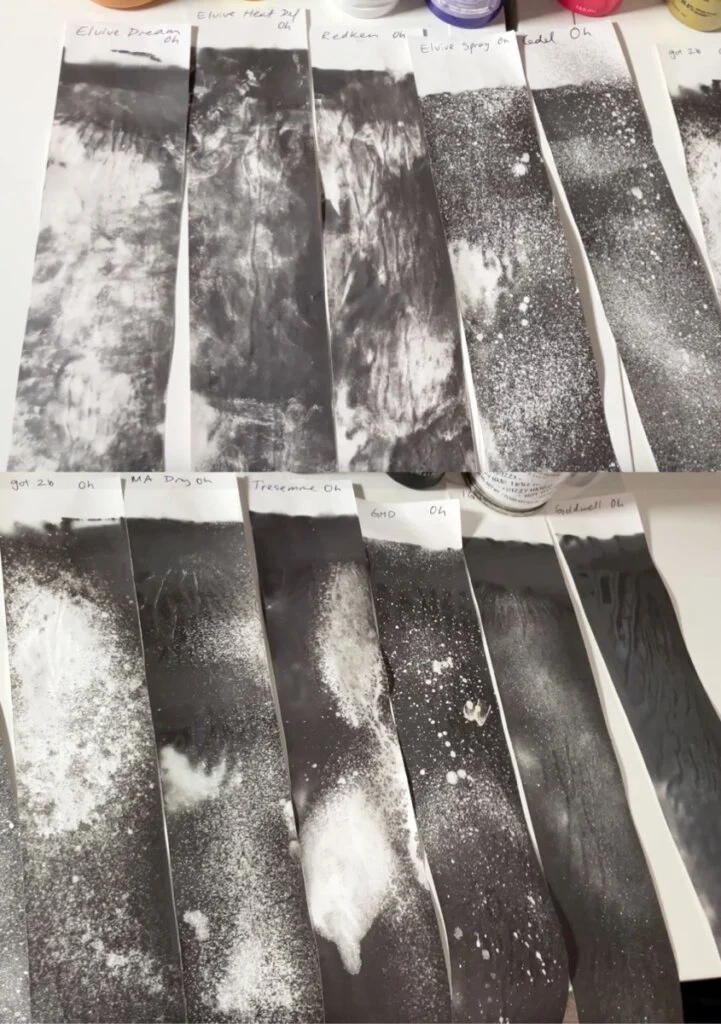
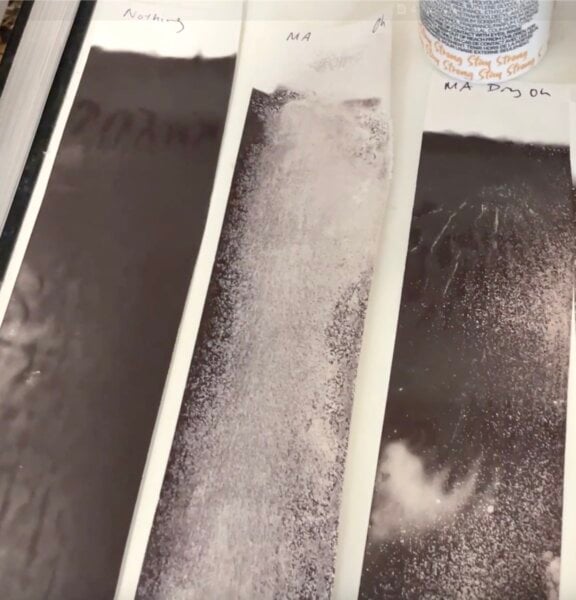
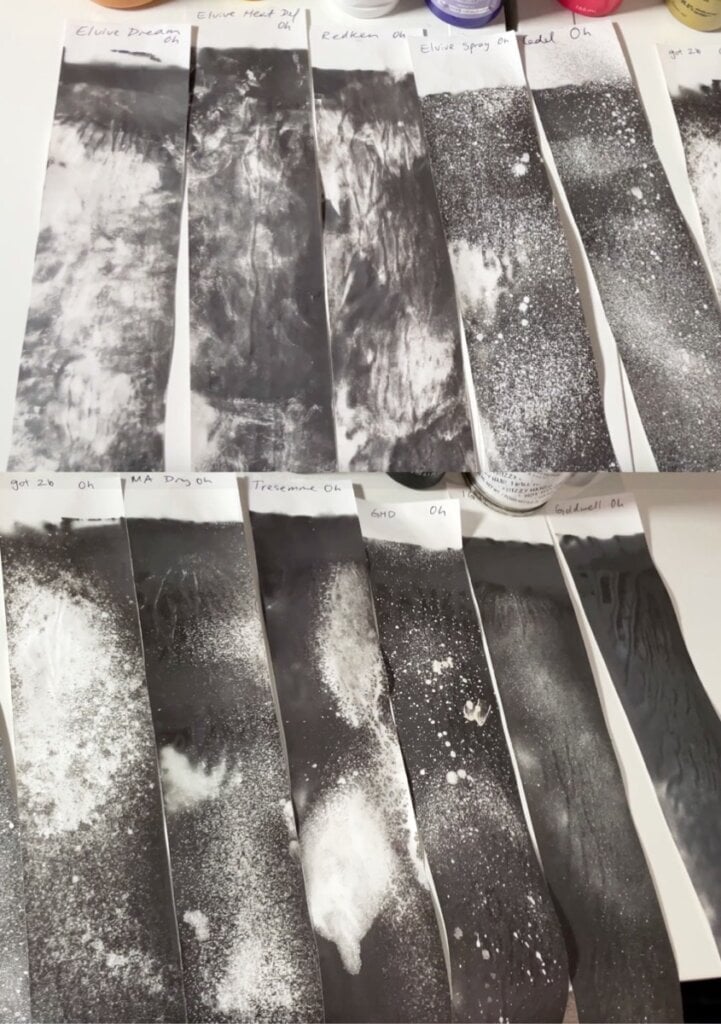
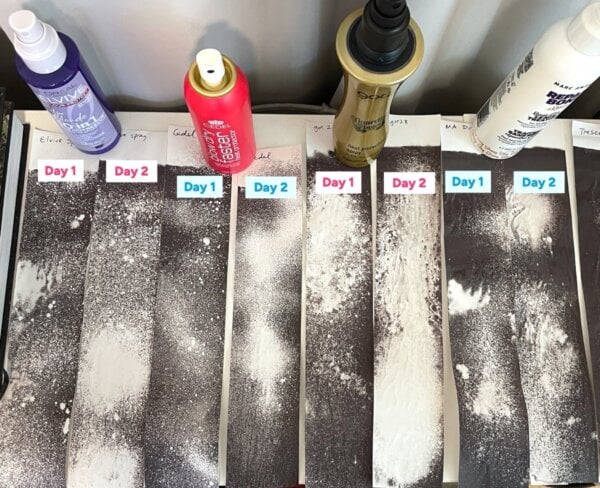
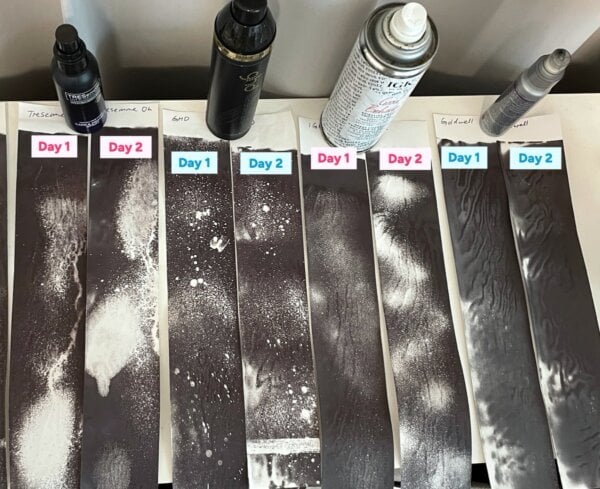
Michelle Wong’s investigation began with an attempt to replicate these viral tests, using a range of 11 heat protectants—comprising pump sprays, propellant sprays, and cream formulas—and a flat iron set to 170°C (approximately 340°F), similar to the temperatures used in the viral videos. Early observations immediately hinted at complications. When a product like the Marc Anthony spray was applied to a receipt and immediately heat-styled, it crackled and smoked, suggesting the presence of moisture. This led to a crucial modification: allowing products to dry for approximately 15 minutes after application, mimicking a more realistic hair styling scenario.
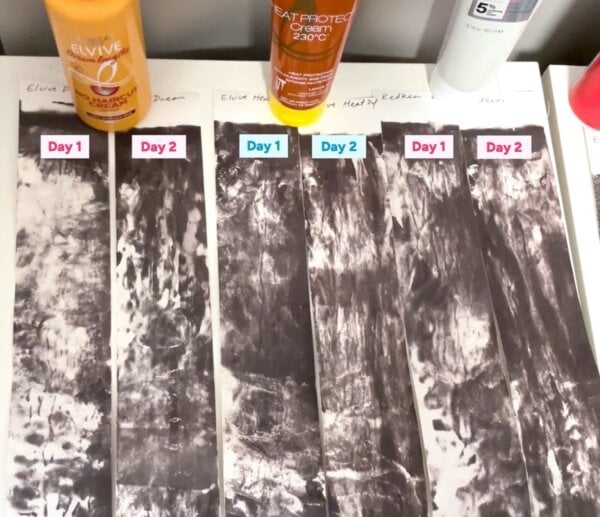
The initial results after this drying period showed significant variation. Creams generally left receipts lighter than sprays, a phenomenon Wong attributed to the thicker application typical of creams, providing more insulation. Conversely, two sprays, Goldwell and IGK, resulted in the darkest receipts. A quick check of their ingredient lists revealed a commonality: water was not a primary ingredient. This suggested that the presence of water, or lack thereof, might play a more significant role than initially assumed, prompting further inquiry into the cooling effects of evaporation.
The Crucial Role of Water and the "Bubble Hair" Phenomenon
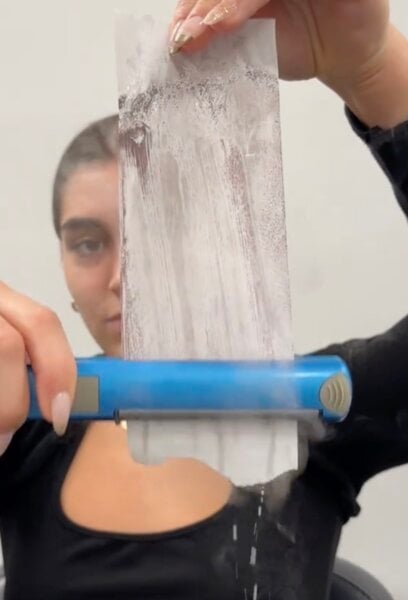
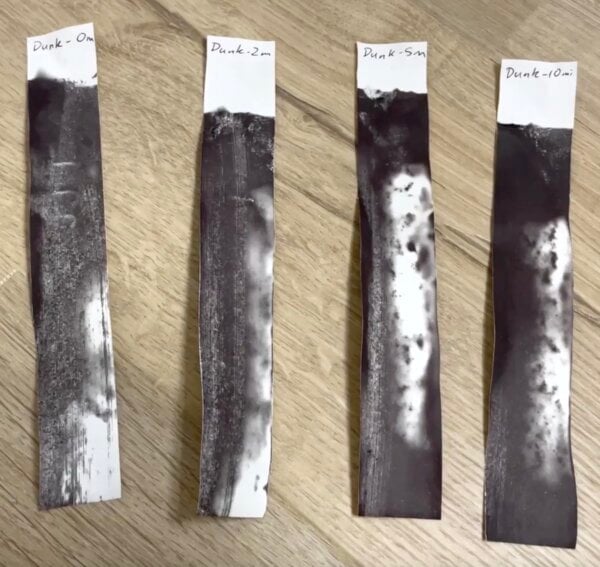
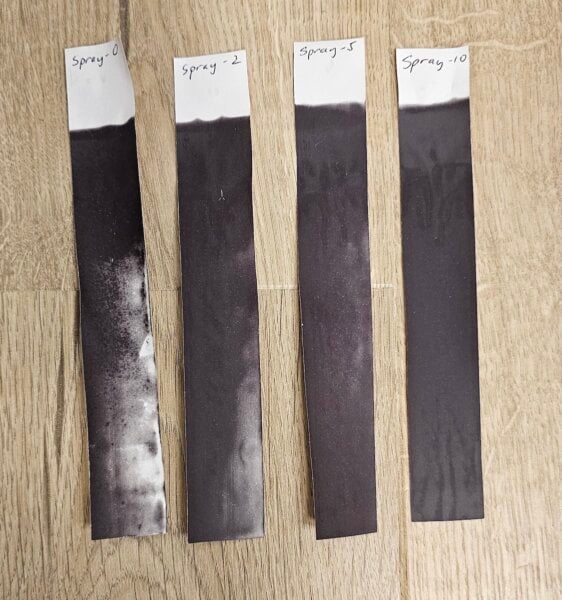
To isolate the impact of water, Wong conducted dedicated "water tests." Receipts were either dunked in water or sprayed with it, then subjected to the flat iron at varying drying intervals (0, 2, 5, and 10 minutes). The results were illuminating: dunked receipts remained largely white even after 10 minutes, with an unexpected observation that the immediate test was slightly darker, possibly due to insufficient water penetration. Sprayed receipts, however, showed a clear progression: white at 0 minutes, grey at 2 minutes, and black by 5 minutes. This definitively demonstrated that water has a potent cooling effect on thermal paper, directly influencing the darkening process.
This finding immediately raised a critical red flag regarding the test’s validity for hair. While water might keep a receipt white, it is notoriously detrimental to hair when heat styled. Hair, being porous, absorbs water. When a hot tool is applied to wet hair, this water can explosively evaporate, creating steam bubbles within the hair shaft. This phenomenon, known as "bubble hair," severely damages the hair’s cuticle and cortex, leading to increased porosity, breakage, and frizz. Therefore, a product that "works" on a receipt primarily by keeping it wet is, in fact, promoting a highly damaging scenario for actual hair. Heat protectants are designed to be applied to dry or damp hair, not wet, and allowed to dry before heat styling, precisely to avoid this damaging effect.
Unveiling the Thermal Paper Mystery: Temperature Thresholds
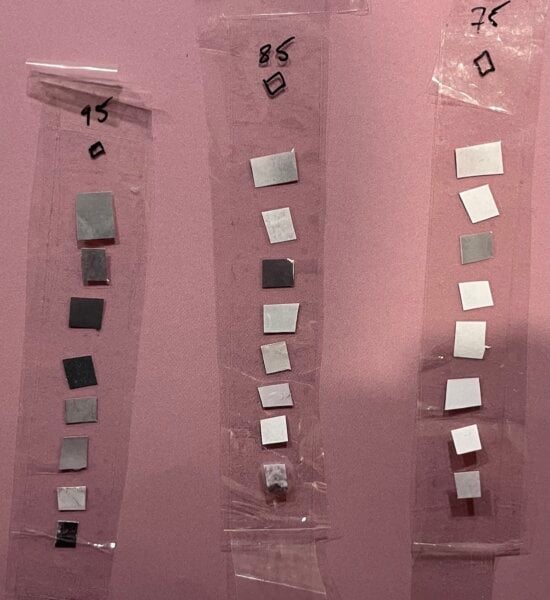
A significant turning point in the investigation came from an unexpected discovery about thermal paper’s activation temperature. Initial online searches for "thermal paper temperature" often yielded figures in the range of 150-185°C, seemingly aligning with hair straightener temperatures. This initial assumption lent a false sense of credibility to the receipt test. However, a deeper dive, serendipitously leading to a German Wikipedia article and scientific papers, revealed a starkly different truth: thermal paper typically begins to develop color between 60-100°C (140-212°F) and reaches its full density between 70-120°C (158-248°F). Crucially, hair doesn’t experience significant structural damage until temperatures exceed 100°C, with severe damage occurring at much higher temperatures.
To confirm this, Wong performed an experiment by dipping various receipts into a beaker of boiling water that was allowed to cool. This demonstrated that most receipts turned black around 95°C. While this temperature threshold aligns more closely with the point at which hair begins to incur damage, the discrepancy from the initial high-temperature assumptions was critical. It meant that any substance merely preventing the receipt from reaching this relatively low temperature could "pass" the test, irrespective of its actual protective qualities for hair.
The Solvent Hypothesis: A Game Changer
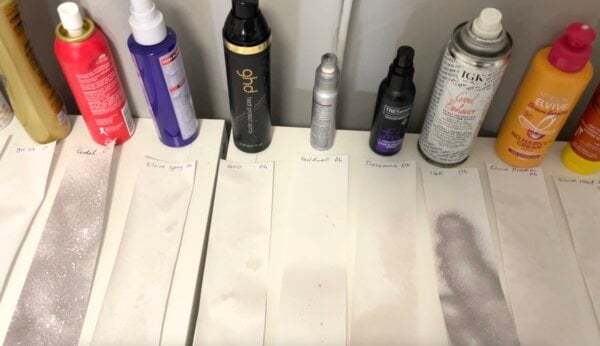
Despite the insights into water’s cooling effect and thermal paper’s temperature sensitivity, some observations remained unexplained. Products that had dried for 24 hours (Day 2 tests) still showed significant variation, with some even appearing lighter than after only 15 minutes of drying. Furthermore, some sprays, particularly those with high alcohol content like Cedel and IGK, caused receipts to turn grey immediately upon application, before any heat was applied. The edges of these grey sections precisely corresponded to the areas that remained white after heating. These anomalies suggested a deeper chemical interaction was at play.
This led to Michelle Wong’s new, more comprehensive hypothesis: heat protectants that "work" in this test are primarily dissolving or disrupting the ink layer on the receipt. Thermal receipt paper functions through a complex chemical reaction. It has a special, invisible coating containing multiple components—a dye and a developer—frozen in a solid, often wax-like, solvent. When heated, the solvent melts, allowing the dye and developer to mix and react, forming the visible black print. If this delicate chemical structure is disrupted or dissolved by external substances, the reaction cannot occur, or the resulting color is altered.
Confirmatory Tests: Proving the Solvent Effect
To validate this hypothesis, Wong conducted a series of confirmatory tests using common substances known for their solvent properties, not their heat protection capabilities.
-
Alcohol, Water, and Glycerin: Drops of methylated spirits (pure alcohol), diluted alcohol, and a mixture of alcohol, water, and glycerin were applied to receipts and allowed to dry for about 30 minutes before heating. All kept the receipts light. Interestingly, diluted alcohol made the receipt whiter than pure alcohol. This is because water and glycerin, being humectants, can hydrogen bond with alcohol, slowing its evaporation and allowing it more time to interact with and disrupt the ink layer. This explained why some spray products appeared even lighter on Day 2: the solvents had more time to work. Water and glycerin alone, however, did not significantly disturb the ink, as thermal paper inks are generally too oily for these hydrophilic substances to dissolve.
-
Other Alcohol-Containing Products: Perfume, rich in alcohol, immediately turned receipts grey upon application and kept them white after heating. Dry shampoo, another alcohol-heavy product, also caused immediate greying but offered less "protection" from heating, likely because its alcohol content evaporates too quickly to fully disrupt the ink layer over time.
-
Surfactants: Many heat protectants, even those without alcohol, contain surfactants (emulsifiers) to blend oil and water components. Wong tested micellar water and water with detergent, both rich in surfactants. These also kept receipts white after application and heating, confirming that surfactants, like alcohol, can dissolve the oily ink components. Moisturizers (e.g., CeraVe Moisturising Cream) and cream sprays (e.g., Laneige Cream Skin), which contain emulsifiers, similarly kept receipts white. Even sunscreens (La Roche-Posay Anthelios UVMune 400 Fluid and Naked Sundays spray), often formulated with both alcohol and surfactants, yielded "passing" results.
-
Volatile Silicones: Cyclopentasiloxane, a volatile silicone commonly found in hair products, was tested from a two-phase eye makeup remover. It had minimal impact on the receipt, neither turning it grey nor keeping it significantly white. This aligns with the hypothesis, as volatile silicones are generally too oily to dissolve the ink layer and evaporate quickly. This also explains why some effective silicone-based heat protectants might "fail" the receipt test.
-
Propellants: Investigations into propellants like HFC-152a, used in some aerosol sprays, showed no effect on the receipts when tested with compressed air, ruling out their direct involvement in the ink disruption.
-
Erasing Existing Ink: The ultimate confirmation came from attempting to erase already darkened thermal print. Applying alcohol, perfume, sunscreen, micellar water, and moisturizer to pre-printed receipts successfully lightened or removed the black ink. This directly demonstrated that these substances, through their solvent action, could break apart the reacted dye and developer components, proving their ink-disrupting capabilities.
The True Science of Heat Protection for Hair
The Lab Muffin investigation conclusively proves that the viral receipt test is an unreliable indicator of a product’s ability to protect hair from heat damage. The "results" are predominantly a function of a product’s solvent content (alcohol, surfactants) dissolving the thermal ink, or, to a lesser extent, the temporary cooling effect of residual water. Neither of these mechanisms equates to genuine hair protection.
Real heat protectants do not simply "block" heat. Instead, they work through several sophisticated mechanisms:
- Heat Distribution: Ingredients like silicones (e.g., dimethicone, cyclopentasiloxane) and polymers form a thin, even film on the hair shaft, helping to distribute heat more evenly across the surface. This prevents "hot spots" that can cause localized damage.
- Thermal Buffering: Some ingredients can absorb and dissipate heat, reducing the direct thermal shock to the hair’s keratin structure.
- Moisture Retention and Conditioning: Hydrolyzed proteins (e.g., wheat protein, keratin) and conditioning agents strengthen the hair, improve elasticity, and reduce friction, making it less prone to mechanical damage from hot tools that can snag or pull. They also help hair retain vital moisture during styling.
- Reduced Drying Time: Certain formulations can help hair dry faster, minimizing the overall exposure time to heat.
Crucially, heat protectants should be applied to damp hair and allowed to fully dry before using high-temperature styling tools like flat irons or curling wands. Using a hot tool on wet hair, as demonstrated by the "bubble hair" phenomenon, causes severe damage, regardless of the heat protectant used.

Industry Response and Best Practices for Consumers
The debunking of this viral trend underscores the importance of scientifically validated testing methods. Beauty brands, like Amika, whose product might "fail" the receipt test, often conduct rigorous, instrumental tests on actual hair samples. These tests typically involve subjecting treated hair swatches to repeated heat styling (e.g., controlled combing machines, tensile strength tests, microscopic analysis) to measure damage reduction, heat distribution, and overall hair health.
For consumers seeking effective heat protection, Michelle Wong advises looking beyond viral tests and instead focusing on:
- Specific Claims: Product packaging that details specific temperature protection limits (e.g., "protects up to 230°C/450°F") or references instrumental testing ("instrumental test," "vs. non-conditioning shampoo alone").
- Key Ingredients: Effective ingredients commonly found in heat protectants include various silicones, film-forming polymers, and hydrolyzed proteins.
- Application Method: Always ensure hair is damp, not wet, and allow the product to dry thoroughly before applying direct heat.
In an era saturated with user-generated content and viral trends, the Lab Muffin investigation serves as a vital reminder for critical thinking in beauty and science. While visually appealing, the receipt test is a prime example of a seemingly logical experiment that, under scientific scrutiny, reveals a deeply flawed premise, ultimately providing consumers with inaccurate and potentially harmful information. Relying on validated scientific research and transparent brand claims remains the most reliable path to effective hair care.
