
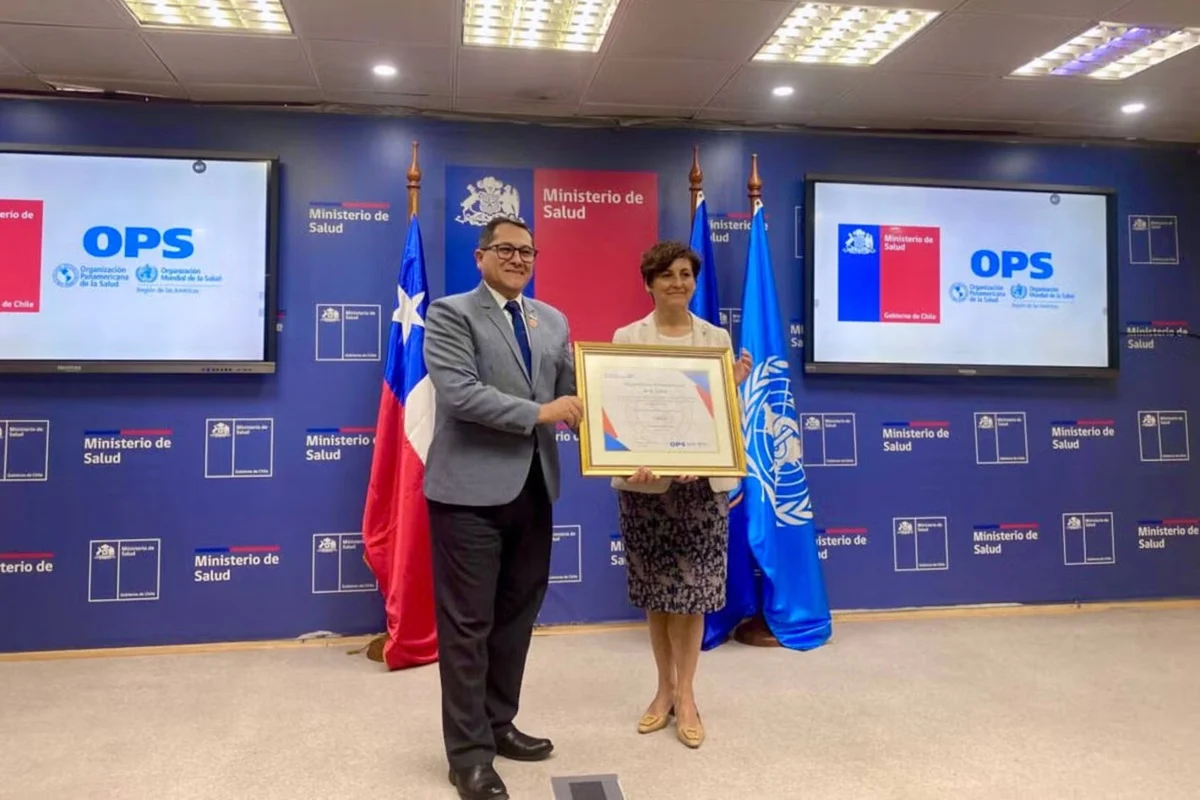
The World Health Organization (WHO) and the Pan American Health Organization (PAHO) have officially verified Chile as having eliminated leprosy, making it the first nation in the Americas and only the second globally to reach this significant public health milestone. This achievement, announced following a rigorous multi-year assessment, marks the culmination of more than three decades of sustained epidemiological surveillance, political commitment, and a robust clinical response system. By successfully interrupting the transmission of Mycobacterium leprae, the bacterium responsible for the disease also known as Hansen’s disease, Chile has set a global precedent for how low-incidence countries can transition from containment to official elimination.
The official verification follows a formal request from the Chilean Ministry of Health to PAHO and WHO. In early 2025, an independent panel of international experts was convened to conduct an exhaustive review of the country’s health data. The panel’s mandate was to determine not only if local transmission had ceased but if the national health infrastructure was capable of maintaining this status in the face of global migration and sporadic imported cases. The findings confirmed that Chile has not recorded a locally acquired case of leprosy in more than 30 years, with the last indigenous transmission documented in 1993.
A Historical Perspective: From Rapa Nui to National Vigilance
The history of leprosy in Chile is intrinsically linked to the geography of Rapa Nui, also known as Easter Island. The disease was first recorded on the island in the late 19th century, likely introduced through maritime trade and travel. For much of the 20th century, leprosy remained largely confined to this remote territory. Public health strategies at the time relied heavily on isolation and specialized treatment centers on the island to prevent the spread of the disease to the continental mainland.
By the late 1990s, the last secondary cases on Rapa Nui were successfully managed, and the focus of the national health system shifted from containment to active surveillance. While the disease was never a widespread epidemic in mainland Chile, the government maintained it as a mandatory notifiable condition. This decision proved critical; by keeping leprosy on the public health agenda even when cases were near zero, Chile ensured that clinical readiness did not atrophy. This "active waiting" period allowed the country to build a longitudinal database that eventually served as the evidentiary basis for the WHO verification.
The Path to Verification: Data and Methodology
The verification of leprosy elimination is a complex process that goes beyond a simple count of cases. The WHO independent expert panel scrutinized several key pillars of Chile’s health system, including epidemiological data from 1990 to the present, the sensitivity of the national surveillance mechanisms, and the quality of laboratory diagnostics.
A critical component of the review was Chile’s management of non-autochthonous cases. Between 2012 and 2023, the country reported 47 cases of leprosy nationwide. Crucially, none of these cases were acquired within Chilean borders; they were identified in individuals who had contracted the disease in other endemic regions before arriving in the country. The panel found that the Chilean health system was highly effective at detecting these imported cases early, providing immediate treatment, and conducting contact tracing to ensure no secondary local transmission occurred.
This ability to manage imported cases without allowing the disease to re-establish a foothold is a primary requirement for WHO verification. It demonstrates that the public health infrastructure is "resilient and responsive," capable of distinguishing between external introductions and internal failures of control.
Leadership and Global Reactions
The international community has hailed Chile’s success as a "landmark public health achievement." Dr. Tedros Adhanom Ghebreyesus, WHO Director-General, emphasized the role of science and political will in overcoming ancient diseases. "Chile’s elimination of leprosy sends a clear message to the world: with sustained commitment, inclusive health services, and early detection, we can consign ancient diseases to history," Dr. Tedros stated. He noted that the achievement aligns with the WHO’s "Towards Zero Leprosy" strategy, which aims for zero infection, zero disability, and zero stigma.
Dr. Jarbas Barbosa, Director of PAHO, highlighted the regional significance of the news. "Being the first country in the Americas to be confirmed as eliminating leprosy sends a powerful message to the Region—that diseases strongly linked to groups living in vulnerable conditions can be eliminated," he said. Dr. Barbosa pointed out that Chile’s success helps break the "vicious circle between disease and poverty," as leprosy has historically marginalized affected individuals and their families.
From the national perspective, Chile’s Minister of Health, Ximena Aguilera, expressed immense pride in the health workers who have maintained vigilance for decades. She reaffirmed the government’s responsibility to maintain active surveillance and ensure that care remains "respectful and stigma-free."
The Chilean Model: Integration and Universal Access
Chile’s success is attributed to an integrated healthcare model that prioritizes early intervention. In the Chilean system, primary care centers serve as the front line. When a suspected case of leprosy is identified—often through skin lesions or loss of sensation—the patient is immediately referred to specialized dermatology services.
The treatment protocol follows the WHO-recommended multidrug therapy (MDT), which consists of a combination of dapsone, rifampicin, and clofazimine. This treatment has been provided free of charge to patients in Chile, supported by a long-standing global partnership. Since 1995, PAHO and WHO have ensured a steady supply of MDT through agreements with The Nippon Foundation (1995–2000) and Novartis (since 2000).
Beyond pharmaceutical intervention, the Chilean model emphasizes holistic care. This includes:
- Disability Prevention: Early diagnosis is key to preventing the permanent nerve damage and physical deformities often associated with untreated leprosy.
- Rehabilitation: For those with existing impairments, the system provides physiotherapy and social inclusion programs.
- Clinical Training: Even in a low-incidence setting where most doctors may never see a case in their entire careers, Chile has invested in continuous training to ensure the medical community can recognize the symptoms of the disease.
- Legal Protections: National legislation guarantees equal access to healthcare for all, including migrants, ensuring that no one is deterred from seeking treatment due to their legal status or fear of social exclusion.
Leprosy in the Global Context
Leprosy remains a neglected tropical disease (NTD) that persists in over 120 countries. According to WHO data, more than 200,000 new cases are reported annually worldwide. The disease is caused by Mycobacterium leprae, a slow-growing bacterium that primarily affects the skin, peripheral nerves, and the mucosa of the upper respiratory tract. Because the incubation period can last anywhere from five to twenty years, maintaining long-term surveillance is one of the greatest challenges for health ministries.
Chile now joins the Hashemite Kingdom of Jordan as the only two countries globally to receive official verification of leprosy elimination. This puts Chile at the forefront of the PAHO Disease Elimination Initiative, which seeks to eliminate more than 30 communicable diseases and related conditions in the Americas by 2030.
Broader Impact on Neglected Tropical Diseases (NTDs)
The verification of Chile is not just a victory against leprosy; it is a victory for the broader fight against NTDs. Chile is the 61st country globally and the sixth in the Americas to have eliminated at least one NTD, joining Brazil, Colombia, Ecuador, Guatemala, and Mexico, which have eliminated diseases such as onchocerciasis (river blindness) or trachoma.
NTDs affect more than one billion people globally, primarily in impoverished communities with limited access to clean water and sanitation. By proving that leprosy can be eliminated even when it has a historical presence, Chile provides a roadmap for other nations in the region to tackle similar challenges. The focus on "zero stigma" is particularly important, as the social consequences of leprosy have often been as devastating as the physical symptoms, leading to the historical creation of "leper colonies" and the exclusion of patients from society.
Challenges of the Post-Elimination Phase
While the verification is a cause for celebration, the WHO and the independent panel have cautioned that the work is not over. The "post-elimination phase" requires a shift in strategy rather than a cessation of efforts. The panel recommended that Chile:
- Maintain Sensitive Surveillance: The system must remain capable of detecting sporadic imported cases to prevent any possibility of re-establishing local transmission.
- Retain Clinical Expertise: As the disease becomes even rarer, the risk of misdiagnosis increases. The panel suggested designating a formal national referral center to consolidate expertise.
- Leverage Digital Training: Utilizing platforms like the WHO Academy to keep health workers updated on diagnostic protocols.
- Sustained Reporting: Continuing to provide annual data to the WHO to ensure global monitoring remains accurate.
Conclusion: A Blueprint for the Future
Chile’s journey from the isolation measures of Rapa Nui in the 1800s to being a global leader in disease elimination in 2025 serves as a testament to the power of a resilient public health system. It demonstrates that elimination is not merely the absence of a pathogen, but the presence of a system strong enough to ensure the pathogen cannot return.
As the Americas look toward the 2030 goal of eliminating multiple communicable diseases, the "Chilean Model" offers several lessons: the importance of universal health coverage, the necessity of long-term political funding, and the value of international cooperation in the supply of essential medicines. For a world still grappling with various infectious threats, Chile’s achievement provides a necessary glimmer of hope that even the most ancient and stigmatized diseases can eventually be defeated.
