
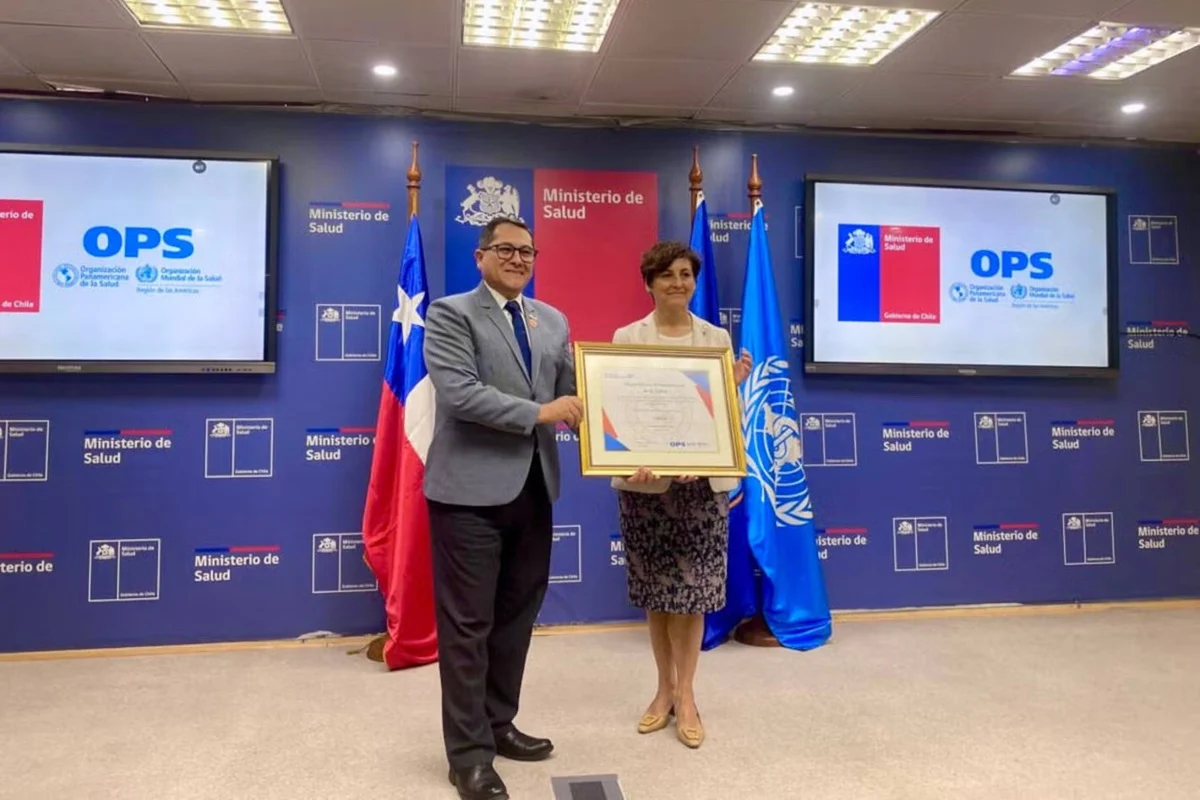
The World Health Organization (WHO) and the Pan American Health Organization (PAHO) have formally announced that Chile has become the first nation in the Americas, and only the second in the world, to be verified as having eliminated leprosy. This historic validation follows more than three decades of rigorous surveillance, clinical discipline, and political commitment to eradicating a disease that has plagued humanity for millennia. The verification, confirmed after an exhaustive review by an independent panel of experts in 2025, marks a watershed moment for the global "Towards Zero Leprosy" initiative and provides a blueprint for other nations grappling with neglected tropical diseases (NTDs).
Leprosy, also known as Hansen’s disease, is a chronic infectious condition caused by the bacterium Mycobacterium leprae. While it is often associated with ancient history and social ostracization, the disease remains a contemporary public health challenge in over 120 countries, with approximately 200,000 new cases reported annually worldwide. Chile’s success in eliminating the disease is particularly notable given its geographical challenges and the historical concentration of the illness in remote territories.
A Century of Progress: From Rapa Nui to National Verification
The history of leprosy in Chile is inextricably linked to Rapa Nui (Easter Island), where the disease was first recorded in the late 19th century. Due to the island’s extreme isolation, the disease remained localized, though it posed a significant threat to the indigenous population. Throughout much of the 20th century, the Chilean government managed the disease through a combination of isolation measures and evolving medical treatments. By the late 1990s, the final secondary cases on the island had been successfully managed, effectively ending local transmission in the territory.
On the Chilean mainland, leprosy was never endemic in the traditional sense, but sporadic introductions occurred due to international travel and migration. The last locally acquired case of leprosy in Chile was detected in 1993. Since then, for over 30 years, the country has not reported a single case of indigenous transmission. Despite the absence of local cases, the Chilean Ministry of Health maintained leprosy as a "notifiable condition," ensuring that the public health apparatus remained vigilant.
Between 2012 and 2023, Chile reported 47 cases of leprosy nationwide. Crucially, all of these cases were identified as "imported," meaning the individuals had contracted the disease outside of Chilean borders. The ability of the Chilean health system to detect these cases, provide immediate treatment, and prevent any secondary local transmission was a primary factor in the WHO’s decision to grant elimination status.
The Verification Process and Expert Findings
In early 2025, at the formal request of the Chilean Ministry of Health, PAHO and WHO convened an independent panel of international experts to evaluate the country’s claims of elimination. The verification process was not merely a count of cases but a comprehensive audit of the nation’s entire public health infrastructure regarding Hansen’s disease.
The panel’s assessment focused on four critical pillars:
- Epidemiological Data: A review of three decades of medical records to confirm the absence of autochthonous (locally acquired) transmission.
- Surveillance Mechanisms: Evaluation of the mandatory reporting systems and the integration of leprosy monitoring into the broader national health surveillance network.
- Case Management Protocols: Inspection of how imported cases were treated, including the use of multidrug therapy (MDT) and the follow-up procedures for contacts.
- Sustainability Plans: An analysis of Chile’s strategy for maintaining clinical expertise and diagnostic capacity in a "low-incidence" environment where many modern doctors have never seen a live case of leprosy.
The panel’s findings were definitive: Chile had not only interrupted transmission but had also built a resilient system capable of managing future sporadic cases without risking a public health resurgence.
Leadership and Global Reactions
The announcement has drawn praise from the highest levels of international health leadership. Dr. Tedros Adhanom Ghebreyesus, WHO Director-General, characterized the achievement as a testament to the power of science and political will. "Chile’s elimination of leprosy sends a clear message to the world: with sustained commitment, inclusive health services, and universal access to care, we can consign ancient diseases to history," Dr. Tedros stated.
Dr. Jarbas Barbosa, Director of PAHO, emphasized the regional significance of the milestone. He noted that leprosy has historically been linked to poverty and vulnerability. "Being the first country in the Americas to be confirmed as eliminating leprosy sends a powerful message to the Region—that diseases strongly linked to groups living in vulnerable conditions can be eliminated, contributing to interrupting the vicious circle between disease and poverty," Dr. Barbosa said.
Chilean Minister of Health, Ximena Aguilera, expressed national pride in the recognition, attributing the success to decades of work by health teams across the country. She emphasized that while the disease is eliminated, the responsibility to provide "stigma-free care" remains a priority for the government.
The Technical Model: Integration and Primary Care
Chile’s success is rooted in an integrated health model that prioritizes early detection at the primary care level. In many countries, leprosy treatment is sequestered in specialized "leper colonies" or remote clinics, which can foster stigma. Chile, conversely, integrated leprosy detection into its general primary care centers.
When a suspected case is identified at a local clinic, the patient is referred to specialized dermatology services for definitive diagnosis and treatment. This system ensures that clinicians across the country—even those in areas that have not seen a case in decades—remain aware of the diagnostic criteria. Training for these health workers is aligned with the WHO’s "Towards Zero Leprosy" strategy, which emphasizes:
- Early Intervention: Detecting the disease before it causes permanent physical damage.
- Disability Prevention: Providing physiotherapy and rehabilitation as part of the standard care package.
- Holistic Support: Ensuring social inclusion and psychological support for those affected.
International Cooperation and the Role of MDT
A critical component of Chile’s achievement has been the uninterrupted access to Multidrug Therapy (MDT). Since 1995, PAHO and WHO have facilitated the free distribution of MDT to countries in the Americas. This was made possible through long-term partnerships with The Nippon Foundation (1995–2000) and Novartis (since 2000).
MDT is a combination of antibiotics—usually rifampicin, dapsone, and clofazimine—that kills the Mycobacterium leprae bacterium and renders the patient non-infectious within days of starting treatment. By ensuring a steady, free supply of these drugs, Chile was able to guarantee that every person diagnosed within its borders received the gold-standard treatment regardless of their socio-economic status or nationality.
Legal Frameworks and the Fight Against Stigma
Beyond the medical intervention, Chile’s success is bolstered by a legal and social framework that protects the rights of patients. National legislation in Chile guarantees equal access to healthcare for all residents, including migrants and marginalized populations. This is vital for leprosy control, as fear of deportation or discrimination often drives infected individuals into hiding, where they continue to spread the disease.
The Chilean model treats leprosy as a standard medical condition rather than a social curse. By providing "stigma-free" care, the health system encourages individuals with suspicious skin lesions or nerve numbness to seek help early, which is the single most effective way to prevent the transmission of the bacteria.
Global Context: The 2030 Roadmap for Neglected Tropical Diseases
Chile’s verification comes at a pivotal time for the WHO’s global strategy. Leprosy is classified as a Neglected Tropical Disease (NTD), one of 21 conditions that primarily affect impoverished communities. The "WHO Road Map for Neglected Tropical Diseases 2021–2030" sets ambitious targets for the control, elimination, and eradication of these illnesses.
In 2025 alone, nine countries were validated for achieving various NTD targets. Chile now joins a prestigious group of nations in the Americas—including Brazil, Colombia, Ecuador, Guatemala, and Mexico—that have eliminated at least one NTD. However, Chile’s distinction as the second country globally (after the Hashemite Kingdom of Jordan) to eliminate leprosy specifically places it at the forefront of the global movement.
Sustaining the "Post-Elimination" Phase
The WHO has cautioned that "elimination" does not mean the end of vigilance. In a globalized world, the risk of imported cases remains constant. The verification panel recommended that Chile continue to report to the WHO and maintain its sensitive surveillance systems.
Key recommendations for the post-elimination phase include:
- Designated Referral Centers: Formally establishing a national center of excellence for Hansen’s disease to preserve clinical expertise.
- Digital Training: Utilizing the WHO Academy’s online platforms to train new generations of health workers who may not encounter the disease during their standard medical education.
- Continued Reporting: Maintaining the mandatory notification status of the disease to track any potential shifts in epidemiological patterns.
Chile’s experience demonstrates that the elimination of an "ancient" disease is not defined solely by the absence of cases, but by the presence of a robust, permanent health system capable of responding whenever and wherever a case appears. As the Americas look toward 2030, the Chilean model serves as a powerful reminder that with political will and international solidarity, even the most persistent public health challenges can be overcome.
