
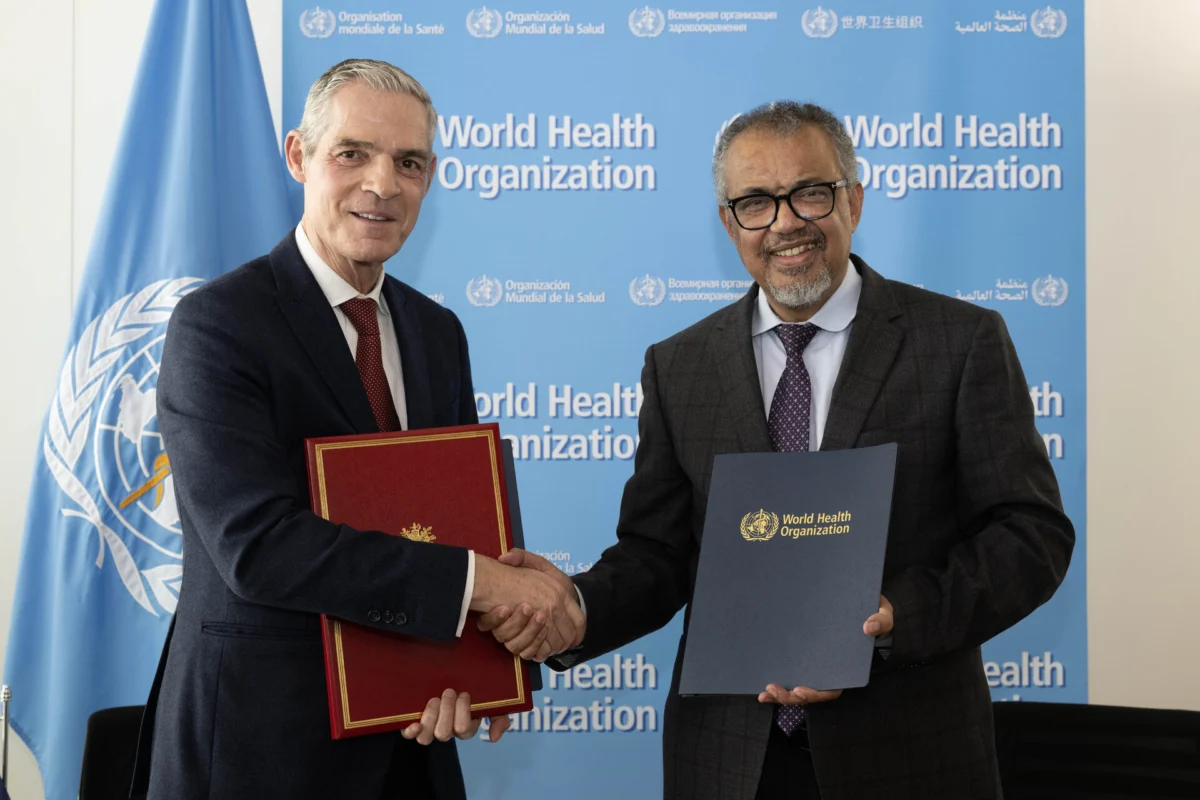
In a significant reinforcement of international health cooperation, the French government has formalized a substantial financial commitment to the World Health Organization (WHO), pledging €24 million to bolster global health security and emergency response capabilities. The contribution agreements were signed on October 17, 2024, at the WHO headquarters in Geneva, during a ceremony attended by Dr. Tedros Adhanom Ghebreyesus, WHO Director-General, and His Excellency Mr. Jérôme Bonnafont, the Permanent Representative of France to the United Nations in Geneva. This funding, channeled through the French Ministry of Europe and Foreign Affairs, represents a strategic alignment between Paris and the Geneva-based health agency, falling under the broader France-WHO Framework Agreement that governs their collaboration through 2025.
Strategic Context and the Framework Agreement
The partnership between France and the WHO is anchored by a comprehensive strategic framework designed to streamline the legal, administrative, and financial processes that facilitate global health interventions. Since its inception, the 2020–2025 Framework Agreement has served as a roadmap, ensuring that French funding is not merely reactive but aligned with the WHO’s long-term priorities, specifically the Fourteenth General Programme of Work (GPW 14), which spans 2025 to 2028.
This latest injection of €24 million is categorized into several specific funding streams, reflecting the complexity of modern global health challenges. A critical component of this package is the €4.5 million in fully flexible voluntary funds allocated to the Core Voluntary Contributions Account (CVCA). Unlike "earmarked" funding, which restricts usage to specific projects, flexible funding allows the WHO to address underfunded emergencies or pivot resources rapidly when unforeseen health crises arise, providing the organization with the agility necessary to manage volatile global health landscapes.
Breakdown of Allocations and Operational Priorities
The financial commitment is earmarked for a diverse array of initiatives, addressing both chronic systemic issues and acute humanitarian emergencies. The scope of the funding includes:

- Emergency Response Mechanisms: Significant portions of the funds are directed toward the WHO Contingency Fund for Emergencies (CFE), which provides immediate liquidity for outbreak response. This includes targeted support for ongoing health crises in Gaza, cholera containment efforts in various regions, and mental health interventions in conflict-affected Ukraine.
- The Lyon Emergency Hub: France continues to invest in the WHO’s specialized center in Lyon. This facility serves as a linchpin for global preparedness, specializing in training, laboratory network management, and the logistics of responding to highly infectious diseases.
- Chronic Health Challenges: Recognizing that non-communicable diseases (NCDs)—such as cardiovascular conditions, cancer, and diabetes—remain the leading cause of mortality globally, France is supporting targeted WHO programs to curb these trends.
- Urban Health and One Health: The funding also emphasizes the "One Health" approach, which recognizes the interconnectedness of human, animal, and environmental health, as well as the development of urban health labs to address the unique sanitary challenges posed by rapidly expanding metropolitan areas.
Chronology of French-WHO Collaboration
France’s role in global health has historically been characterized by proactive multilateralism. The current funding announcement is the latest in a series of engagements that have defined the post-pandemic era:
- 2020: Implementation of the five-year France-WHO Framework Agreement, establishing the current administrative architecture for collaboration.
- 2022: Increased French commitment to the WHO’s emergency programs following the escalation of the war in Ukraine, highlighting the need for specialized mental health and trauma support.
- May 2024: The World Health Assembly approves the Fourteenth General Programme of Work, setting the stage for the inaugural WHO Investment Round.
- October 2024: Formal signing of the €24 million package, reinforcing France’s role as a lead donor and co-host of the ongoing Investment Round.
The Significance of the Investment Round
Perhaps the most notable implication of this signing is the broader push for sustainable financing. For years, the WHO has struggled with a funding model overly dependent on "earmarked" contributions, which can leave core programs—such as those addressing climate change or primary healthcare—underfunded.
France has positioned itself as a vocal advocate for a more robust financial foundation for the WHO. By co-hosting the organization’s first-ever Investment Round, France is spearheading efforts to mobilize predictable, multi-year funding. This transition is essential for the realization of the GPW 14, which aims to improve the health of 1.5 billion more people by 2028. By providing a combination of assessed contributions—mandatory dues based on national wealth—and flexible voluntary funding, France is setting a benchmark for how member states can ensure the WHO remains an independent and effective guardian of global health.
Official Perspectives and Diplomatic Impact
During the signing ceremony, Ambassador Jérôme Bonnafont emphasized that France’s commitment transcends simple financial transfers. "France remains deeply committed to supporting the World Health Organization in its efforts to tackle critical global health challenges," Bonnafont stated. "These agreements reflect our shared priorities of promoting health equity, responding to emergencies, and strengthening healthcare systems worldwide."
Dr. Tedros Adhanom Ghebreyesus, in his response, underscored the vital nature of the partnership. "We are immensely grateful to the French Government for its steadfast support to WHO, continued partnership, and leadership in global health," Dr. Tedros noted. He added that the contribution would directly impact the organization’s ability to save lives and protect the most vulnerable populations, particularly those caught in the crossfire of geopolitical conflict or environmental instability.

Fact-Based Analysis of Broader Implications
The timing of this donation is critical. The global health architecture is currently undergoing a period of intense scrutiny, particularly regarding the development of a Pandemic Treaty and amendments to the International Health Regulations (IHR). By providing flexible funding, France is essentially investing in the "neutrality" and "readiness" of the WHO.
Furthermore, the focus on the Lyon emergency hub signals a strategic shift toward regionalized preparedness. The COVID-19 pandemic demonstrated that global health security is only as strong as the weakest link in the supply chain. By bolstering the Lyon center, France is ensuring that the WHO maintains a technical and operational backbone that can provide rapid assistance to any nation, regardless of its internal resources.
However, the challenge remains for the international community to replicate this model. While France’s contribution is substantial, the total funding requirement for the WHO to meet the 2025–2028 goals remains vast. The success of this partnership serves as a litmus test for the effectiveness of the Investment Round. If major economies follow France’s lead in providing flexible, multi-year funding, the WHO may finally achieve the financial stability required to move from crisis management to proactive disease prevention.
Conclusion
The signing of these seven contribution agreements between France and the WHO serves as a tangible manifestation of international solidarity. By combining long-term strategic planning with immediate, flexible emergency support, France has reinforced its status as a key architect of global health governance. As the WHO transitions into its next General Programme of Work, this €24 million injection provides not only the necessary resources to address current threats—from cholera outbreaks to the burden of non-communicable diseases—but also the political momentum required to foster a more resilient, better-funded global health system capable of navigating the uncertainties of the 21st century.
