

The United Kingdom’s forthcoming food strategy, slated for release this spring, aims to forge a food system characterized by enhanced health, greater resilience, and robust economic growth. In an era increasingly defined by volatile global supply chains, exacerbated by climate change, geopolitical conflicts, and trade disputes, the urgency to achieve these objectives is paramount. This critical juncture demands a concerted effort to accelerate progress in the burgeoning field of alternative proteins, a sector poised to redefine food security and economic opportunity.
Linus Pardoe, senior UK programme manager at the Good Food Institute Europe, has articulated a compelling case for the government to fully embrace alternative proteins. He warns that a failure to do so could see the UK cede its leadership position and economic advantage to other nations. The government has already acknowledged the pivotal role of food innovation in realizing its broader missions for economic growth and public health. Official statements have highlighted the UK’s strong science and research base, which is actively fostering "new products and markets, including for healthier products and in alternative proteins." This recognition underscores a nascent understanding within Whitehall of the transformative potential of this sector.
The UK’s commitment to alternative proteins is not merely aspirational; it is increasingly substantiated by tangible investment. Since 2020, the nation has emerged as Europe’s largest national funder of alternative protein research, channeling over £100 million into the field and establishing several significant research centers. This investment signifies a strategic prioritization of innovation in a sector that promises substantial returns, both economically and environmentally.

The Economic Imperative: Fueling Growth Through Food Innovation
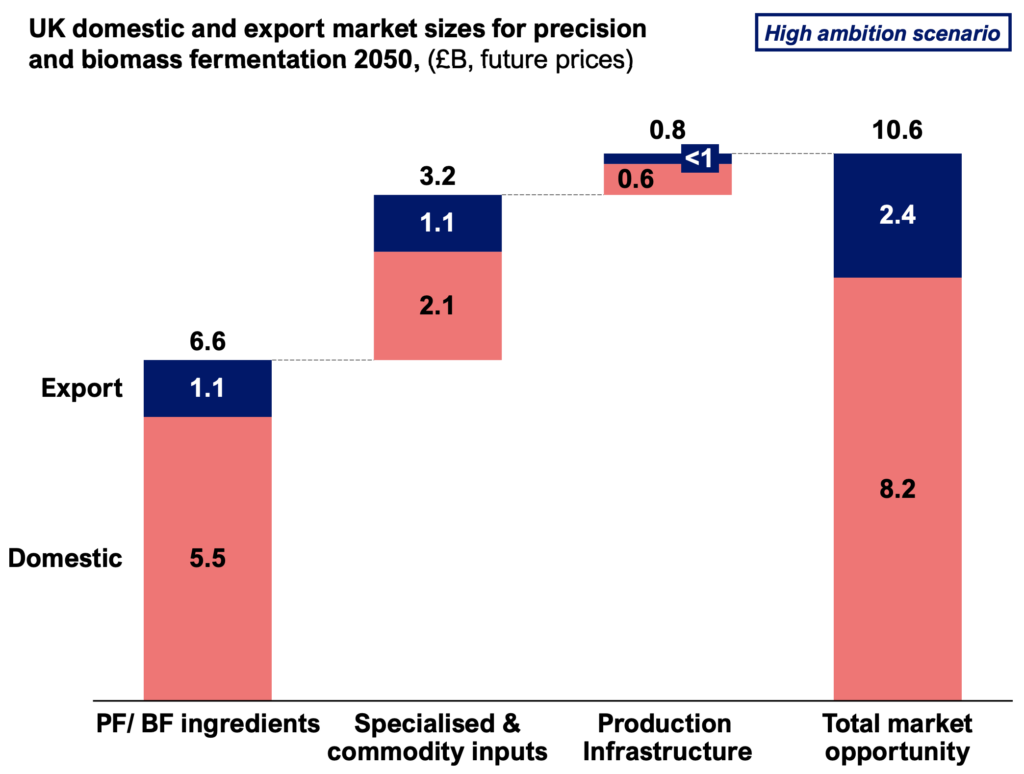
The economic rationale underpinning substantial government funding for the future food sector is increasingly evident. Analysis from Systemiq indicates that advanced fermentation technologies alone could contribute up to £10 billion to the UK economy by 2050. This projection is based on the scalability and efficiency of producing proteins through microbial processes, offering a sustainable and cost-effective alternative to traditional agriculture. Furthermore, research by Green Alliance suggests that if plant-based meat consumption escalates in alignment with the Climate Change Committee’s 2035 scenario, the market value could reach £2.7 billion. This represents a significant economic opportunity, creating new jobs, stimulating entrepreneurship, and enhancing export potential.
The development of a thriving alternative protein industry, however, is not without its challenges. Regulatory hurdles have been consistently identified as a significant constraint on the large-scale production of affordable alternative proteins. The complexity of existing food regulations, often designed for conventional products, can create bottlenecks for novel food technologies. Despite these challenges, there have been commendable efforts to bolster regulatory expertise in recent years. The Food Standards Agency (FSA) has taken a pioneering step by launching a "cultivated meat sandbox" initiative. This program provides a controlled environment for businesses to develop and test novel food products, such as cell-cultivated meat, under regulatory supervision. Complementing this, the FSA has also introduced an innovation research program specifically for precision fermentation, signaling a commitment to understanding and facilitating the regulatory pathways for these emerging technologies.
The critical question now facing the UK government is whether it will translate this nascent recognition and initial investment into decisive action. The success of the alternative protein sector hinges on its ability to deliver products that are not only innovative but also meet the fundamental consumer demands of taste and affordability. Currently, plant-based meat products have not consistently achieved parity with conventional meat in terms of taste and price, while cultivated meat remains in its early stages of technical and commercial maturity. Without targeted public investment and strategic policy choices, these barriers are likely to persist, hindering widespread public adoption.
The next generation of alternative protein producers, those striving to create the "industries of the future" that the government seeks to establish, cannot navigate the critical "valley of death" – the challenging phase between initial research and market commercialization – without substantial support. This support must encompass not only funding for research and development but also the crucial infrastructure required to scale up production and bring these innovative products to market.
A Blueprint for Action: Government Support for Alternative Proteins
The Good Food Institute Europe has put forth a comprehensive set of proposals designed to ensure that the UK’s food strategy actively fosters sustained growth in the plant-based food sector and catalyzes the scaling-up of fermentation and cultivated meat technologies. At the heart of these recommendations lies a proposed £150 million public investment package spread over the next five years. This funding would be administered through established bodies like UK Research and Innovation (UKRI) and the Department for Science, Innovation and Technology.
At an annual allocation of £30 million, this proposed investment represents a modest fraction of UKRI’s substantial £9 billion annual budget. However, evidence strongly suggests that such a targeted investment would act as a powerful catalyst, attracting significant private capital. Analysis by Green Alliance indicates that for every £1 of public funding invested in the plant-based sector, an additional £1.92 in private capital is mobilized. This multiplier effect underscores the efficiency and impact of strategic public investment in de-risking early-stage innovation and signaling market potential to private investors.

Within this broader investment framework, a dedicated £30 million plant-based innovation fund could play a transformative role. Such a fund would be instrumental in supporting domestic production capabilities, thereby reducing the UK’s reliance on imported ingredients and finished products. Home-grown crops, such as peas and fava beans, are prime candidates for use as key ingredients in plant-based meat alternatives. By fostering demand for these crops, the fund can create new, higher-value markets for British farmers. This mirrors the current success seen in the oat milk sector, where brands like Oatly, Alpro, and Moma are increasingly sourcing their oats from UK farms, demonstrating the potential for the alternative protein industry to revitalize agricultural economies.
Beyond bolstering domestic supply chains, a plant-based innovation fund would also facilitate crucial research and development aimed at enhancing the nutritional profiles of plant-based foods. This aligns directly with the food strategy’s objective of making healthier food options more accessible to all segments of the population. While many existing plant-based meat products already boast lower saturated fat content compared to their conventional counterparts, further research is necessary to optimize micronutrient levels, particularly for iron and vitamin B12, and to reduce sodium content. These improvements are essential for ensuring that plant-based options are not only sustainable but also nutritionally complete and appealing to a broader consumer base.
Global Context and Future Outlook
The international landscape is marked by a palpable sense of urgency as other major economies actively develop national strategies to diversify protein production. The UK’s ability to maintain its current standing and capitalize on the opportunities presented by the alternative protein revolution will hinge on its commitment to translating the ambitions outlined in its food strategy into concrete action. A relatively modest, yet strategically deployed, investment in alternative protein research and development, coupled with essential infrastructure development, will be crucial for building upon the progress already achieved. This targeted approach has the potential to unlock the next chapter of the UK’s leadership in protein diversification, securing its position as a global innovator in sustainable and resilient food systems. The time for decisive action is now, to ensure the UK does not falter in this critical race for the future of food.