

The plant-based industry’s pursuit of broader labelling rights has encountered a significant setback in Switzerland, with the Federal Supreme Court delivering a decisive ruling against French food giant Danone. The court has denied Danone’s appeal concerning its Alpro brand’s "This Is Not M*lk" oat-based beverage, a product that employs a graphic symbol in place of the letter ‘i’ in "milk." This decision reinforces a trend observed earlier this year in the United Kingdom, where similar legal challenges have restricted the terminology available to plant-based alternatives.
The Swiss Federal Supreme Court, by a majority of four to one, upheld the prohibition of using the term "milk" on labels for non-dairy products. A compelling analogy was drawn by one of the presiding judges, who stated, "If you have to call a spade a spade, you have to call milk ‘milk.’" This judicial sentiment underscores a core argument often presented by the dairy industry: that the term "milk" is intrinsically linked to mammary secretions from mammals and that its application to plant-based alternatives is inherently misleading.
This judgment in Switzerland follows closely on the heels of a similar verdict by the UK Supreme Court. In that instance, the court invalidated Oatly’s "Post-Milk Generation" trademark. The reasoning behind the UK ruling mirrored that of the Swiss court, asserting that the term "milk" cannot be legally designated for oat-based products. This precedent-setting decision in the UK has demonstrably influenced subsequent legal interpretations across Europe.
A Pattern of Restrictive Rulings on Plant-Based Labelling
The legal battles surrounding plant-based product labelling have intensified in recent years, with the industry advocating for clearer and more consistent terminology. Opponents, primarily representing the traditional dairy sector, have consistently argued that plant-based beverages, despite their similar texture and use, do not meet the biological definition of dairy products, which they contend must originate from mammals. This distinction forms the bedrock of their legal arguments, aiming to prevent what they perceive as an appropriation of a term with established connotations.
Historically, the plant-based sector has employed a range of creative strategies to navigate these restrictions. These often involve linguistic and typographic modifications to circumvent direct prohibitions. Common tactics include replacing the letter ‘i’ in "milk" with symbols such as asterisks (*), exclamation marks (!), or full stops (.), or substituting it with the letter ‘y’. In some cases, the ‘i’ is omitted entirely. These creative interpretations have been employed to maintain a degree of familiarity for consumers while ostensibly adhering to regulatory guidelines.
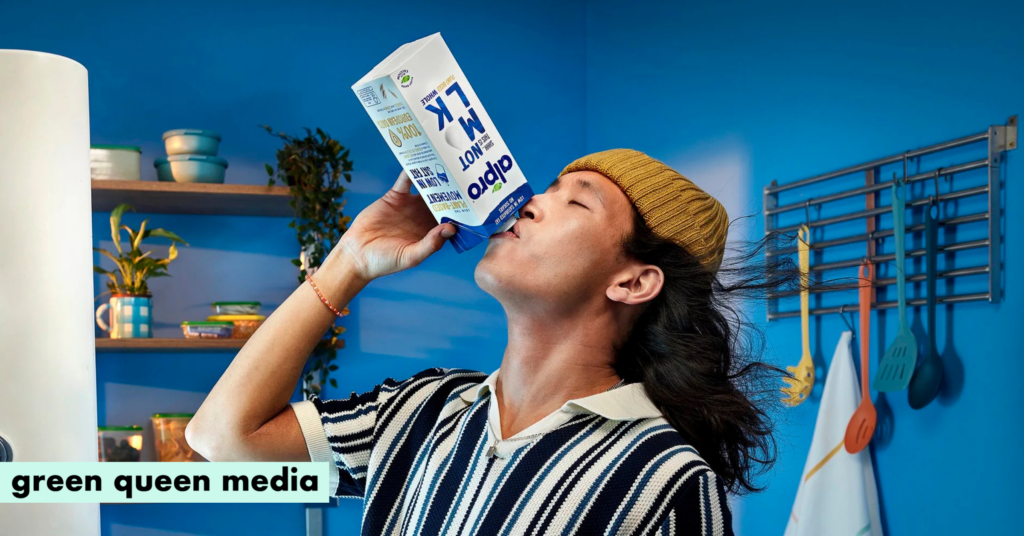
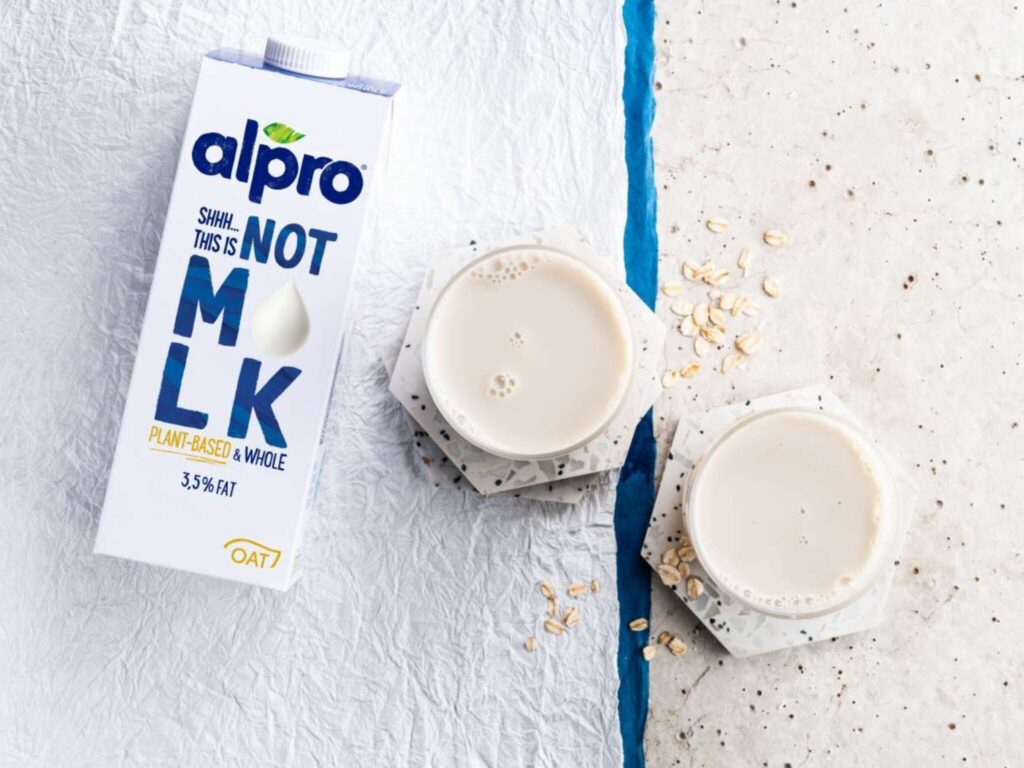
Danone’s Alpro brand, for instance, has largely sidestepped the direct use of "milk" in its core product line by prominently featuring the primary ingredient on its packaging. Products are typically labelled as "Alpro Oat" or "Alpro Almond," allowing consumers to infer the nature of the beverage. However, the product at the heart of the Swiss legal challenge, "This Is Not M*lk," was specifically designed as an oat-based alternative intended to closely mimic the taste profile of dairy milk. The packaging’s use of a white droplet symbol in place of the ‘i’ was a deliberate attempt to navigate existing regulations, including the European Union’s directive that prohibits the use of dairy terms on plant-based products. This approach had proven effective even within the EU’s stringent framework.
Switzerland’s Escalating Stance on Plant-Based Terminology
Switzerland, however, appears to have adopted an even more stringent interpretation of food labelling laws. In 2022, the Zurich cantonal laboratory took decisive action by banning Alpro’s "This Is Not M*lk" from the market. The laboratory cited a violation of Swiss law, which explicitly defines milk as "the product of the mammary secretion of an animal classified as a mammal." This definition leaves no room for interpretation regarding the origin of the product.
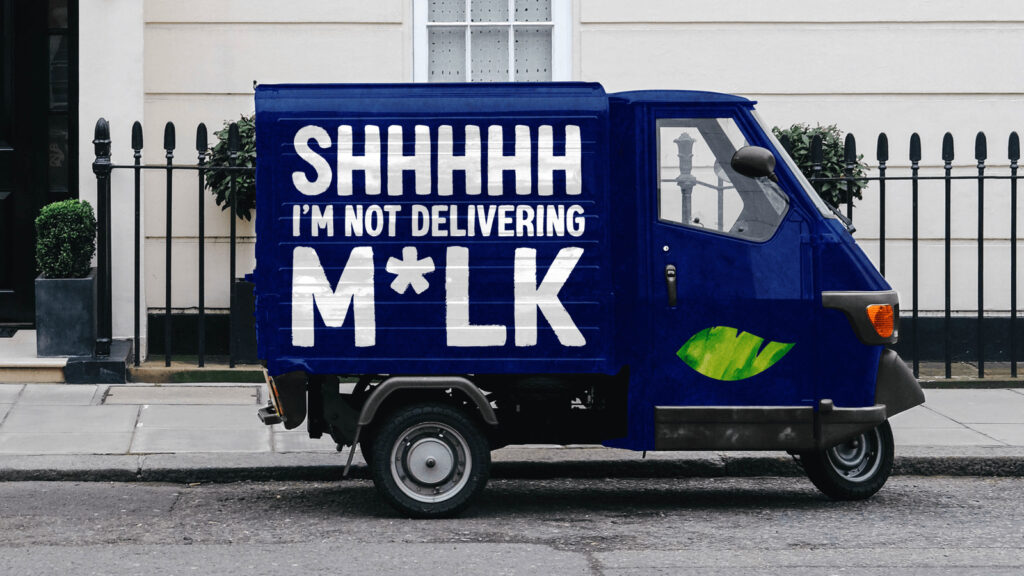
The Zurich Cantonal Court subsequently concurred with the laboratory’s decision, a ruling that prompted Danone to lodge an appeal with the Federal Court. The recent judgment by the Federal Court on Friday has effectively closed the door on this appeal, referencing a 2025 legal precedent concerning the designation of vegan food products. The court’s statement was unequivocal: "In this concrete case, the designation ‘milk’ cannot be used for a vegan product." Crucially, the ruling extended its scope to encompass modified or typographically altered terms. The court elaborated, "In principle, the same applies if the specific term ‘milk’ is used in a negative statement, or if it is modified typographically." This suggests that any attempt to evoke the term "milk," whether directly, negatively, or through stylistic alterations, will be deemed a violation of Swiss food law.
A Growing Trend Against Plant-Based Naming Conventions in Europe
The implications of these legal decisions extend beyond the immediate parties involved. They signal a broader trend across Europe where regulatory bodies and judicial systems are increasingly scrutinizing and restricting the naming conventions for plant-based alternatives. The Swiss Foodstuffs Act, a cornerstone of the nation’s food safety regulations, mandates that the presentation and labelling of food products must not mislead consumers regarding their production, composition, or nature. This principle of consumer protection is often invoked by those seeking to uphold traditional definitions of food categories.
This legal philosophy has already led to significant rulings in other food sectors within Switzerland. Last year, the Supreme Court prohibited the use of terms like "chicken" or "beef" on plant-based meat labels. This overturned a prior decision by the Zurich Administrative Court, which had permitted Planted, a leading Swiss meat-free manufacturer, to use designations such as "Planted chicken," "like chicken," and "like pork." The Supreme Court’s intervention underscored the principle that even descriptive terms implying similarity to animal products could be considered misleading if they did not accurately reflect the product’s origin.
The Federal Food Safety and Veterinary Office (FSVO) has consequently issued guidance to cantonal authorities, advising that even modified or negative claims, such as "not milk," could potentially be interpreted as misleading by consumers. This advisory further tightens the regulatory environment for plant-based products.
The dissenting opinion within the Swiss Federal Court’s ruling highlighted a contrasting perspective. One judge argued that no reasonable consumer would confuse oat milk with dairy milk based on product packaging. This judge pointed to the widespread and common usage of terms like "soy milk" and "almond milk" in everyday language, suggesting that consumers have developed a nuanced understanding of these product categories. This viewpoint suggests a potential disconnect between strict legal interpretations and prevailing consumer understanding and practices.
Contradictions with National Health Objectives
Interestingly, these restrictive legal decisions appear to stand in contrast to Switzerland’s broader national health and sustainability objectives. The Swiss Federal Council introduced a new nutrition strategy last year, advocating for a significant overhaul of the national diet. A key pillar of this strategy is the promotion of plant-based nutrition and the creation of sustainable food environments. This eight-year plan aligns with the country’s latest dietary guidelines for adults, published in August 2024, which actively encourage increased consumption of whole foods and plant proteins.
The Swiss ruling against Danone, coupled with the UK’s decision concerning Oatly and the European Union’s recent outlawing of 31 terms for plant-based meat products, indicates a growing divergence between regulatory enforcement and public health policy. While the government aims to encourage healthier and more sustainable eating habits through increased plant-based consumption, the legal system is imposing significant limitations on how these products can be marketed and identified. This creates a complex and potentially contradictory landscape for both producers and consumers within the rapidly evolving food market. The challenge for the plant-based industry now lies in finding innovative ways to communicate their product offerings effectively and transparently, without falling foul of increasingly stringent, and in some instances, contentious, labelling regulations. The long-term impact of these rulings on consumer choice, market innovation, and the transition towards more sustainable food systems remains a critical area for ongoing observation and analysis.