
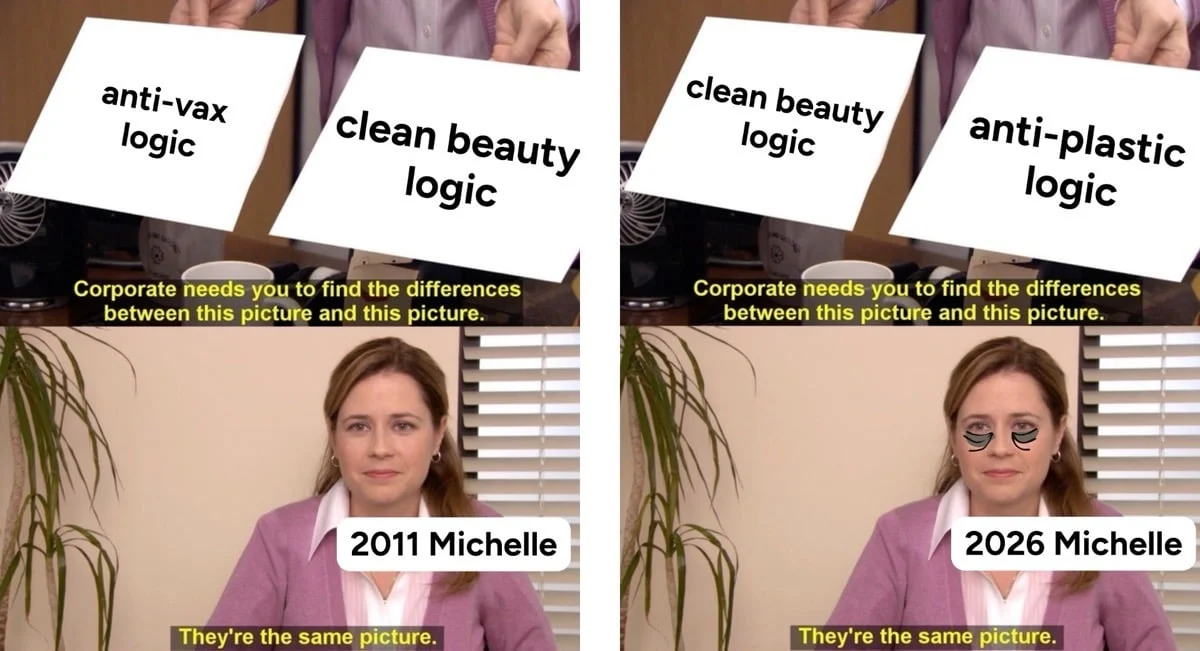
Dr. Wong, a prominent science communicator, began her work in 2011, motivated by the realization that the "non-toxic" clean beauty movement could serve as a conduit to more extreme anti-science beliefs, such as anti-vaccination. Her analysis revealed identical argumentative structures and the demonization of the same "toxic" substances, like aluminum and formaldehyde, across both movements. Today, she identifies similar "vibes" emanating from the anti-plastic trend, noting beauty brands and influencers employing broad "plastic-free" claims and fearmongering tactics regarding microplastics. While acknowledging the legitimate need to reduce plastic waste and address microplastic concerns, Dr. Wong cautions that overblowing these issues and adopting "eco" alternatives without robust evidence ultimately undermines the overarching goals of human and environmental health.
The Genesis of Misinformation: From "Clean Beauty" to "Plastic-Free"
The "clean beauty" movement, which gained significant traction in the 2010s, largely operates on the premise that certain synthetic ingredients commonly found in cosmetics are inherently harmful, irrespective of their concentration or scientific safety data. It often promotes "free-from" lists, excluding ingredients like parabens, sulfates, phthalates, and synthetic fragrances, often citing vague health concerns or unsubstantiated links to diseases. This narrative is frequently underpinned by an "appeal to nature" fallacy – the belief that anything natural is good, and anything synthetic is bad.
Scientific critiques of clean beauty have consistently highlighted its reliance on pseudoscience. Toxicologists and chemists frequently point out that the fundamental principle of toxicology, "the dose makes the poison," is often ignored. Ingredients deemed "toxic" by clean beauty advocates are often safe at the low concentrations used in cosmetic formulations. The movement’s marketing strategies often leverage consumer anxiety about chemicals, inadvertently fostering a distrust of scientific consensus and regulatory bodies. Dr. Wong’s early work demonstrated how this distrust could extend to other scientific domains, creating a "pipeline" to anti-vax sentiment by promoting a similar skepticism towards established scientific evidence.
The current anti-plastic trend appears to follow a strikingly similar trajectory. Fueled by growing public awareness of plastic pollution and its environmental impact, the demand for "plastic-free" products has surged. Brands are quick to capitalize on this sentiment, often making sweeping claims without rigorous scientific backing. This performative greenwashing, as Dr. Wong describes it, often prioritizes marketability over genuine environmental benefit, mirroring the "clean beauty" phenomenon where perceived safety (natural) trumped actual safety (scientifically validated).
Deconstructing the Parallels: Six Key Fallacies
Dr. Wong identifies six significant parallels between anti-plastic messaging and clean beauty, each contributing to a cycle of misinformation:
-
Appeal to Nature Fallacy: This core fallacy dictates that "plastic equals bad, natural equals good," extending even to bioplastics derived from natural materials. The flaw lies in the assumption that a substance’s origin dictates its effects on health or the environment. Many natural substances are highly toxic (e.g., hemlock, arsenic), while many synthetic compounds are benign or even beneficial. In the clean beauty sphere, this manifests as the demonization of synthetic preservatives while embracing less effective or potentially more allergenic "natural" alternatives. For plastics, it leads to the uncritical acceptance of "natural" alternatives like paper or glass, without a comprehensive assessment of their full environmental footprint.
-
Ignoring Fundamentals of Sustainability Science: Just as clean beauty disregards toxicology, blanket "plastic-free equals better for the environment" claims ignore the scientific discipline of sustainability. The gold standard for measuring environmental impact is the Life Cycle Assessment (LCA). An LCA evaluates all stages of a product’s life, from raw material extraction, processing, manufacturing, transport, use, and finally, end-of-life disposal or recycling. Crucially, end-of-life impact (like waste in landfills or oceans) is often not the largest contributor to a product’s overall environmental burden, yet public discourse frequently fixates on it.
For many products, climate change, driven by greenhouse gas emissions, represents the most significant environmental threat. This is where plastic packaging often demonstrates surprising advantages. A 2011 Denkstatt report, for instance, found that switching from plastic to glass, paper, or aluminum alternatives could require, on average, 3.6 times more material, 2.2 times more energy, and result in 2.7 times more carbon emissions. Plastics are lightweight, reducing transport fuel consumption and associated emissions. Their durability and barrier properties also extend product shelf life, minimizing food and product waste, which has its own substantial environmental footprint. For example, plastic packaging can significantly reduce food spoilage, a major contributor to global greenhouse gas emissions. While these benefits are not universal, they highlight the oversimplification inherent in blanket anti-plastic statements. True sustainability requires nuanced, holistic assessment through LCAs, recognizing that even LCAs can be manipulated for greenwashing, especially with bioplastics.
The emphasis on consuming less is unequivocally the most sustainable option. However, many beauty brands promote plastic alternatives without addressing overconsumption. An example cited is Dieux Skin, which promoted aluminum samples as gifts with purchases and sold "plastic-free" totes made of nylon and polyester, materials many consumers mistakenly believe are not plastics. This type of marketing, even from brands perceived as science-advocating, can mislead even informed consumers, contributing to performative greenwashing.
-
Citing Studies with Serious Methodological Issues: A significant concern within the anti-plastic narrative revolves around microplastics. Unfortunately, a substantial number of studies on microplastics suffer from methodological flaws, rendering their results misleading or meaningless. Measuring minute quantities of any substance accurately is challenging, but microplastics present unique difficulties. Common issues include high rates of false positives or exaggerated numbers, which often generate sensational headlines.
One frequently used quantification method, pyrolysis-GCMS (Py-GCMS), can misidentify fats as polyethylene unless meticulously corrected. This can lead researchers to report higher microplastic concentrations than are actually present. This specific issue was highlighted in a study claiming a "spoon’s worth" of microplastics in human brains. Furthermore, contamination is a pervasive problem; microplastics are ubiquitous, meaning studies often inadvertently count microplastics from laboratory gloves, equipment, or ambient air as originating from the sample itself. These esoteric methodological challenges create fertile ground for misinformation, as highlighted by reports in The Guardian questioning such findings.
-
Assuming Presence Means Harm (Correlation vs. Causation): A common logical leap in both clean beauty and anti-plastic discourse is the assumption that the mere presence of a substance in the body or in diseased tissue automatically implies causation of harm. Finding microplastics in artery plaque or the brains of individuals with dementia does not inherently mean microplastics caused these conditions. This is a classic correlation-causation fallacy. Alternative explanations must be considered: the microplastics could be an unrelated byproduct, a confounding factor (e.g., individuals with certain diseases might have different exposure patterns), or even a result of the disease itself.
This mirrors the infamous "parabens in breast tumors" study, often cited by clean beauty advocates. Critics of that study pointed out that it failed to measure paraben levels in normal breast tissue, making it impossible to establish a link between parabens and tumor formation, let alone causation.
-
Ignoring Other Reasons for Material Use: Beyond environmental impacts, plastics offer numerous practical benefits often overlooked when they are broadly demonized. In healthcare, plastics are indispensable for sterile medical devices, syringes, and packaging, ensuring hygiene and preventing contamination. In food packaging, plastics extend shelf life, reduce spoilage, and prevent contamination, contributing to food safety and waste reduction. Their lightweight nature reduces transportation costs and carbon footprints. Their durability makes products accessible and affordable, benefiting a wider demographic.
In the clean beauty context, this parallel is evident in the demonization of parabens. Parabens are highly effective preservatives, meaning lower concentrations are needed to protect products from microbial contamination compared to many "natural" alternatives. This often makes parabens safer for individuals with sensitive skin, as higher concentrations of other preservatives can trigger allergic reactions. Ignoring these functional benefits leads to advocating for alternatives that may be less effective, more costly, or even less safe in certain applications.
-
Science-washing Using Convenient Myths and Experts: Both movements exhibit a pattern of "science-washing," where brands and influencers selectively present scientific-sounding information to bolster pre-determined narratives and sell products. They cherry-pick data, cite flawed studies, and enlist "convenient experts" whose views align with their marketing messages, often regardless of their actual expertise in toxicology, sustainability science, or chemical engineering.
Regulatory bodies worldwide are increasingly addressing this. The US Federal Trade Commission (FTC), the UK Competition and Markets Authority (CMA), and the Australian Competition and Consumer Commission (ACCC) have issued guidelines against misleading and deceptive sustainability claims. Brands claiming "eco-friendly" status without valid proof risk regulatory action. A significant issue is the misunderstanding of relevant expertise; brands might consult a medical doctor about ingredient safety, despite the doctor lacking specific expertise in chemistry or toxicology, or a marketing firm rather than a qualified sustainability scientist for environmental claims. In clean beauty, this manifests as cosmetic chemists promoting "natural" ingredients for marketing purposes rather than scientific efficacy.
The Pervasive Threat of Motivated Reasoning
Beyond these specific parallels, a more insidious issue at play is identity-based motivated reasoning and confirmation bias. This phenomenon, observed across various anti-science movements, sees individuals accepting evidence only when it aligns with their existing beliefs or political/social affiliations. Dr. Wong notes its increasing prevalence in the anti-plastic discourse.
A recent example involves The Guardian, a mainstream media outlet, which published an article in January 2026, "‘A bombshell’: doubt cast on discovery of microplastics throughout human body," discussing significant methodological issues in microplastic measurement. This commendable act of correcting previous misinformation and delving into complex science was met with backlash. Critics accused The Guardian of being "bought by Big Plastic" simply because the article quoted a former Dow chemist, despite also featuring two independent scientists from public institutions and referencing a response letter from nine European scientists with no industry ties.
As cosmetic scientist Jen Novakovich of The Eco Well aptly states, "Discounting something solely based on funding source or affiliation is actually the opposite of critical thinking." While financial conflicts of interest are a legitimate factor to consider, they should not be the sole determinant of an argument’s validity. Critical thinking demands engaging with the arguments and evidence presented, regardless of the source, and assessing them on their own merits. The Guardian article, designed for non-experts, exemplifies how complex scientific nuances can be communicated accessibly, yet still fall victim to motivated reasoning.
Conclusion: Towards Evidence-Based Environmentalism
The parallels between the "plastic-free" movement and "clean beauty" are not merely anecdotal; they represent a concerning trend of misinformed consumerism driven by fear rather than fact. While the imperative to reduce plastic waste and mitigate its environmental impact is undeniable, blanket demonization of plastics, without a nuanced understanding of their roles, benefits, and life cycle impacts, risks leading to counterproductive outcomes.
Genuine environmental stewardship requires a commitment to evidence-based decision-making. This means embracing comprehensive tools like Life Cycle Assessments, critically evaluating scientific studies for methodological rigor, understanding the fundamental principles of toxicology and sustainability science, and resisting the urge to succumb to motivated reasoning or science-washing. Just as removing "dirty" ingredients in beauty products often failed to deliver safer or more effective alternatives, a simplistic "plastic-free" approach can inadvertently worsen environmental footprints by promoting alternatives with higher overall impacts.
Moving forward, consumers and industry alike must prioritize informed choices, supporting brands that demonstrate transparency and scientific integrity in their sustainability claims. True progress toward better human and environmental health lies not in adopting trendy, fear-driven narratives, but in a diligent, holistic, and scientifically grounded approach to consumption and production. The lessons learned from the "clean beauty" movement serve as a crucial warning against repeating similar mistakes in the equally vital pursuit of a more sustainable future.