
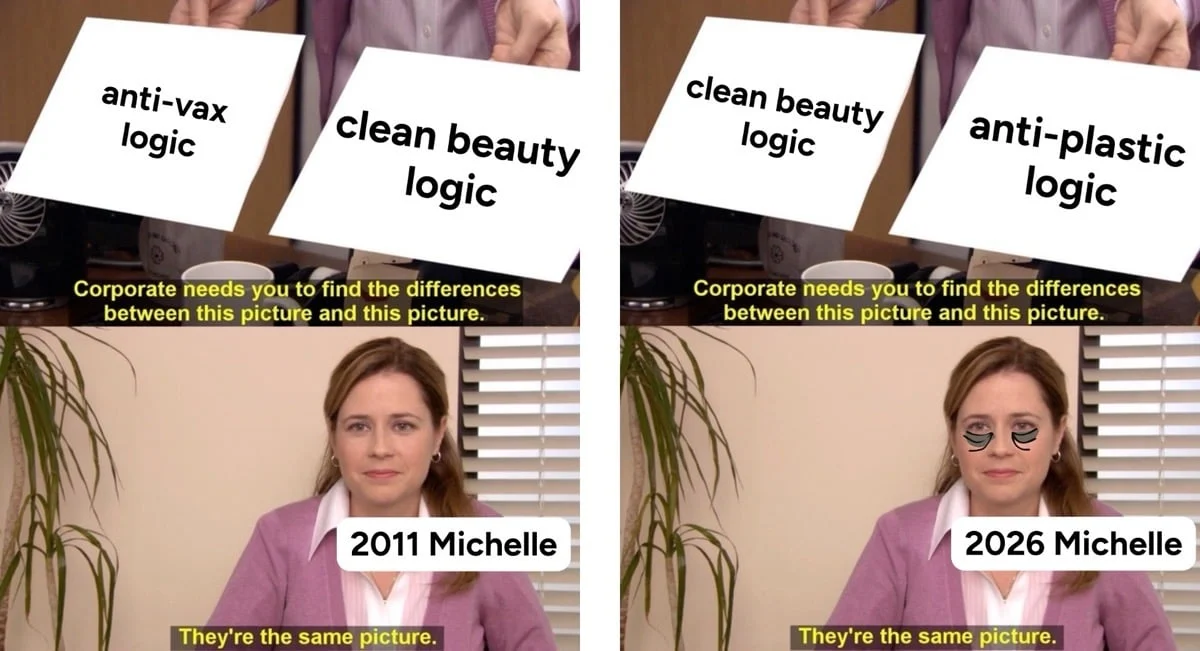
A growing concern among science communicators and experts is the striking resemblance between the burgeoning "anti-plastic" movement and the "clean beauty" phenomenon that gained significant traction over the past decade. This parallel, first highlighted by Dr. Michelle Wong of Lab Muffin Beauty Science, suggests that many of the same pseudoscientific arguments and logical fallacies that underpinned the clean beauty movement are now being repurposed to demonize plastics, potentially leading to misinformed consumer choices and counterproductive environmental outcomes.
The Genesis of a Parallel: From "Non-Toxic" to "Plastic-Free"
The "clean beauty" movement, which emerged prominently in the 2010s, was characterized by its emphasis on "non-toxic," "chemical-free" products, often demonizing common ingredients like parabens, sulfates, and phthalates without robust scientific evidence. Proponents frequently invoked an "appeal to nature" fallacy, suggesting that anything "natural" was inherently safe, while synthetic ingredients were deemed dangerous. Dr. Wong, a cosmetic chemist and science communicator, began her public science communication efforts in 2011 precisely due to her observation that the "non-toxic" rhetoric of clean beauty shared logical frameworks with anti-vaccination sentiments, even demonizing similar substances like aluminum and formaldehyde.
Fast forward to the mid-2020s, and a similar pattern is unfolding around plastics. Prompted by a social media post observing a potential "right-wing pipeline" in the anti-polyester movement, Dr. Wong identified a pervasive sentiment where plastics are blanket-labeled as "bad," and "plastic-free" claims are increasingly used as a marketing tool by beauty brands and influencers. This trend, she argues, often relies on fearmongering about microplastics and overlooks fundamental scientific principles, echoing the misinformation prevalent in the clean beauty space. While acknowledging the undeniable importance of reducing plastic waste and addressing genuine microplastic concerns, Dr. Wong cautions that exaggerating these issues and promoting "eco" alternatives without scientific scrutiny can inadvertently undermine the overarching goals of human and environmental health.
The Clean Beauty Blueprint: A Framework for Misinformation
The parallels between the "anti-plastic" narrative and "clean beauty" are multifaceted, extending beyond mere rhetoric to encompass shared logical fallacies, misinterpretations of scientific data, and strategic marketing tactics. Understanding these commonalities is crucial for navigating the complex landscape of environmental claims and making truly informed decisions.
1. The Appeal to Nature Fallacy: Natural is Not Always Better
Both movements heavily rely on the appeal to nature fallacy, which posits that anything natural is good, and anything synthetic or man-made is inherently bad. In clean beauty, this manifested as the blanket rejection of "chemicals" in favor of "natural" ingredients, despite many natural substances being highly toxic (e.g., hemlock, arsenic) and many synthetic ones being perfectly safe (e.g., purified water, many life-saving medicines).
Similarly, the anti-plastic movement often operates under the simplistic mantra of "plastic = bad, natural = good." This extends to bioplastics, which are made from natural starting materials but can have their own complex environmental footprints. Experts in toxicology and environmental science consistently emphasize that a material’s origin does not determine its safety or environmental impact. For instance, while consumers may perceive bioplastics as uniformly superior, their production can involve intensive agriculture, land-use change, and specific industrial composting requirements that are not always met, leading to them contributing to landfill waste or pollution.
2. Ignoring Fundamentals of Environmental Science: The Crucial Role of Life Cycle Assessment (LCA)
Just as clean beauty disregarded basic toxicology principles like "the dose makes the poison," the blanket "plastic-free = better for the environment" claims often ignore the fundamentals of sustainability science, particularly Life Cycle Assessment (LCA). LCA is the scientific standard for quantitatively measuring a product’s environmental impact across its entire lifespan, from raw material extraction, manufacturing, transport, use, to its eventual disposal or recycling.
A common pitfall, as highlighted by Dr. Wong and other environmental experts, is an excessive focus on a product’s end-of-life (e.g., plastics in landfills, microplastics, ocean trash islands) while neglecting the significant impacts of production and transport. Research indicates that for many products, the end-of-life phase is not the largest contributor to environmental harm. For example, a 2018 study published in the Journal of Cleaner Production found that consumers often incorrectly judge environmental impact by overemphasizing end-of-life considerations.
This myopic view often overlooks climate change, which is widely recognized by the scientific community as the most pressing environmental threat. When assessed through an LCA lens, plastic packaging often demonstrates surprising environmental benefits, particularly concerning carbon emissions. A 2011 Denkstatt report, for instance, found that switching from plastic to alternatives like glass, paper, or aluminum could, on average, require 3.6 times more material, 2.2 times more energy, and result in 2.7 times more carbon emissions.
Plastic’s advantages in LCA often stem from its:
- Lightweight nature: Reducing fuel consumption during transport.
- Durability: Minimizing product damage and waste.
- Efficiency in material use: Often requiring less raw material compared to alternatives for the same function.
While these are not blanket statements – and plastic is not always the best option – the critical point is that each case requires a holistic, evidence-based assessment using LCA. Without such rigor, brands can engage in "greenwashing," promoting seemingly eco-friendly alternatives that, upon closer inspection, have a larger overall environmental footprint. For instance, some beauty brands promote aluminum or paper packaging as "plastic-free" without transparently disclosing the full LCA, often overlooking the higher energy requirements for aluminum production or the water/land use for paper. Environmental advocacy groups, while supportive of reducing overall consumption, increasingly call for brands to substantiate their sustainability claims with comprehensive LCA data to avoid misleading consumers.
3. Citing Studies with Serious Methodological Issues: The Microplastic Dilemma
A significant concern within the anti-plastic narrative revolves around microplastics, tiny plastic particles found ubiquitously in the environment and increasingly in living organisms. While the potential health impacts of microplastics are a legitimate area of scientific inquiry, many widely cited studies have been found to suffer from serious methodological flaws.
Measuring small amounts of any substance accurately is challenging, but microplastics present unique difficulties. Issues such as contamination are rampant; microplastics are so pervasive that samples can easily be contaminated by lab equipment, clothing, or even air particles, leading to false positives or exaggerated findings. For example, a 2025 YouTube short by Dr. Wong highlighted how pyrolysis-GCMS (Py-GCMS), a common quantification method, can misidentify fats as polyethylene unless carefully corrected, potentially leading to overestimations of microplastic levels. This issue was implicated in a study that controversially claimed a "spoon’s worth" of microplastics in human brains.
The Guardian, a prominent mainstream media outlet, notably published an article in January 2026, casting "doubt on discovery of microplastics throughout human body," acknowledging the methodological challenges in many microplastic studies. This rare instance of a major publication correcting previous misinformation underscores the complexity and sensitivity of this research area. The spread of misinformation is often facilitated by the esoteric nature of these scientific challenges, making it difficult for the public and even some researchers to discern robust findings from flawed ones.
4. Assuming Presence Means Harm: Correlation vs. Causation
A recurring theme in both clean beauty and anti-plastic messaging is the assumption that the mere presence of a substance automatically implies harm. In clean beauty, this was exemplified by studies finding parabens in breast tumors, which were widely publicized as evidence of parabens causing cancer, despite the studies failing to compare paraben levels in diseased tissue with normal tissue, or establishing a causal link.
Similarly, the detection of microplastics in diseased tissues (e.g., arterial plaque, brains of individuals with dementia) is often presented as definitive proof of causation. However, as Dr. Wong points out, correlation does not equate to causation. Such findings could be explained by:
- Reverse causation: The disease itself might make individuals more susceptible to accumulating microplastics, or their lifestyle choices might lead to both disease and higher microplastic exposure.
- Confounding factors: Other lifestyle factors, environmental exposures, or genetic predispositions could be responsible for both the disease and microplastic presence.
- Lack of baseline data: Without understanding typical microplastic levels in healthy tissues, it’s difficult to interpret findings in diseased tissues.
Scientists specializing in epidemiology and toxicology emphasize the need for rigorous longitudinal studies and mechanistic evidence to establish causality, moving beyond mere observational correlations.
5. Ignoring Other Reasons for Material Use: Beyond Environmental Impact
The demonization of plastics often overlooks their crucial functional benefits beyond just environmental impact (or lack thereof, when assessed holistically). Plastics offer numerous advantages that contribute to product safety, efficacy, and accessibility:
- Product Preservation: Plastic packaging can protect sensitive formulations from contamination, degradation by light or air, and extend shelf life, reducing product waste.
- Hygiene and Sterility: Plastics are vital for medical devices, food packaging, and personal care products, where maintaining sterility and preventing microbial growth is paramount.
- Safety and Durability: Plastic containers are often less prone to breakage than glass, reducing injury risk and product loss.
- Accessibility and Affordability: The lightweight and cost-effective nature of plastics makes products more accessible and affordable for a wider range of consumers, particularly in developing economies.
In the clean beauty context, a parallel example is the vilification of parabens. While deemed "toxic" by the movement, parabens are highly effective preservatives. Their potency means lower concentrations are needed to preserve products compared to many alternatives, which can sometimes make them safer for individuals with sensitive skin, as they are less likely to cause irritation or allergic reactions. Ignoring these functional benefits leads to a narrow, often detrimental, view of material science.
6. Science-Washing and Convenient Experts: A Misleading Trend
A pervasive issue across both movements is "science-washing" – the practice of using scientific language, cherry-picked data, or credentials to lend credibility to unsubstantiated claims. Many brands and influencers, while claiming to champion science, inadvertently (or intentionally) promote anti-plastic myths supported by selective evidence and "convenient experts" who align with their narrative.
This practice mirrors the clean beauty trend, where figures with tangential scientific backgrounds or those willing to amplify fear-based claims were often elevated as experts, even if their views were outside mainstream scientific consensus. Regulatory bodies in major regions, including the US FTC, UK CMA, and Australian ACCC, have issued guidelines against unsubstantiated "green" claims, deeming them misleading and deceptive. They increasingly expect brands to hire sustainability experts and conduct thorough LCAs to validate their environmental assertions.
A critical aspect of science-washing is the misjudgment of relevant expertise. In environmental science, this often means brands consulting chemists or biologists for packaging solutions, when the actual expertise required for comprehensive sustainability assessment lies with environmental engineers or life cycle assessment specialists. In clean beauty, medical doctors or nutritionists might be cited on cosmetic ingredient safety, despite dermatologists and toxicologists being the primary experts.
Broader Implications: Erosion of Trust and Misdirected Efforts
The parallels between the "plastic-free" and "clean beauty" movements carry significant implications beyond consumer choices.
Erosion of Public Trust: When scientifically unsubstantiated claims are widely propagated, especially by influential brands and individuals, it erodes public trust in both science and legitimate environmental efforts. Consumers become wary, making it harder for genuine, evidence-based solutions to gain traction.
Misallocation of Resources: Focusing on "plastic-free" at all costs, without comprehensive LCA, can lead to brands and consumers investing in alternatives that have a larger overall environmental footprint (e.g., higher carbon emissions, greater water usage). This misdirects valuable resources and attention away from truly impactful sustainability strategies, such as reducing overall consumption, improving recycling infrastructure, or investing in renewable energy.
Economic Impact: Brands that genuinely strive for sustainable practices must contend with a market flooded by potentially misleading "green" claims. Consumers, driven by fear, may gravitate towards more expensive, less efficient, or less sustainable alternatives, impacting their wallets and potentially supporting brands engaged in greenwashing.
Motivated Reasoning and Confirmation Bias: A Persistent Challenge
A significant hurdle in promoting evidence-based understanding is motivated reasoning and confirmation bias. People often accept evidence only when it aligns with their existing beliefs or identity, dismissing contradictory information, especially if it comes from sources perceived as having conflicts of interest.
The Guardian’s correction regarding microplastic measurement issues, for example, was met with accusations of being "bought by Big Plastic" by some, simply because one of the quoted experts was a former Dow chemist. This occurred despite the article also citing multiple independent scientists from public institutions and referencing a response letter from nine European scientists who echoed the same concerns. As cosmetic scientist Jen Novakovich of The Eco Well aptly states, "Discounting something solely based on funding source or affiliation is actually the opposite of critical thinking." Evaluating the arguments themselves, rather than solely the source, is a far more robust approach to critical thinking.
Moving Forward: The Imperative for Nuance and Scientific Rigor
While the imperative to reduce plastic waste and address the environmental challenges posed by plastics is undeniable, the approach must be grounded in scientific rigor and nuance. Blanket demonization of plastics, without proper evidence-based assessment, risks leading to misplaced conservation efforts that ultimately worsen environmental outcomes.
Science communicators like Dr. Michelle Wong and Jen Novakovich (who is currently undertaking a PhD on the impacts of environmental misinformation) play a vital role in dissecting these complex issues, offering balanced perspectives, and equipping consumers with the tools for critical thinking. The lessons learned from the "clean beauty" movement should serve as a cautionary tale: genuine progress in human and environmental health demands a commitment to evidence, a rejection of simplistic narratives, and a willingness to engage with the full spectrum of scientific inquiry. Only through such an approach can society navigate the complexities of sustainability and make truly impactful choices for a healthier planet.