
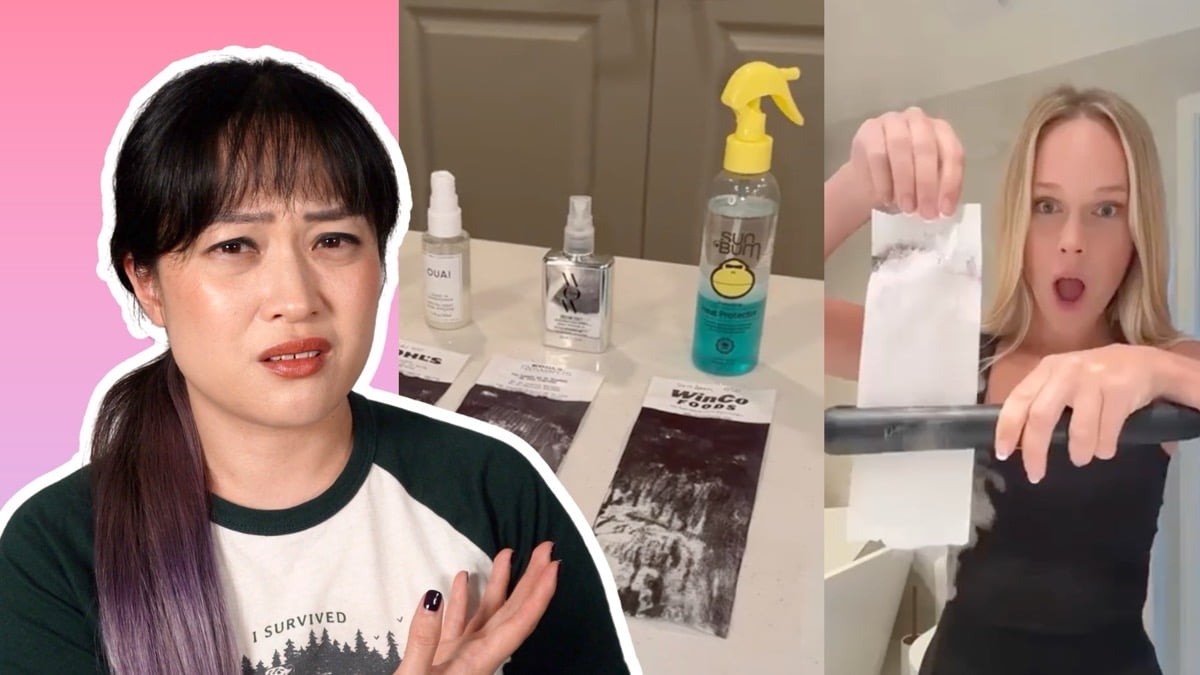
A pervasive beauty trend on social media, particularly TikTok, has been scrutinised and ultimately debunked by cosmetic chemist Michelle Wong of Lab Muffin Beauty Science. The viral "heat protectant test," which involves applying hair protectants to thermal paper receipts and then subjecting them to a flat iron, purports to demonstrate product efficacy based on how much of the receipt remains white. However, Wong’s comprehensive investigation reveals that the test’s results are misleading, primarily influenced by the solvent properties of the products and the presence of residual water, rather than actual heat protection.
The Rise of a Viral Beauty Hack
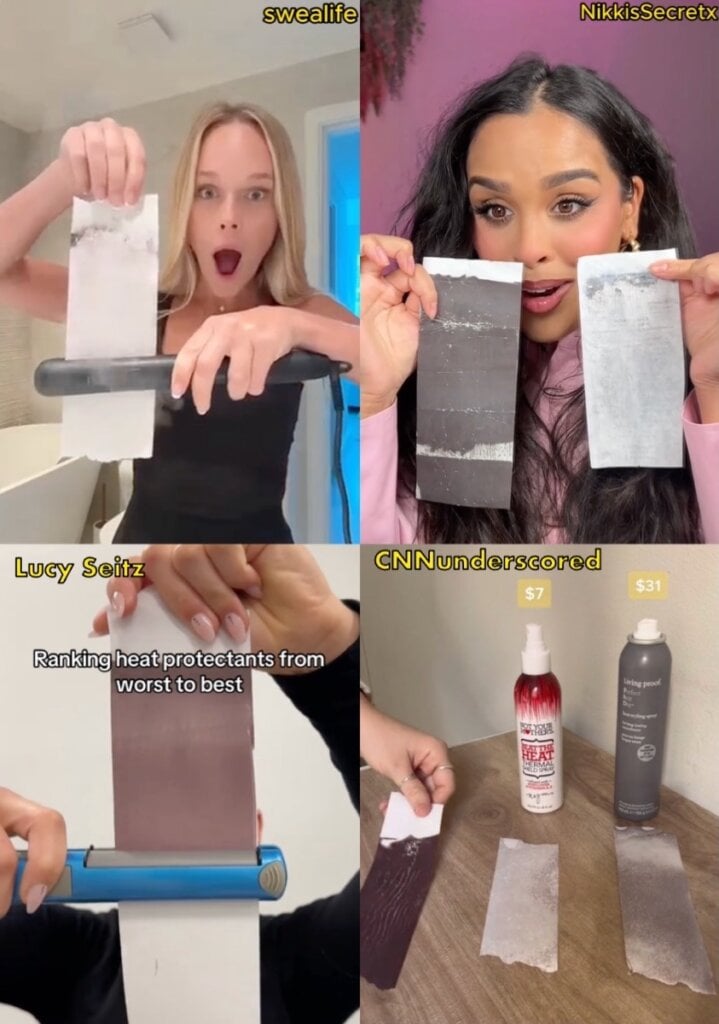
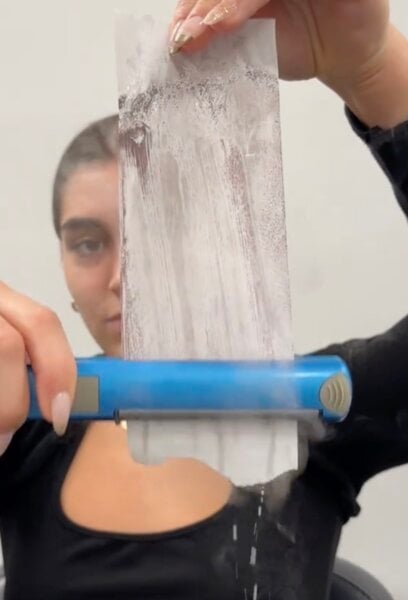
The thermal paper receipt test gained significant traction online as users sought accessible, visual methods to evaluate beauty products. The premise was deceptively simple: thermal paper, commonly used for receipts, turns black when exposed to heat. Therefore, if a heat protectant kept the paper white, it was assumed to be effectively shielding against thermal damage. Cosmetologist Lucy Seitz, for instance, became a prominent figure in this trend, systematically testing various heat protectants at a reported temperature of 340°F (170°C) and including control samples. Her videos, showing some receipts remaining stark white while others blackened, quickly convinced a broad audience of the test’s validity. This phenomenon tapped into a growing public appetite for DIY science and immediate gratification in understanding product performance, often bypassing rigorous scientific methodologies.
The Scientific Lens: Initial Investigation by Lab Muffin Beauty Science
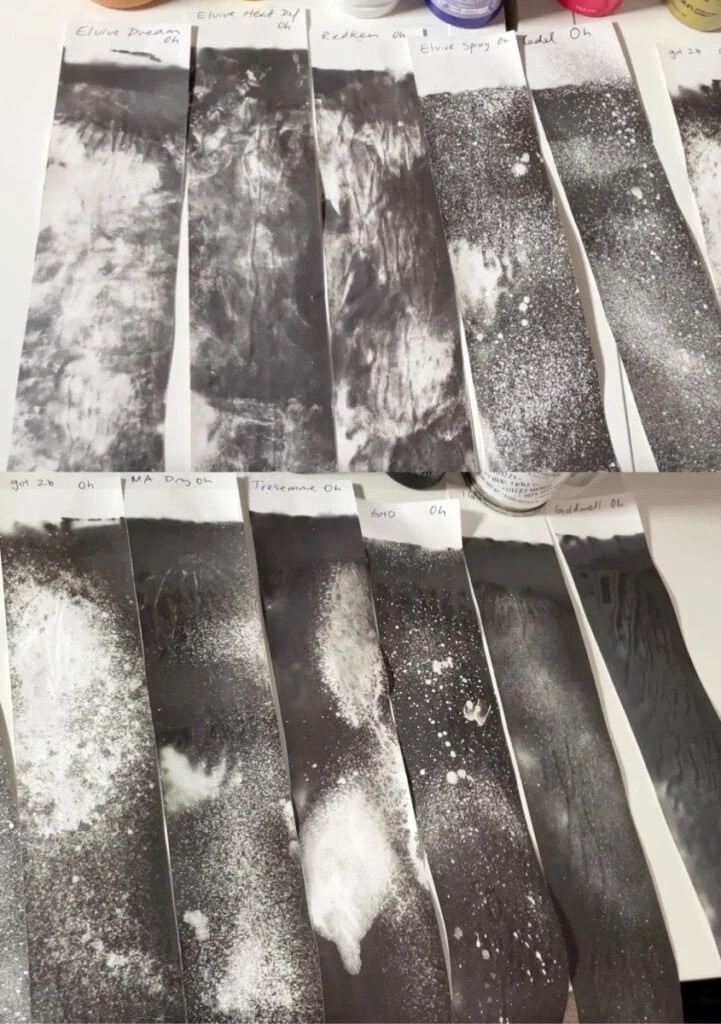
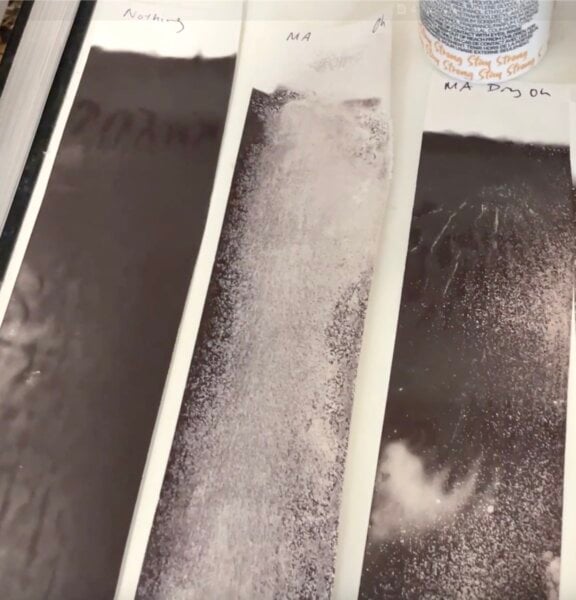
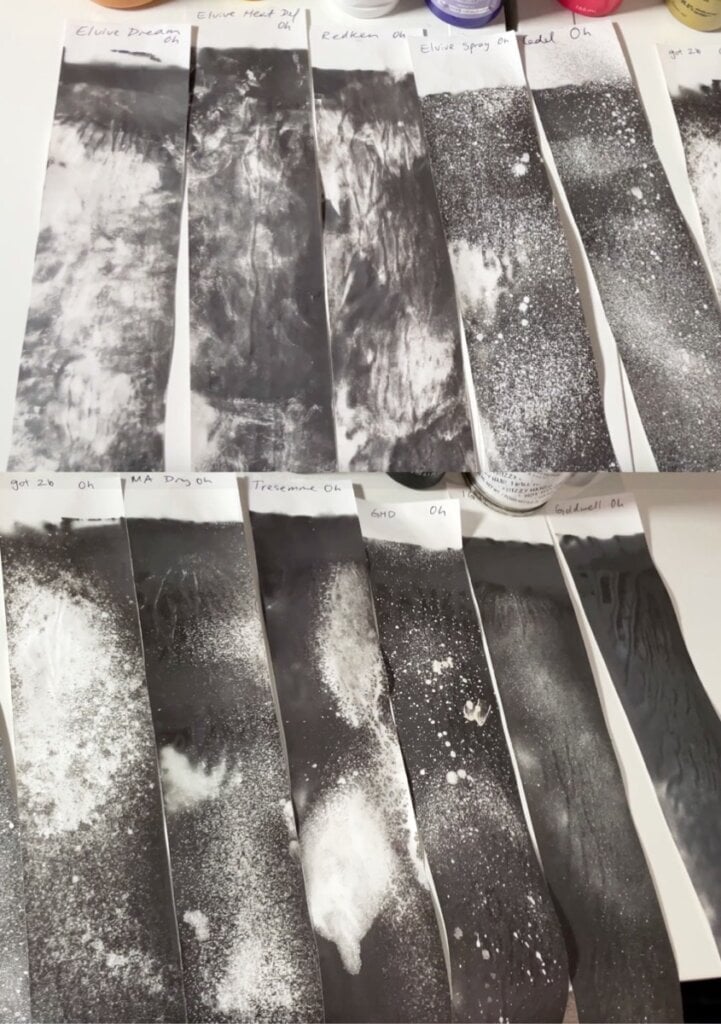
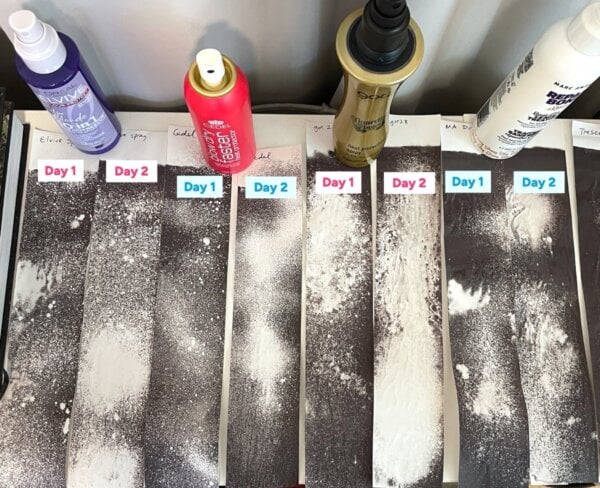
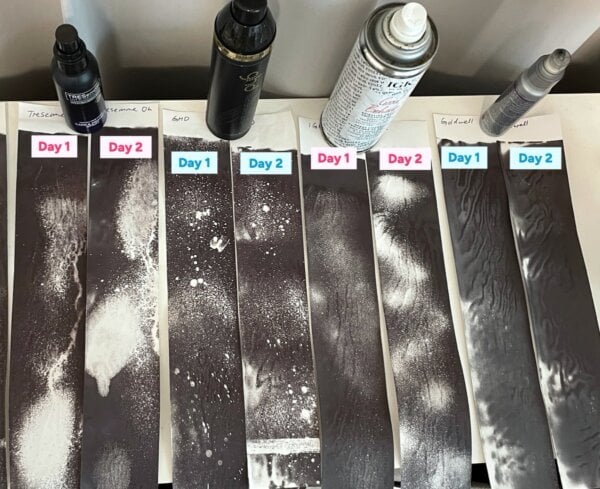
Recognising the widespread adoption of this test and the potential for misinformation, Michelle Wong embarked on a detailed scientific investigation to determine its true efficacy. Her initial approach involved replicating the viral tests, noting that most informal tests did not strictly control variables like product application amount or drying time. Wong gathered 11 products with heat protection claims, encompassing a variety of formulations: seven pump sprays, one propellant spray, and three cream products. Her first attempt, using a product from Marc Anthony and a straightener set to 170°C, immediately revealed an anomaly: the receipt crackled and smoked, indicating a rapid interaction with the heat and product.
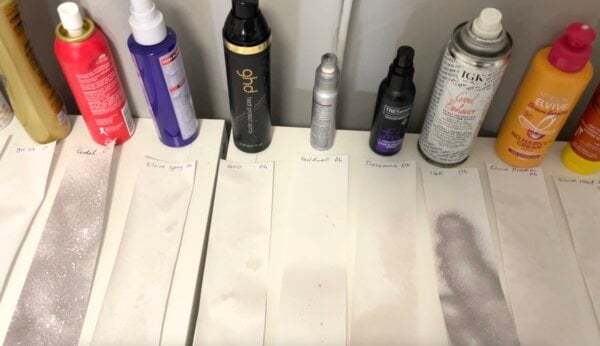
A critical initial observation was the effect of drying time. A receipt tested immediately after product application showed a markedly darker result compared to one allowed to dry for just 15 minutes, even with the same product. This suggested that residual moisture played a significant role. The cream products consistently resulted in the lightest receipts, which Wong hypothesized was due to their thicker application providing more insulation and their slower drying times retaining more water. Conversely, two sprays, Goldwell and IGK, which had water lower on their ingredient lists, resulted in the darkest receipts, aligning with the idea that less water meant less buffering against the heat. These early findings hinted that the test might be measuring something other than direct heat protection.
Unveiling the Flaws: The Role of Water and Evaporative Cooling
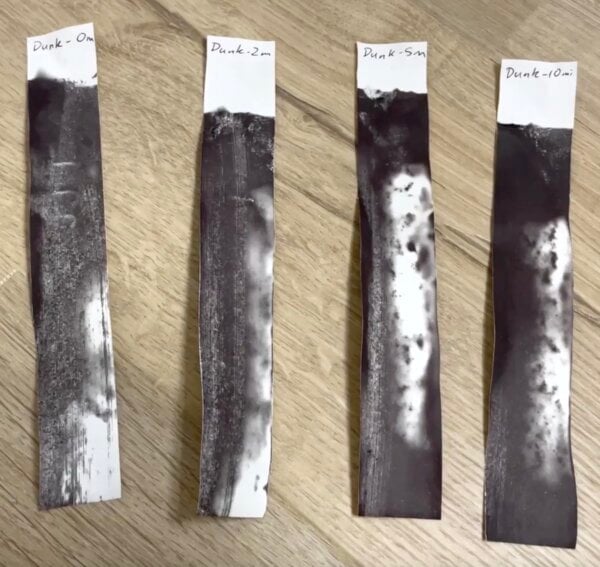
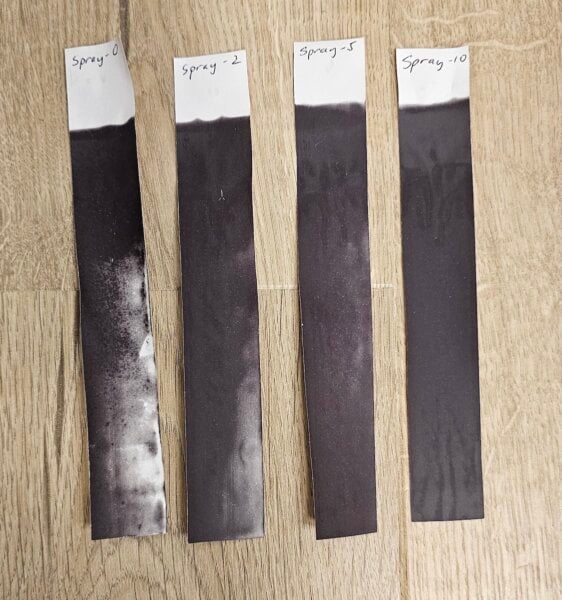
To isolate the impact of water, Wong conducted dedicated "water tests." She applied water to receipts by both dunking and spraying, then subjected them to the straightener at varying drying intervals (0, 2, 5, and 10 minutes). The results were conclusive: receipts that were significantly wet, particularly those dunked, remained largely white even after 10 minutes, demonstrating a powerful cooling effect. The immediate application of sprayed water also showed a degree of protection, which diminished as the water evaporated.
This observation is crucial because water, while an excellent heat sink due to its high specific heat capacity and latent heat of vaporization, is detrimental to hair when trapped and rapidly heated. The phenomenon of "bubble hair" occurs when water inside the hair shaft explosively evaporates, causing structural damage. Therefore, a product appearing "effective" in the receipt test due to residual water is actually promoting a condition that could harm hair, not protect it. This highlights a fundamental disconnect between the receipt test’s visual outcome and actual hair health.
A Critical Discovery: Thermal Paper’s True Temperature Threshold
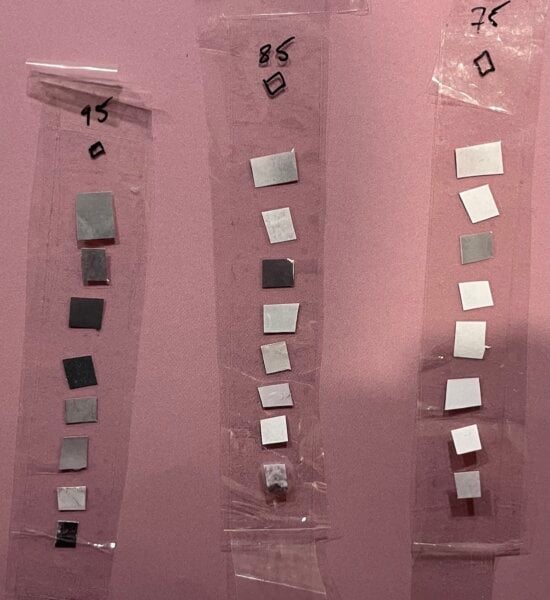
A significant turning point in Wong’s investigation was the discovery of the actual temperature range at which thermal paper reacts. Initial Google searches yielded inconsistent results, some suggesting reaction temperatures similar to hair straighteners (150-185°C). However, deeper research into German scientific literature revealed that thermal paper typically begins to develop colour at a much lower range: 60 to 100°C (140-212°F), reaching full density between 70 and 120°C (158-248°F).
To confirm this, Wong performed an experiment using boiling water that had been allowed to cool to specific temperatures. By dipping various receipt samples into these temperature-controlled water baths, she found that most receipts turned black around 95°C. This finding is critical: hair damage typically begins around 100°C and escalates significantly at higher temperatures. If the receipt turns black well below the critical hair damage temperature, the test cannot accurately model hair protection. A product might keep a receipt white by simply lowering the surface temperature by a few degrees, an effect irrelevant to preventing damage at the much higher temperatures used for styling.
The Deeper Mechanism: Dissolving the Ink Layer
Beyond the cooling effect of water, Wong’s investigation uncovered an even more profound flaw: many "effective" heat protectants were not blocking heat but were instead dissolving the thermal ink layer on the receipt. Thermal paper works by having a colorless dye and a developer separated in a solid matrix. When heated, the matrix melts, allowing the dye and developer to mix and produce a visible colour. This ink layer is delicate and can be disrupted by certain chemicals.
Wong noticed that some receipts turned grey immediately after spraying, particularly those treated with products high in alcohol. This led to a new hypothesis: heat protectants that appear to "work" are effectively dissolving or disrupting the invisible ink layer, preventing the heat-induced colour change. Alcohol, being a potent solvent, can dissolve the oily components of the ink layer. When alcohol, especially when mixed with water and humectants like glycerin, lingers on the paper, it can continuously disrupt the ink, making it unable to react to heat. This explains why some products, even after thoroughly drying for 24 hours, still kept receipts light – the solvents had permanently altered the paper’s reactivity.
Confirmatory Experiments and Unexpected Results
To validate her dissolution hypothesis, Wong conducted further tests with common substances known for their solvent or surfactant properties:
- Alcohol, Water, Glycerin: Pure alcohol, and mixtures of alcohol with water and glycerin, all kept receipts light after heating. Interestingly, diluted alcohol made receipts even whiter than pure alcohol, as the water and glycerin slowed alcohol evaporation, allowing more time for the solvent action to occur. This mirrors how 70% alcohol is more effective for sanitising than pure alcohol, as it penetrates better and evaporates slower.
- Water Alone / Water with Glycerin: These substances did not significantly disrupt the ink, confirming that the thermal ink is largely resistant to water-based solutions without additional solvent properties.
- Other Alcohol-Containing Products: Perfume, which is high in alcohol, immediately turned receipts grey and then kept them white after heating. Dry shampoo, also alcohol-rich but with fewer humectants, made receipts grey but offered less "protection" upon heating, as the alcohol evaporated more quickly, limiting its solvent action.
- Surfactants: Many heat protectants, even those without high alcohol content, contain surfactants (emulsifiers) to mix oil and water components. Wong tested micellar water and water with detergent, both of which kept receipts white. Similarly, moisturizers (like CeraVe Moisturising Cream) and cream sprays (Laneige Cream Skin), which contain emulsifiers, also prevented the receipts from darkening. Sunscreens, often formulated with both alcohol and surfactants, exhibited similar "protective" effects on the receipts.
- Volatile Silicones: Products containing highly volatile silicones, like cyclopentasiloxane (found in some eye makeup removers), had minimal impact on the receipt. This is because they are too oily to dissolve the ink and evaporate too quickly to have a lasting effect, explaining why some silicone-heavy products might "fail" the receipt test.
- Propellants: Investigations into propellants like HFC-152a, used in some aerosol sprays, showed no direct effect on receipt colouration when tested as compressed air, ruling out their direct involvement in the "protection."
Finally, Wong demonstrated that the same substances that prevented the ink from turning black could also erase existing black thermal ink. Alcohol, perfume, sunscreen, micellar water, and moisturizer effectively faded pre-darkened receipt areas, providing strong evidence for the dissolution mechanism.
Beyond the Receipt: What Truly Protects Hair
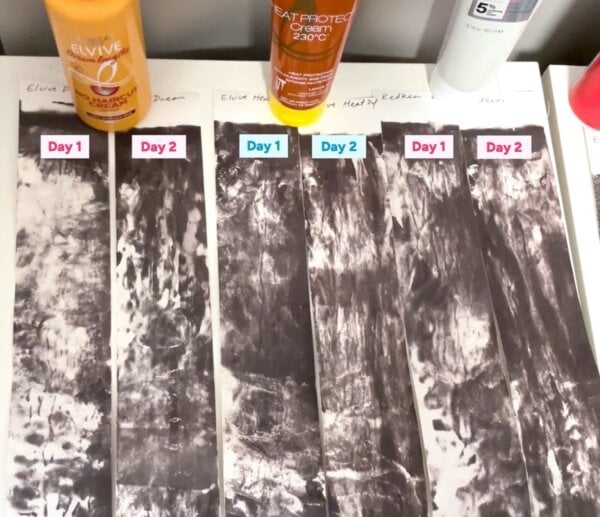
Michelle Wong’s meticulous investigation unequivocally concludes that the viral heat protectant receipt test is fundamentally flawed. It does not measure a product’s ability to protect hair from thermal damage but rather its capacity to cool the paper (due to water) or, more significantly, to dissolve or disrupt the thermal ink layer (due to solvents and surfactants).
True heat protectants for hair function differently. They typically work by:
- Distributing Heat Evenly: Ingredients like silicones and polymers form a barrier that helps distribute heat across the hair shaft, preventing "hot spots" that can cause localized damage.
- Reducing Friction: Conditioning agents minimize snagging and mechanical stress as hot tools pass through the hair.
- Encapsulating Moisture: Some ingredients can help retain hair’s internal moisture without allowing it to boil off explosively.
The concept of a "heat protectant" isn’t about blocking heat entirely – hair needs heat to be styled – but about mitigating its damaging effects.
Industry Response and the Importance of Rigorous Testing
The debunking of such viral tests underscores the critical role of scientific literacy in the beauty industry. Reputable beauty brands invest heavily in rigorous, instrumental testing on actual hair samples. For example, Amika, a brand whose product "failed" the receipt test, showcases its testing methods, which involve mechanical stress tests on treated hair samples using specialized equipment designed to simulate real-world styling damage. These sophisticated tests, often conducted in controlled laboratory environments, provide reliable data on a product’s ability to reduce breakage, maintain hair integrity, and protect against heat-induced damage.
Consumers should look for specific claims on product packaging that indicate scientific validation, such as "instrumental test," "proven at X temperature," or comparisons "vs. non-conditioning shampoo alone." Key ingredients often include various silicones (e.g., dimethicone, cyclopentasiloxane), polymers, and hydrolysed proteins. Crucially, if a heat protectant is water-based, it should always be allowed to dry completely before using hot styling tools to prevent steam damage.
Implications for Consumers and Beauty Education
The viral heat protectant test serves as a stark reminder of the challenges posed by misinformation in the digital age. While visually compelling, such DIY experiments can lead consumers to make ill-informed product choices, potentially investing in ineffective products or, worse, those that indirectly cause harm. Michelle Wong’s work through Lab Muffin Beauty Science exemplifies the vital role of science communicators in dissecting popular trends and providing evidence-based insights. For consumers, the takeaway is clear: rely on credible scientific investigations and brand claims backed by robust testing, rather than deceptive visual demonstrations on non-biological substrates. Understanding the science behind beauty products empowers individuals to make informed decisions for their hair and skin health.

Affiliate Disclosure: I receive a small commission for purchases made via affiliate links.
How to cite: Wong M. Investigating the viral heat protectant test. Lab Muffin Beauty Science. September 9, 2025. Accessed March 11, 2026. https://labmuffin.com/investigating-the-viral-heat-protectant-test/