
Nearly four months after completing a series of strategic acquisitions, Bettani Farms is poised to transform the landscape of vegan cheese. The company is accelerating its distribution network and introducing a groundbreaking "high-stretch" mozzarella alternative, signaling a significant leap forward in plant-based dairy innovation. The year 2025 marked a pivotal period for the company, formerly known as Climax Foods, as it underwent a significant rebranding, secured $6.5 million in funding, and appointed a new CEO. This was swiftly followed by the acquisition of three established plant-based businesses: Hungry Planet, Numu, and Stockeld Dreamery. Bolstered by its proprietary AI-powered ingredient, Caseed, and an expanded product portfolio and distribution channels, Bettani Farms is now intensely focused on making dairy-free cheese more accessible to American consumers.
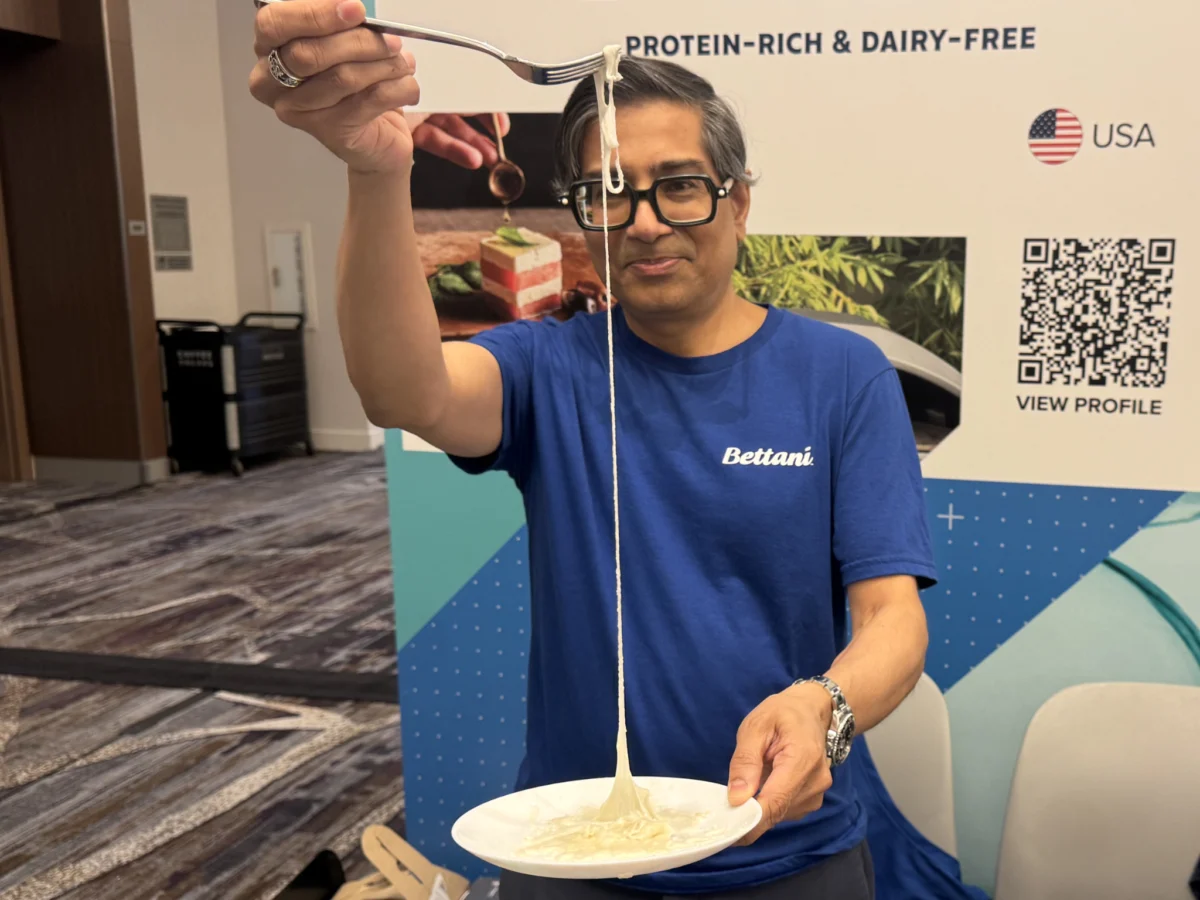
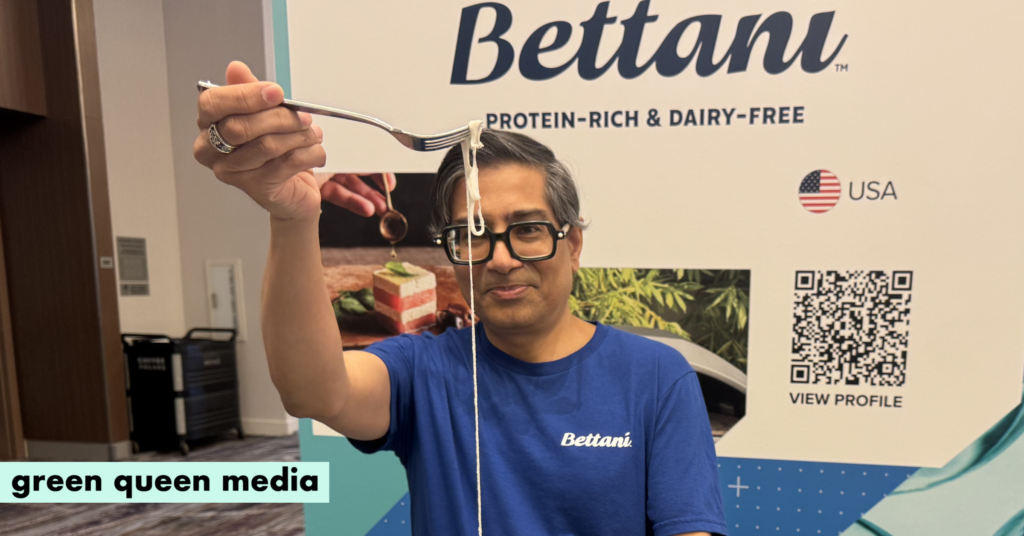
Sandeep Patel, who transitioned from his role as CFO at Califia Farms to become Bettani Farms’ chief executive in October, articulates the company’s ambitious vision: "We’re trying to do for mozzarella what oat milk has done for coffee." This aspiration was vividly demonstrated at the 2026 Future Food-Tech conference in San Francisco, where Patel showcased the company’s innovative mozzarella. In a live demonstration, he microwaved the product, eliciting gasps from the audience as he stretched it with a fork to an impressive length, exceeding two feet. This remarkable elasticity, achieved without dairy or precision-fermented casein, the protein typically responsible for cheese’s melt and stretch properties, underscores the technological advancements Bettani Farms has achieved.
Patel further highlighted the consumer acceptance of their product, stating, "In a recent study, 39% of consumers preferred our cheese to dairy, or had no preference." This figure is particularly significant when considering the current market dynamics. The non-dairy cheese segment currently holds a modest market share of just over 1% in the U.S. cheese category, according to the Good Food Institute. Much of this existing market share is attributed to cream cheeses, which are generally considered less challenging to replicate in a plant-based format compared to mozzarella. Patel emphasized the performance of their mozzarella, asserting, "We have served up a product that actually performs, tastes and functions like dairy mozzarella. We get stretch, we get melt, we get taste, we get the bite when you chew it." He proudly proclaimed the taste test results, stating, "We’re able to get 39% [in taste tests]. Frankly, that’s a platinum medal in my book."
Strategic Acquisitions Address Market Entry Challenges
Bettani Farms strategically acquired Hungry Planet, Numu, and Stockeld Dreamery to fortify its distribution network and broaden its product offerings, effectively tackling the "cold start" problem prevalent in the food industry. Based in the Bay Area, the company recognized that expanding its reach required more than just innovative products; it necessitated established pathways to market.
"We’re focused on two key routes to market," Patel explained. "One is the away-from-home channel, which is about 55% share of stomach in the U.S. So that’s pizzerias, salad chains, etc. And then the other big go-to-market channel is B2B CPG. We want to sell our proprietary protein to companies that can formulate with it, and we want to sell a finished cheese or other finished products."
The away-from-home market, encompassing restaurants and food service establishments, presents a classic "cold start" problem for emerging brands. This refers to the difficulty in gaining traction due to a lack of initial customers, which in turn makes it challenging to demonstrate sufficient demand to distributors. Patel elaborated on this hurdle: "You can have individual outlets interested in your product, but if you don’t have enough demand in a defined geographic area, it becomes difficult for distributors to stock your product." He illustrated this with a hypothetical scenario: "So Joe’s Pizza loves our cheese and says: ‘I’ll order a case a week.’ But your distributor says, ‘You need to have a pallet a week in order for me to be able to bring it in.’"
Bettani Farms’ acquisition of Hungry Planet was instrumental in circumventing this challenge. Hungry Planet possessed a longstanding relationship with Dot Foods, North America’s largest foodservice redistributor. This partnership immediately provided Bettani Farms with a critical distribution lifeline. "This enables Joe’s Pizza to order one case through their distributor, which is then supplied by Dot Foods on a truck that has lots of equipment," Patel stated. "So when we did all three acquisitions, we immediately put Stockeld’s cream cheese and Numu’s mozzarella onto the Dot platform, combining with Hungry Planet, and opening up distribution for us."
The acquisition of Hungry Planet, whose primary focus was plant-based meat rather than solely non-dairy cheese, was a deliberate strategic move. Bettani Farms aimed to leverage Hungry Planet’s expertise and existing portfolio of saturated-fat-free plant protein products. "They’re using vegetable oils. And they also make pizza toppings. So it gives us more baskets to go into pizzerias and other foodservice locations," Patel outlined. He further characterized the synergy: "It’s complementary, both from a distribution standpoint and from a product standpoint. Our core focus going forward is cheese, but it helps to have other products that are adjacent."
Integrating Talent and Manufacturing Capabilities
While Bettani Farms onboarded key distribution and product assets through its acquisitions, the integration of employees from Stockeld Dreamery, Numu, and Hungry Planet was selective. "We had a transition period where we got a lot of help," Patel noted. "We brought on a couple of people from the companies, either full-time or as consultants, but we already had a great team, and we’re now able to actually get more products and scale to match the team that we already have."
Patel emphasized the collaborative spirit during the acquisition process, particularly in a challenging funding environment. "In this funding-scarce market environment, you have to be creative and innovative. We had incredible cooperation from each of the companies. They clearly have developed great products. They want to see them succeed and not just go away. And so they were very helpful to us with continuity of customers and manufacturing."
A significant advantage inherited through the acquisitions was a network of "world-class" co-manufacturers. The acquired startups had already established robust partnerships with these manufacturing facilities. "We’re already working with them, not just on continuing production of the existing products, but on launching our next-generation products," Patel confirmed. This existing infrastructure provided a foundation for scaling production and introducing new innovations.
The integration of these manufacturing relationships is crucial for the launch of Bettani Farms’ next-generation products. "So that’s also where the acquisitions become very interesting, because again, you have a cold start problem with our next-gen products. But now, we already have the existing relationships with Dot Foods and with customers like Whole Foods, Apollo Bagels and others, that we can then go to and say: ‘Not only do we have the distribution, we have this next-gen product. Do you like it?’"
This proactive approach involves engaging directly with potential customers to refine product development. "We’ve already started doing that. We’ve already started getting input from them. ‘What do we not have that you’d like?’ And that’s informing our product development. So we call them design partners. We’re not just designing in a vacuum – we’re actually working with potential customers, with real products, real problems, and solving them with real manufacturing partners." This collaborative model accelerates the development cycle and ensures market relevance. "So it cuts down development time and really helps us focus on things that are very relevant immediately, and not just in a vacuum. It’s like: ‘What price point, what’s the cost structure, what’s the form factor, what’s the shelf life you need?’"
Bettani Farms plans to introduce products under its own brand and has already initiated the rebranding of Stockeld Dreamery’s cream cheese, while retaining the original brand name as a clear identifier on the packaging. The company is also working on relaunching Stockeld Dreamery’s cultured Cheddar slices, with an expected rollout later this year.
Advancing Vegan Cheese Technology with AI and Future Funding
At the core of Bettani Farms’ innovation is its AI-driven approach to reverse-engineering the sensory attributes of dairy cheese. The company’s proprietary Caseed ingredient, unveiled last year, is a plant-based casein alternative derived from regenerative crops. Caseed is engineered to deliver a creamy texture, a desirable white color, and a neutral flavor profile, crucial for mimicking dairy cheese characteristics.
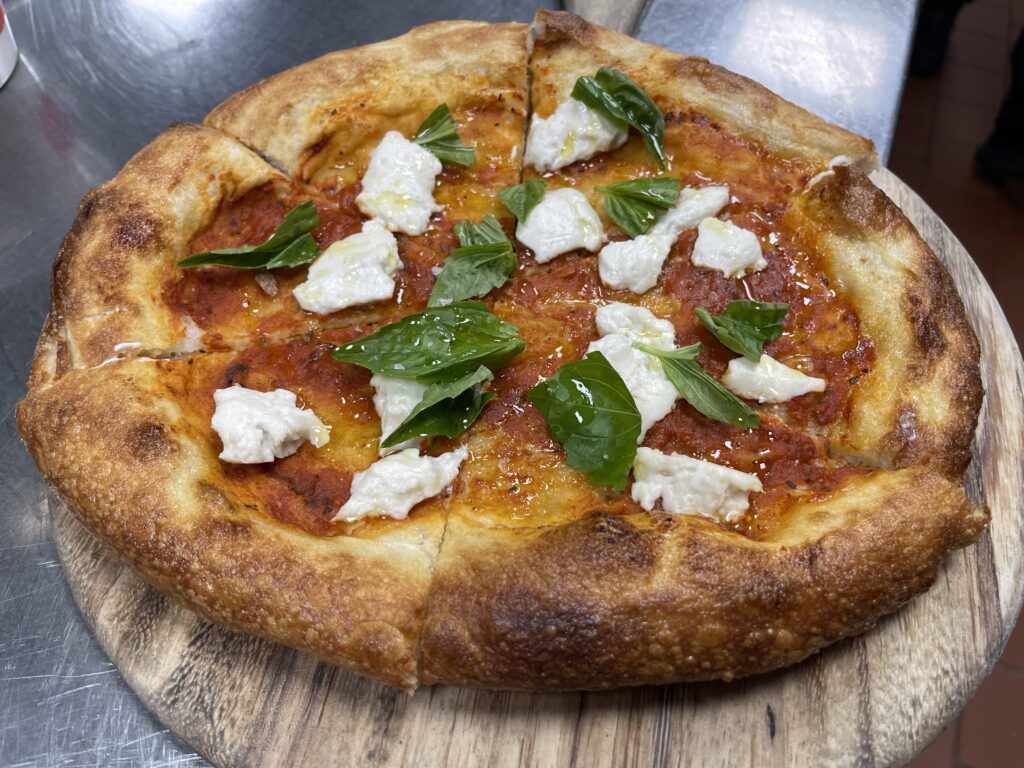
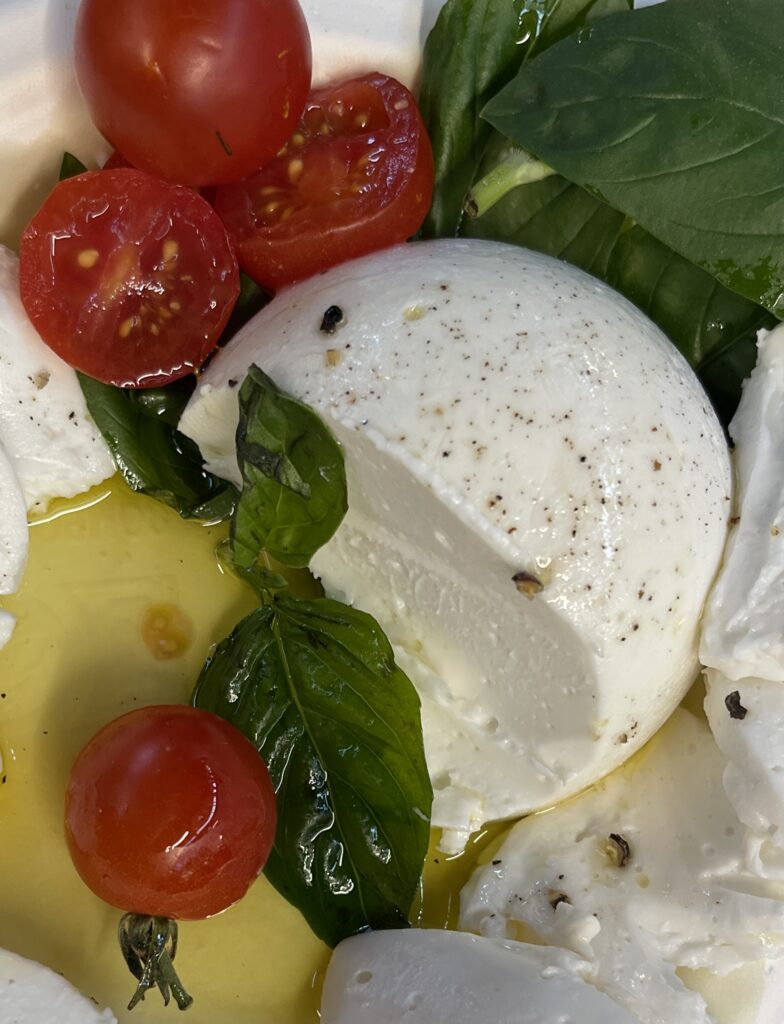
"We have a whole suite of products under development," Patel revealed. This pipeline includes the "high-melt, high-stretch, high-protein mozzarella" demonstrated at Future Food-Tech, a stracciatella-like alternative, feta, goat’s cheese, a cheese sauce for applications like queso and chili-cheese fries, and a sour cream that shares a foundational product chassis with its cream cheese.
The development of these new products is guided by a rigorous evaluation process. "With all of these products, we look at not just where there is actually a good product market fit, but also, can we manufacture it with our existing co-manufacturing partners? Do we have ingredients that we’re using that work well with it? Is there an opportunity to really level up the quality, performance and taste?" Patel elaborated.
Bettani Farms is actively expanding its market presence. "We have great customers like Whole Foods. We’re not in every single store, but in stores that have a vegan cheese option, culinary bar, or live pizzas, we are the cheese that they offer," Patel stated. The company prioritizes partnerships with high-volume, influential locations. "It’s not just the number of outlets – it’s which outlet. So you go to Apollo Bagels in Williamsburg. They do a ton of volume, lines around the block. That’s the equivalent of, I don’t know how many bagel shops in places where there may not be [as much traffic]."
To fuel this ambitious expansion and further product development, Bettani Farms is seeking additional funding. Following a $6.5 million Series A round in October, the company is now looking for add-on investments of $3-5 million from both existing and new investors. "So not huge, but that will get us to cashflow break-even, and we’ve already validated our technology at scale through commercial scale-up trials," Patel explained. "We’re doing some more trials, and we hope to be manufacturing protein at scale later this year, and be launching products."
The company’s strategic positioning, combining technological innovation with established distribution channels through its acquisitions, sets the stage for significant growth. "And again, in away from home, we already have a ready-to-go market infrastructure and a great set of customers to go do that. And we’re also in discussions with many CPG companies around the world about the use of our cheeses in their products." Bettani Farms is not just aiming to compete in the vegan cheese market; it is positioning itself to redefine it through advanced technology and strategic market access.