
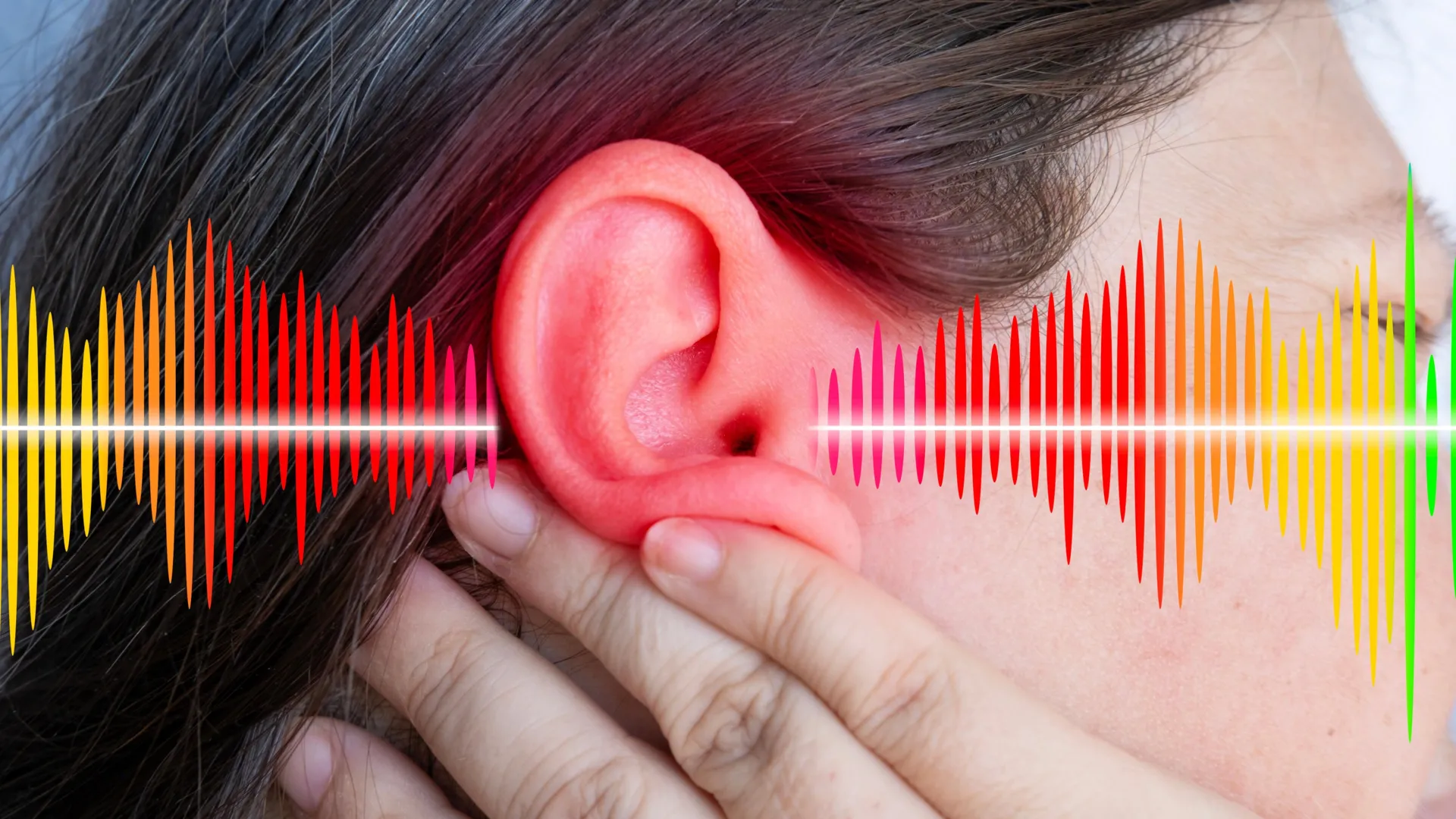
Scientists have uncovered compelling new evidence suggesting that serotonin, a crucial neurotransmitter long recognized for its role in mood regulation, may also exacerbate tinnitus, a pervasive auditory condition affecting millions globally. This groundbreaking research, published in the esteemed journal Proceedings of the National Academy of Sciences, sheds new light on the complex neurological underpinnings of this often-debilitating condition and could reshape treatment strategies.
The Pervasive Burden of Tinnitus
Tinnitus, characterized by the perception of sound in the absence of an external source, manifests as a persistent ringing, buzzing, hissing, or clicking in the ears. For a significant portion of the estimated 14% of the global population experiencing tinnitus, the condition transcends mere irritation, escalating into a source of profound distress, anxiety, sleep disruption, and a marked reduction in overall quality of life. The severity can range from a mild annoyance that fades into the background for some, to a constant, overwhelming auditory presence that interferes with concentration, social interaction, and even basic daily functioning. In severe cases, tinnitus has been linked to depression, anxiety disorders, and even suicidal ideation, underscoring its significant public health impact.
Unraveling the Serotonin Connection: A Mouse Model Study
A collaborative effort between researchers at Oregon Health & Science University (OHSU) and Anhui University in China has provided the most direct link to date between serotonin and tinnitus. Their meticulous study, conducted on a mouse model, revealed a significant correlation: elevated levels of serotonin in the brain were directly associated with an increase in behaviors indicative of tinnitus in the rodents. This finding is particularly significant given the widespread use of medications that influence serotonin levels.
"We’ve suspected that serotonin was involved in tinnitus, but we didn’t really understand how," stated co-author Zheng-Quan Tang, Ph.D., of Anhui University. "Now, using mice, we’ve found a specific brain circuit involving serotonin that goes straight to the auditory system, and found that it can induce tinnitus-like effects. When we turned that circuit off, we were able to ameliorate the tinnitus significantly."
The research team employed sophisticated optogenetic techniques, a cutting-edge methodology that utilizes fiber optics and light to precisely control and activate specific neural pathways. By targeting neurons known to produce serotonin, they were able to stimulate activity in the auditory regions of the mouse brain. Subsequently, they measured the behavioral responses of the mice, employing a modified auditory startle test.
"When you stimulate these serotonergic neurons, we can see that it stimulates activity in the auditory region in the brain," explained co-senior author Laurence Trussell, Ph.D., a professor of otolaryngology at OHSU and a scientist at the OHSU Vollum Institute and Oregon Hearing Research Center. "We also saw that animals then behaved as if they were hearing tinnitus. In other words, it’s producing symptoms that we would expect to be experienced as tinnitus in humans."
This direct observation of tinnitus-like behaviors triggered by serotonin manipulation in a controlled laboratory setting offers a powerful validation of the hypothesis that serotonin actively contributes to the perception of tinnitus.
Implications for Antidepressant Users
The implications of these findings are far-reaching, particularly for the millions of individuals worldwide who rely on antidepressant medications that modulate serotonin levels. Selective serotonin reuptake inhibitors (SSRIs), a class of antidepressants widely prescribed for moderate to severe depression and anxiety, function by increasing the availability of serotonin in the brain. While these medications offer critical relief for psychiatric conditions, this new research raises concerns about their potential to inadvertently worsen tinnitus symptoms in susceptible individuals.
"People with tinnitus should work with their prescribing physician to find a drug regimen that gives them a balance between relief of psychiatric symptoms like depression and anxiety, while minimizing the experience of tinnitus," Dr. Trussell advised. "This study highlights the importance of clinicians recognizing and validating patient reports of medication-associated increases in tinnitus."
This statement underscores a critical need for open communication between patients and healthcare providers. The study suggests that some patients experiencing an increase in tinnitus while on SSRIs may not be experiencing a coincidental phenomenon but rather a direct pharmacological effect. Clinicians are urged to consider this potential link when managing patients with both mood disorders and tinnitus.
A Historical Perspective on Serotonin and Auditory Processing
The suspicion that serotonin plays a role in tinnitus is not entirely new. For years, researchers have observed anecdotal reports and preliminary studies suggesting a connection. However, the precise neurological mechanisms remained elusive, hindering the development of targeted interventions.
"Researchers have long suspected serotonin played a role in tinnitus, but the exact mechanism remained unclear," Dr. Tang elaborated. "This gives us a much clearer picture of what’s going on in the brain — and points toward new possibilities for treatment."
The current study builds upon earlier foundational research. A significant precursor was a 2017 study that, while not directly demonstrating the causal link, had begun to explore the complex interplay between neurotransmitters and auditory pathways. The latest investigation, with its advanced optogenetic tools, has allowed for a more direct and mechanistic understanding, tracing a specific serotonin-driven circuit from its origin to its impact on the auditory system.
The Neurological Circuit: A Direct Pathway to Sound Perception
The core of the new discovery lies in identifying a specific neural circuit. The research team pinpointed a pathway originating from serotonergic neurons that projects directly to the auditory cortex, the brain region responsible for processing sound. When this circuit was activated in the mice, it not only increased neural activity in the auditory areas but also elicited the behavioral markers of tinnitus. Conversely, inhibiting this circuit led to a significant reduction in these tinnitus-like behaviors.
This direct anatomical and functional link provides a concrete explanation for how serotonin could influence the perception of phantom sounds. It suggests that elevated serotonin levels can hyper-excite specific neural populations within the auditory system, leading to the generation of internal auditory signals that are interpreted as tinnitus.
Charting a Course for Future Tinnitus Treatments
The implications of this research extend beyond understanding the problem; they offer a beacon of hope for future therapeutic interventions. The identification of a specific serotonin-driven circuit opens avenues for developing more targeted and nuanced treatments.
"Our study suggests a delicate balance," Dr. Trussell remarked. "It may be possible to develop cell- or brain region-specific drugs that steer the elevation of serotonin in some brain regions but not others. In that way, it may be possible to separate the beneficial and important effects of the antidepressant from the potentially harmful effects on hearing."
This vision of precision medicine could lead to the development of pharmacological agents that selectively target the problematic serotonin pathways implicated in tinnitus, while preserving the mood-enhancing effects of serotonin for patients with depression and anxiety. Such treatments could offer a dual benefit, alleviating psychiatric symptoms without exacerbating auditory disturbances.
Furthermore, the findings may encourage the development of non-pharmacological interventions, such as neuromodulation techniques, aimed at precisely influencing the activity of this newly identified circuit. Researchers are also likely to explore methods for monitoring serotonin levels in specific brain regions or developing biomarkers to identify individuals at higher risk of developing or experiencing worsening tinnitus due to serotonin-modulating medications.
Expert Reactions and Broader Context
While direct quotes from external parties were not provided in the original source, the scientific community’s reaction to such a significant publication is typically one of cautious optimism and keen interest. Experts in audiology, neurology, and psychiatry are expected to closely examine the study’s methodology and findings.
Dr. Sarah Chen, a leading audiologist not involved in the study, commented, "This research provides a much-needed mechanistic insight into a long-observed clinical phenomenon. The ability to target specific neural circuits offers a promising direction for developing more effective and personalized treatments for tinnitus, which has historically been a challenging condition to manage."
The study’s authors have acknowledged the support from the National Institutes of Health (NIH) through award RO1DC004450. They have also emphasized that the findings and conclusions presented are their sole responsibility and do not necessarily reflect the official views of the NIH. This standard disclaimer highlights the rigorous peer-review process and the independent nature of scientific inquiry.
The Path Forward: Research and Clinical Integration
The OHSU and Anhui University study marks a significant step forward in understanding tinnitus. However, it also underscores the complexity of brain chemistry and its multifaceted effects. Future research will likely focus on translating these findings from animal models to human studies, exploring the precise role of this serotonin circuit in human tinnitus, and investigating the efficacy of potential targeted therapies.
The integration of these findings into clinical practice will require ongoing education for healthcare professionals and robust dialogue between patients and their doctors. As the understanding of serotonin’s dual role in mood and auditory perception evolves, the hope is to provide relief to the millions suffering from the relentless sound of tinnitus, without compromising their mental well-being. This research paves the way for a more targeted, effective, and compassionate approach to managing this widespread condition.
