
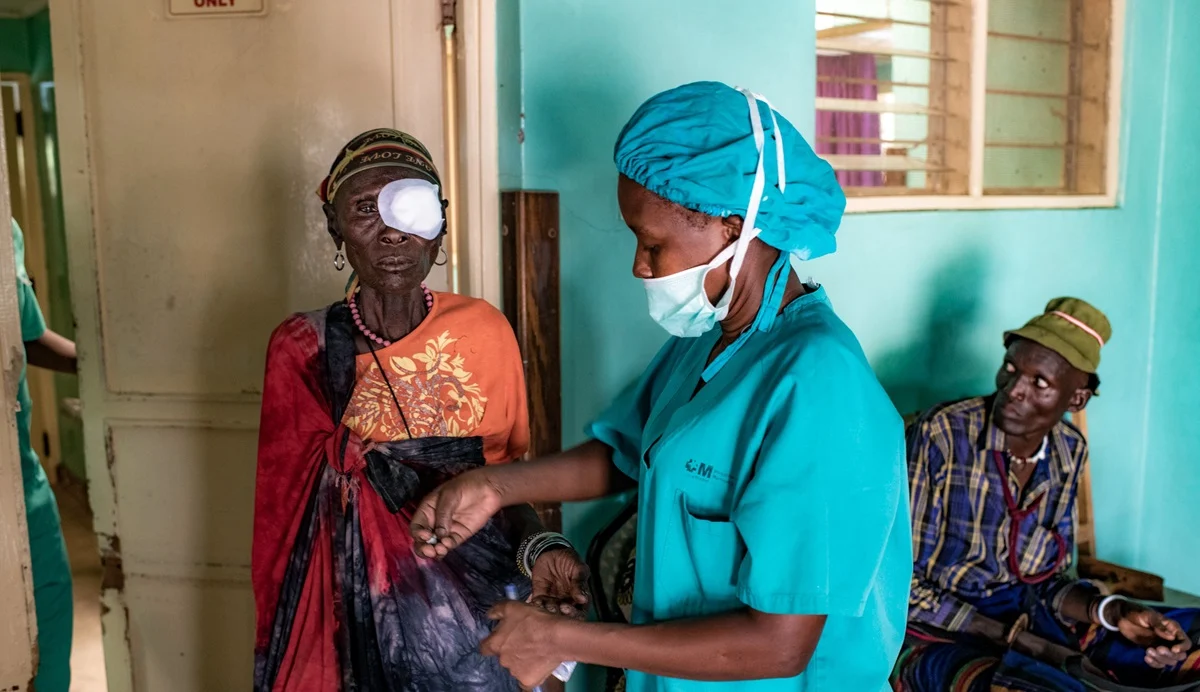
The World Health Organization (WHO) has issued a high-level call to action for governments and international health stakeholders to drastically accelerate efforts to address the global cataract crisis. According to a landmark study published in The Lancet Global Health, nearly half of all individuals worldwide suffering from cataract-related blindness or severe vision impairment still lack access to the simple, life-changing surgery required to restore their sight. This revelation comes at a critical juncture as the global population ages, threatening to overwhelm existing surgical capacities unless immediate and systemic changes are implemented within national healthcare frameworks.
Cataract, characterized by the progressive clouding of the eye’s natural lens, remains the leading cause of blindness globally. Despite the existence of a highly effective, 15-minute surgical procedure that can restore vision almost immediately, more than 94 million people are currently living with the condition. The WHO emphasizes that cataract surgery is not only one of the most successful medical interventions in history but also one of the most cost-effective, providing a profound return on investment by returning independence and economic productivity to affected individuals.
The Scale of the Global Vision Crisis
The newly released data underscores a significant disparity between the availability of medical technology and its actual delivery to those in need. While global coverage for cataract surgery has seen a modest increase of approximately 15% over the last two decades, this progress is being outpaced by demographic shifts. As life expectancy increases globally, the number of people developing cataracts is rising faster than the rate of surgical intervention.
Current modeling suggests that if current trends continue, cataract surgery coverage will only rise by 8.4% over the current decade. This trajectory falls significantly short of the ambitious targets set by the World Health Assembly, which calls for a 30% increase in effective cataract surgical coverage by the year 2030. To meet these goals, the WHO asserts that progress must accelerate by more than three times its current pace.
Devora Kestel, Director a.i. of the WHO Department of Noncommunicable Diseases and Mental Health, highlighted the human element of these statistics. She noted that cataract surgery is a transformative tool that goes beyond clinical outcomes. When a person regains their sight, they are often able to return to work, care for their families, and live with a sense of dignity that is frequently stripped away by avoidable blindness.
Analysis of Regional and Gender Disparities
The study, which synthesized reports from 68 country estimates for the years 2023 and 2024, revealed deep-seated inequities in how eye care is distributed across the globe. The African Region remains the most underserved, with a staggering 75% of individuals requiring cataract surgery remaining untreated. In many sub-Saharan African nations, the ratio of ophthalmologists to the general population is dangerously low, often leaving rural inhabitants with no access to specialized eye care.
Beyond geographic location, gender has emerged as a primary determinant of access to care. The WHO report indicates that women are disproportionately affected by cataract-related blindness across all global regions. Women consistently experience lower access to surgical services than men, a phenomenon attributed to a combination of longer life expectancy—leading to a higher prevalence of age-related cataracts—and socio-economic barriers. In many cultures, women may have less control over household finances or face greater restrictions on traveling to urban centers where surgical facilities are located.
A Chronology of Global Eye Health Initiatives
The current push for expanded cataract coverage is the latest chapter in a decades-long effort by the international community to eliminate avoidable blindness. Understanding the timeline of these efforts provides context for the urgency of the WHO’s current appeal:
- 1999: Launch of VISION 2020: The WHO and the International Agency for the Prevention of Blindness (IAPB) launched "VISION 2020: The Right to Sight." This global initiative aimed to eliminate the main causes of avoidable blindness by the year 2020, with cataracts identified as a top priority.
- 2013: Global Action Plan (2014–2019): The World Health Assembly adopted a formal action plan for universal eye health, focusing on reducing the prevalence of avoidable visual impairment by 25% by 2019.
- 2019: World Report on Vision: The WHO published its first comprehensive World Report on Vision, which shifted the focus toward "integrated people-centered eye care" (IPCEC). This report highlighted that over 2.2 billion people have a vision impairment, and at least 1 billion of those cases could have been prevented or have yet to be addressed.
- 2021: Resolution WHA74.7: Member states at the 74th World Health Assembly committed to new global targets for 2030, including a 30% increase in effective cataract surgical coverage and a 40% increase in effective refractive error coverage.
- 2024: The Lancet Global Health Study: The publication of the latest modeling data serves as a mid-way status report, sounding the alarm that the 2030 targets are currently out of reach without a radical shift in strategy.
Structural Barriers to Effective Care
The WHO identifies several systemic obstacles that have hindered the expansion of eye care services. High out-of-pocket costs remain a primary deterrent for patients in low- and middle-income countries. Even when the surgery itself is subsidized, the collateral costs—such as transportation to a hospital, lost wages for the patient and a caregiver, and post-operative medications—can be prohibitive for impoverished families.
Furthermore, there is a critical shortage and unequal distribution of the eye-care workforce. Most trained ophthalmologists and ophthalmic nurses are concentrated in major metropolitan areas, leaving rural and remote populations in a "service desert." In addition to workforce issues, many regions suffer from a lack of essential surgical infrastructure, including a steady supply of high-quality intraocular lenses (IOLs) and sterilized surgical environments.
The WHO also points to a lack of awareness and demand. In some communities, vision loss is mistakenly viewed as an inevitable and untreatable consequence of aging. Without public health education campaigns to inform the public that cataracts are treatable, many individuals never seek help, even when services are available nearby.
Risk Factors and Preventive Measures
While aging is the primary driver of cataract development, the WHO emphasizes that several modifiable risk factors can accelerate the onset of the condition. These include:
- Prolonged UV-B Exposure: Individuals working outdoors without eye protection are at a significantly higher risk of developing cataracts earlier in life.
- Tobacco Use: Smoking has been scientifically linked to an increased risk of lens clouding.
- Diabetes: The global rise in Type 2 diabetes is contributing to a secondary epidemic of diabetic cataracts, which often progress more rapidly than age-related versions.
- Corticosteroid Use: Long-term use of certain medications can lead to secondary cataracts.
Addressing these risk factors through broader public health initiatives—such as tobacco control and diabetes management—is essential to reducing the long-term burden on surgical systems.
Strategic Solutions and Economic Implications
To close the gap, the WHO advocates for the full integration of eye care into primary health care (PHC). By training community health workers to perform basic vision screenings and identify cataracts, countries can create a more robust referral pipeline. This approach ensures that eye care is not treated as a "luxury" add-on but as a fundamental component of universal health coverage.
The economic argument for investing in cataract surgery is compelling. Studies have shown that every dollar invested in vision restoration can yield a multi-fold return in economic productivity. Blindness often forces children out of school to act as caregivers for elderly relatives, creating a cycle of poverty. By restoring sight to the elderly, younger generations are freed to pursue education and employment, while the patients themselves can often resume self-care or small-scale economic activities.
Future Outlook and Call to Action
The WHO’s message to governments is clear: the technology to end cataract-related blindness exists, but the political will and financial investment must follow. The organization is calling for targeted efforts to prioritize women and marginalized communities, ensuring that the benefits of medical progress are distributed equitably.
"With sustained commitment, cataract surgery can move from being out of reach for millions to a universally accessible intervention," the WHO statement concluded. The road to the 2030 targets requires a fundamental reimagining of how eye care is delivered, moving away from sporadic surgical "camps" toward sustainable, integrated, and well-funded national eye care programs. As the world faces an aging future, the ability to maintain the vision of its citizens will be a key indicator of the success of global health systems.