
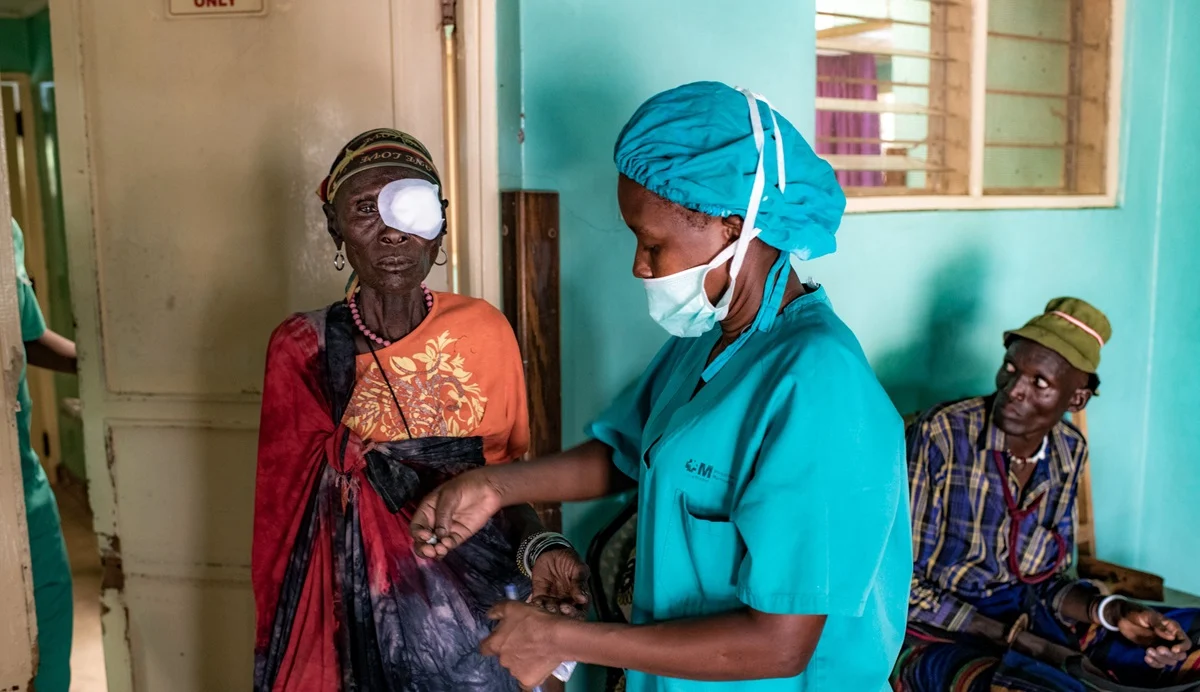
The World Health Organization (WHO) has issued a formal call to action for governments and international health stakeholders to drastically accelerate efforts to address the global cataract crisis, as new data reveals that nearly half of the world’s population suffering from cataract-related blindness remains without access to essential surgical care. Despite the existence of a highly effective, 15-minute procedure that can restore sight almost immediately, systemic barriers continue to prevent millions from receiving treatment, particularly in low-income regions and among marginalized demographics. This urgent appeal follows the publication of a comprehensive study in The Lancet Global Health, which underscores a widening gap between the rising demand for eye care and the current pace of surgical service delivery.
Cataracts, characterized by the progressive clouding of the eye’s natural lens, remain the leading cause of blindness and vision impairment globally. The condition affects more than 94 million people, causing blurred vision that, if left untreated, inevitably leads to total loss of sight. While the medical community identifies cataract surgery as one of the most cost-effective interventions in modern medicine, the disparity in access remains a significant public health challenge. The WHO emphasizes that restoring sight is not merely a medical success but a catalyst for socio-economic stability, enabling individuals to regain their independence, dignity, and ability to participate in the workforce.
The Global Burden and the Current State of Surgical Coverage
The latest findings published in The Lancet Global Health provide a sobering analysis of the current landscape of eye health. Based on reports and estimates from 68 countries for the years 2023 and 2024, the study highlights that while progress has been made over the last two decades, it is insufficient to meet the growing needs of an aging global population. Since the early 2000s, global coverage of cataract surgery has seen a modest increase of approximately 15%. However, this growth has been largely offset by the demographic shift toward older populations, which has naturally increased the prevalence of cataracts.
Current modeling predicts that at the present trajectory, cataract surgery coverage will increase by only 8.4% over the current decade. This projection falls dangerously short of the ambitious targets set by the World Health Assembly, which calls for a 30% increase in effective cataract surgical coverage by the year 2030. The WHO warns that without a sharp acceleration in service delivery, the number of people living with avoidable blindness will continue to climb, placing an immense burden on global health systems and economies.
The data reveals a stark geographic divide. The African Region faces the most significant challenges, where three out of every four individuals requiring cataract surgery remain untreated. This gap is reflective of broader inequities in global health infrastructure, where specialized surgical services are often concentrated in urban centers, leaving rural and impoverished communities underserved.
A Chronology of Global Vision Initiatives
The current push to eliminate cataract-related blindness is the latest chapter in a decades-long effort by the international community to address eye health. To understand the urgency of the WHO’s current call, it is essential to view it within the context of previous global initiatives:
- Vision 2020: The Right to Sight (1999): Launched as a joint initiative between the WHO and the International Agency for the Prevention of Blindness (IAPB), this program aimed to eliminate the main causes of avoidable blindness by the year 2020. While it succeeded in raising awareness and increasing surgical rates in many countries, it did not fully achieve its goal due to the rapid pace of population aging.
- The World Report on Vision (2019): This landmark WHO report shifted the focus from specific diseases to "integrated people-centered eye care." It highlighted that more than 2.2 billion people globally have a vision impairment, of which at least 1 billion could have been prevented or have yet to be addressed.
- The 74th World Health Assembly Resolution (2021): Member states officially adopted two new global targets for 2030: a 40% increase in effective coverage of refractive errors and a 30% increase in effective coverage of cataract surgery.
- The Lancet Global Health Study (2024/2025): The current data serves as a mid-point reality check, indicating that the world is currently off-track to meet the 2030 cataract target, necessitating the WHO’s renewed plea for accelerated action.
Identifying the Barriers to Care
The WHO’s analysis identifies several long-standing structural barriers that prevent the scaling of surgical interventions. These obstacles are often interconnected and require multi-faceted solutions.
Workforce Shortages and Maldistribution: There is a critical shortage of trained ophthalmologists, ophthalmic nurses, and technicians in many parts of the world. Furthermore, the existing workforce is often concentrated in capital cities, creating "surgical deserts" in rural areas.
Economic Constraints: Even when services are available, high out-of-pocket costs remain a deterrent for many. In many low- and middle-income countries, the cost of a 15-minute surgery can represent several months of household income, forcing families to choose between medical care and basic necessities.
Gender Inequity: The Lancet study confirms that women are disproportionately affected by cataract-related blindness. Across all analyzed regions, women consistently experience lower access to eye care services than men. This is often due to underlying social factors, including limited control over household finances, restricted mobility, and a lack of prioritization of women’s health within certain cultural contexts.
Systemic Inefficiencies: Long waiting times and a lack of integrated screening processes mean that many patients are only diagnosed when their vision has already deteriorated significantly. Additionally, there is often a lack of awareness or "demand" for surgery in areas where the procedure is not normalized or where misinformation about the risks of surgery persists.
Risk Factors Beyond Aging
While age remains the primary driver of cataract development, the WHO points to several other factors that accelerate the clouding of the lens. Addressing these risk factors is a vital component of a comprehensive eye health strategy. Prolonged exposure to UV-B radiation, particularly in equatorial regions, is a significant contributor. Behavioral factors such as tobacco use and the long-term use of corticosteroids also increase risk.
Furthermore, the global rise in diabetes has created a secondary crisis in eye health. Diabetic patients are significantly more likely to develop cataracts at an earlier age compared to the general population. The intersection of noncommunicable diseases (NCDs) and vision loss underscores the need for integrated health policies that address metabolic health alongside sensory health.
Official Responses and the Human Impact
"Cataract surgery is one of the most powerful tools we have to restore vision and transform lives," stated Devora Kestel, Director a.i. of the WHO Department of Noncommunicable Diseases and Mental Health. "When people regain their sight, they regain independence, dignity, and opportunity."
Health advocates from various international NGOs have echoed this sentiment, noting that the economic impact of blindness is staggering. The loss of productivity for a blind individual, combined with the lost productivity of a family member who must act as a full-time caregiver, creates a cycle of poverty that is difficult to break. By investing in cataract surgery, governments can achieve a high return on investment through increased labor force participation and reduced social dependency.
Inferred reactions from the global surgical community suggest that the 15-minute nature of the procedure makes it an ideal candidate for "surgical camps" and mobile clinics, provided there is sustained funding and governmental support for the underlying infrastructure.
Strategic Solutions for Closing the Gap
To meet the 2030 targets, the WHO outlines a series of strategic solutions that countries must adopt. These recommendations focus on moving away from isolated eye clinics and toward a more integrated health system.
Integration into Primary Health Care (PHC): The WHO advocates for vision screening and eye examinations to be a standard part of primary health care visits. By training community health workers to identify early signs of cataracts, patients can be referred to surgical centers before they reach the stage of total blindness.
Investing in Infrastructure: Beyond training personnel, there is a need for investment in essential surgical equipment and consumables. This includes ensuring a steady supply of high-quality intraocular lenses (IOLs), which are necessary to replace the clouded natural lens during surgery.
Prioritizing Equity: Targeted efforts must be made to reach women and marginalized communities. This includes implementing gender-sensitive health policies and providing subsidies or insurance coverage to eliminate out-of-pocket costs for the poorest populations.
Workforce Expansion: Expanding the eye-care workforce involves not just training more surgeons, but also empowering mid-level providers to perform screenings and post-operative care, allowing surgeons to focus on the operating room.
Analysis of Broader Implications
The failure to address the cataract gap has implications that extend far beyond individual health. In the context of the Sustainable Development Goals (SDGs), vision health is linked to quality education (SDG 4), decent work and economic growth (SDG 8), and reduced inequalities (SDG 10). A child who cannot see clearly cannot learn, and an adult who loses their vision often loses their livelihood.
Furthermore, the aging of the global population means that the demand for cataract surgery will only continue to rise. If health systems do not scale their capacity now, they risk being overwhelmed by a "silver tsunami" of vision loss in the coming decades. The WHO’s call for a 30% increase in coverage is not just an aspirational goal; it is a necessary benchmark for the sustainability of global public health.
As the international community looks toward the 2030 deadline, the focus must shift from awareness to implementation. The technology to cure cataract-related blindness has existed for decades; the challenge remains the political and logistical will to deliver that technology to every corner of the globe. With sustained commitment and targeted investment, the WHO believes that cataract surgery can transition from a luxury of the few to a universally accessible right, effectively ending avoidable blindness for millions of people worldwide.