
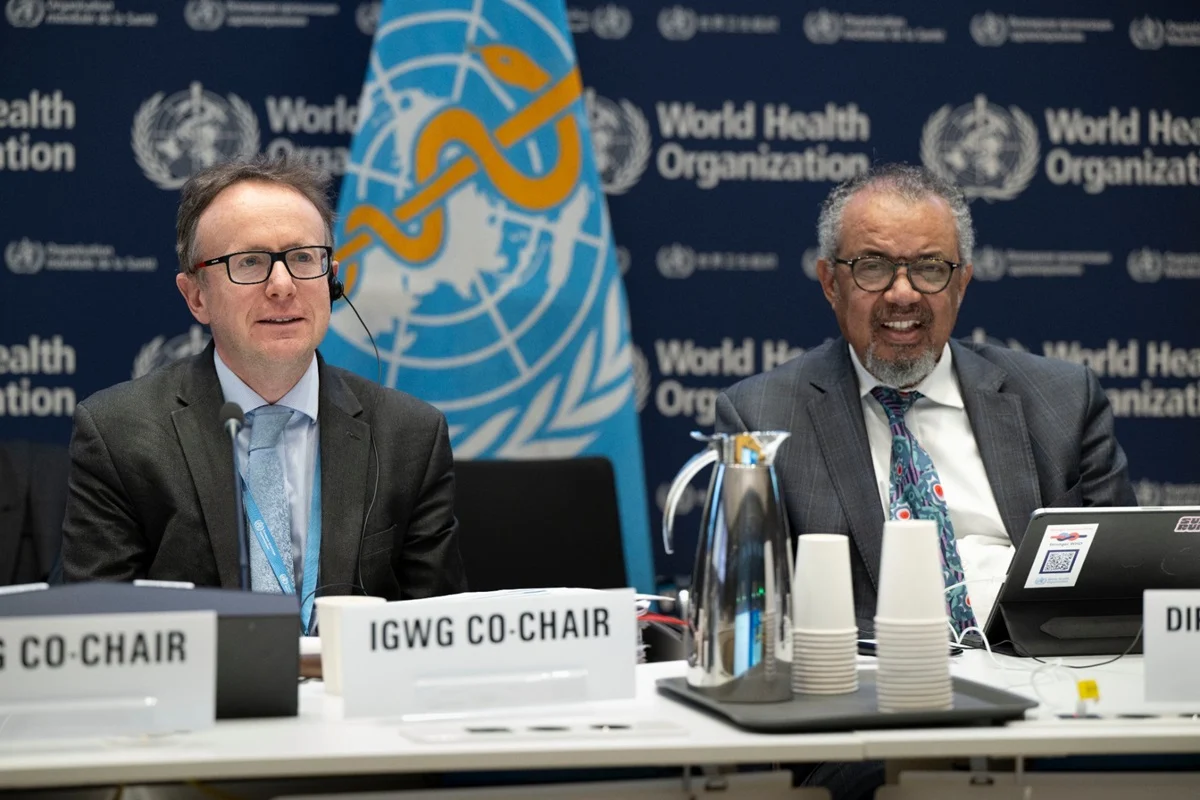
The World Health Organization (WHO) Member States have reached a consensus to extend high-stakes negotiations regarding the Pathogen Access and Benefit Sharing (PABS) annex, a fundamental pillar of the proposed WHO Pandemic Agreement. This decision moves the deadline for finalizing the annex to a critical window in late April, just weeks before the document is slated for formal consideration at the 77th World Health Assembly (WHA) in May 2024. The extension, which schedules additional deliberations from April 27 to May 1, underscores the complexity of balancing rapid scientific data sharing with the equitable distribution of life-saving medical countermeasures.
This diplomatic extension follows a week of intensive discussions under the Intergovernmental Working Group (IGWG) and the Intergovernmental Negotiating Body (INB). While progress has been made on the technical frameworks of the agreement, several "bridgeable but significant" gaps remain regarding how the international community handles biological materials and the subsequent profits and products derived from them. The move to incorporate informal intersessional discussions ahead of the April restart reflects an urgent commitment to resolve the remaining points of contention that have historically divided high-income nations and the Global South.
The Strategic Core of the Pandemic Agreement
The PABS system is widely regarded as the "engine room" of the broader Pandemic Agreement. Its primary objective is to establish a permanent, legally binding framework for the rapid sharing of pathogens with pandemic potential. In exchange for this transparency, the system seeks to ensure the fair and equitable sharing of benefits arising from the use of those pathogens—specifically vaccines, therapeutics, and diagnostic tools.
During the COVID-19 pandemic, the world witnessed a phenomenon often described as "vaccine nationalism," where wealthy nations secured the lion’s share of early vaccine supplies, leaving developing nations with limited access despite many of those nations having provided the viral samples necessary for research and development. The PABS annex aims to codify a "grand bargain": developing nations provide the viral data that scientists need to create vaccines, and in return, they receive guaranteed, affordable access to the resulting medical products.
Dr. Tedros Adhanom Ghebreyesus, WHO Director-General, emphasized the moral and practical necessity of this system. “The Pathogen Access and Benefit Sharing system lies at the heart of the WHO Pandemic Agreement and I thank WHO Member States for their commitment to work to bring it to life,” Dr. Tedros stated. He urged delegations to move past historical grievances and "believe in the power of trust," citing the common public good as the ultimate objective of the negotiations.
Historical Context and the Evolution of the Accord
The impetus for the WHO Pandemic Agreement dates back to the height of the COVID-19 crisis. In December 2021, the World Health Assembly met in a rare Special Session—only the second in the organization’s history—to discuss the catastrophic failures in global cooperation. This session led to the establishment of the INB, tasked with drafting and negotiating a convention, agreement, or other international instrument under the WHO Constitution to strengthen pandemic prevention, preparedness, and response.
Over the last two years, the negotiations have moved through various iterations. Initially, the focus was on broad principles of transparency and surveillance. However, as the drafts became more technical, the PABS annex emerged as the most contentious element. The disagreement largely centers on the "benefit-sharing" aspect. Developing nations, often represented by the Group for Equity, have pushed for a mandatory contribution of 20% of pandemic-related products (10% as a donation and 10% at non-profit prices) to be managed by the WHO. Conversely, some industrialized nations with large pharmaceutical sectors have raised concerns regarding intellectual property (IP) rights and the potential for bureaucratic delays in research.
Chronology of Recent Negotiations and Key Milestones
The path toward the May 2024 World Health Assembly has been marked by several critical phases:
- December 2021: The WHA Special Session establishes the INB to draft the "Pandemic Accord."
- February 2023: The "Zero Draft" of the agreement is released, introducing the initial concepts of the PABS system.
- September 2023: High-level meetings at the United Nations General Assembly reinforce political will for a binding agreement.
- March 2024: The ninth round of INB negotiations takes place in Geneva, revealing deep divisions on the PABS annex but also a shared desire not to let the agreement fail.
- Late March 2024: Member States officially agree to extend PABS negotiations into late April to bridge remaining gaps.
- April 27 – May 1, 2024: The scheduled resumption of formal negotiations on the PABS annex.
- May 27 – June 1, 2024: The 77th World Health Assembly, where the final text is expected to be presented for adoption.
Technical Hurdles and Points of Contention
The recent intensive sessions under the IGWG have focused on three primary pillars of the PABS system: the definition of benefits, contractual arrangements, and governance.
1. Defining and Distributing Benefits:
Negotiators are debating whether benefits should be purely monetary or include non-monetary components such as technology transfer and manufacturing capacity-building in low- and middle-income countries. There is also a debate over whether the PABS system should apply only during declared Public Health Emergencies of International Concern (PHEIC) or function as a permanent surveillance and sharing network.
2. Contractual Arrangements:
A major point of discussion involves the nature of the "PABS Contracts." These would be legally binding agreements between the WHO and manufacturers who receive pathogen materials through the system. Negotiators are working to determine the legal triggers that would mandate manufacturers to set aside a portion of their production for global distribution.
3. Governance and Transparency:
To ensure the system functions in the public interest, Member States are discussing the creation of a "PABS Oversight Committee." This body would be responsible for tracking the movement of pathogen samples and ensuring that entities receiving those samples fulfill their benefit-sharing obligations.
Ambassador Tovar da Silva Nunes of Brazil, co-chair of the IGWG Bureau, highlighted the intensity of the work. “Member State negotiators are working intensively towards having an ambitious and equitable Pathogen Access and Benefits Sharing annex ready for adoption at the World Health Assembly in May,” he noted. His comments reflect the perspective of many emerging economies that view the PABS annex as a non-negotiable requirement for a fair global health architecture.
Supporting Data: The Cost of Inequity
The drive for the PABS system is supported by sobering data from the COVID-19 pandemic. According to various estimates, including studies published in The Lancet, the inequitable distribution of vaccines may have resulted in over a million preventable deaths in low-income countries during the first year of the vaccine rollout.
Furthermore, data from the International Monetary Fund (IMF) indicated that the global economy lost nearly $12.5 trillion due to the pandemic. Proponents of the PABS annex argue that the cost of establishing a global sharing system is a fraction of the economic and human cost of a fragmented pandemic response. By ensuring that pathogens are shared immediately—rather than being held as "bargaining chips" by nations—the global community can theoretically reduce the time it takes to develop diagnostics and vaccines by weeks or even months.
Perspectives from the Global North and South
While the WHO maintains an objective stance, the negotiations reflect a clash of philosophies. Mr. Matthew Harpur of the United Kingdom, also a co-chair of the IGWG Bureau, acknowledged the progress made despite these differences. “With less than two months until the World Health Assembly in May, I welcome the commitment shown this week by Member States towards finding consensus on outstanding areas,” Harpur said.
High-income nations, including the U.S., the U.K., and members of the European Union, have generally advocated for a system that encourages innovation and protects the private sector’s ability to respond rapidly. They emphasize that any benefit-sharing mechanism must not stifle the research and development (R&D) ecosystem.
In contrast, the "Group for Equity"—comprising dozens of countries across Africa, Asia, and Latin America—argues that the current system is "fundamentally broken." They point to the Nagoya Protocol on Access and Benefit-Sharing as a precedent, which asserts national sovereignty over biological resources. These nations argue that if they are to relinquish some of that sovereignty by sharing pathogens "rapidly and unconditionally," the reciprocal benefit-sharing must be equally "rapid and unconditional."
Broader Implications and Future Outlook
The outcome of the April 27–May 1 negotiations will likely determine the success of the entire WHO Pandemic Agreement. If the PABS annex is finalized, it would represent a historic shift in international law, moving from a voluntary "best efforts" approach to a structured, legally binding system of mutual accountability.
A successful PABS system would likely lead to:
- Enhanced Global Surveillance: More countries would be incentivized to report and share new viral strains early, knowing they will not be "locked out" of the resulting cures.
- Regional Manufacturing Hubs: The agreement could catalyze the development of vaccine manufacturing sites in regions like Africa and Southeast Asia, reducing reliance on Western supply chains.
- Predictable Funding: Monetary contributions from the PABS system could provide a sustainable funding stream for the WHO’s health emergency programs.
Conversely, a failure to reach an agreement could lead to a fragmented global health landscape. Nations might revert to bilateral agreements or "sample diplomacy," where virus sharing is used as a tool for geopolitical leverage rather than a public health necessity.
As the late-April deadline approaches, the international community remains cautiously optimistic. The commitment to intersessional discussions suggests that diplomats are moving beyond prepared statements and into the technical "text-clearing" phase necessary for a final deal. The world now looks to the final week of April as the decisive moment for global health equity, where the lessons of COVID-19 will either be codified into law or left as a missed opportunity for future generations.