
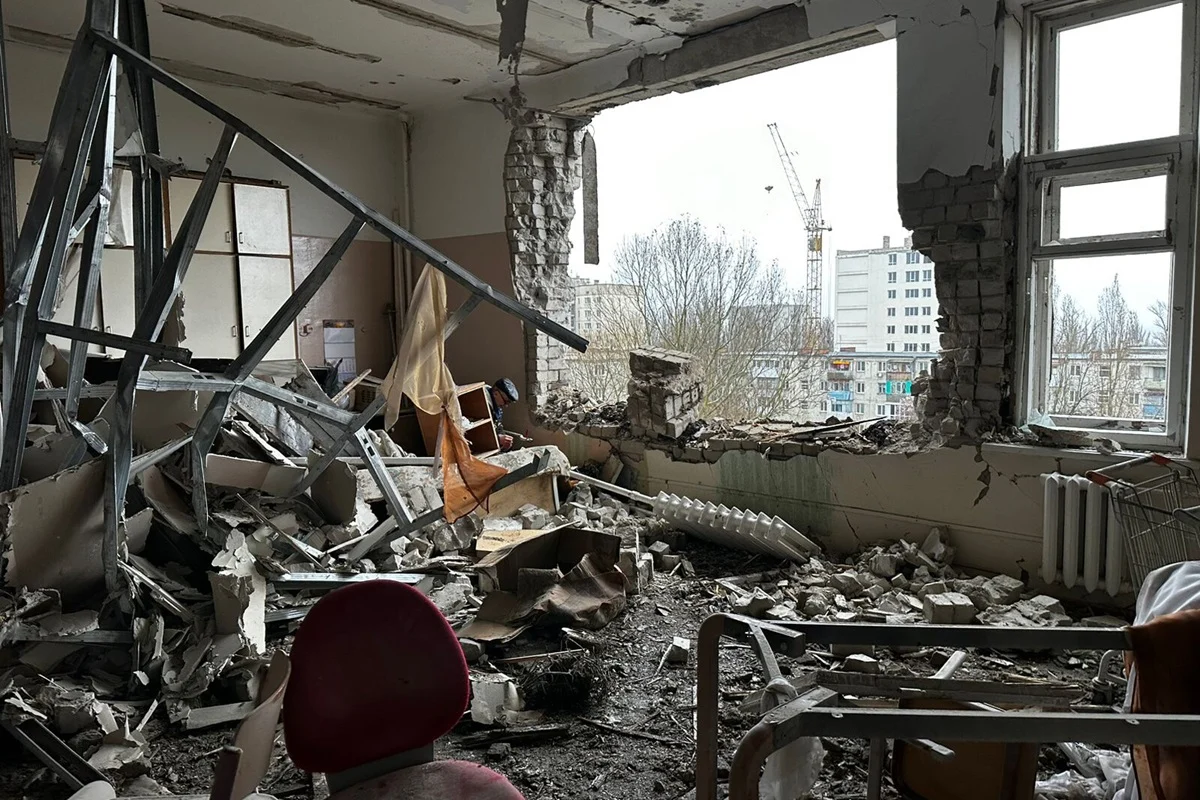
As Ukraine enters its fifth year of full-scale war, the nation’s health-care system is facing its most precarious moment since the beginning of hostilities on February 24, 2022. New data released by the World Health Organization (WHO) reveals that 2025 marked the most violent year for medical infrastructure to date, with a nearly 20% increase in attacks on health-care facilities, personnel, and transport compared to the previous year. This surge in violence against the medical sector has coincided with a systematic campaign against the nation’s energy grid, creating a compounding humanitarian crisis that threatens the survival of the most vulnerable populations.
Since the onset of the invasion four years ago, the WHO has documented and verified at least 2,881 discrete attacks on health care in Ukraine. These incidents encompass a wide range of violations, including the shelling of hospitals, the destruction of ambulances, the targeted strikes on medical warehouses, and the injury or death of health-care providers in the line of duty. The cumulative toll on the human workforce and the physical infrastructure of the health system has left deep, systemic gaps that international aid organizations are struggling to bridge as the conflict persists into 2026.
A Chronology of Escalation: From 2022 to the Present
The trajectory of the conflict’s impact on health care has shifted from the initial chaos of 2022 to a more systematic and debilitating pattern of destruction. In the first year of the war, attacks were often the result of broad kinetic operations and indiscriminate shelling in urban centers. However, by 2024 and 2025, a disturbing trend emerged: the deliberate targeting of logistics and support systems that keep the medical sector functional.
In 2025, the frequency of these attacks reached a new zenith. The third quarter of 2025 was particularly lethal, with 184 documented attacks occurring in a 90-day window. This period alone resulted in the deaths of 12 individuals and injuries to 110 health workers and patients. Furthermore, 2025 saw a tripling of attacks on medical warehouses compared to 2024. By destroying the hubs where medicines, surgical equipment, and consumables are stored, these strikes have crippled the supply chain, making it nearly impossible for frontline clinics to maintain standard levels of care.
Over the four-year duration of the war, the human cost within the medical community has been staggering. Records indicate that 233 health workers and patients have been killed, while another 930 have sustained significant injuries. Under international humanitarian law, health-care facilities and personnel are granted protected status; the WHO and various international legal bodies have repeatedly noted that these persistent strikes constitute clear violations of these global norms.
The Dual Front: Direct Strikes and Infrastructure Collapse
Ukraine’s health services are currently battling on two distinct fronts. The first is the direct physical destruction of clinics and hospitals. The second, and perhaps more insidious, is the cascading effect of strikes on civilian infrastructure, particularly the thermal power plants and electrical substations that underpin the country’s power grid.
The winter of 2025–2026 has been characterized as the harshest since the conflict began. A series of coordinated strikes on energy infrastructure in late 2025 left millions of citizens without reliable heating, electricity, or water. The impact reached a critical point in January 2026, when a massive attack on Kyiv’s energy hubs left nearly 6,000 buildings in the capital without heat during subzero temperatures. This event alone triggered the displacement of an estimated 600,000 residents who were forced to flee the city to avoid freezing.
For the health-care system, the loss of power is a death sentence for modern medical practice. While many hospitals have been equipped with generators, these are temporary solutions that cannot replace a stable national grid. "What we are witnessing in Ukraine is a devastating cycle," explained Dr. Jarno Habicht, the WHO Representative to Ukraine. "A heating station is struck and thousands of homes lose heat within hours. At -20°C, water in the pipes freezes, bursts them, and floods buildings with ice. Repairs are made, then the next attack starts it all over again."
The Psychological and Chronic Disease Burden
The physical destruction of buildings is only one facet of the crisis. The invisible toll on the Ukrainian population is becoming increasingly evident in public health surveys. According to a WHO assessment conducted in December 2025, 59% of people living in frontline areas reported their health as "poor" or "very poor." This is a significant increase from non-frontline areas, where 47% of the population reported similar health declines.
The mental health crisis has reached what officials describe as "staggering" levels. Survey data indicates that 72% of Ukrainians experienced symptoms of anxiety or depression over the past year. However, the stigma surrounding mental health, combined with the lack of available services, means that only one in five individuals sought professional help. The constant threat of aerial bombardment and the economic instability of a five-year war have created a state of chronic toxic stress for millions.
Simultaneously, non-communicable diseases (NCDs) are surging. Cardiovascular disease, often exacerbated by stress and lack of access to preventative care, is now a primary killer. One in four Ukrainians is currently living with dangerously high blood pressure. The management of such conditions is made nearly impossible by the breakdown of the pharmaceutical retail sector. Approximately 80% of the population reports difficulty accessing necessary medications. While some of this is due to physical unavailability in frontline zones, 71% of respondents cited the prohibitive cost of medicine as the primary barrier.
Barriers to Rehabilitation and Long-term Recovery
The nature of modern warfare, characterized by heavy artillery and explosive remnants of war, has resulted in a massive influx of trauma-related injuries. This has created a surge in demand for specialized services such as surgery, blood products, and complex rehabilitation. However, the infrastructure for long-term recovery is severely underdeveloped.
Current data shows that only 4% of hospitals in Ukraine are equipped to provide inpatient rehabilitation services. Furthermore, only 3% of medical facilities offer assistive technologies, such as prosthetics or corrective devices. For the thousands of amputees created by the war, including both soldiers and civilians, the wait for a prosthetic can last months, and the lack of localized rehabilitation means many will never fully reintegrate into the workforce or daily life.
The struggle for survival extends to the most vulnerable. New mothers discharged from maternity wards often return to homes without running water or heat. Cancer patients recovering from surgeries are forced to manage their post-operative care in freezing apartments. These conditions turn what should be a period of medical recovery into a daily struggle for basic survival, often negating the successful outcomes of the surgeries themselves.
Official Responses and the Call for Global Support
International health leaders have been vocal in their condemnation of the ongoing attacks and the deteriorating situation. Dr. Tedros Adhanom Ghebreyesus, the WHO Director-General, emphasized the paradox of providing care in a combat zone. "After four years of war, health needs are increasing, but many people are unable to get the care they need, in part because hospitals and clinics are routinely attacked," Dr. Tedros stated. He noted that while the WHO is working to keep hospitals supplied with medicine and warmth, "the best medicine is peace."
Dr. Hans Henri P. Kluge, the WHO Regional Director for Europe, highlighted the human stories behind the statistics. "This is not abstract—it’s a heart patient who can’t find blood pressure medication, an amputee waiting months for a prosthetic, a teenager too afraid to leave the house," he said. Kluge underscored that the Ukrainian health system requires sustained, long-term international support rather than sporadic emergency aid.
In response to the escalating crisis, the WHO has appealed for US$ 42 million in additional funding for 2026. This funding is intended to sustain essential health services for approximately 700,000 people. Throughout 2025, the organization managed to reach 1.9 million people across the country, providing generators to 284 health facilities and facilitating medical referrals for those in hard-to-reach frontline zones.
Broader Implications and the Path Forward
The implications of the Ukrainian health crisis extend beyond the country’s borders. The breakdown of infection prevention and control (IPC) and the rise of antimicrobial resistance (AMR) in war-torn regions pose a significant threat to regional health security. In overcrowded shelters and damaged hospitals, the risk of communicable disease outbreaks remains high, and the lack of consistent antibiotic supplies contributes to the development of resistant bacterial strains.
Furthermore, the destruction of the Ukrainian health system represents a massive loss of human capital. Thousands of doctors and nurses have been displaced or killed, and the education of the next generation of medical professionals has been severely disrupted. Rebuilding this workforce will take decades, even if the conflict were to end immediately.
As the international community looks toward 2026, the focus remains on resilience and adaptation. The WHO’s strategy involves decentralized care, utilizing mobile health units and "health clusters" to reach populations that are cut off from major urban hospitals. However, as long as medical facilities remain targets of military action, the effectiveness of these interventions will be limited. The data from 2025 serves as a stark reminder that in modern conflict, the health-care system is often on the literal and metaphorical front line, and without a cessation of hostilities, the humanitarian toll will only continue to climb.