
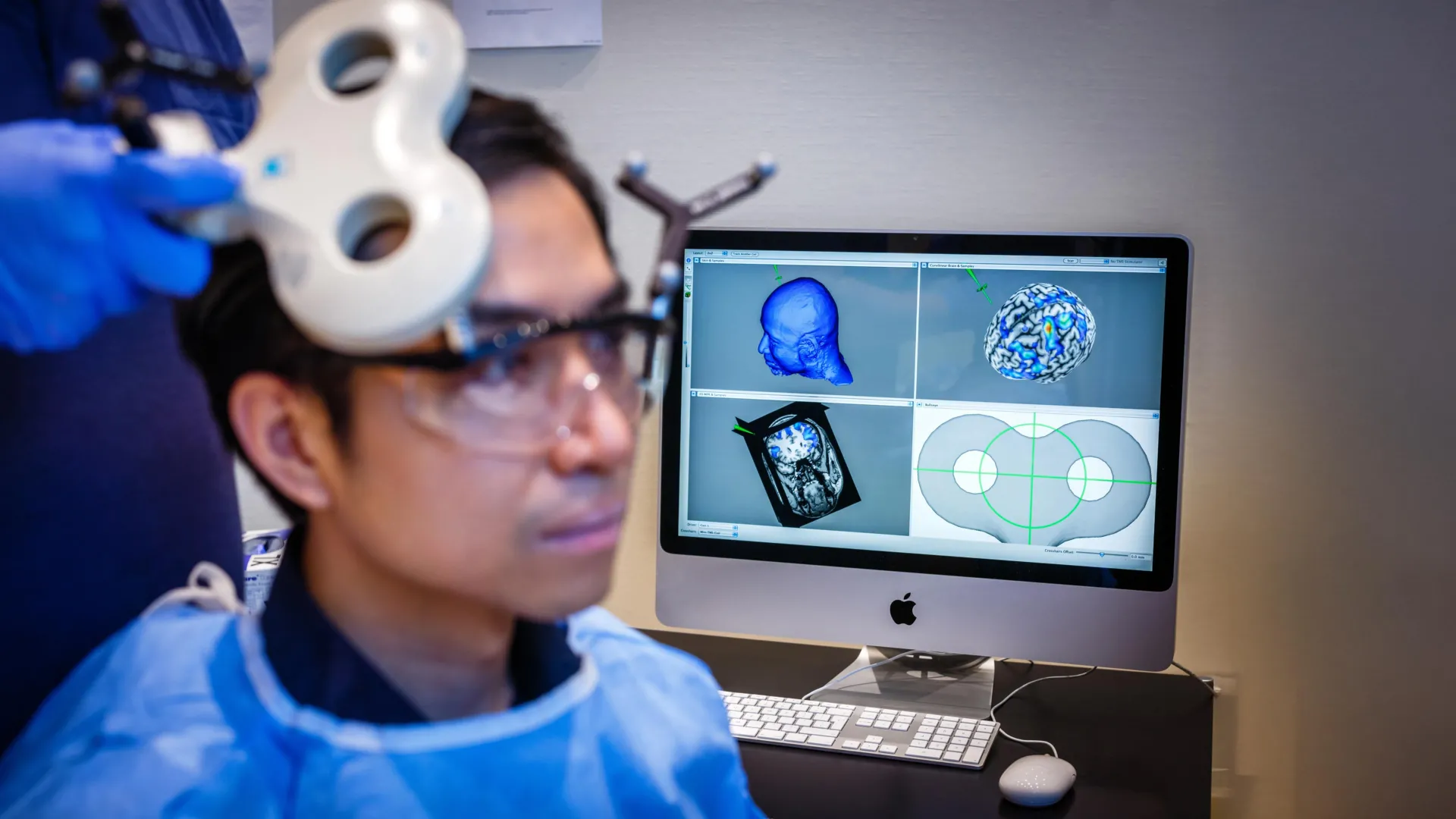
A groundbreaking study published on February 10th in the open-access journal PLOS Biology has unveiled a fascinating link between synchronized brain activity and altruistic behavior. Researchers from East China Normal University, led by Jie Hu, in collaboration with scientists from the University of Zurich, have demonstrated that encouraging specific regions of the brain to fire in unison can lead to a measurable increase in people’s willingness to act generously. This discovery offers a novel perspective on the neurobiological underpinnings of social decision-making and the complex factors that influence our propensity for selfless actions.
The research, conducted over an unspecified period leading up to the publication date, involved 44 participants who engaged in a modified version of the classic Dictator Game. This economic game is a standard tool in behavioral economics used to study fairness and altruism. In this iteration, participants were presented with a series of 540 decision-making scenarios. In each round, they were given the opportunity to decide how to divide a sum of money with another individual, who was an unseen partner in the experiment. Crucially, the payout amounts varied across these decisions, creating situations where participants could either gain more than their partner, less than their partner, or an equal amount. This design allowed researchers to observe how participants weighed their own financial gain against the potential benefit to another person.
The Science Behind Synchronized Neuronal Firing
At the core of this study lies the application of transcranial alternating current stimulation (tACS), a non-invasive neuromodulation technique. This method involves applying weak electrical currents to specific areas of the scalp, which in turn influences the electrical activity of the underlying brain regions. The primary aim of tACS in this research was to coordinate the firing patterns of neurons, essentially guiding them to synchronize their activity. The researchers focused on two key brain areas: the frontal lobe, known for its role in executive functions, decision-making, and social cognition, and the parietal lobe, which is involved in processing sensory information, spatial awareness, and attention.
The stimulation was specifically designed to align neuronal firing into repeating rhythmic patterns, known as oscillations. The study explored two types of oscillations: gamma and alpha. Gamma oscillations (typically in the 30-100 Hz range) are often associated with active information processing, attention, and cognitive binding, while alpha oscillations (typically in the 8-12 Hz range) are generally linked to states of relaxation, inhibition, and internal thought processes. By precisely modulating these oscillatory patterns, the researchers aimed to understand how synchrony between these two critical brain regions influences the complex decision-making processes involved in generosity.
Gamma Synchrony and the Rise of Altruism
The findings were particularly striking when the tACS stimulation successfully strengthened gamma synchrony between the frontal and parietal regions. In these instances, participants exhibited a statistically significant, albeit modest, increase in altruistic decisions. This manifested as a greater willingness to share larger portions of the money, even when such generosity directly reduced their own potential earnings in favor of their partner. This suggests a direct causal link: by enhancing the coordinated activity between these brain areas, the researchers could effectively nudge individuals towards more selfless choices.
To further elucidate the mechanism behind this behavioral shift, the research team employed a computational model. This model indicated that the tACS intervention altered how participants evaluated the different offers presented to them. Following the gamma synchrony stimulation, individuals appeared to place a greater emphasis on the outcome for the other person when making their division decisions. This suggests that the synchronized activity in the frontal and parietal lobes plays a crucial role in weighting social considerations during economic decision-making.
It is important to note that the researchers did not directly measure neural activity during the Dictator Game itself. The tACS intervention was applied externally. However, the authors emphasized that their findings strongly suggest a functional connection. They posited that future research could build upon these results by combining tACS with electroencephalography (EEG), a technique that directly measures electrical activity in the brain. Such a combination would provide a more direct confirmation of how the stimulation alters specific brain signals and, consequently, influences decision-making. Nevertheless, the current findings provide compelling evidence that synchronized activity between the frontal and parietal lobes is a significant factor in altruistic decision-making.
Unpacking the Cause and Effect
The researchers themselves have highlighted the significance of establishing a cause-and-effect relationship in their work. Coauthor Christian Ruff, from the University of Zurich, commented on the findings, stating, "We identified a pattern of communication between brain regions that is tied to altruistic choices. This improves our basic understanding of how the brain supports social decisions, and it sets the stage for future research on cooperation—especially in situations where success depends on people working together." This underscores the potential of the research to move beyond correlational findings and delve into the direct manipulation of brain networks to understand social behavior.
Jie Hu, the lead author from East China Normal University, further elaborated on the novelty of their approach. "What’s new here is evidence of cause and effect," Hu stated. "When we altered communication in a specific brain network using targeted, non-invasive stimulation, people’s sharing decisions changed in a consistent way—shifting how they balanced their own interests against others’." This emphasis on the direct impact of the intervention on behavior is a key contribution of the study.
Marius Moisa, another coauthor, expressed his surprise at the extent of the behavioral shift observed. "We were struck by how boosting coordination between two brain areas led to more altruistic choices," Moisa remarked. "When we increased synchrony between frontal and parietal regions, participants were more likely to help others, even when it came at a personal cost." This observation directly speaks to the core of altruism – acting in a way that benefits others, even at a personal disadvantage.
Broader Implications and Future Directions
The implications of this research extend far beyond the confines of a laboratory experiment. Understanding the neural mechanisms that promote generosity could have significant applications in various societal contexts. For instance, it could inform strategies for fostering greater cooperation and prosocial behavior in communities, workplaces, and even in addressing global challenges that require collective action.
The ability to non-invasively modulate brain activity to encourage altruism opens up avenues for further investigation. Researchers could explore the long-term effects of such stimulation, whether it can be applied to specific populations (e.g., individuals with difficulties in social empathy), and how it interacts with other psychological and environmental factors that influence generosity. The finding that gamma synchrony, often associated with active cognitive processing, is key to this effect might suggest that boosting cognitive engagement with the needs of others is central to promoting altruistic choices.
The study also raises intriguing questions about the evolutionary basis of altruism. While societies often strive to instill values of sharing and kindness, the inherent differences in individuals’ propensities for selfless behavior suggest a complex interplay of genetic predispositions and environmental influences. This research provides a potential neurobiological window into these predispositions, suggesting that the underlying brain architecture and its functional connectivity play a significant role.
Furthermore, the computational model’s insight into the shift in how individuals weigh outcomes is particularly valuable. It suggests that altruism is not necessarily an innate, fixed trait but can be influenced by altering the cognitive processes that underpin decision-making. This could have implications for educational interventions aimed at promoting empathy and prosocial behavior, potentially by focusing on techniques that enhance the cognitive valuation of others’ well-being.
The researchers’ acknowledgement of the need for future studies combining tACS with direct neural measurement techniques like EEG is a testament to the scientific rigor of the field. Such studies would provide a more comprehensive picture of the neural dynamics at play, potentially identifying specific neuronal populations and circuits involved in this phenomenon.
In conclusion, this study represents a significant step forward in our understanding of the neural basis of altruism. By demonstrating that synchronized activity between the frontal and parietal lobes can enhance generous behavior, Jie Hu and his colleagues have opened new avenues for research into the neurobiology of social decision-making. The findings offer a compelling glimpse into how our brains are wired for connection and cooperation, and they hold promise for developing interventions that can foster a more compassionate and collaborative world. The journey to fully understand the intricate dance of neurons that leads to selfless acts is ongoing, but this research provides a vital and exciting new direction.