
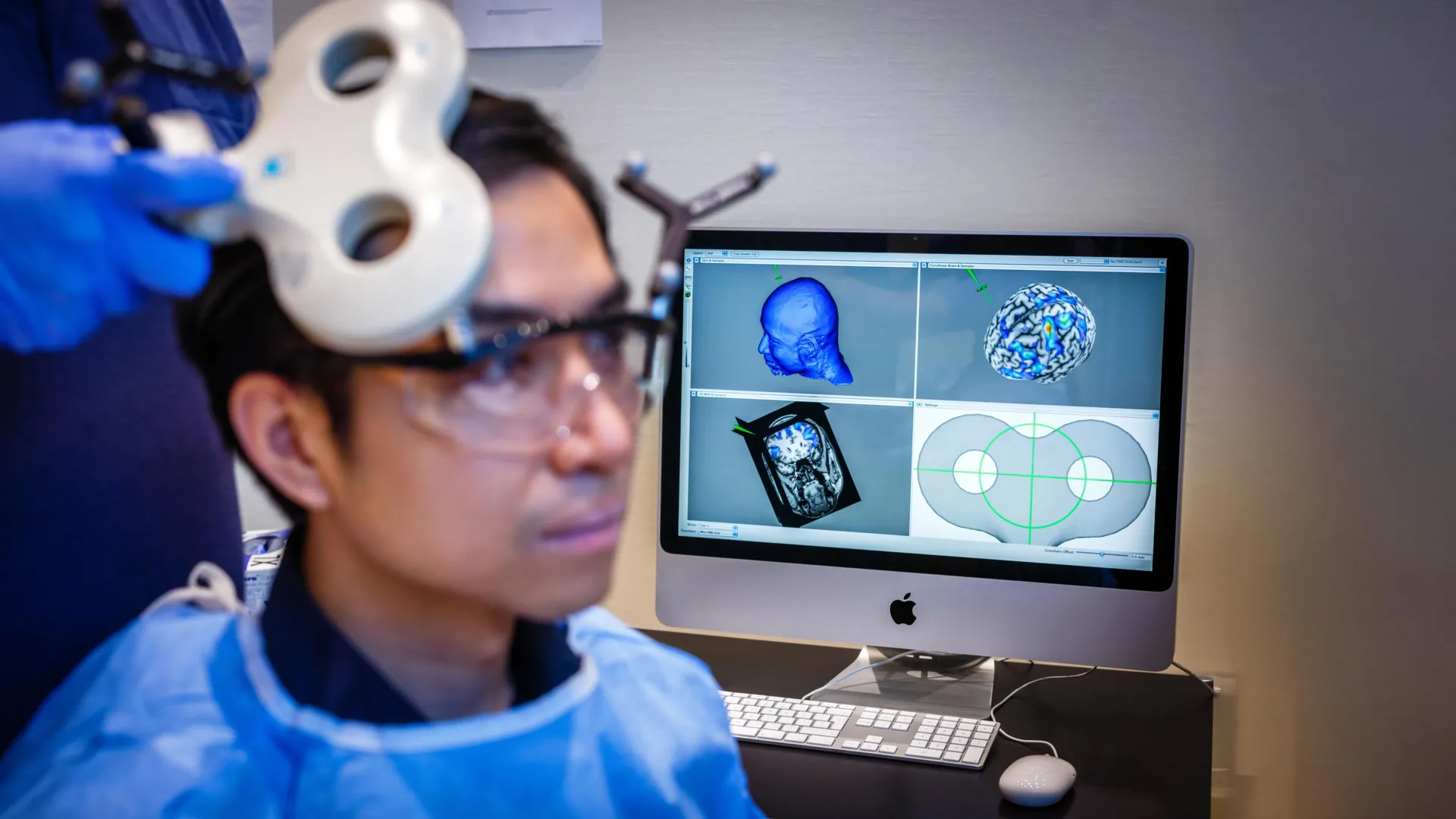
Encouraging two parts of the brain to fire in sync can make people act more generously, according to research published February 10th in the open-access journal PLOS Biology. The study, a collaborative effort led by Jie Hu of East China Normal University in China and researchers from the University of Zurich in Switzerland, demonstrated that by aligning activity between specific brain regions, altruistic behavior could be subtly amplified. This groundbreaking work offers new insights into the neural underpinnings of prosocial decision-making and has significant implications for understanding human cooperation and empathy.
The Enigma of Altruism: Understanding Prosocial Behavior
The tendency for individuals to act selflessly, prioritizing the well-being of others even at a personal cost, has long fascinated scientists, psychologists, and philosophers. While parents strive to instill virtues like sharing, kindness, and consideration for others in their children, the degree to which these traits manifest in adulthood varies significantly. Some individuals consistently exhibit remarkable altruism, while others appear more driven by personal gain. This spectrum of selfless behavior has fueled decades of inquiry into its biological and psychological origins. Understanding these individual differences is not merely an academic pursuit; it is crucial for fostering more cohesive and supportive communities.
Pioneering Research: The Dictator Game and Targeted Brain Stimulation
To unravel the neural mechanisms behind generosity, the research team designed an innovative experiment. They recruited 44 participants and engaged them in a series of 540 decision-making rounds within the framework of the Dictator Game. This economic game, a staple in behavioral economics, involves one player (the dictator) being given a sum of money and the option to share any portion of it with another anonymous player. Crucially, the dictator’s decision is final, and the recipient has no recourse. In this study, the payout amounts were varied in each round, creating scenarios where participants could either gain more money than their partner or end up with less.
During their participation in the Dictator Game, the researchers employed a sophisticated, non-invasive technique known as transcranial alternating current stimulation (tACS). This method involves applying weak electrical currents to the scalp, designed to influence the synchronized firing patterns of neurons in targeted brain areas. The primary objective of the tACS was to guide brain cells in specific regions to align their electrical activity, a phenomenon known as neural synchrony, within particular oscillatory rhythms, specifically gamma and alpha waves. The frontal lobe, associated with executive functions, planning, and decision-making, and the parietal lobe, involved in sensory integration, spatial awareness, and empathy, were chosen as the key regions of interest.
Gamma Synchrony: A Catalyst for Generosity
The results of the stimulation were striking. When the tACS specifically strengthened gamma synchrony – a high-frequency neural oscillation characterized by rapid firing of neurons – between the frontal and parietal regions, participants demonstrated a modest but significant increase in altruistic decisions. This meant that individuals were more inclined to share larger portions of the money, even when doing so directly reduced their own potential earnings in comparison to their partner. This finding provides compelling evidence for a causal link between synchronized neural activity in these brain areas and prosocial behavior.
To further elucidate the observed effects, the researchers developed a computational model. This model helped them understand how the tACS intervention altered participants’ decision-making processes. The analysis revealed that after receiving the gamma synchrony stimulation, participants began to place a greater weight on the other person’s outcome when evaluating each offer. This shift in valuation suggests that the synchronized neural activity influenced how individuals perceived fairness and considered the impact of their decisions on others.
The authors of the study were careful to note that they did not directly measure neural activity during the core experiment. However, they posited that future research, which could integrate brain stimulation techniques like tACS with electroencephalography (EEG) – a method that measures electrical activity in the brain – would be instrumental in confirming the precise changes in brain signals induced by the intervention. Despite this limitation, the current findings strongly indicate that synchronized activity between the frontal and parietal lobes plays a pivotal role in the complex process of altruistic decision-making.
Researchers Emphasize Cause and Effect in Neural Communication
The implications of this research extend beyond a basic understanding of generosity. Christian Ruff, a coauthor of the study, highlighted the significance of identifying a specific pattern of neural communication tied to altruistic choices. "We identified a pattern of communication between brain regions that is tied to altruistic choices," Ruff stated. "This improves our basic understanding of how the brain supports social decisions, and it sets the stage for future research on cooperation — especially in situations where success depends on people working together." This points to a broader potential for understanding and potentially enhancing collaborative efforts in various societal contexts.
Jie Hu, the lead author, emphasized the novel contribution of the study in establishing a cause-and-effect relationship. "What’s new here is evidence of cause and effect," Hu remarked. "When we altered communication in a specific brain network using targeted, non-invasive stimulation, people’s sharing decisions changed in a consistent way — shifting how they balanced their own interests against others’." This direct demonstration of intervention leading to behavioral change is a crucial step in moving from correlational findings to causal explanations in neuroscience.
Marius Moisa, another coauthor, expressed his astonishment at the direct impact of boosting neural coordination. "We were struck by how boosting coordination between two brain areas led to more altruistic choices," Moisa concluded. "When we increased synchrony between frontal and parietal regions, participants were more likely to help others, even when it came at a personal cost." This observation underscores the potent influence that synchronized neural firing can have on shaping complex human behaviors like altruism.
Broader Implications and Future Directions
The findings from Hu, Ruff, and Moisa’s team open up a wealth of possibilities for future research and potential applications. Understanding the neural basis of altruism could lead to the development of novel interventions aimed at fostering empathy and prosocial behavior in individuals or groups. This could have far-reaching implications in fields such as education, therapy, and even organizational psychology, where promoting cooperation and mutual support is paramount.
Potential Applications in Mental Health and Education
In the realm of mental health, this research could inform therapeutic strategies for conditions characterized by deficits in social cognition or empathy, such as certain personality disorders or autism spectrum disorder. By understanding how to modulate neural synchrony, clinicians might explore new avenues for enhancing patients’ ability to connect with and care for others. Similarly, in educational settings, insights from this study could guide the design of programs aimed at cultivating prosocial values and behaviors in children and adolescents.
Ethical Considerations and Societal Impact
However, the ability to influence altruism through technological means also raises important ethical considerations. The researchers are keenly aware of the need for responsible innovation and emphasize that their work is focused on fundamental scientific understanding. The potential for misuse or unintended consequences must be carefully considered as this field advances. Nevertheless, the promise of enhancing human cooperation and understanding is immense.
The Future of Prosocial Neuroscience
The current study represents a significant leap forward in the field of prosocial neuroscience. It provides a tangible link between specific patterns of neural activity and the complex decision to act altruistically. As technology advances and our understanding of the brain deepens, it is conceivable that we will gain even greater insights into the intricate mechanisms that drive human generosity and cooperation. This research serves as a powerful reminder that even seemingly abstract human qualities like kindness and selflessness have a discernible biological basis, one that can be explored and potentially understood through scientific inquiry. The journey to fully comprehend the nuances of human social behavior is ongoing, and this study marks a pivotal milestone on that path.