
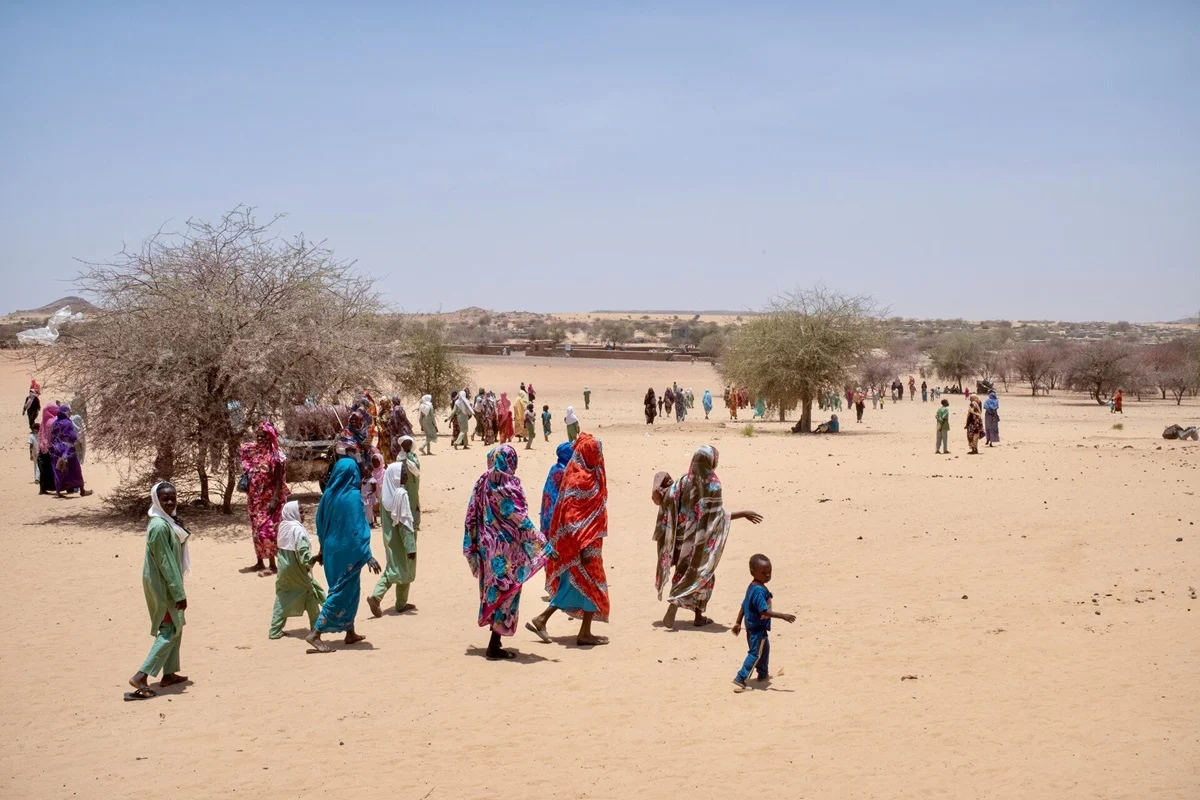
The conflict in Sudan has reached a somber milestone of 1,000 days, cementing its status as the world’s most severe humanitarian catastrophe. As of today, more than 20 million people across the nation require urgent health assistance, while 21 million are facing acute food insecurity. The relentless violence, which has spanned nearly three years, has decimated the country’s infrastructure, triggered the largest displacement crisis on the planet, and pushed the national healthcare system to the precipice of total collapse. According to the latest estimates from the World Health Organization (WHO) and humanitarian partners, a staggering 33.7 million people—more than two-thirds of the population—will require some form of humanitarian aid throughout 2025.
The situation in Sudan is characterized by a "perfect storm" of continuous warfare, severe bureaucratic and physical access constraints for aid workers, and a critical shortfall in international funding. What began as a power struggle between rival military factions has evolved into a nationwide tragedy that threatens the stability of the entire Horn of Africa region. The erosion of basic services, combined with the intentional targeting of civilian infrastructure, has left millions of Sudanese citizens without a safety net, trapped between the frontlines of active combat and the slow-motion disaster of famine and disease.
The Genesis of the Crisis: A Timeline of Conflict and Decay
To understand the gravity of the 1,000-day mark, it is essential to trace the trajectory of the violence that has engulfed the nation. The current conflict erupted on April 15, 2023, in Khartoum, the capital, before rapidly spreading to the Darfur and Kordofan regions. However, the roots of the instability reach back further, following the 2021 military coup that derailed Sudan’s fragile transition toward democratic civilian rule.
In the early months of the 2023 conflict, the focus was primarily on urban warfare in Khartoum, leading to the destruction of the city’s industrial and commercial hubs. By late 2023, the violence had expanded into the Al Jazirah state, often referred to as Sudan’s "breadbasket," which severely hampered domestic food production. Throughout 2024, the conflict intensified in North Darfur, particularly around El Fasher, where hundreds of thousands of civilians have been besieged. As the calendar turns past 1,000 days of fighting, the frontline has become fractured, with various militia groups and regional actors complicating the path toward a ceasefire.
The protracted nature of the war has allowed for the systemic degradation of the state. Institutions that once managed water, electricity, and public health have ceased to function in many areas, creating a vacuum that humanitarian organizations are struggling to fill amidst ongoing insecurity and administrative hurdles.
A Health System Under Siege: Data and Destruction
The impact on Sudan’s healthcare sector has been nothing short of catastrophic. WHO reports indicate that the health system has been systematically dismantled by a combination of direct attacks, lack of essential supplies, and the mass exodus of trained medical professionals. Currently, approximately 37% of health facilities in Sudan remain non-functional. In areas directly impacted by the fighting, this percentage is significantly higher, leaving millions of people without access to even the most basic lifesaving care.
Since the outbreak of hostilities in April 2023, the WHO has verified 201 distinct attacks on healthcare facilities, personnel, and transport. These incidents have resulted in at least 1,858 deaths and 490 injuries. These statistics represent a flagrant violation of international humanitarian law, which mandates the protection of medical neutralities during armed conflict. Beyond the immediate casualties, these attacks have a multiplier effect: every hospital forced to close and every doctor forced to flee leaves thousands of patients with chronic conditions—such as diabetes, hypertension, and kidney failure—without the regular treatment necessary for survival.
Dr. Shible Sahbani, the WHO Representative in Sudan, emphasized the severity of the situation in a recent statement. “One thousand days of conflict in Sudan have driven the health system to the brink of collapse. Under the strain of disease, hunger, and a lack of access to basic services, people face a devastating situation,” Dr. Sahbani said. He noted that while the WHO continues to work on the recovery of the health system, the scale of the need is outstripping the current capacity of the global response.
The World’s Largest Displacement Crisis
Sudan now holds the tragic distinction of being the site of the world’s largest displacement crisis. An estimated 13.6 million people have been forced to flee their homes. This includes millions of internally displaced persons (IDPs) who are living in overcrowded schools, makeshift camps, or out in the open, as well as over 2 million refugees who have crossed borders into neighboring countries such as Chad, Egypt, South Sudan, and Ethiopia.
The conditions within these displacement sites are often dire. Overcrowding, combined with a lack of clean water and sanitation services (WASH), has created an environment where infectious diseases can spread with alarming speed. The breakdown of routine immunization programs has further exacerbated this risk, leaving a generation of children vulnerable to preventable illnesses.
The WHO is currently monitoring and responding to several concurrent outbreaks. Cholera has been reported in all 18 states of Sudan, a testament to the collapse of water infrastructure. Dengue fever has been identified in 14 states, while malaria remains endemic in 16 states. Measles outbreaks continue to threaten the lives of children whose immune systems are already weakened by malnutrition. The lack of access to preventive care and the limited availability of treatments for severe acute malnutrition (SAM) mean that many of these cases are proving fatal.
Humanitarian Response: Efforts Amidst Adversity
Despite the immense challenges, the WHO and its partners have maintained a persistent presence on the ground. Since the conflict began, the WHO has successfully delivered 3,378 metric tons of medicines and medical supplies, valued at approximately US$ 40 million. These supplies have been distributed to 48 health partners and include diagnostic kits, treatments for malnutrition, and essential surgical supplies for emergency operations.
Vaccination efforts have remained a priority in an effort to stem the tide of disease. Approximately 24 million people have received cholera vaccinations through various campaigns, and the WHO has supported the country in introducing and scaling up malaria vaccines—a critical development given the high mortality rate of the disease in the region. Furthermore, more than 3.3 million people have accessed healthcare services through WHO-supported hospitals, primary healthcare centers, and mobile clinics.
A critical component of the response has been the treatment of children. More than 112,400 children suffering from severe acute malnutrition with medical complications have received specialized care at functional stabilization centers. These centers are entirely dependent on WHO-provided nutrition supplies to keep their doors open. Additionally, the WHO has worked to equip and strengthen national and state public health laboratories, enabling the rapid confirmation of disease outbreaks and a more coordinated response.
Access Constraints and the Looming Threat of Famine
One of the most significant barriers to humanitarian aid is the issue of access. Large swathes of the country, particularly in the Darfur and Kordofan regions, remain largely inaccessible to international aid agencies due to active fighting and the refusal of warring parties to grant safe passage. This "humanitarian blockade" has contributed to the declaration of famine conditions in parts of North Darfur, specifically in the Zamzam displacement camp.
Dr. Sahbani highlighted this urgent need for access, stating, “As the relentless conflict renders some areas inaccessible, the population’s health needs continue to increase. To meet these mounting needs and prevent the crisis from spiraling out of hand, WHO and humanitarian partners require safe and unimpeded access to all areas of Sudan, and increased financial resources.”
The funding gap remains a major hurdle. Despite the scale of the disaster, the international humanitarian appeal for Sudan has remained chronically underfunded. This lack of resources limits the ability of agencies to scale up operations, procure enough supplies, and maintain the logistical networks required to reach the most remote and vulnerable populations.
Analysis of Implications and the Path Forward
The 1,000-day milestone serves as a grim reminder of the international community’s failure to mediate a lasting peace in Sudan. The implications of this prolonged conflict are far-reaching and will likely affect the region for decades.
Economically, Sudan has been set back by generations. The destruction of its agricultural base and the collapse of the Sudanese pound have led to hyperinflation, making even basic food items unaffordable for the average family. Socially, the trauma of the war—marked by reports of widespread gender-based violence and ethnic targeting—has deeply fractured the national fabric.
From a geopolitical perspective, the continued instability in Sudan threatens to spill over into neighboring states, many of which are already grappling with their own internal challenges. The flow of refugees and the potential for the conflict to attract regional proxies increase the risk of a wider regional conflagration.
The WHO’s call for an immediate ceasefire is echoed by humanitarian organizations worldwide. Without a cessation of hostilities, any aid provided is merely a temporary measure against a rising tide of suffering. The restoration of peace is the only viable pathway to rebuilding the health system, securing the food supply, and allowing the 13.6 million displaced Sudanese to return to their homes and begin the long process of recovery.
As the conflict enters its next phase, the focus must remain on three critical pillars: ensuring the protection of civilians and healthcare workers, securing unimpeded humanitarian access to all regions, and significantly increasing the financial commitments from the international community. One thousand days of war have already cost Sudan its present; without urgent intervention, the country risks losing its future entirely.