
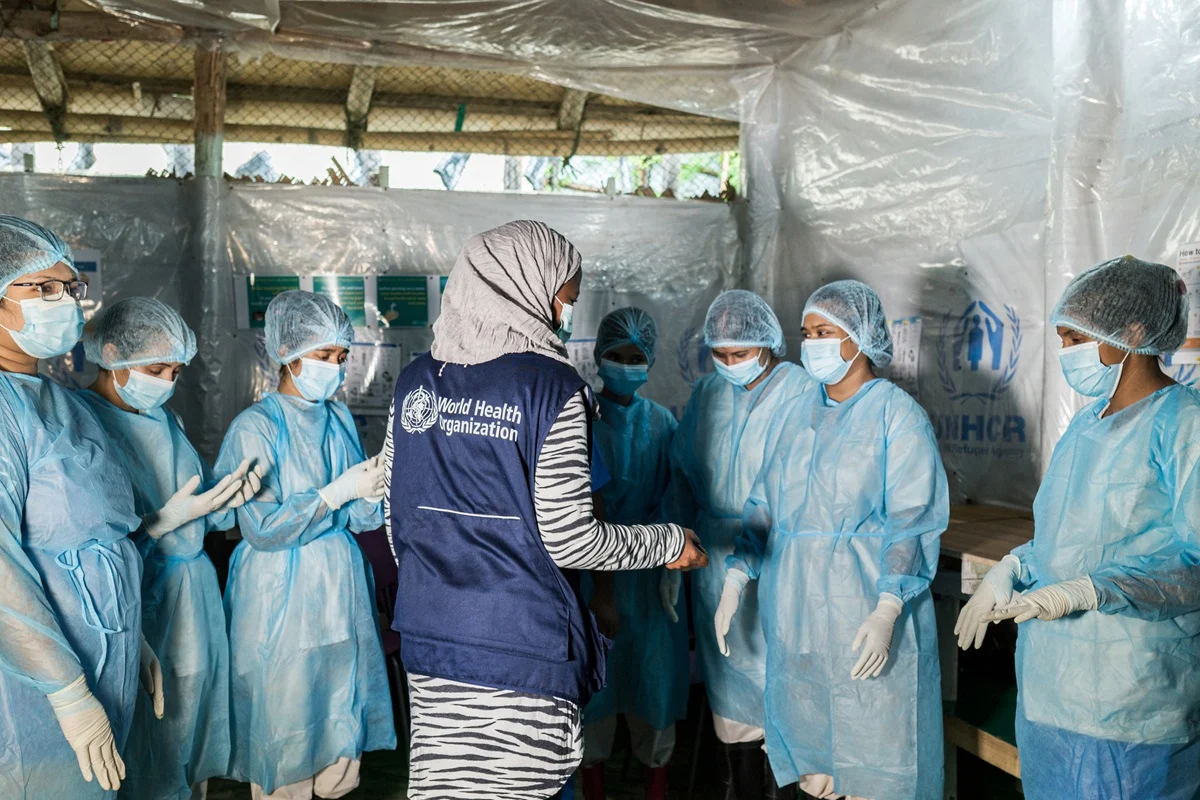
The World Health Organization (WHO) marks a significant milestone this year as six years have passed since the Director-General first sounded the highest level of global alarm under international law, declaring the outbreak of a novel coronavirus a Public Health Emergency of International Concern (PHEIC). While the formal emergency status for COVID-19 was rescinded in May 2023, the legacy of the pandemic continues to shape global health policy, national security strategies, and international cooperation. Addressing the 158th session of the WHO Executive Board, Director-General Dr. Tedros Adhanom Ghebreyesus offered a sobering assessment of the world’s current standing, suggesting that while significant strides have been made in infrastructure and technology, the global community remains dangerously vulnerable to future biological threats.
The Paradox of Preparedness: A Dual Reality
When evaluating whether the world is better prepared for the next pandemic, the WHO’s assessment is characterized by a "yes and no" dichotomy. The "yes" is supported by unprecedented technological leaps and the establishment of new global health architectures. The "no" is driven by a visible retreat in political will, shifting financial priorities, and the persistence of health inequities that the COVID-19 pandemic laid bare.
The COVID-19 pandemic served as a catalyst for reforms that had been stalled for decades. In the years following the initial 2020 declaration, the WHO and its Member States have implemented concrete measures designed to detect and respond to pathogens with greater speed. However, these gains are described by health officials as "fragile and uneven." The central concern is that as the immediate memory of the pandemic fades, governments are shifting their focus and funding away from public health and toward defense and national security, overlooking the fact that a major pandemic can cause more disruption to national stability than many conventional military threats.
Chronology of the Global Response (2020–2025)
To understand the current state of preparedness, it is essential to trace the timeline of the global health community’s response to the SARS-CoV-2 virus:
- January 30, 2020: The WHO declares a PHEIC, the highest alarm available under the International Health Regulations (IHR 2005). At the time, there were fewer than 100 cases outside of China and no recorded deaths outside its borders.
- March 11, 2020: The WHO characterizes COVID-19 as a pandemic, reflecting the rapid global spread of the virus.
- 2021–2022: The period of rapid vaccine development and the launch of COVAX. This era was marked by "vaccine nationalism," where wealthy nations secured the majority of doses, leading to significant delays in coverage for low- and middle-income countries.
- May 5, 2023: Dr. Tedros declares the end of COVID-19 as a PHEIC, transitioning the virus to a long-term management phase.
- 2024–2025: The current phase focuses on the negotiation of a "Pandemic Accord" and amendments to the IHR to ensure a more equitable and coordinated response to future "Pathogen X" events.
Measurable Progress in Health Infrastructure
Since 2020, several significant advancements have been integrated into the global health framework. These are not merely theoretical improvements but active systems currently being utilized to manage smaller-scale outbreaks.
One of the most notable achievements is the establishment of the WHO Hub for Pandemic and Epidemic Intelligence in Berlin. This facility is designed to use big data, artificial intelligence, and cross-border data sharing to identify potential threats before they escalate. Coupled with this is the WHO BioHub System, which provides a reliable and transparent way for countries to share biological materials (pathogen samples) safely.
Furthermore, the creation of the mRNA technology transfer hub in South Africa represents a major shift in global health equity. By empowering regional manufacturers to produce high-tech vaccines, the international community is attempting to decentralize the production of life-saving medicines, reducing the dependence of the Global South on Western pharmaceutical giants.
The financial landscape has also seen the introduction of the Pandemic Fund, hosted by the World Bank with technical lead from the WHO. To date, the fund has raised over $2 billion in seed capital from various donors to help low-income countries strengthen their laboratory systems, surveillance networks, and healthcare workforces.
Real-World Application: Ebola and Marburg Responses
The efficacy of these new systems has been tested recently in Africa. Ten years ago, the West African Ebola outbreak resulted in over 11,000 deaths, largely due to a lack of rapid diagnostics, vaccines, and a slow international response. In contrast, recent outbreaks of Ebola in the Democratic Republic of the Congo (DRC) and Marburg virus disease in Rwanda, Tanzania, and Ethiopia have been contained with remarkable speed.
In the 2024 Marburg response in Rwanda, for example, national health authorities utilized rapid diagnostic kits and mobilized community health workers within days of the first confirmed case. Supported by the WHO’s regional offices, these countries have achieved lower case fatality rates and prevented the regional spread of these highly lethal pathogens. These successes demonstrate that when national institutions are supported by global expertise and pre-positioned resources, catastrophic loss of life can be avoided.
The Threat of Shifting Financial Priorities
Despite these successes, the WHO warns that the progress made is under threat. A significant trend has emerged where funding is being redirected from public health budgets toward military and defense sectors. This shift is often framed as a response to geopolitical instability, yet public health experts argue that it ignores the fundamental lesson of COVID-19: pandemics are national security threats.
The economic impact of COVID-19 is estimated to have cost the global economy more than $12.5 trillion. In comparison, the cost of robust pandemic preparedness is a small fraction of that amount. The WHO asserts that investing in preparedness is not merely an "emergency cost" but an investment in economic stability and social resilience. When health systems are weakened by budget cuts, they lose the "surge capacity" required to handle a sudden influx of patients, leading to the collapse of routine services like maternal care and immunization programs.
The Geopolitical Challenge: The Global Pandemic Accord
A pivotal element of the current strategy is the ongoing negotiation of the WHO Pandemic Agreement, often referred to as the Pandemic Accord. This historic effort aims to create a legally binding compact that ensures accountability and efficiency in future responses.
The negotiations have faced hurdles, particularly regarding "Pathogen Access and Benefit-Sharing" (PABS). Developing nations are advocating for a system where, if they share data and samples of a new virus, they are guaranteed equitable access to the vaccines and treatments derived from that data. Conversely, some nations with large pharmaceutical sectors have raised concerns regarding intellectual property rights.
The 158th session of the Executive Board is seen as a critical juncture for these negotiations. The goal is to move beyond the "charity model" of global health and toward a "solidarity model," where every country has a clear role and a guaranteed level of protection. As Dr. Tedros emphasized, "Solidarity is the best immunity."
Implications for Future Global Health Security
The implications of the current "fragile" state of preparedness are profound. Pathogens do not respect national borders, and a weakness in one country’s surveillance system is a vulnerability for the entire world. The rise of zoonotic diseases—those that jump from animals to humans—is expected to increase as climate change and habitat loss bring humans and wildlife into closer contact.
A brief analysis of current data suggests that without sustained investment, the world may repeat the cycle of "panic and neglect." During an outbreak, resources are flooded into the system, only to be withdrawn once the immediate threat subsides. The WHO’s current call to action is a plea to break this cycle by maintaining continuous vigilance.
The "One Health" approach is also gaining traction as a necessary component of preparedness. This strategy recognizes that the health of humans is closely linked to the health of animals and the environment. By monitoring viral loads in livestock and wildlife, scientists hope to predict the next "spillover" event before it reaches human populations.
Conclusion: The Time for Action is Now
The six-year mark of the COVID-19 PHEIC serves as a reminder that the window for preparation is often narrow. The global health community has the tools, the technology, and the lessons learned from the recent past to prevent another catastrophe on the scale of 2020. However, the success of these tools depends entirely on political commitment and sustainable financing.
The WHO urges all governments to treat pandemic preparedness as a core component of national security. As the Executive Board meeting continues this week, the focus remains on finalizing the global compact and ensuring that the hard-won gains of the last six years are not lost to complacency. The message from the World Health Organization is clear: the time to prepare for the next pandemic is not when it arrives, but in the quiet periods between crises. Continuous vigilance and international solidarity remain the only viable path to a safer world.