
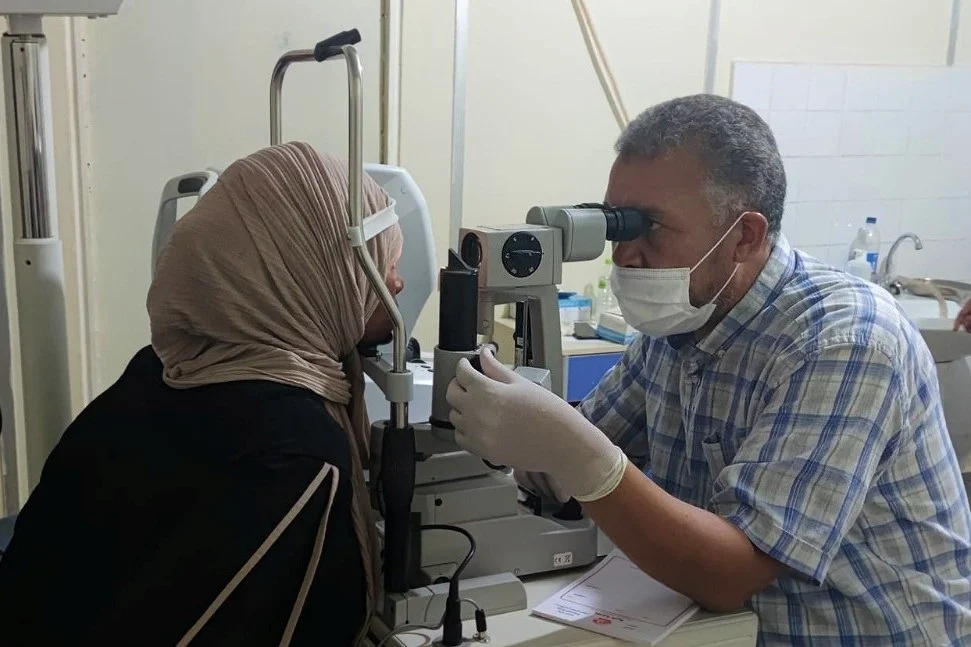
The World Health Organization (WHO) has officially validated Libya for having eliminated trachoma as a public health problem, marking a historic achievement for the nation and the broader Eastern Mediterranean Region. This milestone represents the culmination of decades of dedicated public health interventions, surveillance, and international cooperation, ensuring that future generations of Libyans are protected from a leading cause of preventable blindness. By reaching this status, Libya becomes the 28th country globally and the eighth in its region to successfully eradicate the disease as a public health threat, joining a growing list of nations that have overcome neglected tropical diseases (NTDs) through evidence-based strategies and persistent political will.
The announcement was met with international acclaim, as it underscores the possibility of significant health progress even within countries facing complex humanitarian and political landscapes. Trachoma, an infectious eye disease that has plagued humanity for millennia, is particularly prevalent in areas with limited access to clean water and sanitation. Libya’s success serves as a powerful testament to the efficacy of the WHO-recommended strategies and the resilience of its national health infrastructure.
The Nature of the Challenge: Understanding Trachoma
Trachoma is a neglected tropical disease caused by infection with the bacterium Chlamydia trachomatis. The infection is transmitted through direct contact with eye or nasal discharges from infected people, or indirectly via contaminated objects, such as towels or clothing. Additionally, certain species of flies can act as vectors, carrying the bacteria from one person to another. In communities where the disease is endemic, children are the primary reservoir of infection, though the most severe consequences typically manifest in adulthood.
The progression of the disease is particularly devastating. Repeated infections over many years lead to scarring on the inner surface of the eyelid. This scarring causes the eyelid to turn inward, a condition known as trichiasis. Once trichiasis develops, the eyelashes rub against the cornea, causing intense pain, corneal opacification, and eventually irreversible blindness. Beyond the individual physical suffering, trachoma imposes a significant economic burden on families and communities, as it often strikes during the most productive years of a person’s life, leading to loss of livelihood and increased dependency.
A Century-Long Battle: The Chronology of Elimination in Libya
The history of trachoma in Libya is long and well-documented. Records from the early 20th century indicate that the disease was once widespread across the country, with particularly high prevalence rates in the southern desert regions. Early surveys conducted in the mid-1900s showed that in some communities, active (inflammatory) trachoma affected a significant portion of the population, leading to high rates of visual impairment.
The first major turning point occurred in the 1970s and 1980s. During this period, the Libyan Ministry of Health launched a series of concentrated efforts to control infectious eye diseases. These initiatives focused on expanding the reach of primary healthcare and integrating eye health into the broader national health system. By strengthening the capacity of local clinics to diagnose and treat eye infections, Libya began to see a gradual decline in the transmission of the bacteria.
In 2017, the Ministry of Health took a decisive step by prioritizing trachoma elimination within the framework of the National Prevention of Blindness Programme. This move aligned Libya’s national goals with the WHO Alliance for the Global Elimination of Trachoma by 2020 (GET2020). Despite the political instability that characterized the country during this era, the national program remained operational, focusing on the southern districts where the disease was suspected to remain endemic.
The final push toward validation began in 2022. With technical support from the WHO, Sightsavers, the International Trachoma Initiative, and Tropical Data, the Ministry of Health conducted comprehensive surveys across six southern districts. These surveys were designed to measure the prevalence of active trachoma in children and trichiasis in adults. The results were overwhelmingly positive, showing that prevalence levels had fallen below the WHO-defined elimination thresholds in almost all areas. The only exception was the Wadi Al Hayaa/Ghat region, where trichiasis levels remained slightly above the threshold. In response, health authorities launched a targeted surgical campaign to provide corrective procedures for those affected. A follow-up survey in 2025 confirmed that the prevalence in this final stronghold had also dropped below the elimination threshold, clearing the path for official WHO validation.
Strategic Implementation: The SAFE Strategy and Beyond
Libya’s success is rooted in the implementation of the WHO-recommended SAFE strategy, an integrated approach that addresses both the immediate medical needs of the population and the environmental factors that facilitate the spread of the disease. The acronym SAFE stands for:
- Surgery: Treating the blinding stage of the disease (trichiasis) through corrective eyelid surgery.
- Antibiotics: Clearing the infection through the distribution of antibiotics, primarily azithromycin, which is donated to endemic countries through the International Trachoma Initiative.
- Facial cleanliness: Promoting hygiene practices to reduce the transmission of the bacteria.
- Environmental improvement: Increasing access to water and sanitation to eliminate the breeding grounds for flies and improve overall community health.
In Libya, the integration of these components was vital. The national program did not operate in a vacuum; it worked alongside efforts to improve water infrastructure and public education. Even as the country dealt with internal displacement and a strained health system, the commitment to the SAFE strategy ensured that the necessary interventions reached the most vulnerable populations in remote southern districts.
Leadership and Resilience Amidst Adversity
The validation of Libya’s achievement is particularly remarkable given the socio-political context of the last decade. Since 2011, Libya has faced significant challenges, including armed conflict, fragmented governance, and a humanitarian crisis that has seen hundreds of thousands of people displaced. Such conditions typically exacerbate the spread of infectious diseases and disrupt the delivery of healthcare services.
However, the Libyan health workforce demonstrated extraordinary resilience. Dr. Mohamed Al-Ghoj, the Acting Minister of Health, emphasized that the success belongs to the frontline workers. "This validation is a source of pride for Libya and a testament to the commitment of our health workers and communities," he stated. He noted that even during the most difficult years, the focus remained on ensuring that no one was left behind, with doctors and nurses traveling to remote areas to conduct surveys and provide treatment.
The role of international solidarity was also crucial. Dr. Ahmed Zouiten, the WHO Representative in Libya, described the achievement as a "collective public health triumph." He highlighted that the synergy between the Ministry of Health and WHO teams allowed for a unified response that combined scientific rigor with national mobilization. This partnership ensured that even when logistics were difficult, the technical standards for elimination were met and documented.
Regional and Global Implications
Libya’s success has significant implications for the Eastern Mediterranean Region, which has historically been heavily burdened by neglected tropical diseases. As the eighth country in the region to eliminate trachoma, Libya provides a roadmap for neighboring nations that are still working toward similar goals. Dr. Hanan Balkhy, WHO Regional Director for the Eastern Mediterranean, noted that this achievement reflects strong regional coordination and perseverance.
On a global scale, Libya is now the 59th country to have eliminated at least one neglected tropical disease. This progress is a key component of the WHO’s "Road map for neglected tropical diseases 2021–2030," which aims to reduce the number of people requiring interventions for NTDs by 90% and to eliminate at least one NTD in 100 countries by the end of the decade.
The elimination of trachoma in Libya also highlights the importance of continued surveillance. While the disease is no longer a public health problem, the WHO emphasizes that countries must maintain robust monitoring systems to detect any potential resurgence of the infection. This post-elimination phase is critical to ensuring that the hard-won gains are sustained indefinitely.
Conclusion: A Future Free of Preventable Blindness
The elimination of trachoma in Libya is more than just a medical milestone; it is a victory for human rights and social equity. By removing the threat of a disease that primarily affects the poorest and most marginalized communities, Libya has taken a significant step toward improving the quality of life for its citizens.
The lessons learned from Libya’s journey—ranging from the importance of high-level political commitment to the necessity of grassroots community engagement—will undoubtedly inform future public health campaigns both within the country and around the world. As the global health community celebrates this achievement, the focus remains on the remaining endemic areas, inspired by the knowledge that even in the face of conflict and instability, the vision of a world free from preventable blindness is achievable.
WHO Director-General Dr. Tedros Adhanom Ghebreyesus summarized the sentiment of the international community, stating, "This milestone reflects Libya’s determination to safeguard the health of its people and reinforces our conviction that progress against neglected tropical diseases is possible everywhere." With trachoma defeated, Libya moves forward with a strengthened health system, ready to tackle the remaining public health challenges of the 21st century.