
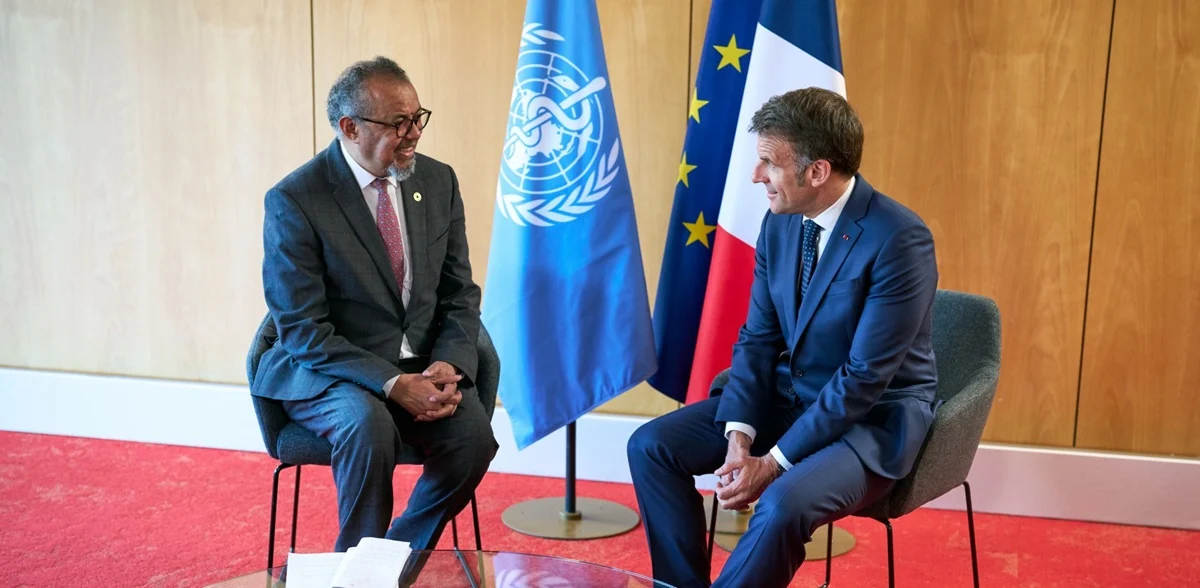
The global health landscape reached a pivotal turning point on World Health Day as international heads of state, scientific pioneers, and policy architects convened in France for the landmark One Health Summit. This high-level assembly, hosted by the French government in collaboration with the World Health Organization (WHO), served as the platform for unveiling a comprehensive suite of strategic actions designed to fortify the world against burgeoning health threats. By formalizing the One Health approach—a framework acknowledging the inextricable links between human health, animal welfare, and environmental integrity—the summit signaled a transition from theoretical consensus to rigorous, on-the-ground implementation.
The event took place under the resonant theme, “Together for health. Stand with science,” a call to action that underscored the necessity of evidence-based policy in an era of unprecedented ecological and biological volatility. As the world continues to grapple with the long-term repercussions of the COVID-19 pandemic, the summit’s outcomes represent a collective commitment to preventing future catastrophes by addressing the root causes of disease emergence at the interface of people, animals, and their shared ecosystems.
The Scientific Urgency: Addressing the Zoonotic Threat
The impetus for the One Health Summit is grounded in sobering epidemiological data. Current scientific consensus indicates that the health of the human population is no longer an isolated variable. Environmental degradation, rapid urbanization, and the intensification of agriculture have created a "perfect storm" for the spillover of pathogens from wildlife to humans. Data presented at the summit highlighted that approximately 60% of known infectious diseases in humans are zoonotic, meaning they originate in animals. Furthermore, 75% of all emerging infectious diseases discovered in recent decades have an animal origin.
The human and economic toll of failing to recognize these connections was laid bare by the COVID-19 pandemic. Estimates provided by the WHO suggest that the pandemic resulted in approximately 15 million excess deaths globally. Beyond the tragic loss of life, the economic fallout during the 2020–2021 period alone was measured in the trillions of dollars, disrupting global supply chains and plunging millions into poverty. The summit participants emphasized that the cost of proactive prevention—investing in surveillance, environmental protection, and veterinary health—is a fraction of the cost required for emergency pandemic response.
Chronology of the Summit and the Shift to Implementation
The summit’s proceedings in France began with a series of ministerial dialogues aimed at aligning the agendas of various sectors that traditionally operate in silos. Historically, human health, agriculture, and environmental conservation have been managed by separate governmental bodies with little cross-communication. The One Health Summit sought to dismantle these barriers, bringing together the "Quadripartite" organizations: the WHO, the Food and Agriculture Organization of the United Nations (FAO), the United Nations Environment Programme (UNEP), and the World Organisation for Animal Health (WOAH).
During the opening sessions, French President Emmanuel Macron and WHO Director-General Dr. Tedros Adhanom Ghebreyesus set a directive for the assembly: to move beyond declarations of intent. The timeline of the summit was structured to move from identifying gaps in the current global health architecture to the announcement of four specific, well-funded initiatives designed to provide immediate and long-term protection for the global community.
Four Pillars of Global Action
To institutionalize the One Health framework, the WHO and its Quadripartite partners detailed four major actions that will define the international health strategy for the coming decade.
1. The Global Network of One Health Institutions
The centerpiece of the summit’s announcements was the creation of a Global Network of One Health Institutions. This initiative is designed to serve as the operational arm of the One Health Joint Plan of Action. By mobilizing a multidisciplinary array of experts—ranging from ecologists and veterinarians to epidemiologists and social scientists—the network will provide direct support to national governments. This delivery model aims to translate high-level global guidance into practical tools, such as enhanced community surveillance and modernized laboratory systems. The WHO Academy will play a central role in this network, providing standardized training to ensure that the global workforce is equipped with the skills necessary to manage complex health-environment interactions.
2. Expansion of the One Health High-Level Expert Panel (OHHLEP)
Recognizing that policy must be dynamic and responsive to new data, the mandate of the One Health High-Level Expert Panel (OHHLEP) has been extended through 2027, with a subsequent phase planned through 2029. As the primary scientific advisory body for the Quadripartite, OHHLEP is tasked with shaping the global research agenda. Its expanded role will focus on identifying "hotspots" for potential disease spillover and providing evidence-based recommendations for land-use policies and wildlife trade regulations that reduce pandemic risk.
3. The 2030 Roadmap for Rabies Elimination
In a move to tackle a long-standing but preventable public health crisis, the WHO, WOAH, and the Institut Pasteur launched a renewed global initiative to eliminate dog-mediated human rabies deaths by 2030. Rabies remains a significant threat in many parts of the world, claiming nearly 60,000 lives annually, a majority of whom are children in underserved communities. This initiative serves as a litmus test for the One Health approach; by focusing on mass dog vaccination and improved community-level waste management, the program aims to eliminate the virus at its source. Success in rabies elimination is expected to provide a blueprint for managing other zoonotic threats through integrated animal and human health interventions.
4. A Unified Strategy Against Avian Influenza
With the increasing detection of highly pathogenic avian influenza (HPAI) in diverse mammal species and occasional human cases, the summit presented a New Strategic Framework for Collaboration on Avian Influenza. This framework moves away from fragmented, reactive measures toward a unified surveillance and response system. By integrating data from poultry farms, wild bird migratory patterns, and human flu clinics, the Quadripartite aims to detect mutations in the virus more rapidly, thereby enhancing vaccine preparedness and protecting both food security and public health.
Leadership and Multi-Sectoral Governance
A significant administrative shift was also confirmed during the summit: the World Health Organization has officially assumed the Chairmanship of the Quadripartite collaboration. Under Dr. Tedros’s leadership, the WHO will prioritize the streamlining of governance across the four international bodies. This move is intended to eliminate bureaucratic redundancies and ensure that funding is directed toward high-impact priorities, such as antimicrobial resistance (AMR) and the impact of climate change on vector-borne diseases.
President Macron, representing the host nation, reaffirmed France’s commitment to international scientific cooperation. He noted that France would continue to champion the One Health agenda within the G7 and other multilateral forums, advocating for a global health architecture that treats environmental health as a prerequisite for human security.
The Global Forum of WHO Collaborating Centres
Parallel to the summit, the inaugural Global Forum of WHO Collaborating Centres (CCs) commenced, running from April 7 to 9. This forum brought together over 800 institutions from 80 countries, representing the world’s most prestigious academic and research bodies. High-level participation from health ministers of Germany, Indonesia, South Africa, and Japan highlighted the global reach of the initiative.
The Forum is designed to foster a "science-first" culture of data sharing and collaborative research. By connecting local research hubs with global policy-makers, the WHO aims to accelerate the development of innovative diagnostic tools and therapeutic interventions. The inclusion of ministers from diverse geographical regions emphasizes the need for health equity, ensuring that the benefits of scientific advancement are accessible to the Global South, where the burden of zoonotic disease is often highest.
Broader Implications and Future Outlook
The One Health Summit marks a definitive end to the era of "siloed" medicine. The implications of this shift are profound, touching upon sectors as diverse as urban planning, international trade, and conservation biology. By integrating environmental metrics into health assessments, the international community is acknowledging that the destruction of biodiversity and the warming of the planet are not just ecological crises, but direct threats to human survival.
Analysis of the summit’s outcomes suggests that the "One Health" label will increasingly become a requirement for international development funding and national health security strategies. For the private sector, particularly in agriculture and pharmaceuticals, this means stricter adherence to biosecurity standards and a greater emphasis on "One Health" compatible innovations.
As the summit concluded, the message from the global leaders in France was clear: the interconnectedness of life on Earth is a biological reality that can no longer be ignored by political systems. The actions announced in France provide the infrastructure, but the ultimate success of the One Health approach will depend on sustained political will and the continued elevation of science over political expediency. With the WHO taking the helm of the Quadripartite and the launch of the Global Network of One Health Institutions, the world has taken its most significant step yet toward a preemptive, rather than reactive, era of global health security.