
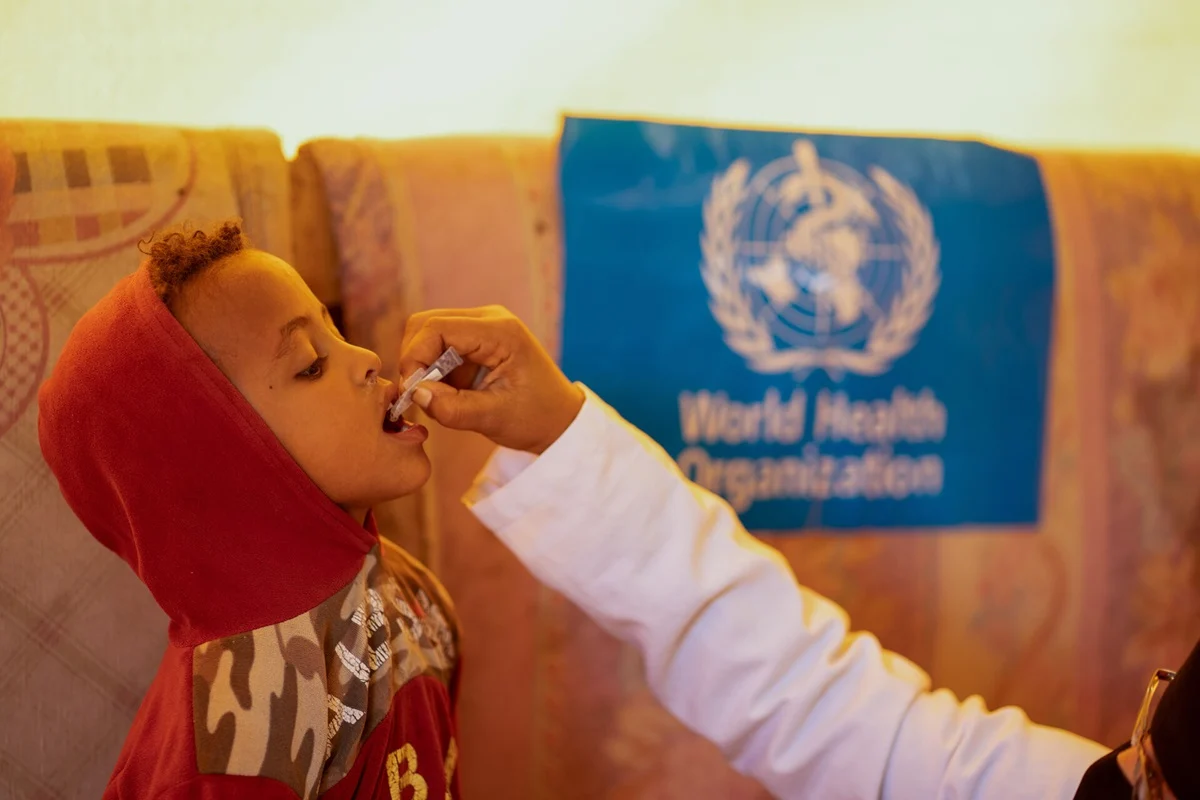
Global health authorities have confirmed the resumption of life-saving preventive cholera vaccination campaigns for the first time in over three years, marking a pivotal shift in the international response to one of the world’s most persistent waterborne threats. Gavi, the Vaccine Alliance, UNICEF, and the World Health Organization (WHO) jointly announced that the global supply of the oral cholera vaccine (OCV) has finally reached a level sufficient to move beyond emergency reactive measures. This development follows a period of severe scarcity that forced health organizations to ration doses and suspend preventive efforts to prioritize active outbreak zones.
Mozambique has been identified as the first nation to restart these preventive measures. The country’s vaccination drive arrives at a critical juncture, as it continues to grapple with an ongoing cholera outbreak compounded by the devastating aftermath of recent floods. These environmental disasters have affected upwards of 700,000 people, displacing thousands and causing extensive damage to fragile water and sanitation infrastructure. In such conditions, the risk of rapid cholera transmission escalates, making the availability of preventive doses a matter of urgent public health necessity.
The suspension of preventive campaigns in 2022 was a direct result of a global surge in cholera cases, which depleted the international stockpile and created an unprecedented gap between supply and demand. For nearly three years, the global health community was forced to adopt a "firefighting" approach, deploying vaccines only after an outbreak had already claimed lives and gained momentum. With the recent stabilization of the supply chain, agencies are now aiming to break this reactive cycle by shielding vulnerable populations before the bacteria can take hold.
The Path to Supply Recovery: Manufacturing and Logistics
The restoration of the OCV supply is the result of a coordinated multi-year effort involving global health agencies, donor governments, and pharmaceutical manufacturers. Central to this recovery has been the role of EUBiologics, currently the primary manufacturer producing the vaccine at the scale required for mass international campaigns. Through technical collaborations and significant investment, the annual global supply of OCV is projected to double, rising from approximately 35 million doses in 2022 to nearly 70 million doses by 2025.
Dr. Tedros Adhanom Ghebreyesus, Director-General of the WHO, emphasized the importance of diversifying the manufacturing landscape to ensure long-term security. While praising EUBiologics for its vital contributions, Dr. Tedros urged other pharmaceutical entities to enter the market. The reliance on a single major supplier remains a point of concern for global health security, as any disruption in production could once again plunge the world into a vaccine deficit.
The financing and distribution of these vaccines involve a complex logistical framework. Gavi provides the necessary funding for the global OCV stockpile, while UNICEF manages the procurement and delivery to participating countries. This partnership ensures that lower-income nations, which bear the highest burden of cholera, have access to the vaccine without the prohibitive costs associated with private market procurement.
Strategic Allocation in Mozambique, DRC, and Bangladesh
To ensure the equitable and transparent distribution of the newly available doses, the Global Task Force for Cholera Control (GTFCC) has established a rigorous allocation framework. This partnership of over 50 organizations evaluates requests based on epidemiological risk, the status of water and sanitation infrastructure, and the potential for large-scale mortality.
A first allocation of 20 million doses is currently being deployed for preventive campaigns across three high-risk nations:
- Mozambique: Received 3.6 million doses to mitigate the dual threat of active outbreaks and flood-related displacement.
- Democratic Republic of the Congo (DRC): Allocated 6.1 million doses to combat significant and persistent outbreaks, often exacerbated by conflict and internal displacement.
- Bangladesh: Planned delivery of 10.3 million doses to protect populations in densely populated urban centers and refugee settlements where sanitation is limited.
In Mozambique, the campaign is not merely a medical intervention but a race against time. The destruction of water systems in flood-affected regions has left hundreds of thousands of people dependent on contaminated sources. By administering the vaccine preventively, health officials hope to provide a biological barrier that prevents the surge of cases that typically follows such environmental catastrophes.
Understanding the Efficacy and Strategy of the Oral Cholera Vaccine
The oral cholera vaccine is a safe and effective tool recommended for individuals over the age of one. Unlike many other vaccines that require intramuscular injection, the OCV is administered orally, making it ideal for mass campaigns in resource-limited settings.
The vaccine’s efficacy is dose-dependent. A single dose provides short-term protection, lasting at least six months, which is often sufficient to bring an active outbreak under control. However, a two-dose regimen offers significantly more robust protection, shielding the individual for up to three years.
During the height of the supply shortage in 2022, the WHO’s International Coordinating Group (ICG) took the difficult decision to temporarily move to a one-dose strategy for all outbreak responses. This allowed the limited supply to be stretched across more people, even if it meant a shorter duration of immunity. While the global supply is now improving, the one-dose strategy remains the standard for emergency outbreak responses to maximize coverage. The transition back to two-dose preventive regimens will be evaluated on a case-by-case basis as the stockpile continues to grow.
The Global Cholera Crisis: A Resurgence of an Ancient Disease
Cholera is an acute diarrheal infection caused by the ingestion of food or water contaminated with the bacterium Vibrio cholerae. While easily preventable with safe water and sanitation, and treatable with oral rehydration solution, it remains a "disease of poverty" that thrives in areas where basic infrastructure is lacking.
The data regarding the current global surge is sobering. In 2023, more than 600,000 cases of cholera or acute watery diarrhea were reported to the WHO from 33 countries, resulting in nearly 7,600 deaths. Experts warn that these figures are likely significant underestimates due to surveillance gaps and the stigma associated with reporting outbreaks in some regions.
A concerning trend has emerged since 2021: while the total number of cases showed a slight decline in 2025, the number of deaths has continued to rise. This suggests that the outbreaks are becoming more virulent or that health systems are becoming less capable of providing timely treatment. The lethality of cholera is primarily driven by extreme dehydration; without treatment, the disease can kill a previously healthy adult within hours.
Official Perspectives on the Resumption of Campaigns
Leaders across the global health spectrum have hailed the resumption of preventive campaigns as a landmark moment. Dr. Sania Nishtar, CEO of Gavi, the Vaccine Alliance, described the multi-year surge in cases as a "stark reminder" that vaccine supply must be treated as a global public good. She noted that the world cannot afford complacency, as the demand for OCV is expected to remain high for the foreseeable future due to climate change and ongoing regional conflicts.
Catherine Russell, UNICEF Executive Director, highlighted the specific impact on children, who are disproportionately affected by the dehydration caused by cholera. "Resuming preventive cholera vaccination will protect children and help stop this highly contagious disease in its tracks," Russell stated. However, she also cautioned that vaccination is not a standalone solution. She emphasized that medical interventions must be paired with long-term investments in safe water and basic sanitation (WASH) to achieve lasting results.
Dr. Ilesh Jani, chair of the Steering Committee of the GTFCC, pointed out that while vaccines buy "critical time," the ultimate goal must be the eradication of the conditions that allow cholera to flourish. He called for indispensable political commitment to infrastructure development, noting that vaccines are a shield, but sanitation is the cure.
Analysis of Broader Implications and Future Outlook
The restart of preventive vaccination signals a return to a more sophisticated public health strategy, but it also exposes the fragility of the global health architecture. The three-year hiatus in preventive measures likely contributed to the scale of recent outbreaks, as populations in high-risk zones were left without the protection they had received in previous years.
The doubling of the vaccine supply by 2025 is a significant achievement, yet it may still fall short if the frequency of climate-induced disasters continues to rise. Floods, cyclones, and droughts all disrupt water safety, creating the "perfect storm" for Vibrio cholerae. Consequently, the demand for OCV is no longer predictable; it is increasingly tied to the volatility of the global climate.
Furthermore, the transition of the global cholera response highlights a shift toward "localizing" health security. There are ongoing discussions within the African Union and other regional bodies about establishing vaccine manufacturing hubs on the continent to reduce dependence on a single global supplier. Such initiatives, if successful, could provide a more resilient buffer against future shortages.
In the immediate term, the success of the campaigns in Mozambique, DRC, and Bangladesh will be closely monitored. These efforts represent more than just a medical delivery; they are a test of the global community’s ability to coordinate a complex response in the face of environmental and logistical adversity. As the 20 million doses reach the hands—and mouths—of those at risk, the hope is that the cycle of reaction is finally being replaced by a strategy of prevention, saving countless lives in the process.