
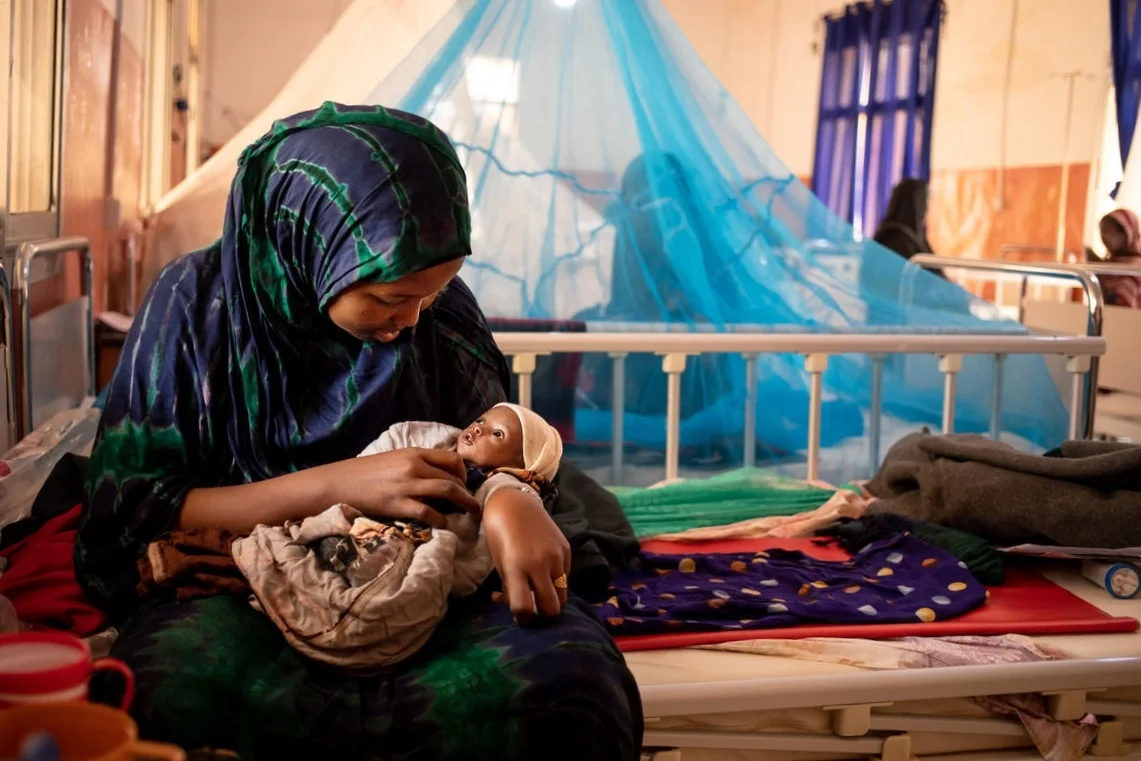
The global community is facing a sobering reality as new data reveals that an estimated 4.9 million children died before reaching their fifth birthday in 2024. Among these fatalities, 2.3 million were newborns, representing a staggering loss of life that experts argue is largely preventable. According to the latest "Levels & Trends in Child Mortality" report, released by the United Nations Inter-agency Group for Child Mortality Estimation (UN IGME), while significant strides have been made over the last quarter-century, the momentum required to meet international health targets is flagging. The report underscores a concerning trend: since 2015, the pace at which child mortality is being reduced has slowed by more than 60 per cent, threatening to undo decades of public health gains.
This year’s findings provide the most comprehensive data set to date, fully integrating cause-of-death estimates for the first time. The integration, facilitated by the Child and Adolescent Causes of Death Estimation (CA CODE) group led by the Johns Hopkins Bloomberg School of Public Health, offers a granular view of why and where children are dying. The data highlights a convergence of traditional threats—such as infectious diseases and malnutrition—and modern challenges, including climate shocks, protracted conflict, and a shifting landscape in global development financing.
A Critical Deceleration in Global Progress
The historical context of child survival is one of initial triumph followed by recent stagnation. Since the year 2000, the global under-five mortality rate has been cut by more than half. This achievement was driven by massive international investments in immunization, maternal health services, and the fight against major infectious diseases. However, the report indicates that the period following the adoption of the Sustainable Development Goals (SDGs) in 2015 has seen a marked decrease in the rate of improvement.
This 60 per cent slowdown in progress is a clarion call for policymakers. The data suggests that the "low-hanging fruit" of public health interventions may have been harvested, leaving behind more complex challenges that require systemic changes in primary health care and sustained political will. The stagnation is particularly visible in regions where health systems are under-resourced or where external shocks have disrupted the delivery of essential services.
The Hidden Toll of Severe Acute Malnutrition
In a landmark inclusion, the 2024 report provides the first direct estimates of deaths caused by severe acute malnutrition (SAM). The findings are harrowing: more than 100,000 children aged between 1 and 59 months died directly from SAM in 2024, accounting for 5 per cent of all deaths in this age bracket. However, the report cautions that these figures represent only the tip of the iceberg.
Malnutrition acts as a lethal catalyst; it weakens a child’s immune system to the point where common, treatable illnesses like diarrhea or pneumonia become fatal. Because mortality data often fail to list SAM as the underlying cause of death, the actual burden of malnutrition is likely significantly higher than official records suggest. Countries such as Pakistan, Somalia, and Sudan have been identified as having the highest numbers of direct deaths attributed to SAM, reflecting the intersection of food insecurity, economic instability, and environmental crises.
The Fragility of the First Month
Newborn deaths—those occurring within the first 28 days of life—now account for nearly half (47 per cent) of all under-five mortality. This statistic highlights a critical gap in the continuum of care. While progress has been made in treating older children, the medical community has struggled to achieve similar reductions in neonatal mortality.
The leading causes of death among newborns remain constant: complications arising from preterm birth (36 per cent) and complications during labor and delivery, such as birth asphyxia or trauma (21 per cent). Furthermore, neonatal sepsis and congenital anomalies continue to claim hundreds of thousands of lives annually. These deaths are often the result of a lack of skilled health personnel at birth and inadequate access to emergency obstetric and newborn care. In many regions, the infrastructure required to support "small and sick" newborns is either non-existent or inaccessible to the most vulnerable populations.
Infectious Diseases and Regional Disparities
For children who survive the neonatal period, the threats shift toward infectious diseases. Malaria, diarrhea, and pneumonia remain the primary killers of children aged 1 to 59 months. Malaria, in particular, continues to be the single largest killer in this age group, responsible for 17 per cent of deaths. These fatalities are heavily concentrated in sub-Saharan Africa, where the disease is endemic.
The report highlights a disturbing trend in malaria control. After dramatic declines between 2000 and 2015, progress has stalled. In countries like Chad, the Democratic Republic of the Congo, Niger, and Nigeria, health workers are battling a "perfect storm" of challenges. Conflict and climate-driven migration are displacing populations, while biological threats—such as the spread of invasive mosquito species and increasing drug resistance—are making traditional prevention and treatment methods less effective.
The geographical disparity in child survival remains one of the most glaring injustices of the modern era. In 2024, sub-Saharan Africa accounted for 58 per cent of all under-five deaths. In this region, infectious diseases were responsible for more than half of all child fatalities. By contrast, in Europe and Northern America, infectious diseases account for only 9 per cent of under-five deaths, dropping to 6 per cent in Australia and New Zealand. These figures illustrate that a child’s chance of survival is still largely determined by their place of birth rather than the availability of medical science.
In Southern Asia, which accounts for 25 per cent of global under-five deaths, the drivers are slightly different. Here, mortality is primarily fueled by neonatal complications. The report emphasizes that investing in quality antenatal care and essential newborn services in Southern Asia could save millions of lives over the coming decade.
The Burden of Conflict and Adolescence
The 2024 report also sheds light on the "fragility penalty." Children born in fragile or conflict-affected settings are nearly three times more likely to die before their fifth birthday compared to those in stable environments. Conflict destroys health infrastructure, forces the flight of medical professionals, and cuts off supply chains for vaccines and life-saving medications.
Beyond the age of five, the risks to life change in nature. An estimated 2.1 million children, adolescents, and youth aged 5 to 24 died in 2024. While infectious diseases and injuries are the leading causes of death for younger children in this bracket, the risks shift dramatically during adolescence. Among girls aged 15 to 19, self-harm has emerged as the leading cause of death, reflecting a global mental health crisis. For boys in the same age group, road traffic injuries remain the primary threat. This shift suggests that as children grow, their survival depends less on clinical interventions and more on social protections, mental health support, and public safety infrastructure.
Institutional Responses and the Economic Case for Investment
Leaders of the world’s major health and development organizations have reacted to the report with a mixture of urgency and resolve. UNICEF Executive Director Catherine Russell emphasized that the world already possesses the knowledge and tools to prevent these deaths. "No child should die from diseases that we know how to prevent," Russell stated. "But we see worrying signs that progress in child survival is slowing—and at a time where we’re seeing further global budget cuts."
Dr. Tedros Adhanom Ghebreyesus, Director-General of the World Health Organization (WHO), echoed these concerns, particularly regarding the vulnerability of children in crisis zones. "We must protect essential health and nutrition services and reach the most vulnerable families so every child has the chance not only to survive, but to thrive," he said.
The World Bank Group has responded by setting a target to reach 1.5 billion people with quality primary health services. Monique Vledder, the World Bank’s Health Director, described the findings as a "collective call to speed up implementation of proven, scalable solutions."
The economic argument for these investments is as compelling as the moral one. Evidence integrated into the report shows that child health interventions are among the most cost-effective development measures available. Every dollar invested in child survival can generate up to twenty dollars in social and economic benefits. By improving productivity and reducing the future burden on public health systems, these investments strengthen national economies and foster long-term stability.
A Roadmap for the Future
To reverse the current slowdown and accelerate progress toward the 2030 Sustainable Development Goals, the UN IGME report outlines several critical priorities for governments and international donors. These include:
- Strengthening Primary Health Care: Ensuring that essential services—including routine immunization and nutrition programs—are available at the community level.
- Investing in the Health Workforce: Training and retaining skilled birth attendants and community health workers, particularly in sub-Saharan Africa and Southern Asia.
- Enhancing Data Systems: Improving civil registration and vital statistics to ensure that every birth and death is counted, allowing for more targeted and effective interventions.
- Addressing Malnutrition: Fully integrating the treatment of severe acute malnutrition into standard pediatric care and addressing the root causes of food insecurity.
- Protecting Health in Conflict: Establishing "corridors of health" to ensure that life-saving interventions reach children in war zones.
As the global development financing landscape undergoes significant shifts, the pressure on maternal and child health programs is mounting. The report concludes that without a renewed political commitment and sustained funding, the world risks a reversal of the hard-won progress of the last two decades. The science is clear, and the solutions are within reach; the question remains whether the global community will muster the will to ensure that no child is left behind.