
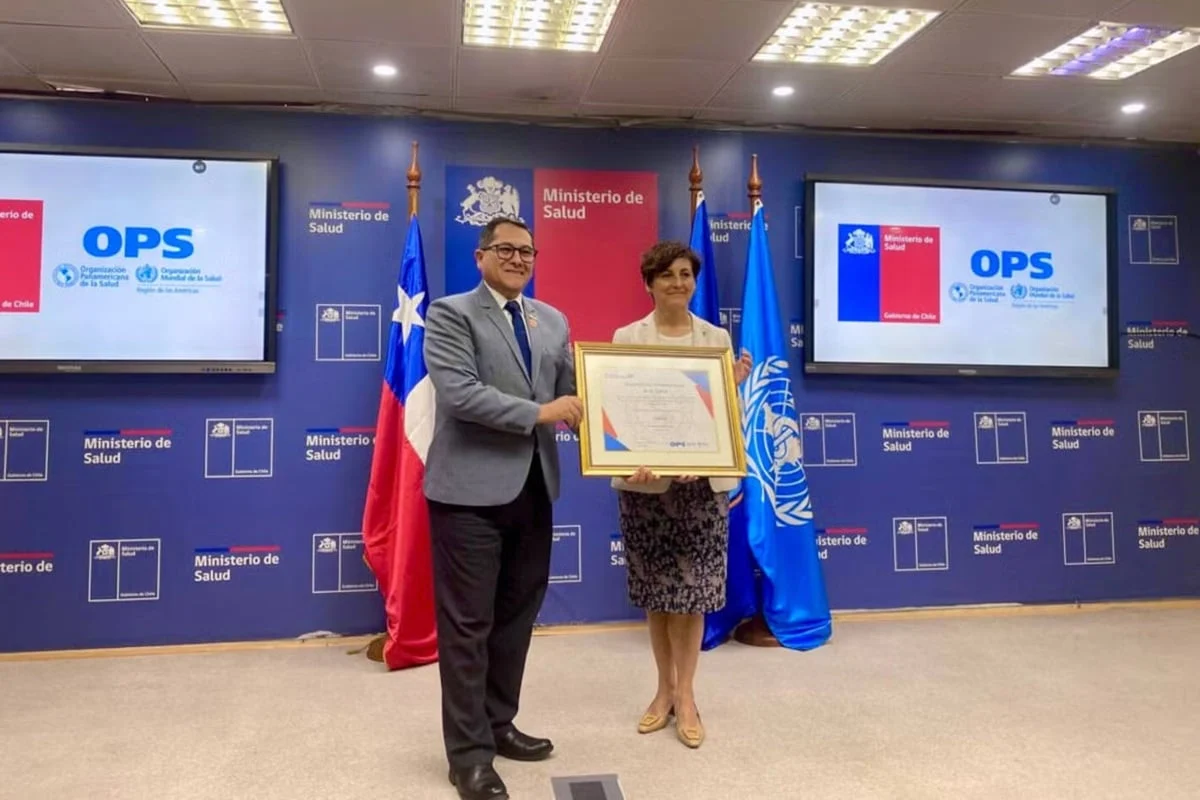
The World Health Organization (WHO) and the Pan American Health Organization (PAHO) have formally announced that Chile has become the first country in the Region of the Americas, and only the second globally, to be verified as having eliminated leprosy. This landmark achievement, confirmed following a rigorous evaluation by an independent international expert panel, marks the culmination of more than three decades of focused public health intervention, robust epidemiological surveillance, and a steadfast political commitment to eradicating one of the world’s oldest and most stigmatized diseases.
Leprosy, also known as Hansen’s disease, is a chronic infectious condition caused by the bacterium Mycobacterium leprae. While it has been a public health challenge for millennia, Chile’s success demonstrates that even diseases deeply rooted in historical and social complexities can be overcome through science-led strategies and universal health coverage. The verification was granted after the country demonstrated a complete absence of locally acquired (autochthonous) cases for over 30 years, with the last indigenous transmission recorded in 1993.
A Century of Progress: From Rapa Nui to National Elimination
The history of leprosy in Chile is inextricably linked to Rapa Nui (Easter Island), where the disease was first documented in the late 19th century. Due to the island’s geographic isolation, the disease remained largely contained there, though sporadic introductions occurred in mainland Chile over the following decades. For much of the 20th century, management relied on isolation and specialized treatment centers on the island.
By the late 1990s, the last secondary cases on Rapa Nui were successfully managed, effectively ending local transmission in the territory. However, the Chilean government did not view this decline as a signal to deprioritize the disease. Instead, leprosy remained a mandatory notifiable condition within the national public health agenda. This proactive stance ensured that even as the disease faded from the public consciousness, the health system’s "clinical readiness" remained high.
Between 2012 and 2023, Chile reported 47 cases of leprosy nationwide. Crucially, an exhaustive epidemiological investigation confirmed that none of these cases were locally acquired. All 47 individuals had contracted the disease outside of Chile, highlighting the strength of the country’s surveillance systems in detecting imported cases and preventing the re-establishment of local transmission chains.
The Verification Process and Expert Validation
The path to official verification began at the request of Chile’s Ministry of Health. In 2025, PAHO and WHO convened an independent panel of international experts to conduct a comprehensive assessment. The panel’s mandate was to determine not only if elimination had been achieved but whether the Chilean health system possessed the infrastructure to sustain this status indefinitely.
The assessment involved a deep dive into decades of epidemiological data, a review of laboratory capacities, and an audit of case management protocols. The experts also evaluated the country’s sustainability plans, ensuring that the transition to a "post-elimination" phase would not lead to a degradation of diagnostic skills among medical professionals. The panel’s final report validated Chile’s capacity to detect, treat, and respond to sporadic cases among non-autochthonous populations, leading to the historic certification.
Dr. Tedros Adhanom Ghebreyesus, WHO Director-General, hailed the achievement as a "powerful testament to what leadership, science, and solidarity can accomplish." He noted that Chile’s success sends a clear message to the international community: with sustained commitment and integrated public health strategies, ancient diseases can finally be consigned to history.
Structural Pillars of Chile’s Success
Chile’s elimination of leprosy was not the result of a single campaign but rather the integration of leprosy care into the broader primary healthcare (PHC) framework. This model ensures that any individual seeking care for skin conditions—the primary manifestation of leprosy—can be screened at local health centers.
- Integrated Surveillance: Leprosy is part of a mandatory reporting system. This ensures that every suspected case is tracked from the moment of first contact with a healthcare provider through to the completion of treatment.
- Specialized Dermatology Network: While primary care serves as the entry point, Chile maintains a robust referral system to specialized dermatology services. These centers provide definitive diagnosis, multidrug therapy (MDT), and long-term follow-up.
- Training and Capacity Building: In a low-incidence setting, many health professionals may never encounter a case of leprosy in their entire careers. To combat this, Chile has implemented continuous training programs aligned with the WHO’s "Towards zero leprosy" strategy, ensuring that clinicians remain vigilant for the signs of the disease.
- Holistic Care and Rehabilitation: The Chilean model extends beyond pharmaceutical intervention. It includes physiotherapy and rehabilitation services to support those who may suffer from nerve damage or physical disabilities associated with the disease, promoting full social inclusion and reducing the "vicious circle" of disease and poverty.
Global Partnerships and the Role of Multidrug Therapy
A critical component of Chile’s success has been the uninterrupted access to multidrug therapy (MDT). Since 1995, PAHO and WHO have coordinated the free distribution of MDT to countries in the Americas. This effort has been sustained through significant long-term partnerships with the private sector and philanthropic organizations.
The Nippon Foundation provided crucial support between 1995 and 2000, and since 2000, the pharmaceutical company Novartis has provided MDT free of charge through direct agreements with WHO. This reliable supply chain has been essential for curing patients, preventing the onset of permanent disabilities, and interrupting the chain of transmission. In Chile, this international support was bolstered by a national supply system that ensured the medication reached even the most remote regions of the country.
Dr. Jarbas Barbosa, Director of PAHO, emphasized that Chile’s milestone is particularly significant for the Region of the Americas. "It demonstrates that diseases strongly linked to groups living in vulnerable conditions can be eliminated," he stated. He added that Chile’s achievement provides a blueprint for other nations in the region to address leprosy as part of PAHO’s broader Disease Elimination Initiative.
Human Rights and the Eradication of Stigma
Beyond the clinical and epidemiological achievements, Chile’s success is rooted in a legal and social framework that prioritizes human rights. Historically, leprosy patients worldwide faced forced isolation and profound social ostracization. Chile has worked to dismantle this legacy by ensuring that leprosy care is provided within a mixed public-private health system that guarantees equal access for all, including migrants and other vulnerable populations.
National legislation in Chile protects against discrimination and ensures that individuals affected by leprosy receive respectful, stigma-free care. By treating leprosy as a manageable medical condition rather than a social curse, the health system has encouraged individuals to seek early diagnosis without fear of exclusion.
Ximena Aguilera, Chile’s Minister of Health, expressed great pride in the recognition, stating that the milestone "reaffirms our responsibility to maintain active surveillance and ensure respectful care for all." She noted that the achievement is a reflection of decades of work by health teams across the country who remained dedicated to a disease that many thought had already disappeared.
Implications for the Global Neglected Tropical Diseases Roadmap
The verification of Chile as leprosy-free is a major win for the WHO’s 2021–2030 roadmap for Neglected Tropical Diseases (NTDs). Leprosy is one of 21 conditions categorized as NTDs, which collectively affect more than one billion people globally, primarily in impoverished communities.
In 2025 alone, nine countries reached various milestones in the control, elimination, or eradication of NTDs. Chile now stands as the 61st country globally to have eliminated at least one NTD. Within the Americas, Chile joins Brazil, Colombia, Ecuador, Guatemala, and Mexico as nations that have successfully eliminated at least one disease from this category. Furthermore, Chile follows the Hashemite Kingdom of Jordan as the second country in the world to be officially verified for the elimination of leprosy specifically.
Globally, leprosy remains a persistent challenge, with over 200,000 new cases reported annually in more than 120 countries. Chile’s success serves as a "proof of concept" that elimination is possible even in countries with a history of endemicity, provided there is a combination of political will, international cooperation, and a resilient healthcare system.
Sustaining the Post-Elimination Phase
The WHO verification panel has provided specific recommendations for Chile to ensure that its "leprosy-free" status remains secure. Moving forward, the country is encouraged to:
- Maintain sensitive surveillance systems to detect imported cases immediately.
- Formally designate a national referral center to consolidate clinical expertise.
- Utilize the WHO Academy’s online training platforms to keep new generations of health workers informed.
- Continue reporting data to WHO to contribute to global monitoring efforts.
Chile’s journey from the late 19th-century outbreaks on Rapa Nui to being a global leader in disease elimination illustrates a profound evolution in public health. It serves as a reminder that while the path to elimination is long—spanning decades of silent, diligent work—the result is a significant contribution to global health security and a more equitable world for future generations.