
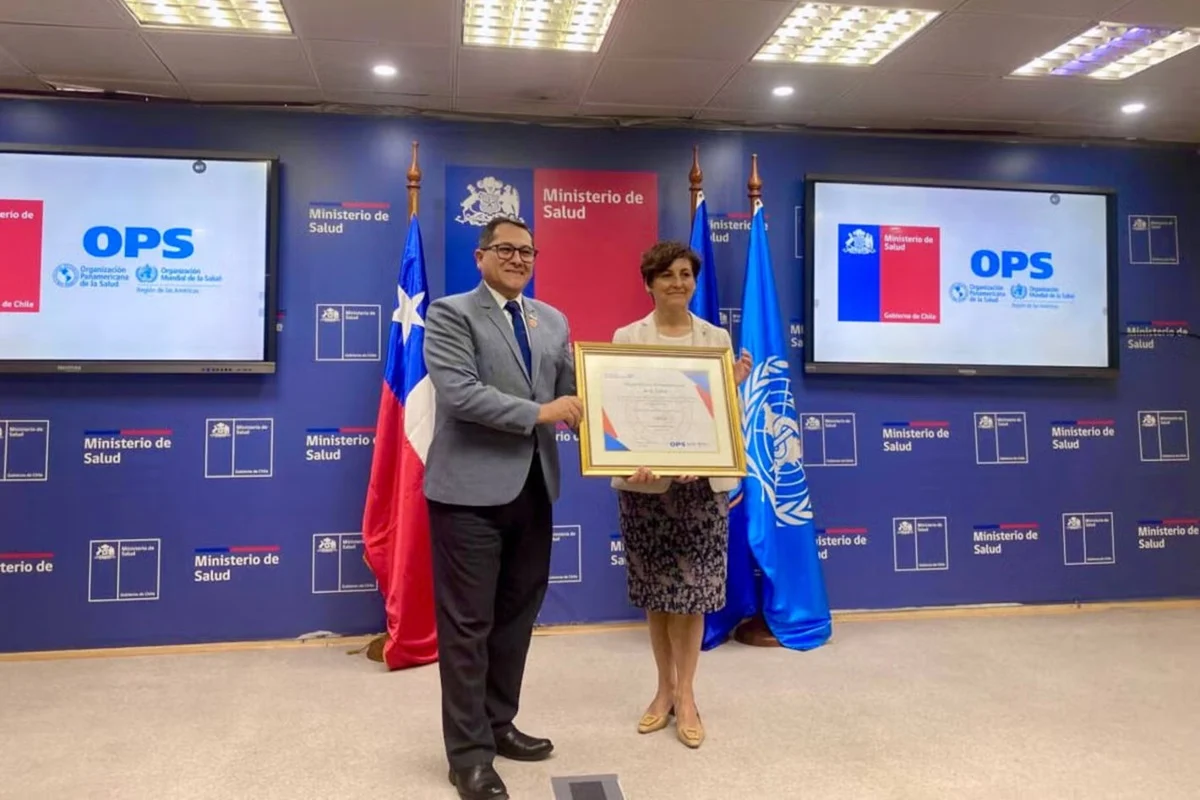
The World Health Organization (WHO), in coordination with the Pan American Health Organization (PAHO), has formally announced that Chile is the first country in the Region of the Americas and only the second globally to be verified as having eliminated leprosy, also known as Hansen’s disease. This landmark achievement follows a rigorous assessment process and marks the culmination of more than three decades of sustained public health surveillance, clinical excellence, and political commitment. The verification serves as a global beacon of hope, demonstrating that even ancient, stigmatized diseases can be relegated to history through disciplined scientific application and inclusive healthcare systems.
Leprosy is a chronic infectious condition caused by the bacterium Mycobacterium leprae. While it has historically been associated with severe disability and social ostracization, modern medicine has rendered it fully curable. Chile’s success in interrupting the local transmission of the disease represents a significant step forward in the global "Towards Zero Leprosy" strategy, providing a blueprint for other nations grappling with the burden of neglected tropical diseases (NTDs).
A Century of Containment: The Chilean Context
The history of leprosy in Chile is inextricably linked to Rapa Nui, also known as Easter Island. The disease was first documented on the island in the late 19th century, likely introduced through regional maritime travel. For decades, the Chilean government managed the disease through a combination of isolation measures and specialized treatment on the island, preventing the bacteria from establishing a significant foothold in mainland Chile.
While sporadic introductions occurred on the mainland throughout the 20th century, they were quickly identified and contained. By the late 1990s, the final secondary cases on Rapa Nui had been successfully managed. The last locally acquired case of leprosy in the country was detected in 1993. Since then, Chile has maintained a record of zero indigenous transmission for over 30 years—a feat that required the country to remain vigilant even when the disease appeared to have vanished from the public consciousness.
Despite the absence of local cases, Chile never removed leprosy from its public health priority list. It remained a mandatory notifiable condition, ensuring that every health professional, from rural primary care doctors to urban specialists, remained trained to recognize potential symptoms. This long-term readiness was critical in securing the official WHO verification in 2025.
The Verification Process: Rigor and Resilience
The path to official verification began when the Chilean Ministry of Health formally requested an evaluation by PAHO and the WHO. In response, an independent panel of international experts was convened in 2025 to determine if the elimination of leprosy was not only achieved but also sustainable in the long term.
The panel’s investigation was exhaustive. Experts reviewed decades of epidemiological data, scrutinized the country’s integrated surveillance mechanisms, and evaluated case management protocols. They also assessed the "sustainability plans" designed to ensure that the health system could handle any future imported cases. The findings were definitive: there was no evidence of local transmission, and the Chilean health system possessed the robust infrastructure necessary to detect and treat non-autochthonous cases (cases originating from outside the country) without allowing the disease to spread.
Dr. Tedros Adhanom Ghebreyesus, WHO Director-General, hailed the achievement as a "powerful testament to what leadership, science, and solidarity can accomplish." He emphasized that Chile’s success sends a message to the world that with early detection and universal access to care, ancient diseases can finally be defeated.
Statistical Analysis: Managing Imported Cases in a Globalized World
While Chile has eliminated local transmission, it remains part of a globalized community where migration and travel can lead to the introduction of infectious diseases. Between 2012 and 2023, Chile reported 47 cases of leprosy nationwide. Crucially, every single one of these cases was classified as imported, meaning the infection was acquired outside of Chilean territory.
The ability to detect these 47 cases is, paradoxically, a sign of a healthy surveillance system. In many regions, imported cases go undetected, leading to potential outbreaks. In Chile, the integrated healthcare model ensures that primary care centers act as an effective "first line of defense." When a suspected case is identified, the patient is immediately referred to specialized dermatology services for confirmation, multidrug therapy (MDT), and continuous follow-up.
This model prioritizes "holistic care," which includes not just the administration of antibiotics but also physiotherapy and rehabilitation. Because leprosy can cause permanent nerve damage if left untreated, the Chilean system ensures that patients living with chronic disabilities receive the support needed for social inclusion and physical recovery.
Regional Implications and the Vicious Cycle of Poverty
For the Region of the Americas, Chile’s verification is a watershed moment. Dr. Jarbas Barbosa, Director of PAHO, noted that leprosy is often a "disease of the vulnerable," thriving in areas where poverty, overcrowding, and lack of healthcare access are prevalent. By eliminating the disease, Chile has proven that the "vicious circle between disease and poverty" can be broken.
"Chile’s achievement demonstrates that eliminating leprosy is achievable and requires building strong systems that can detect, respond to, and provide comprehensive care," Dr. Barbosa stated. As the first country in the Americas to reach this milestone, Chile provides a roadmap for neighboring nations where leprosy remains endemic.
Since 1995, PAHO and the WHO have worked to ensure that multidrug therapy is available free of charge across the Americas. This effort has been bolstered by significant private-sector and philanthropic partnerships. The Nippon Foundation provided MDT from 1995 to 2000, and Novartis has continued this commitment since 2000. This reliable supply chain has been essential in curing patients and interrupting the chain of transmission across the continent.
Legal Frameworks and the Fight Against Stigma
A significant factor in Chile’s success has been its robust legal and social framework. Unlike the historical approach of the 19th and early 20th centuries, which often involved the forced isolation of "lepers," modern Chilean policy is rooted in human rights and inclusion.
National legislation in Chile guarantees equal access to healthcare and social protection for all residents, including migrants and vulnerable populations. This is particularly important for leprosy, a disease that carries an ancient stigma. When patients fear discrimination, they are less likely to seek medical help, which allows the disease to progress and potentially spread. By fostering a "stigma-free" environment, Chile has encouraged early reporting and treatment, which are the cornerstones of elimination.
Ximena Aguilera, Chile’s Minister of Health, expressed immense pride in the recognition, noting that it reflects the "commitment of health teams across the country." She reaffirmed that the country’s responsibility does not end with verification; rather, it transitions into a phase of active, respectful surveillance to maintain its leprosy-free status.
The Broader Context of Neglected Tropical Diseases (NTDs)
Leprosy is classified as one of the 21 Neglected Tropical Diseases (NTDs)—a group of conditions that affect over one billion people worldwide, primarily in impoverished tropical and subtropical regions. The WHO’s "Road Map for Neglected Tropical Diseases 2021–2030" sets ambitious targets for the control and elimination of these conditions.
Chile’s verification as having eliminated leprosy makes it the 61st country globally to eliminate at least one NTD. Within the Americas, it joins a small group of nations—including Brazil, Colombia, Ecuador, Guatemala, and Mexico—that have successfully eliminated specific NTDs like onchocerciasis (river blindness) or trachoma. However, Chile stands alone in the region for its success against leprosy. Globally, it follows the Hashemite Kingdom of Jordan, which was the first country to receive such verification.
Sustaining the Post-Elimination Phase
The WHO and the independent verification panel have provided clear recommendations for Chile as it enters the post-elimination era. The goal is to ensure that the country does not become a victim of its own success by allowing clinical expertise to fade.
In a low-incidence setting, many young health professionals may never see a case of leprosy during their entire careers. To combat this, the panel recommended that Chile formally designate a national referral center to consolidate expertise. Furthermore, the use of the WHO Academy’s online training platforms will be vital for keeping healthcare workers updated on the latest diagnostic and treatment protocols.
Maintaining "sensitive surveillance" is also paramount. Chile must continue to report to the WHO and remain capable of managing sporadic cases that may arise from international travel. The verification is not a signal to stop looking for the disease, but rather a validation that the country’s "search and treat" mechanisms are working at an elite level.
Understanding Hansen’s Disease: A Scientific Overview
To appreciate the scale of Chile’s achievement, one must understand the nature of the pathogen. Mycobacterium leprae is a slow-growing bacterium with an incubation period that can last from five to twenty years. This long latency makes the disease difficult to track and requires decades of consistent data to prove elimination.
The disease primarily affects the skin, peripheral nerves, the mucosa of the upper respiratory tract, and the eyes. If untreated, it leads to progressive and permanent damage to the skin, nerves, limbs, and eyes. However, it is not highly contagious. It is transmitted via droplets from the nose and mouth during close and frequent contact with untreated cases.
The introduction of multidrug therapy (MDT) in the 1980s revolutionized treatment. MDT consists of a combination of three antibiotics: dapsone, rifampicin, and clofazimine. This treatment kills the pathogen and renders the patient non-infectious within a very short period, preventing further transmission and stopping the progression of disabilities.
Conclusion: A Global Example of Public Health Excellence
The elimination of leprosy in Chile is more than a localized medical success; it is a validation of the global public health infrastructure. It proves that the "Towards Zero Leprosy" strategy is not merely a theoretical goal but a practical possibility when backed by political will and integrated health services.
As the world looks toward the 2030 targets for neglected tropical diseases, Chile’s experience serves as a case study in persistence. It reminds the international community that the "elimination" of a disease is not defined solely by the absence of cases, but by the presence of a resilient, prepared, and compassionate health system. By consigning this "ancient disease" to history, Chile has set a new standard for the Americas and the world.