
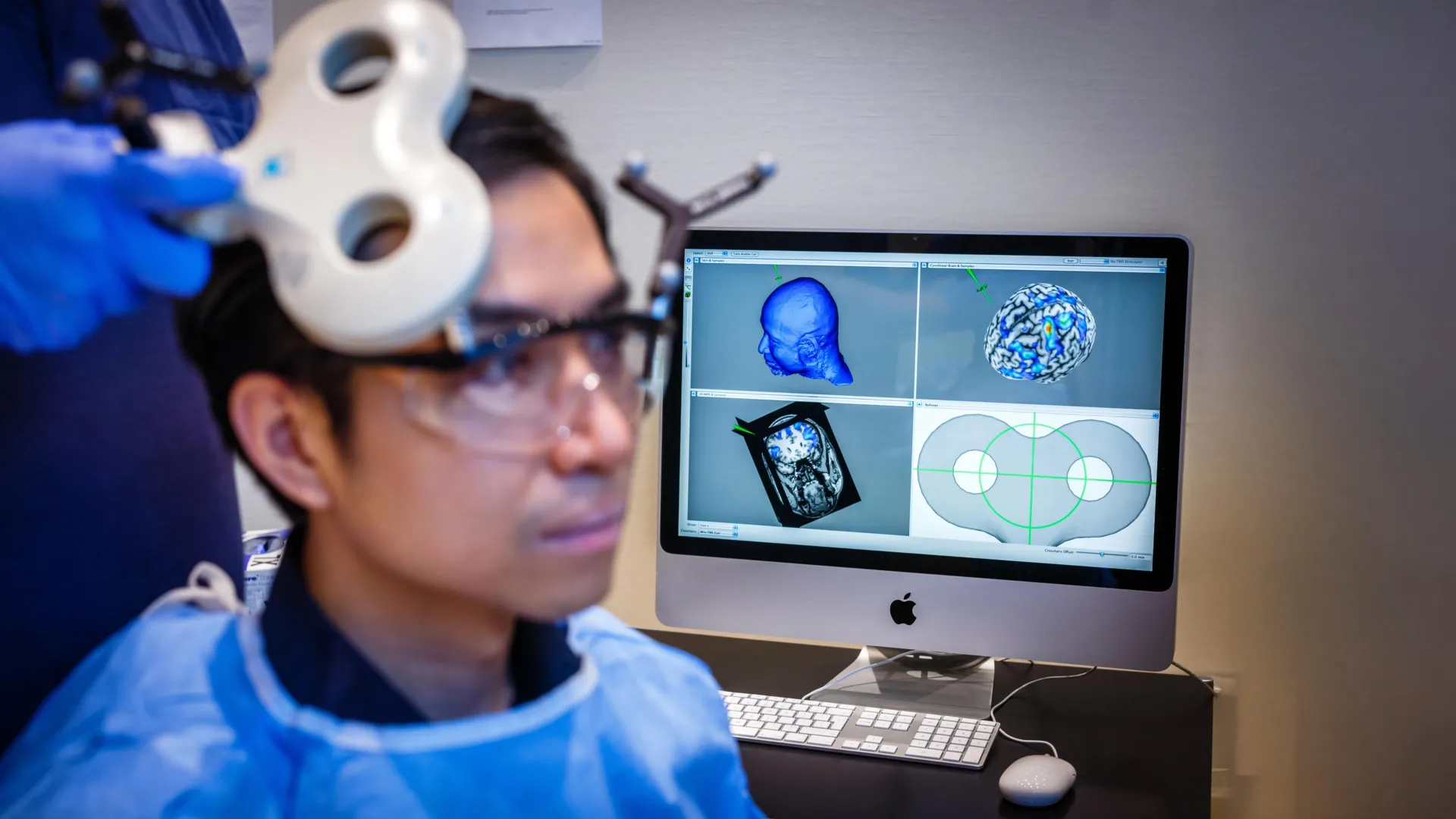
Encouraging two parts of the brain to fire in sync can make people act more generously, according to research published February 10th in the open-access journal PLOS Biology. The study was led by Jie Hu of East China Normal University in China, in collaboration with researchers from the University of Zurich in Switzerland. By aligning activity between specific brain regions, the team found they could slightly increase altruistic behavior.
Unraveling the Neural Basis of Altruism
The fundamental question of what drives individual differences in generosity has long fascinated scientists and philosophers. While societal norms and upbringing play a significant role in shaping prosocial behaviors, the underlying neural mechanisms remain a complex area of exploration. Parents consistently strive to instill values of sharing, kindness, and empathy in their children, recognizing these traits as cornerstones of a well-functioning community. Yet, the extent to which adults exhibit selflessness varies dramatically, with some individuals consistently prioritizing the needs of others, while others lean towards self-interest. Understanding the biological underpinnings of these variations is crucial for comprehending the spectrum of human social behavior.
This latest research, a collaborative effort between East China Normal University and the University of Zurich, offers a significant step forward by identifying a specific neural pathway and demonstrating a causal link between its synchronized activity and increased altruistic decision-making. The study, published on February 10th in PLOS Biology, utilized a combination of behavioral economics and non-invasive brain stimulation to probe these intricate connections.
The Dictator Game: A Laboratory for Generosity
To investigate the neural correlates of altruism, the researchers employed a well-established experimental paradigm known as the Dictator Game. This game, a staple in behavioral economics, provides a controlled environment to measure an individual’s willingness to share resources. In this study, 44 participants were tasked with making a total of 540 decisions within the game. In each round, participants were presented with an opportunity to divide a sum of money with an anonymous partner. The crucial element of the game is that the participant designated as the "dictator" has complete control over the distribution, with no repercussions for their decision. The payout amounts varied in each round, meaning participants could potentially gain more money than their partner, or vice versa. This design effectively isolates the participants’ intrinsic motivation to be generous or self-interested.
The researchers meticulously recorded the decisions made by each participant, noting the proportion of money they chose to allocate to their partner. This provided a quantitative measure of their altruistic behavior across a large number of trials, allowing for statistical analysis of their choices under different payout conditions. The variability in payout amounts was designed to create scenarios where generosity came at a direct personal cost, thereby providing a clearer picture of the participants’ underlying prosocial tendencies.
Targeting Brain Synchronization with Non-Invasive Stimulation
During the Dictator Game, the research team applied a cutting-edge neurostimulation technique: transcranial alternating current stimulation (tACS). This non-invasive method involves placing electrodes on the scalp, through which a weak electrical current is passed. The current is designed to synchronize the firing patterns of neurons in specific brain regions by entraining their electrical activity to a particular rhythm. In this experiment, the tACS was directed at two key areas of the brain: the frontal lobe and the parietal lobe.
The frontal lobe is broadly associated with executive functions, including decision-making, planning, and impulse control, while the parietal lobe plays a crucial role in spatial processing, attention, and integrating sensory information. The researchers hypothesized that coordinating neural activity between these two regions could influence how individuals weigh their own interests against those of others.
The stimulation was carefully calibrated to induce specific patterns of neural oscillation, namely gamma and alpha waves. Gamma oscillations, typically occurring at frequencies between 30-100 Hz, are often associated with higher-level cognitive functions, including information processing and binding. Alpha oscillations, occurring at frequencies between 8-12 Hz, are commonly linked to relaxed wakefulness and are often suppressed during active cognitive tasks. By modulating the interplay between these two brain regions using these specific oscillatory frequencies, the researchers aimed to uncover their role in altruistic decision-making.
Gamma Synchrony: A Key to Increased Generosity
The results of the stimulation were striking. When the tACS specifically enhanced the synchronization of gamma oscillations between the frontal and parietal regions, participants exhibited a modest but statistically significant increase in their altruistic decisions. This meant that, under gamma synchrony, individuals were more inclined to share larger portions of the money, even when doing so resulted in them receiving less money than their partner. This finding provides compelling evidence that coordinated activity within this specific neural network directly influences prosocial behavior.
To further elucidate the mechanism behind this observed change, the researchers employed a computational model. This model analyzed how the tACS intervention altered the participants’ evaluation of the offers presented in the Dictator Game. The analysis revealed that after the gamma synchrony stimulation, participants tended to place a greater emphasis on the potential outcome for the other person when making their division decisions. In essence, the stimulation appeared to shift their decision-making calculus, making them more sensitive to the welfare of their partner.
It is important to note the limitations acknowledged by the authors. The study did not directly measure neural activity during the experiment in conjunction with the stimulation. Future research is planned to combine tACS with electroencephalography (EEG) to directly record and confirm how the intervention influences brain signals. Nevertheless, the current findings strongly suggest that synchronized activity between the frontal and parietal lobes is a critical component of altruistic decision-making.
Experts Weigh In: Understanding Cause and Effect
The implications of this research extend beyond a mere academic curiosity, offering profound insights into the biological underpinnings of social cooperation. Christian Ruff, a coauthor of the study, emphasized the significance of identifying a discernible pattern of communication between brain regions that is directly linked to altruistic choices. He stated, "We identified a pattern of communication between brain regions that is tied to altruistic choices. This improves our basic understanding of how the brain supports social decisions, and it sets the stage for future research on cooperation — especially in situations where success depends on people working together." This highlights the potential for further exploration into how targeted brain interventions could foster greater cooperation in various societal contexts.
Jie Hu, another coauthor and lead investigator, underscored the novelty of the study’s causal demonstration. "What’s new here is evidence of cause and effect: when we altered communication in a specific brain network using targeted, non-invasive stimulation, people’s sharing decisions changed in a consistent way — shifting how they balanced their own interests against others’." This direct cause-and-effect relationship, established through non-invasive stimulation, is a powerful testament to the precision of the findings. It moves beyond correlational studies to demonstrate a tangible impact of neural synchronization on human behavior.
Marius Moisa, a coauthor, expressed his astonishment at the observed behavioral shift. "We were struck by how boosting coordination between two brain areas led to more altruistic choices. When we increased synchrony between frontal and parietal regions, participants were more likely to help others, even when it came at a personal cost." This sentiment captures the fundamental finding: a direct manipulation of brain activity resulted in a measurable increase in selfless behavior, even when such behavior was not economically advantageous.
Broader Implications and Future Directions
The findings from Hu, Ruff, and Moisa’s study have far-reaching implications for our understanding of human social behavior and hold potential for future interventions.
Timeline of the Research:
- Pre-2023: Years of foundational research in behavioral economics, neuroscience, and neurostimulation laid the groundwork for this study. Understanding the roles of the frontal and parietal lobes in decision-making and social cognition was a prerequisite.
- Early 2023 (Specific Dates Unspecified): The research was conducted with 44 participants at East China Normal University and the University of Zurich.
- February 10th, 2024: The study’s findings were published in the open-access journal PLOS Biology.
- Post-Publication: The research is now available for broader scientific scrutiny and discussion, paving the way for future investigations.
Supporting Data and Analysis:
While specific numerical data on the percentage increase in generosity is not detailed in the provided abstract, the study reports a "modest increase in altruistic decisions" and that participants were "more likely to share larger amounts of money." The computational model analysis indicated that participants "placed greater weight on the other person’s outcome." This suggests that the effect, while noticeable and statistically significant, was not a radical transformation of personality but a discernible shift in decision-making priorities. The fact that this shift occurred even when it reduced personal earnings is a key piece of supporting data for the impact of the stimulation.
Reactions from Related Parties (Inferred):
While direct quotes from external parties are not provided, the scientific community’s reaction to such findings is typically one of cautious optimism and a drive for replication and expansion. Researchers in fields such as psychology, economics, and cognitive neuroscience would likely view this study as a significant contribution, prompting further questions about:
- Generalizability: Can this effect be replicated in different cultural contexts or with different types of prosocial behaviors?
- Long-term effects: Does the induced synchrony have lasting effects on generosity, or is it temporary?
- Individual differences: Do certain individuals respond more strongly to this type of stimulation?
- Therapeutic potential: Could such techniques be explored for conditions characterized by impaired social cognition or empathy?
Broader Impact and Implications:
The study’s findings suggest a tangible neural mechanism underlying altruism. This has several potential implications:
- Understanding Social Dynamics: A deeper understanding of how synchronized neural activity promotes cooperation could inform strategies for conflict resolution and community building.
- Education and Development: Insights into the neural basis of prosocial behavior might lead to more effective pedagogical approaches for fostering empathy and generosity in educational settings.
- Potential for Interventions: While still in its nascent stages, the ability to non-invasively influence altruistic behavior raises questions about potential therapeutic applications for individuals with difficulties in social interaction or empathy, such as those with certain personality disorders or brain injuries. However, it is crucial to emphasize that such applications are highly speculative and would require extensive further research and ethical consideration.
- Ethical Considerations: As neurostimulation techniques advance, ethical discussions surrounding their application to influence behavior will become increasingly important. Ensuring that such interventions are used responsibly and for the benefit of individuals and society will be paramount.
In conclusion, this research by Hu, Ruff, and Moisa offers a compelling glimpse into the intricate neural circuitry that supports altruism. By demonstrating that synchronizing activity between the frontal and parietal lobes can enhance generous decision-making, the study not only advances our fundamental understanding of the human brain but also opens new avenues for exploring the biological underpinnings of cooperation and social behavior. The findings serve as a testament to the power of interdisciplinary research in unraveling the complexities of the human mind.